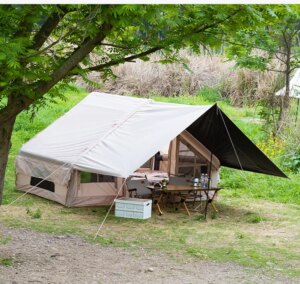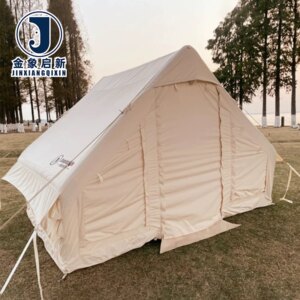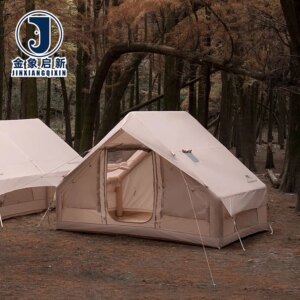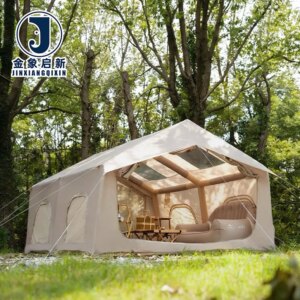
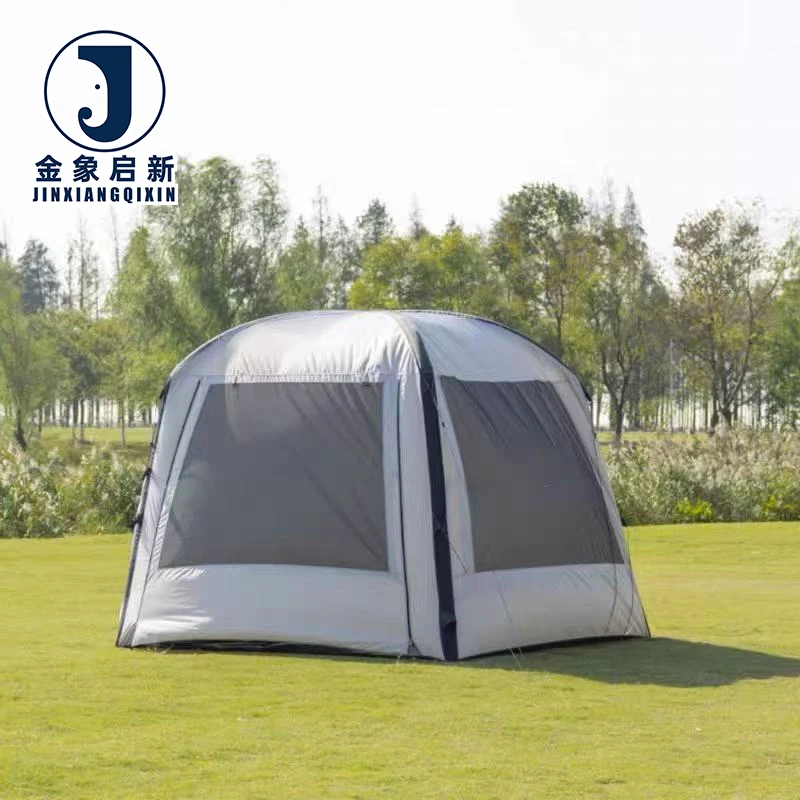
Deep Process Control — nearly 30 years focused on PVC coating weight and adhesion, applied here to inflatable tent fabric where airtight seam integrity depends on consistent coating thickness across every roll.
Technical Specifications
| Parameter | Value |
|---|---|
| Product Type | Inflatable Tent Fabric |
| Core Material | PVC tarpaulin |
| Construction | Single-layer PVC |
| Waterproof | Yes |
| UV-Resistant | Available — confirm test standard required for your market |
| Flame Retardant | Available in flame retardant grades — confirm the grade required for your market |
| Anti-Static | Available — confirm surface resistance standard required for your market |
| Tear-Resistant | Yes |
| Capacity | 6-person |
| Opening Mechanism | Automatic inflatable |
| Season Rating | Four-season |
| Customization | OEM & ODM (size adjustments, pattern printing, material thickness modifications) |
| Standards | ISO 9001, ISO 14001, ISO 45001, CE |
Application Suitability
| Application | Exposure & Requirement |
|---|---|
| Commercial camping grounds | Continuous UV exposure, seasonal temperature swings, repeated inflation and deflation cycles |
| Outdoor hospitality and glamping setups | Guest-facing aesthetics, wind load on inflated structures, four-season weather resistance |
| Event infrastructure | Rapid deployment and teardown, transport abrasion, short-term high-visibility use |
| Industrial temporary shelters | Dust and debris exposure, fire safety compliance on project sites, structural membrane demands |
| Tourism operators | Coastal or alpine environments, salt or moisture exposure, long-term outdoor placement |
Why Claimed Treatments Fail Verification on Arrival
Every batch ships with specification sheets and test documentation — no treatment is stated without a report to back it.
Technical buyers sourcing inflatable tent fabric routinely receive material where anti-UV or flame-retardant treatment was quoted but arrives without supporting test data. The gap between what the quotation states and what the roll actually carries creates compliance risk at the installation site. For inflatable structures used in commercial camping or event infrastructure, the absence of documented fire classification can halt operations before the first guest arrives. Coating weight discrepancies compound the problem — a lighter coat reduces both the fabric’s barrier performance and its heat-seal integrity at the seam lines where air-beam structures concentrate stress [NEED_CITE: tensile and tear test methods for coated fabrics per ISO 1421].
Coating Weight and Its Role in Inflatable Structure Performance
The PVC coating applied to the base fabric determines how the material behaves under continuous inflation pressure. Coating weight controls the thickness of the polymer layer that seals the fabric against air permeation, directly affecting how long an inflatable tent holds pressure between top-ups. For inflatable tent fabric used in glamping applications, the coating must remain flexible across seasonal temperature ranges while maintaining adhesion to the base fabric through repeated fold-unfold cycles.
Base Fabric Construction and Tear Propagation
The woven base fabric beneath the PVC coating carries the structural load when the tent is inflated and subjected to wind. Denier count and weave density govern how a puncture or cut propagates through the material — a tighter weave arrests tear spread more effectively than an open construction. In single-layer PVC structures designed for four-season deployment, the base fabric must balance tensile strength with the flexibility needed for packing and transport. The relationship between base fabric specification and coating weight is what ultimately defines the inflatable tent fabric performance envelope [NEED_CITE: DIN 4102 fire classification for building materials].
Understanding Specification Parameters for Inflatable Tent Applications
Coating weight alone does not predict field performance — it works in combination with base fabric density to determine tensile and tear values. A heavier coat on a low-denier base may resist abrasion but tear easily under wind load, while a lighter coat on a high-density weave may offer structural strength but limited air-holding capability. Knife coating, the method used for this PVC tarpaulin, produces a uniform polymer layer with strong adhesion to the base fabric, which is critical for heat-welded seams on inflatable air beams. The single-layer construction reduces packed weight and transport volume compared to multi-layer alternatives, an advantage for operators deploying and relocating glamping units seasonally. Surface finish — whether glossy or matte — influences both cleaning behaviour in guest-facing applications and the adhesion of printed branding or pattern work applied during OEM customisation. Available flame retardant grades must be matched to the fire safety classification required in the destination market, as standards vary significantly between regions.
What Happens When Seam Specification Is Overlooked
Inflatable tent structures concentrate mechanical stress at welded seam lines, particularly where air beams bend under load. If the coating weight or formulation differs from what the welding parameters were set for, the seam can fail before the body fabric shows any sign of wear. This failure mode is not visible during pre-shipment visual inspection — it appears only when the structure is inflated and loaded. Batch-to-batch variation in coating composition compounds the risk, as welding temperature and dwell time that worked on the previous roll may produce a brittle or incomplete bond on the next. For commercial operators running inflatable glamping units continuously through a season, seam failure means guest displacement and revenue loss [NEED_CITE: heat-seal integrity testing for welded PVC seams].
What This Supply Chain Provides
A 10-person R&D team handles material selection, pattern printing, and sample development for inflatable tent fabric, producing samples within days rather than weeks for custom thickness or print requirements. Three full production lines with 36 sets of professional equipment support bulk roll output with consistent coating weight across the production run. Dedicated QA/QC runs at every production stage, with 100 percent inspection before shipment — including a 24-hour inflation leak test on finished units. Coating weight and adhesion are controlled through the knife-coating process, verified against the stated specification before dispatch. OEM and ODM capability covers size adjustments, material thickness modifications, and pattern printing for operators who need branded or dimension-specific inflatable structures.
Documentation & Verification
- Material specification sheet stating base fabric denier, coating composition, and confirmed GSM for each roll
- Test reports for UV stability and flame-retardant grades provided where applicable to the order specification
- ISO 9001, ISO 14001, ISO 45001, and CE certificates available for compliance audits
- Pre-shipment inspection record documenting coating weight verification and 24-hour inflation leak test results
- Roll packing list with batch reference for traceability across the production run
Fabrication, Handling & Storage
- Heat-weld seams using temperature and dwell time matched to the specific PVC coating weight on this single-layer fabric
- Store rolls horizontally on a flat surface to prevent permanent creasing in the PVC coating layer
- Use compatible PVC adhesive for field repairs on punctures, matching the coating formulation for bond strength
- Allow cold-stored rolls to reach ambient temperature before unrolling to avoid coating crack at the fold line
- Cut patterns with adequate seam allowance to account for the material thickness during heat-welding overlap
- Clean the glossy or matte surface with mild detergent only, avoiding solvents that degrade the PVC top coat
What to Include in Your Enquiry
Provide the target market and any fire safety or anti-static classification required at the installation site, along with the annual roll volume and preferred width for your cutting layout. Specify whether you need finished inflatable tent units with welded air beams or roll stock for your own fabrication line. Confirm whether pattern printing or branding is required, and state the material thickness preference for your structural design.
Frequently Asked Questions
Q: How is the PVC coating weight verified and what options are available for inflatable tent fabric?
A: Coating weight is measured per roll against the stated GSM before dispatch and documented on the material specification sheet. Options span lightweight to heavy-duty grades depending on the structural demands of your inflatable design. The R&D team can develop samples at different coating weights so you can test inflation performance and seam behaviour before committing to a production run.
Q: What test standards support the flame-retardant and anti-static claims for commercial tent applications?
A: Flame-retardant and anti-static treatments are available in grades matched to different market requirements. The specific test standard depends on the destination country and the application classification — confirm the grade required for your site before ordering. Test reports accompany each shipment where these treatments are specified, providing documented evidence for compliance audits.
Q: How does single-layer PVC construction perform in four-season outdoor exposure regarding UV degradation?
A: The single-layer PVC construction is engineered for four-season deployment, with UV-resistant treatment available to reduce polymer breakdown from prolonged sun exposure. The knife-coated surface maintains flexibility across seasonal temperature ranges. Request a sample with the specific UV treatment grade for your climate zone and conduct accelerated weathering tests to validate long-term performance for your application.
Q: What OEM customization options exist for material thickness, pattern printing, and custom dimensions?
A: OEM and ODM services cover material thickness modifications, custom dimensions, and pattern printing directly onto the PVC surface. Samples are developed within days for approval before bulk production proceeds. The 10-person R&D team works with your structural design to recommend coating weight and base fabric combinations that meet your inflation pressure and packing requirements.
Q: What documentation accompanies each shipment for material compliance and engineering validation?
A: Each shipment includes a material specification sheet confirming base fabric and coating details, test reports for specified treatments, a pre-shipment inspection record with inflation leak test results, and a roll packing list with batch traceability. ISO and CE certificates are available for compliance documentation. All records reference the specific production batch for your engineering files.