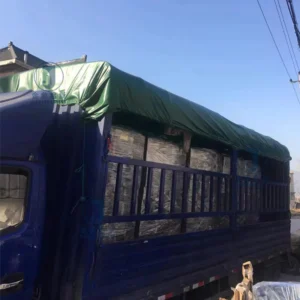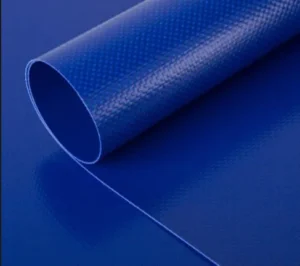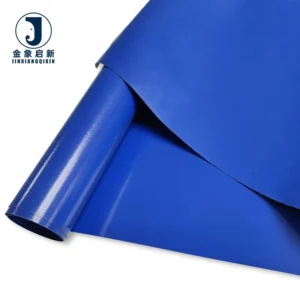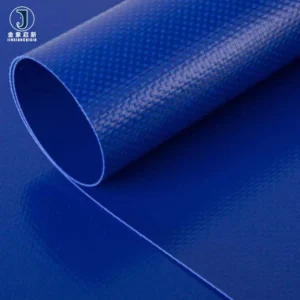
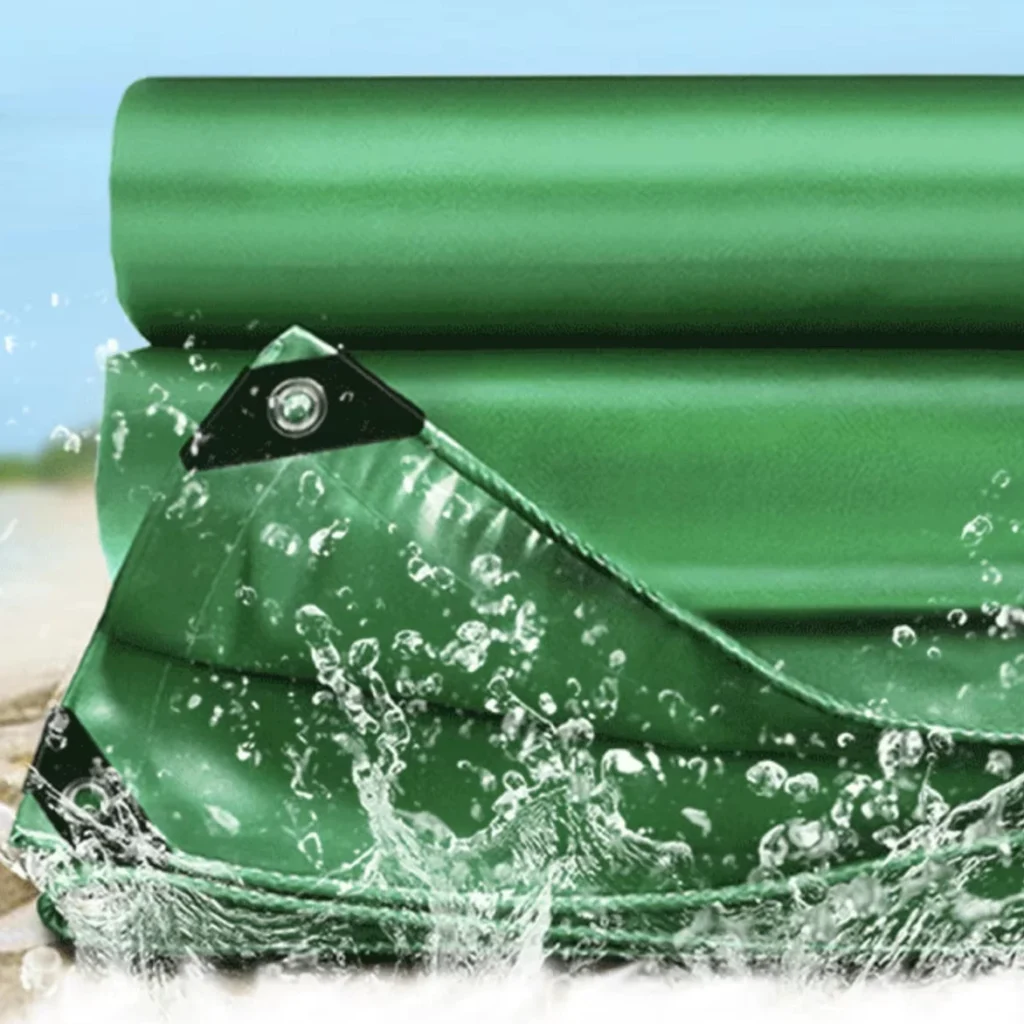
Coating Consistency — Every roll of 400g PVC coated tarpaulin undergoes 100% pre-shipment inspection to confirm coating weight matches the material specification sheet before dispatch.
Technical Specifications
| Parameter | Value |
|---|---|
| Product Type | PVC Coated Tarpaulin Fabric |
| Weight (GSM) | 400g/m² |
| Total Thickness | 0.3mm |
| Base Fabric Denier | 500D × 500D Polyester |
| Coating | Double-Sided PVC |
| Water Resistance | Fully Waterproof Construction |
| Flame Retardant | Available — confirm the grade required for your market (grade not stated in source) |
| Anti-UV | Available — test basis available on request (test basis not stated in source) |
| Color | Blackout (additional colors available on request) |
| Standards | ISO, CE |
| Package | Roll packing, bale packing, carton |
Application Suitability
| Application | Exposure & Requirement |
|---|---|
| Truck and trailer side curtains | Constant flexing at load points, road debris abrasion, UV exposure, weld seam integrity under tension |
| Awning and tent panel fabrication | Outdoor weathering, repeated folding and deployment, hot-air weld precision on custom panel sizes |
| Machine and equipment covers | Dust and moisture ingress protection, UV degradation from prolonged outdoor storage, reinforced attachment points |
| Wood storage and yard covers | Rain and snow contact, ground moisture wicking, wind uplift stress on hems and tie-downs |
| Car and vehicle covers | Scratch-free inner surface, UV reflection, lightweight handling for daily removal and replacement |
Why a 400g PVC Coated Tarpaulin Fabric Weight Claim Needs Verification
A quoted GSM means nothing if the roll arriving at your dock weighs less than agreed.
Technical buyers and fabricators specifying material properties know that coating weight directly influences weld behaviour, tensile performance, and long-term durability. When a supplier quotes 400g but delivers lighter material, the consequences show up on the fabrication floor — hot-air weld parameters calibrated for the specified thickness produce weak bonds on thinner coating, and tensile loads at seam points fail earlier than expected. [NEED_CITE: tensile and tear test methods for coated fabrics per ISO 1421] I have seen fabricators blame their welding equipment when the real variable was an incoming roll that did not match the specification sheet. With this PVC coated tarpaulin fabric, the stated 400g/m² is verified against the material specification sheet at the QA stage, not assumed from a catalogue listing.
How the 500D × 500D Base Fabric Governs Dimensional Stability
The 500D × 500D polyester base provides the structural skeleton of this PVC coated tarpaulin fabric. Denier defines the yarn thickness, and at this count the base fabric delivers predictable dimensional stability when the material is tensioned on a welding table or stretched across a frame. For fabricators producing truck side curtains or awning panels, this stability means cut edges stay true and welded seams align without pulling during assembly. A lower denier base would stretch under tension, producing misaligned panels and inconsistent weld overlap.
Coating Adhesion and What 0.3mm Thickness Means for Weld Performance
The 0.3mm total thickness represents the combined PVC coating on both faces of the polyester base. This thickness places the material in a range where hot-air welding produces reliable bonds without requiring excessive heat that could damage the base fabric. Fabricators working with this PVC coated tarpaulin fabric typically find that standard weld parameters for medium-weight coated materials apply, though confirmation with sample rolls is always recommended before committing to production runs. [NEED_CITE: hot-air welding parameters for PVC coated polyester fabrics] The double-sided coating ensures that both the weld face and the outer surface maintain consistent PVC composition, which is critical when welded seams must match the parent material in flexibility and weather resistance.
Reading the Specification Sheet Beyond GSM
GSM alone tells you how much material is present per square metre, but it does not explain how that weight is distributed between base fabric and coating. A 400g/m² construction built on a 500D × 500D base means a specific ratio of polyester to PVC — shift that ratio and you change tear propagation behaviour, weld window, and surface finish. The base fabric denier determines how tears initiate and spread; a tighter weave arrests tear propagation more effectively than an open weave at the same denier. The PVC coating method and weight influence peel strength — the force required to separate the coating from the base — which directly affects whether a welded seam holds or delaminates under load. Surface finish, whether glossy or matte, influences cleaning ease and how well printed branding adheres over time. Understanding these relationships lets a technical buyer specify what actually matters for the end use, rather than relying on a single number.
What Happens When Roll-to-Roll Consistency Breaks Down
Fabricators cutting and welding multiple rolls into a single project — such as a set of trailer side curtains — depend on uniform coating weight and colour across every roll. If one roll runs lighter in coating, its weld behaviour shifts, producing seams that may pass visual inspection but fail under flex load. Colour variation between rolls becomes visible once panels are installed side by side on the same vehicle or structure, forcing rejection and rework of the entire set. [NEED_CITE: batch colour consistency standards for coated fabric rolls] These failures are not material defects in the traditional sense; they are consistency failures that only appear when multiple rolls from the same order are compared. The 100% pre-shipment inspection record exists specifically to catch these variances before they leave the production floor.
Why Fabricators Source This PVC Coated Tarpaulin Fabric Here
Three full production lines and 36 sets of professional equipment support bulk roll output with consistent coating weight across the production run. A dedicated 10-person R&D team handles material selection, custom width development, and sample preparation within days rather than weeks. Every roll passes through QA/QC at each production stage, with the 400g/m² coating weight verified against the specification sheet before packing. ISO and CE certification frameworks govern the production process, providing traceable documentation rather than marketing claims. Sample rolls are developed for weld and seam behaviour validation so fabricators can confirm hot-air weld parameters and eyelet reinforcement performance before placing bulk orders. [NEED_CITE: DIN 4102 fire classification for building materials]
Documentation & Verification
- Material specification sheet stating 400g/m² GSM, 500D × 500D base fabric denier, and PVC coating weight
- UV and flame retardant test reports provided where applicable to target market standards
- Pre-shipment inspection record confirming roll-to-roll weight and colour consistency
- ISO and CE certificates supporting production process traceability
- Certificate of origin and customs documentation for international roll stock shipments
Fabrication, Handling & Storage
- Hot-air weld parameters should be calibrated on sample rolls of this 0.3mm construction before production runs begin
- Eyelet and hem reinforcement points require backing plates suited to the 400g/m² fabric weight to prevent pull-through
- Rolls should be stored upright on pallets to prevent flat-spotting and permanent creasing of the PVC coating
- Allow rolls to acclimate to workshop temperature before unrolling to avoid coating stiffness and cracking in cold conditions
- Use PVC-compatible cleaners only; solvent-based products may degrade the coating surface on this double-sided construction
What to Include in Your Enquiry
Specify the end-use application and the environmental exposure conditions your finished product will face, including UV intensity and any flame retardant compliance requirements for your target market. Confirm the roll widths and linear metre quantities needed for your fabrication layout to minimize offcut waste. Indicate whether you require sample rolls for weld parameter validation before committing to bulk production, and note any colour or surface finish preferences for the PVC coating.
Frequently Asked Questions
Q: How is the 400g GSM verified on each roll before shipment?
A: Every roll undergoes weight sampling during the 100% pre-shipment inspection. The measured GSM is recorded and compared against the 400g/m² stated on the material specification sheet. Rolls that fall outside tolerance are held before dispatch. Inspection records documenting the verified weight are available with each shipment.
Q: What flame retardant grade does this fabric carry for my market?
A: Flame retardant treatment is available, but the specific grade depends on your target market’s fire safety regulations. We supply test reports aligned to the standard you specify. Confirm the required classification — such as B1, M2, or NFPA 701 — at the enquiry stage so the correct treatment and documentation can be prepared.
Q: What is the UV test basis for this 0.3mm PVC coated construction?
A: Anti-UV treatment is applied during the coating process, and the test basis is available on request. The specific test method and exposure duration depend on the standard relevant to your application and market. Request the UV test report with your sample order to evaluate suitability for your intended outdoor service conditions.
Q: How does the 500D × 500D base fabric affect tensile and tear strength at welded seams?
A: The 500D × 500D polyester base provides dimensional stability that supports consistent weld seam alignment during fabrication. The denier count and weave density influence how tears initiate and propagate near weld lines. Requesting sample rolls allows you to test hot-air weld strength and tear behaviour on your specific welding equipment before bulk ordering.
Q: Can I get a sample roll to test hot-air welding and eyelet reinforcement?
A: Sample rolls are developed within days for custom requirements. Fabricators use these samples to calibrate hot-air weld temperatures, confirm eyelet pull-through resistance at the 400g/m² weight, and validate hem reinforcement methods. Contact us with your specification to arrange sample development matched to your fabrication process.