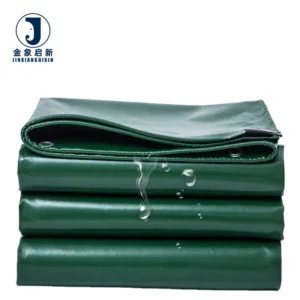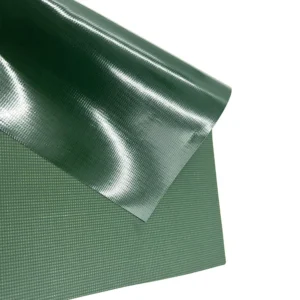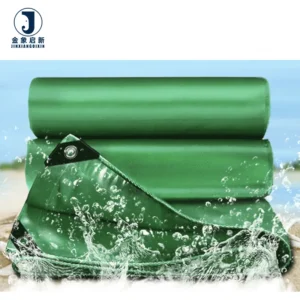
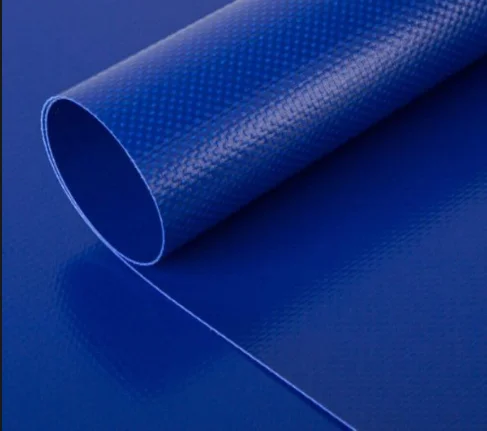
Coating Process Mastery — Every roll undergoes in-process QA to verify adhesion and PVC coating weight consistency across the full fabric width.
Technical Specifications
| Parameter | Value |
|---|---|
| Product Type | PVC Knife Coated Tarpaulin Roll |
| Coating Method | Knife Coated |
| Coating Material | PVC |
| Fire Retardant | Available in flame retardant grades — confirm the grade required for your market |
| UV Treatment | Available with UV stabilisation — request test basis for your climate zone |
| Anti-Mildew | Antibacterial and mildew proof treated |
| Chemical Resistance | Oil, stain, acid and alkali resistant |
| Temperature Resistance | High temperature and cold resistant |
| Welding Compatibility | HF, Hot Air, Sewing |
| Surface Properties | Anti-oxidation, weather resistant, self-cleaning |
| Flexibility | Highly flexible, crack resistant |
| Tensile Strength | Engineered for high tensile performance — request test data per ISO 1421 |
| Tear Strength | Engineered for high tear performance — request test data per ISO 1421 |
| Peel Resistance | High peel adhesion between coating and base fabric |
| Certification | ISO, CE certified production |
Application Suitability
| Application | Exposure & Requirement |
|---|---|
| Tensile and membrane structures | Permanent UV exposure, wind load tension, architectural fire safety codes, long-term colour stability |
| Truck and transport covers | Road abrasion, constant flexing at tie-down points, fuel and oil contact, weather cycling |
| Portable storage structures | Wind uplift forces, snow load, ground moisture, seasonal temperature swings |
| Airport hangars | Strict fire classification requirements, large unsupported spans, aviation fuel exposure |
| Shade systems and awnings | Daily UV radiation, thermal expansion and contraction, frequent retraction cycles |
| Stadium architectural roofs | High tensile demand, public assembly fire codes, drainage design integration |
| Industrial tarpaulin | Chemical splash, mechanical abrasion, heavy equipment contact |
Why Base Fabric Denier Matters More Than Quoted GSM Alone
A heavier coating does not automatically make the PVC knife coated tarpaulin roll stronger — the base fabric construction carries the structural load.
Technical buyers often receive quotations listing only total GSM, with no breakdown between base fabric denier and PVC coating weight. This obscures the real source of tensile and tear performance. [NEED_CITE: relationship between base fabric denier and tensile strength in coated fabrics per ISO 1421] Two rolls quoted at the same total weight can behave entirely differently under load if one relies on thick coating while the other is built on a high-density polyester scrim. Without seeing the full specification, fabricators cannot predict how the material will perform at the weld line or under sustained tension.
Knife Coating Process and Adhesion Control
The knife coating method applies liquid PVC directly onto the moving base fabric under controlled blade gap and tension. This produces a uniform coating thickness and drives the PVC into the weave structure, creating mechanical interlock between coating and yarn. For fabricators working with HF or hot air welding, consistent coating weight across the roll width means predictable seam parameters — no adjustment needed mid-production when a new roll is loaded.
Treatment Grades and Documentation Requirements
The PVC knife coated tarpaulin roll is available with fire retardant, UV stabilisation, and anti-mildew treatments applied during or after coating. The critical distinction is whether these treatments are backed by test reports or merely stated on the quotation. When specifying material for airport hangars or public assembly structures, the fire classification must match your local code — M2, B1, or NFPA 701 each test the material differently. Request the specific test report before committing to a production run. [NEED_CITE: fire classification testing methods M2 B1 and NFPA 701 for coated textile membranes]
Reading the Specification Sheet Correctly
Total GSM tells you how much material is in each square metre, but it does not reveal where that weight sits. A high-denier base fabric with moderate coating weight will generally outperform a low-denier fabric with heavy coating in tear resistance, because the yarns themselves resist tear propagation. Peel resistance — how strongly the PVC bonds to the base fabric — is largely determined by the knife coating process parameters and the primer layer. For membrane structures under constant tension, peel failure at a welded seam can compromise the entire installation. Surface finish, whether the material presents a self-cleaning top layer, affects how dirt accumulates and how readily the fabric can be cleaned in the field without damaging the coating.
What Happens When Specifications Are Not Verified Before Production
Colour variation between rolls in a single shipment becomes visible only after the fabric is installed side by side on a structure or truck fleet. Welded seams failing before the fabric body does typically points to inconsistent coating weight at the seam zone or welding parameters set for a different PVC formulation. [NEED_CITE: common weld failure causes in PVC coated polyester fabrics] When fire retardant treatment is specified but the delivered material lacks a matching test certificate, the structure may fail inspection — requiring full replacement at significant cost and project delay.
Why Fabricators Source This Material Here
Deep process control over knife coating parameters ensures PVC adhesion and coating weight remain consistent from the first metre to the last on every roll. Three full production lines and 36 sets of professional equipment support bulk roll orders with reliable delivery scheduling. A dedicated 10-person R&D team handles custom width, treatment specification, and sample development within days rather than weeks. Every production stage carries in-process QA, with 100% inspection recorded before any roll is packed for dispatch. Material specification sheets ship with every order, giving you documented GSM, base fabric details, and treatment data for incoming verification.
Documentation & Verification
- Material specification sheet stating exact GSM, base fabric denier, and PVC coating weight per roll
- Test reports for UV stabilisation and flame retardant grades supplied where applicable
- Pre-shipment inspection record with roll-by-roll weight and visual verification
- ISO and CE certificates covering the coated fabric production scope
- Certificate of origin and customs documentation package for export clearance
Fabrication, Handling & Storage
- HF welding parameters must be tuned to the specific PVC coating weight of this knife coated roll for consistent seam strength
- Hot air welding speed and temperature should be validated on a test piece from each new roll before production runs
- Sewn seams on this knife coated PVC tarpaulin require UV-resistant thread matched to the fabric weight class
- Store rolls upright on pallets in dry conditions to prevent edge crushing and permanent creasing of the coated surface
- Avoid dragging the PVC coated surface across abrasive ground during unrolling at the installation site
Before You Request a Quote
Provide your application type, the environmental exposure conditions, and any fire classification your local building code or site specification demands. Specify whether you need roll stock in standard widths or custom cut sizes, and indicate your expected annual volume so we can align production scheduling. If colour consistency across multiple rolls is critical for your installation, flag this at the inquiry stage so batch matching is planned into the production run.
Frequently Asked Questions
Q: How do I verify the GSM and coating weight when the rolls arrive?
A: Every shipment includes a material specification sheet stating the exact GSM, base fabric denier, and PVC coating weight for your batch. You can cross-check by cutting a measured sample from the roll end and weighing it on a calibrated scale. Discrepancies should be reported before any fabrication begins.
Q: What fire retardant grades are available and how do they map to regional standards?
A: The material is available in flame retardant grades suited to different market requirements including M2, B1, and NFPA 701 classifications. Each standard uses a different test method and pass criteria. Specify your local code at inquiry stage so the correct treatment is applied and a matching test report is provided with the shipment.
Q: How is colour and coating consistency maintained across multiple rolls in one order?
A: In-process QA monitors coating weight and colour at defined intervals during production. All rolls in a single order are produced from the same PVC compound batch and base fabric lot. Pre-shipment inspection includes roll-by-roll visual comparison before packing, and the inspection record is included in the dispatch documentation.
Q: Which welding method should I choose for my application?
A: HF welding suits high-speed production of truck covers and tensioned panels. Hot air welding works for on-site repairs and curved seams on membrane structures. Sewing with sealed stitch lines is used where mechanical fastening is required. All three methods are compatible with this knife coated PVC tarpaulin — seam strength testing can be arranged before dispatch.
Q: What information do you need to develop a sample for my project?
A: Provide your target GSM range, required fire classification or UV treatment grade, roll width, and colour reference. Sample rolls are developed within days through the in-house R&D team. Once you approve the sample, production parameters are locked to match the approved specification exactly.