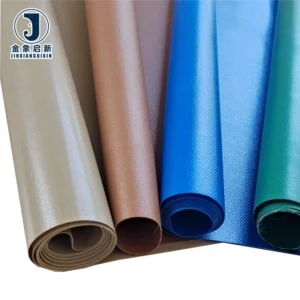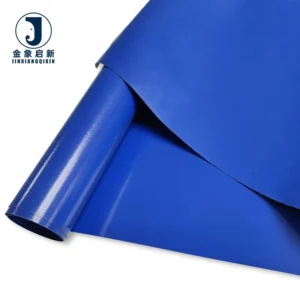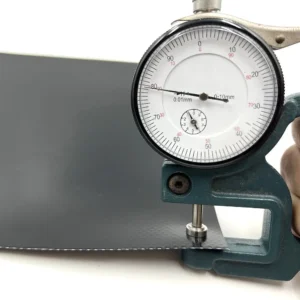
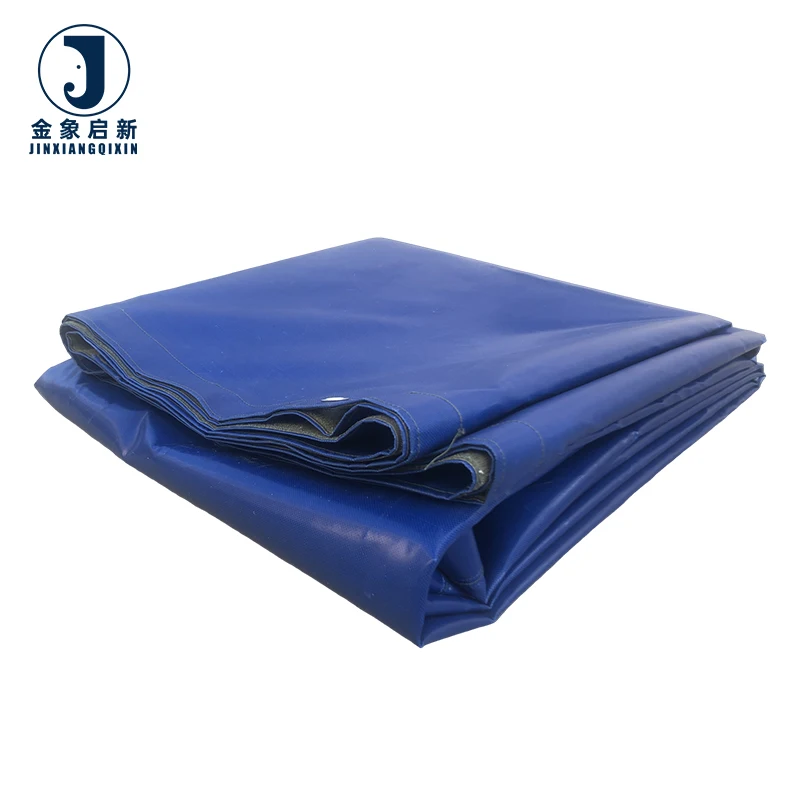
Deep Coating Process Control — Nearly 30 years focused on PVC coated fabric, with verified GSM consistency across production runs so the roll arriving at your warehouse matches the weight specified on your purchase order.
Technical Specifications
| Parameter | Value |
|---|---|
| Product Type | PVC Coated Tarpaulin Roll |
| Specification | 500gsm PVC Coated Tarpaulin Roll 1000D laminated |
| Weight | 500gsm |
| Base Fabric Denier | 1000D |
| Coating Method | Laminated |
| Coating Material | PVC |
| Waterproof Rating | Anti-permeable ≥20 KPa |
| Flame Retardant Grade | ≤10 seconds (grade not stated — confirm the grade required for your market) |
| Low-Temperature Flexibility | -30°C without fracture |
| Anti-Mildew | Stated (test basis not stated — request report for your target climate) |
| Anti-Corrosion | Acid, alkali, and brine resistance |
| Seaming Method | High-frequency heat combined |
| Water Absorption | Negligible |
| Color Options | Grey (custom colours available per order) |
| Certification | ISO, CE |
Application Suitability
| Application | Exposure & Requirement |
|---|---|
| Tent and large camping tarp fabrication | Roll goods cut and welded into multi-panel structures — requires consistent coating thickness for reliable high-frequency welds across long seam runs |
| Truck and transport cover production | Fitted covers subjected to road vibration, abrasion at flex points, and weather exposure — seaming integrity at load-bearing junctions is critical |
| Awning and carport structure fabric | Roll stock for manufacturers needing colour and coating consistency across production batches — visible colour shifts between panels compromise finished product quality |
| Outdoor general-purpose heavy-duty tarp | Contact with moisture, soil chemistry, and UV exposure — waterproof rating and anti-corrosion treatment govern service life in field conditions |
Why a Quoted 500gsm PVC Coated Tarpaulin Roll Can Arrive Under-Weight
Coating weight deviation is a process control problem, not a specification problem — what matters is whether the supplier inspects every roll before it leaves the factory.
Technical buyers who purchase PVC coated fabric by the roll often receive material that measures lighter than the GSM stated on the quotation. The gap between a quoted 500gsm and a delivered weight of 460 or 470gsm is not always intentional — it can stem from inconsistent lamination pressure, variation in base fabric tension during coating, or simply the absence of a weight check at the dispatch stage [NEED_CITE: coating weight variation causes and measurement methods for PVC laminated fabrics]. When fabricators cut and weld this material into finished covers, the lighter weight translates directly into lower tensile and tear values than the project engineer calculated. This page treats the 500gsm PVC laminated tarpaulin roll as a technical specification, not a marketing claim, and pairs it with pre-shipment GSM verification so that fabrication decisions are based on the roll you actually receive.
Base Fabric Construction and Structural Backbone
The 1000D base fabric forms the load-bearing skeleton of this PVC coated tarpaulin. Denier selection governs how the material resists tear propagation once a puncture or cut initiates — a 1000D yarn provides a substantially heavier yarn structure than lighter deniers, meaning more fibre must be broken before a tear extends across the fabric surface. For fabricators producing truck covers or tensioned awning panels, this denier level supports the mechanical stress at tie-down points and welded seams where concentrated forces occur. The weave pattern works together with denier to distribute load across warp and weft, and the lamination process encapsulates this structure within the PVC coating.
Laminated PVC Coating and Adhesion Behaviour
Laminated PVC construction differs fundamentally from knife-coated alternatives in how the coating bonds to the base fabric. In lamination, pre-formed PVC films are bonded to the textile substrate under heat and pressure, creating a uniform coating thickness that is consistent from edge to edge across the roll width. This process produces a PVC coated tarpaulin with predictable flex behaviour and reliable high-frequency welding performance — the coating melts at a consistent temperature because its thickness does not vary. Knife-coated fabric, by contrast, can show coating thickness variation that leads to uneven weld penetration. For manufacturers running long production runs of welded panels, the laminated 500gsm PVC laminated tarpaulin roll delivers the coating uniformity that high-frequency welding equipment requires [NEED_CITE: laminated versus knife-coated PVC adhesion strength and seaming behaviour].
Specifying What the Numbers Actually Mean
The 500gsm weight represents the total fabric mass — base fabric plus coating combined — and this figure alone does not define performance. A roll that achieves 500gsm through heavy coating on a light base fabric will behave very differently from one that reaches the same weight through a heavy 1000D base with a thinner laminate layer. The second construction delivers higher tear strength because the base yarn carries the structural load, while the first relies on coating thickness that can crack under flex stress. The anti-permeable rating of ≥20 KPa indicates the hydrostatic head the coating can withstand before water penetration, which is relevant for applications involving standing water or driven rain. Low-temperature flexibility to -30°C defines the boundary below which the PVC coating transitions from flexible to brittle — critical for fabricators producing covers destined for cold-climate deployment where the material must be unfolded and handled in sub-zero conditions without micro-fracturing the coating surface. The high-frequency heat seaming method creates welded joints where the PVC layers fuse together, and the quality of this fusion depends directly on coating uniformity and the welding parameters applied.
When Specification Shortcuts Lead to Fabrication Failures
A roll that arrives 40gsm lighter than quoted will weld differently — the reduced coating thickness changes the melt behaviour under high-frequency equipment, and weld operators may not adjust their settings in time. Seam failures in the field often trace back to this mismatch, where the welded joint parts before the fabric itself reaches its breaking point [NEED_CITE: seam failure modes in PVC coated tarpaulin at flex and load points]. Flame retardant claims without a stated grade create a different risk: the material may pass one test standard but fail the specific standard required by the building authority or mining regulator in the buyer’s market. Colour inconsistency between rolls in a single order becomes visible only when panels are installed side by side on site, forcing fabricators to sort and match rolls manually or reject the affected batches entirely.
Material Transparency and Production Control
Coating weight consistency across a 500gsm PVC laminated tarpaulin roll order depends on in-process quality checks at every production stage — from base fabric tension control during lamination through to the final roll winding. A 10-person R&D team supports custom specification development, material selection, and sample production so that fabricators can test welding parameters and coating behaviour before committing to a full container order. Three production lines with 36 sets of professional equipment provide the capacity to fulfil bulk roll orders with predictable scheduling. Dedicated QA and QC inspection covers every roll before dispatch, with GSM verification recorded against the quoted weight so that the documentation matches the physical product. Samples are developed within days for custom colour, width, or treatment requirements, giving buyers the material in hand before making a purchasing decision.
Documentation & Verification
- Material specification sheet stating GSM, base fabric denier, coating method, and colour reference per roll batch
- Test report for flame retardant grades where applicable, with stated standards matching your target market requirements
- Pre-shipment inspection record confirming roll-by-roll GSM verification against the quoted 500gsm weight
- Roll packing list with batch identification for colour and coating consistency traceability across the shipment
- ISO and CE certificates supporting the material documentation package
Fabrication, Handling & Storage
- Set high-frequency welding temperature and dwell time based on the laminated PVC coating thickness — test on a sample offcut before running full panel welds
- Store rolls upright on their cores to prevent flat-spot creasing that transfers visible lines into finished welded panels
- Allow cold-stored rolls to reach ambient temperature before unrolling to avoid cracking the PVC coating at low-temperature flexibility limits
- Use cutting layouts that minimise cross-grain seams on 1000D base fabric, aligning primary stress lines with the warp direction
- Clean fabricated surfaces with non-solvent cleaners to preserve the anti-corrosion and anti-mildew treatment on the PVC coating
What to Include in Your Material Enquiry
Specify the end-use application and the environmental conditions the fabricated product will face — including temperature range, chemical exposure, and any fire safety regulations that apply in your target market. Confirm whether you require roll stock in standard widths or custom widths to optimise your cutting layout and reduce weld seams. Indicate your annual volume and whether you need sample rolls to validate welding parameters and coating behaviour on your production equipment before placing a bulk order.
Frequently Asked Questions
Q: How is the 500gsm weight verified before the PVC coated tarpaulin roll ships?
A: Every roll is weighed during pre-shipment inspection and the GSM is recorded against the quoted specification. The inspection record accompanies the shipment documentation so you can verify that the physical material matches the weight stated on your purchase order. This process applies to every roll, not just sample cuts from the production run.
Q: What does the flame retardant claim actually mean without a stated grade?
A: The material is formulated to self-extinguish within 10 seconds under test conditions, but the specific test standard and grade classification depend on your target market. Request the applicable test report — such as DIN 4102, NFPA 701, or your local building code standard — to confirm that the flame retardant performance meets the regulatory requirement for your application and jurisdiction.
Q: How does laminated construction compare to knife-coated PVC for welding performance?
A: Laminated PVC produces a uniform coating thickness across the full roll width, which means high-frequency welding equipment encounters consistent material properties at every weld point. Knife-coated fabric can show thickness variation that requires weld operators to adjust settings mid-run. For long seam runs in tent or truck cover fabrication, laminated construction reduces weld variability.
Q: What high-frequency welding parameters should I use for this 500gsm laminated grade?
A: Start with manufacturer-recommended settings for laminated PVC in the 500gsm range and run test welds on sample offcuts. Adjust power and dwell time until the weld achieves full fusion without coating burn-through. Record the validated settings and apply them to production runs to maintain consistent seam strength across fabricated panels.
Q: Can I get a sample roll to test before committing to a full order?
A: Sample rolls are developed within days for custom requirements including colour, width, and treatment specifications. Use the sample to validate welding parameters, check coating adhesion at seam points, and confirm colour consistency before authorising bulk production. This step protects your fabrication schedule from material-related rework.