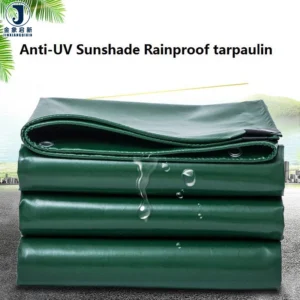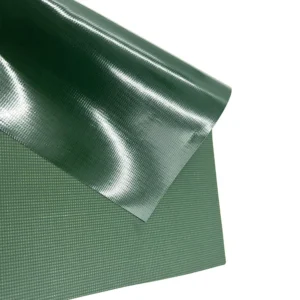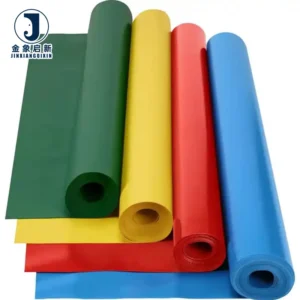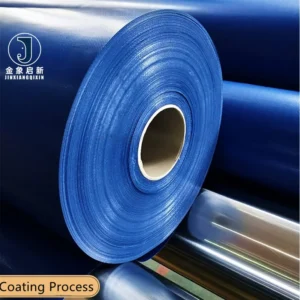
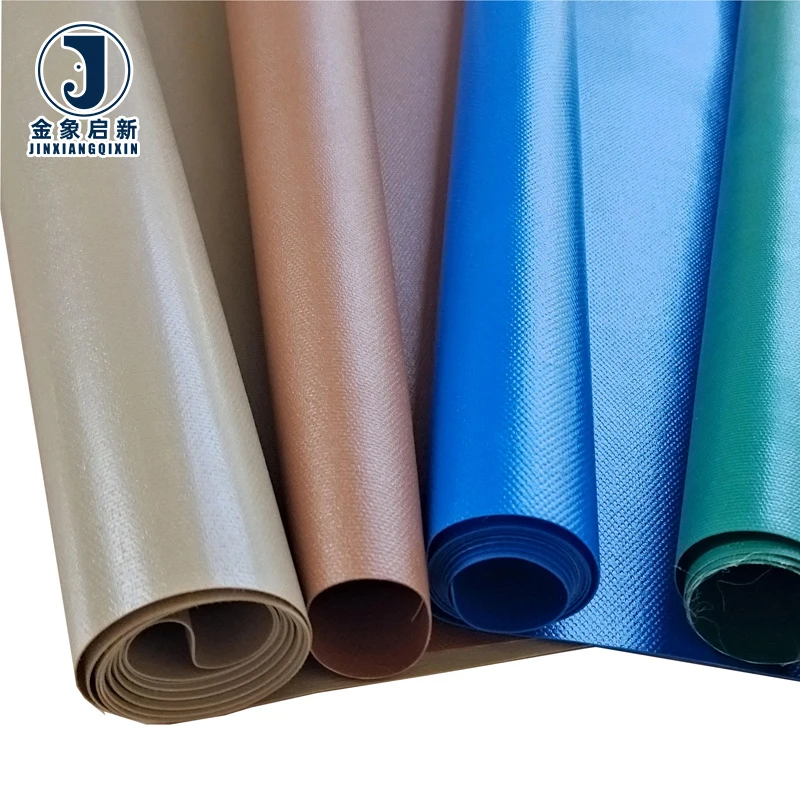
Coating adhesion control — verified through high-frequency heat bonding process ensuring seam integrity at flex points under load stress for this 500gsm laminated PVC roll stock.
Technical Specifications
| Parameter | Value |
|---|---|
| Product Type | PVC Coated Tarpaulin Roll |
| Weight | 500gsm |
| Base Fabric Denier | 1000D |
| Coating Material | PVC |
| Coating Method | Laminated |
| Waterproof Rating | Anti-permeable ≥20KPa |
| Flame Retardant Grade | ≤10 seconds (test standard not stated — confirm M2 / B1 / NFPA 701 / DIN 4102 for your market) |
| Low-Temperature Flexibility | No fracture at -30°C |
| Corrosion Resistance | Acid, alkali and brine resistant |
| Anti-Mildew | Stated (test basis not stated) |
| Heat Seaming | High-frequency heat combined, water tight |
| Color Options | Grey (blackout and black available) |
Application Suitability
| Application | Exposure & Requirement |
|---|---|
| Truck and trailer cover | Constant flexing at load points, road debris abrasion, weather exposure, seam integrity under tension |
| Tent and awning fabrication | Roll stock cutting and welding, colour consistency across panels, structural wind load resistance |
| Boat and carport cover | Salt-air corrosion, prolonged water contact, UV exposure requiring treatment confirmation |
| Roof and outdoor protective cover | Water pooling resistance, temperature cycling, puncture from falling debris |
| Shipping and cargo cover | Marine humidity, stacking compression, tie-down point stress |
Why a Flame Retardant Claim Without a Standard Is a Procurement Risk
PVC coated tarpaulin 500gsm 1000D laminated fabric listed as flame retardant ≤10 seconds carries no cited test standard — verify the grade your market requires before approving bulk.
A flame retardant figure without a reference standard leaves buyers unable to confirm compliance with local building codes, mining safety regulations or transport specifications. Different markets mandate different classifications — DIN 4102 B1 in parts of Europe, NFPA 701 in North America, M2 in France — and a generic burn-time number does not map directly to any of them. When a site inspector or safety auditor asks for documentation, a test report tied to a recognised standard is what closes the file. [NEED_CITE: flame retardant classification standards for coated technical textiles]
Without batch-specific test reports, there is no assurance that the roll arriving at your workshop meets the same burn performance as the sample approved weeks earlier. This gap matters most for enclosed structures and transport applications where fire classification is contractual.
Laminated Construction and What It Means for Seam Performance
Laminated PVC construction bonds the coating to the 1000D base fabric under heat and pressure, creating a unified sheet where the coating follows the weave texture. For fabricators working with PVC coated tarpaulin 500gsm 1000D laminated fabric, this construction responds predictably to high-frequency heat seaming — the coating softens and fuses at the weld line, producing a seam that is water tight and resistant to cracking under repeated flex.
This makes laminated rolls a practical choice for truck cover panels and awning sections where welded seams carry structural load. The bond between coating and base fabric determines how well the weld holds when the material flexes under wind or cargo movement.
Coating Weight and Base Fabric Interaction
The relationship between 500gsm total weight and 1000D denier base fabric defines how this material behaves during fabrication and in service. A heavier denier base with proportionate coating weight delivers tear resistance that matters when cut edges are joined and stressed. [NEED_CITE: relationship between base fabric denier and tear propagation in coated textiles]
For roll stock buyers ordering multiple rolls per project, this consistent ratio between base fabric and coating across production batches means welding parameters set on the first roll transfer to subsequent rolls without recalibration — reducing setup waste and maintaining seam quality across the full order.
Reading the Specification Sheet Beyond GSM
The 500gsm figure alone tells you the total weight per square metre but not how that weight is distributed between base fabric and PVC coating. A 1000D base at this weight class indicates a mid-range coating thickness that balances flexibility with waterproof performance at ≥20KPa. For fabricators, this means the material folds and handles without excessive stiffness while maintaining sufficient coating mass to protect the base yarns from moisture ingress.
The anti-permeable rating of ≥20KPa confirms waterproof performance under hydrostatic pressure relevant to truck covers and outdoor structures. Low-temperature flexibility to -30°C indicates the PVC formulation remains pliable in cold-climate deployment, reducing the risk of brittle fracture during winter handling and installation. Acid, alkali and brine corrosion resistance extends suitability to marine and industrial environments where chemical exposure would degrade untreated fabrics. [NEED_CITE: ISO 1421 tensile and tear test methods for PVC coated fabrics]
What Happens When Colour Varies Between Rolls in One Order
Batch colour inconsistency becomes visible only after installation, when adjacent panels cut from different rolls sit side by side on a truck body or awning frame. For grey or blackout PVC coated tarpaulin 500gsm 1000D laminated fabric ordered in volume, this means a finished project that looks patchwork despite correct fabrication.
The cost is not just the material — it includes the labour to remove, re-cut and reinstall, plus the reputational damage when the end client sees the variation. Roll-to-roll colour consistency must be verified before the material leaves the factory, not after it arrives on the workshop floor. [NEED_CITE: colour consistency control in batch production of coated fabrics]
Production Control That Reduces Fabrication Surprises
Three full production lines with 36 sets of equipment support consistent output across this PVC coated tarpaulin 500gsm 1000D laminated fabric range, with coating weight monitored at each stage. The 10-person R&D team handles sample development for custom width and colour requirements within days, letting you verify weld parameters and colour match before committing to bulk.
Dedicated QA and QC at every production stage means roll-by-roll GSM verification happens before packing, not after the buyer raises a claim. Pre-shipment inspection covers surface defects, coating adhesion and dimensional accuracy across the full order. This process discipline applies whether the order is five rolls or five containers.
Documentation & Verification
- Material specification sheet stating exact GSM, 1000D base fabric denier and laminated coating method per roll batch
- Flame retardant test report matched to production batch — confirm required standard for your market
- Pre-shipment inspection record with roll-by-roll weight verification against stated 500gsm
- Colour consistency check across all rolls in a single order before dispatch
- ISO and CE certificates with certificate of origin for customs clearance
- Packing list showing roll dimensions, net weight and batch reference per item
Fabrication, Handling & Storage
- High-frequency heat seaming at parameters suited to 500gsm laminated PVC — test weld on sample before production run
- Store rolls upright on pallets to prevent flat-spot deformation of the 1000D base fabric under self-weight
- Allow cold-stored rolls to reach workshop temperature before unrolling to avoid coating stress fracture near -30°C threshold
- Cut with sharp blade to prevent fraying the 1000D yarns at panel edges before welding
- Clean with mild detergent only — solvents may compromise PVC coating adhesion on laminated construction
- Plan panel layout to minimise cross-width welds where seam visibility matters on finished truck or awning surfaces
What to Include in Your Specification Enquiry
Provide the application type and exposure conditions so the correct treatment grade can be confirmed — whether the 500gsm laminated PVC roll stock is destined for truck covers, awnings or marine applications. Specify required roll width and annual volume to check stock availability and batch scheduling.
If your market mandates a specific flame retardant classification, state the standard upfront so a compliant test report can be prepared with the production batch. Indicate whether you require roll stock only or finished cut-to-size panels with welded hems and eyelets.
Frequently Asked Questions
Q: How is the 500gsm weight verified on arrival — what GSM testing protocol is used?
A: Each roll undergoes weight sampling against the stated 500gsm during pre-shipment inspection. Standard practice involves cutting measured samples from the roll, weighing them, and comparing against the specification sheet. Acceptable tolerance follows industry norms for coated fabrics. Request the inspection record with your shipment to confirm actual GSM received versus quoted.
Q: The flame retardant claim states ≤10 seconds — which standard does this correspond to?
A: The ≤10 second figure is a burn time measurement, but the source data does not cite a specific international standard such as DIN 4102, NFPA 701, M2 or B1. Before ordering, confirm which fire classification your local regulations or project specification require. A certified test report to the appropriate standard can be requested for the production batch.
Q: What is the difference between laminated and knife coated construction for this 1000D fabric?
A: Laminated construction bonds PVC film to the 1000D base fabric under heat, producing a lighter coating that follows the weave texture. Knife coating applies liquid PVC directly, creating a thicker, smoother surface with higher adhesion strength. For 500gsm weight class, laminated construction offers cost-effective performance suited to truck covers and awning applications with standard weld requirements.
Q: How is batch colour consistency maintained when ordering multiple rolls?
A: Production batches are mixed and matched during the coating stage to minimise variation. Pre-shipment inspection includes visual comparison of rolls within a single order under standardised lighting. For projects where adjacent panels must match precisely, request a colour consistency verification report or approve a production sample cut from the actual batch before full dispatch.
Q: What anti-UV test basis supports outdoor service life claims for this 500gsm PVC grade?
A: The current product data does not cite a specific anti-UV test standard or exposure duration for this 500gsm laminated grade. If UV resistance is contractually required for your application, request confirmation of available anti-UV treatment options and the corresponding test basis. This should be verified before bulk production to ensure compliance with your project specification.