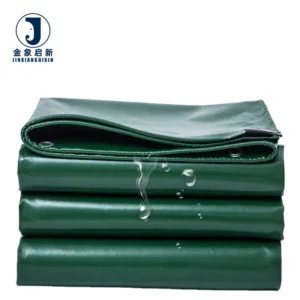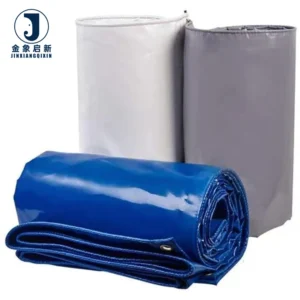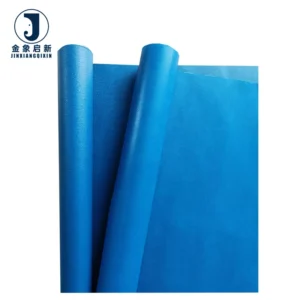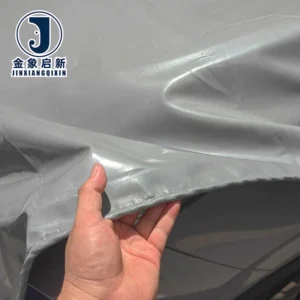
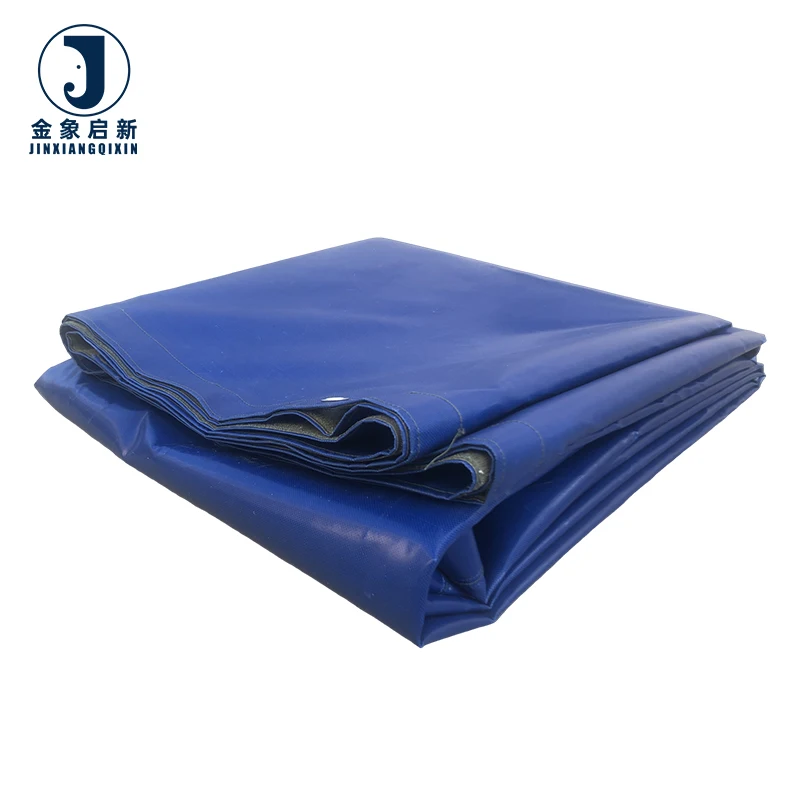
Coating adhesion control — Every roll of 500gsm PVC laminated tarpaulin undergoes in-process peel testing to confirm bond strength between the PVC layer and base fabric before it leaves the line.
Technical Specifications
| Parameter | Value |
|---|---|
| Product Type | PVC Coated Tarpaulin |
| Weight | 500gsm |
| Coating Method | Laminated |
| Coating Material | PVC |
| Waterproof Rating | Anti-permeable ≥20KPa |
| Flame Retardant Grade | ≤10 seconds (grade not stated — confirm compliance with your market’s fire code) |
| Low-Temperature Flexibility | Not fractured at -30°C |
| Corrosion Resistance | Acid, alkali and brine resistant |
| Seaming Method | High-frequency heat combined |
| Water Absorption | Almost none; dries quickly after rain |
| Mildew Resistance | Mildew proofing properties claimed (test basis not stated) |
| Standards | ISO, CE |
Application Suitability
| Application | Exposure & Requirement |
|---|---|
| Tent and awning fabric | Prolonged UV exposure, rain ingress, repeated folding and tension at frame joints |
| Truck and trailer covers | Road abrasion, wind flap fatigue, high-speed moisture impact, tie-down stress at edges |
| Boat covers | Saltwater spray, mildew-prone humid storage, UV reflection off water surfaces |
| Carport and roof covers | Standing water load, thermal expansion and contraction, hail impact |
| Outdoor camping tarp | Ground contact moisture, branch puncture risk, frequent pack-and-unpack abrasion |
Why a Quoted 500gsm Does Not Guarantee What You Think It Does
GSM tells you weight per square metre, not how that weight is distributed between coating and base fabric.
A material buyer specifying PVC coated tarpaulin 500gsm for a truck cover project may receive a roll that weighs correctly on the scale yet carries a heavier coating over a lighter base fabric. The result is a material that passes the weight check but tears more easily at the seam under load flex. Coating weight and base fabric construction together determine how the fabric behaves during fabrication and in service [NEED_CITE: relationship between coating weight distribution and tensile performance in laminated fabrics per ISO 1421]. Without a material specification sheet breaking down these components, the quoted GSM becomes a single number disconnected from the actual performance you need.
How Lamination Builds a Consistent Material Profile
The laminated construction of this PVC coated tarpaulin 500gsm bonds the PVC layer to the base fabric under controlled heat and pressure. This method produces a uniform coating thickness across the full width of the roll, which matters when fabricators run heat welding along long seam lines. Inconsistent coating thickness causes some weld zones to overheat while others fail to fuse, creating weak points that open under tension. Laminated construction reduces this variability compared to processes where coating is applied by gravity or spread mechanically.
What the Waterproof and Temperature Ratings Mean in Practice
The anti-permeable rating of ≥20KPa indicates the material resists water penetration under sustained hydrostatic pressure, which translates to reliable moisture barrier performance during heavy rain or when water pools on a flat roof cover. The low-temperature flexibility down to -30°C without fracture means the PVC coating remains pliable in cold-climate installations where brittle cracking would compromise waterproofing. For fabricators in northern markets, this specification eliminates the risk of material cracking during winter handling and deployment [NEED_CITE: low-temperature flexibility test methods for PVC coated fabrics].
Decoding the Specification for Fabrication Decisions
The 500gsm weight sits in a range where the material remains manageable for cut-and-sew operations while providing enough body to hold shape in tensioned structures like awnings and tent canopies. The laminated PVC coating responds predictably to high-frequency heat welding, producing water-tight joins that maintain integrity through repeated flexing — critical for truck side curtains that open and close daily. The acid, alkali and brine corrosion resistance means the material can be deployed in marine and agricultural environments without coating degradation from chemical exposure. Mildew proofing properties are claimed for the material; fabricators working in tropical or humid climates should request the test basis before specifying this grade for long-term damp exposure.
The Hidden Cost of Specifying on Price Alone
When a distributor selects a 500gsm PVC coated tarpaulin roll based on the lowest quote, the savings often disappear during fabrication. Welded seams that fail before the fabric does indicate poor coating adhesion or inconsistent coating weight — problems invisible in a sample swatch but obvious when a finished truck cover splits at the flex point under load [NEED_CITE: weld seam failure rates in laminated tarpaulin materials under cyclic loading]. Batch colour variation across rolls in the same shipment forces fabricators to segregate panels or face visible mismatches on installed covers. Flame retardant grades claimed without supporting test reports mean the finished product may fail site inspection, requiring costly replacement after installation.
Why Fabricators Source This Grade Here
Deep process control over coating weight and adhesion means every roll of 500gsm PVC laminated tarpaulin ships with verified material properties rather than quoted values that drift during production. The 10-person R&D team handles custom width, pattern printing and sample development, delivering material-level solutions within days for fabricators who need to test weld parameters before committing to bulk. Dedicated QA/QC runs at every production stage with 100% roll inspection before dispatch, catching colour variation and coating defects before they reach the fabrication floor. Three full production lines and 36 sets of equipment support volume orders with reliable scheduling for fabricators managing tight delivery windows. The ISO and CE certified quality system provides documentation traceability that technical buyers in regulated markets require for compliance submissions.
Documentation & Verification
- Material specification sheet stating 500gsm GSM, base fabric construction and laminated coating method per roll
- Flame retardant test report provided where applicable — confirm your market’s fire code before ordering
- Pre-shipment inspection record confirming coating weight and colour consistency across the full batch
- Roll packing list with batch codes enabling traceability back to production date and line
- ISO and CE certificates available for compliance documentation in regulated procurement
Fabrication, Handling & Storage
- Set high-frequency welder parameters for laminated PVC at 500gsm — test peel strength on scrap before running production seams
- Allow rolls to acclimate to workshop temperature before unrolling to prevent coating stress cracks in cold weather
- Store rolls upright on pallets in shaded areas to prevent compression flattening of the laminated surface
- Use solvent-free cleaners on the PVC surface to avoid dissolving the coating layer during maintenance
- Plan panel cutting layouts to place welded seams away from high-flex zones on truck covers and awning frames
What We Need to Quote This Material Accurately
Provide the end-use application and the environmental exposure conditions the finished product will face, including any fire code or flame retardant grade required by your market. Confirm the roll widths and annual volume you need, along with any colour matching or custom printing requirements. If you require sample rolls for weld parameter testing before bulk commitment, specify the sample quantity and target delivery window.
Frequently Asked Questions
Q: How do you verify the 500gsm GSM matches the quoted specification on arrival?
A: Every roll ships with a material specification sheet stating the confirmed GSM, base fabric construction and coating method. Our pre-shipment inspection record documents weight verification per roll, and you can cross-check against the specification sheet on receipt. Random sample testing during production ensures roll-to-roll consistency across your order.
Q: Can I get a test report for flame retardant performance?
A: Flame retardant test reports are provided where the grade has been specified and tested. Because fire code requirements vary by market, we need to know your target compliance standard before production. Confirm the grade required for your application so we can supply the correct documentation.
Q: How does laminated construction affect weld behaviour compared to other coating methods?
A: Laminated PVC produces a uniform coating thickness that responds consistently to high-frequency heat welding. This reduces the risk of under-fused or over-fused weld zones along long seam lines, which is particularly important for truck covers and tensioned awning panels where seam integrity under flex is critical.
Q: How do you ensure colour consistency when I order multiple rolls in the same shade?
A: Colour matching is controlled at the coating stage with in-process checks against the approved reference. Our 100% pre-shipment inspection includes visual comparison across rolls in the same batch. If your project requires panels from different rolls installed side by side, specify this so we can apply tighter tolerance controls during production.
Q: What documentation ships with each container of tarpaulin rolls?
A: Each shipment includes a material specification sheet per product, roll packing list with batch traceability, pre-shipment inspection record, and certificate of origin. ISO and CE certificates accompany the documentation package, and flame retardant test reports are included where applicable to your specified grade.