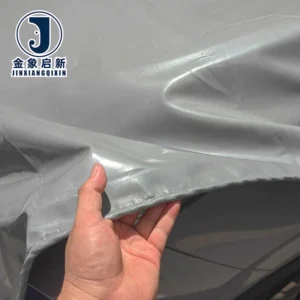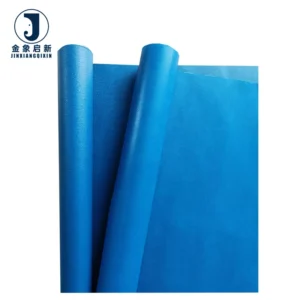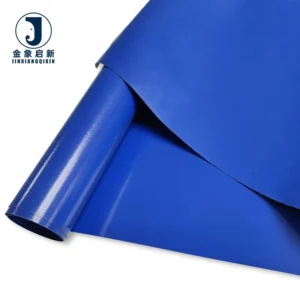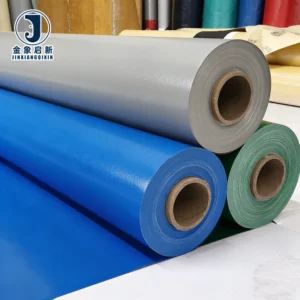
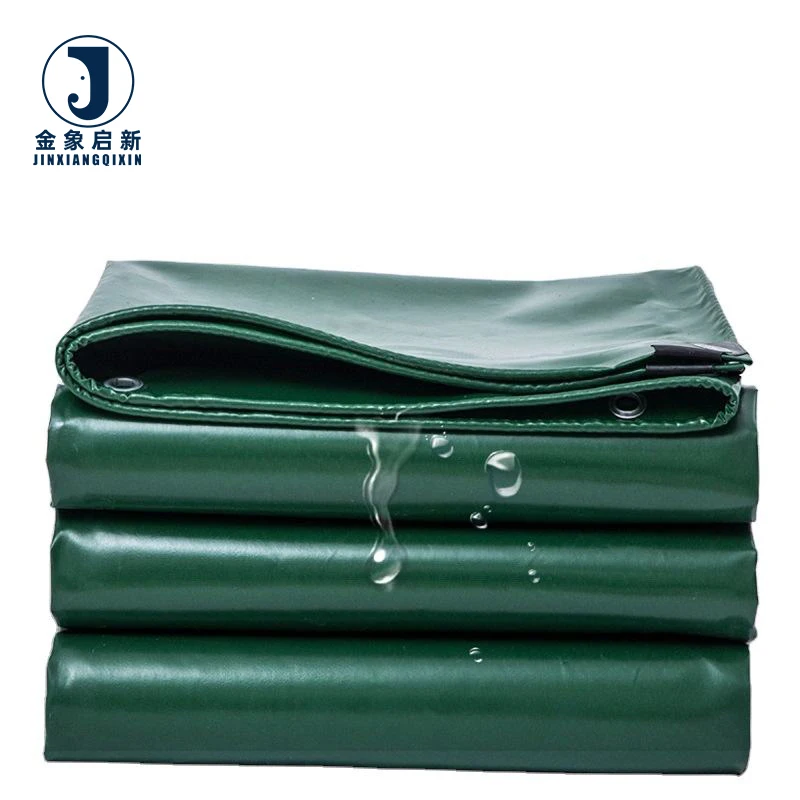
Coating weight control — Every roll of 620gsm PVC coated tarpaulin is backed by a material specification sheet stating exact base fabric denier, coating weight and GSM for independent verification upon receipt.
Technical Specifications
| Parameter | Value |
|---|---|
| Product Type | PVC Tarpaulin Roll |
| Specification | 620gsm |
| Base Fabric | High-strength polyester mesh fabric |
| Coating Technology | Laminated technology / Hot-melt Coating technology |
| Surface Finish | Glossy Surface or Matt Surface |
| Weight | 620gsm |
| Color Options | Blue / Red / Yellow / Light blue / Grey (Customized) |
| Roll Size | 2m width × 75m length / 2.1m width × 50m length |
| Waterproofing | Double-sided 100% Waterproof |
| Cold Crack Resistance | Yes |
| Anti-Mildew | Yes |
| Anti-Static | Treatment applied (grade not stated) |
| Flame Retardant | Available in flame retardant grades — confirm the grade required for your market |
| UV Resistance | Sunproof treatment applied (test basis not stated in source) |
| Standards | ISO, CE |
Application Suitability
| Application | Exposure & Requirement |
|---|---|
| Fish pond and reservoir liner | Permanent water contact, soil chemistry, puncture risk from substrate, UV exposure at waterline |
| Truck awning and side curtain | Constant flexing at load points, road abrasion, UV and weather exposure, weld seam stress |
| Construction and scaffolding enclosure | Wind load, UV degradation, scaffolding tube abrasion, cold weather handling |
| Temporary industrial equipment cover | Outdoor storage exposure, dust and moisture ingress, repeated folding and unfolding |
| Tent and marquee roof panel | Pooling water load, UV at peak, seam tension from frame geometry |
Why the Quoted GSM Rarely Matches What Arrives on the Dock
The only way to confirm PVC Coated Tarpaulin 620gsm material specification compliance is to demand a roll-level specification sheet before dispatch, not a generic product brochure.
Technical buyers routinely face a familiar pattern: the quotation states a precise gram weight, yet the rolls that arrive test lighter when sampled. This discrepancy rarely stems from a single production error. More often, it reflects a supply chain where base fabric denier and coating weight are treated as adjustable variables to absorb material cost increases. When the PVC Coated Tarpaulin 620gsm material specification is referenced only as a product code rather than a verified physical property, the buyer absorbs the performance gap at the fabrication stage — typically discovering it only after weld seams fail under tension or the fabric tears at stress points during installation [NEED_CITE: common causes of GSM variance in coated polyester tarpaulins].
How Base Fabric and Coating Weight Interact in 620gsm Construction
The structural integrity of this PVC coated tarpaulin depends on the relationship between the high-strength polyester mesh and the PVC coating applied through hot-melt or laminated technology. GSM alone is a composite number that does not distinguish whether weight comes from a heavier base yarn or a thicker coating layer. A 620gsm fabric with a dense base mesh and moderate coating delivers different tensile behaviour than one with a lighter mesh compensated by excess PVC. For fabricators cutting and welding this material, the coating method directly influences peel strength at the weld line — hot-melt coating typically produces superior adhesion at seams compared to basic laminated grades, which affects how the PVC Coated Tarpaulin 620gsm material specification translates into finished product durability.
Coating Technology and Weld Seam Integrity
Fabricators processing this PVC coated tarpaulin into truck side curtains, pond liners or construction enclosures rely on consistent thermal welding performance across the full roll length. Hot-melt coating technology embeds the PVC into the polyester mesh structure, creating a bond that resists delamination at the flex points where welded seams experience the greatest mechanical stress. Laminated technology offers a different cost-performance balance, suitable for applications where seam loading is lower. The choice between glossy and matt surface finish also affects downstream processing: glossy surfaces generally accept heat-transfer printing more readily, while matt surfaces reduce glare in construction and scaffolding applications. When specifying PVC Coated Tarpaulin 620gsm material specification for a project, confirming which coating technology and surface finish applies to your order ensures the fabrication parameters match the material behaviour [NEED_CITE: thermal welding parameters for PVC coated polyester fabrics].
Reading the Specification Sheet Beyond Gram Weight
A meaningful PVC Coated Tarpaulin 620gsm material specification goes well beyond a single weight figure. The base fabric denier and weave density determine how tears propagate once initiated — a tighter mesh with higher-tenacity yarns restricts tear spread, which matters for applications like truck awnings where a small puncture from road debris can compromise an entire panel. Coating weight, expressed separately from total GSM, indicates how much PVC is protecting each surface, directly affecting waterproofing longevity and UV resistance capacity. Cold crack resistance and anti-mildew treatment extend the material’s usable temperature range and storage life in humid environments. The thickness-to-GSM correlation in this product range — from 0.32mm at lighter grades through to 0.65mm at heavier weights — provides a reference for estimating coating thickness, though actual values depend on the specific base fabric construction chosen for the 620gsm grade. Surface finish selection between glossy and matt influences both practical cleaning behaviour and aesthetic performance in visible installations.
What Happens When Specification Verification Is Skipped
Skipping roll-level verification creates downstream costs that compound through the fabrication and installation process. Rolls arriving below the quoted GSM may pass visual inspection but fail at the weld press, where insufficient coating thickness produces weak seams that delaminate under flexing. Colour inconsistency across rolls in the same order becomes visible only after panels are installed side by side on a truck curtain or building enclosure, forcing selective replacement and project delays. For pond liner applications, an unverified coating weight may mean inadequate puncture resistance against the substrate, leading to leaks that are expensive to locate and repair after the pond is filled. These failures share a common root: the material was ordered by product code rather than by verified PVC Coated Tarpaulin 620gsm material specification with supporting documentation [NEED_CITE: cost of rework in tarpaulin fabrication from specification variance].
What This Production Line Delivers to Technical Buyers
The 620gsm grade is produced on dedicated coating lines with in-process QA at every stage, from base fabric inspection through coating application to final roll winding. A 10-person R&D team supports specification matching — confirming whether hot-melt or laminated coating suits your welding setup, adjusting colour formulations to match project Pantone references, and developing samples within days for custom width or surface finish requirements. Each roll undergoes 100% pre-shipment inspection with GSM measured against the stated specification before packing. Material specification sheets document base fabric denier, coating method, and weight for every roll shipped, giving receiving teams the data needed for independent verification. ISO and CE standards govern the production process, and certificates of origin accompany export dispatches to support customs clearance in destination markets.
Documentation & Verification
- Material specification sheet stating exact GSM, base fabric denier and coating method per roll
- UV and flame retardant test reports supplied for treated grades upon specification confirmation
- Pre-shipment inspection record with measured GSM and colour check against reference standard
- ISO and CE certificates included with export dispatch documentation package
- Certificate of origin provided for customs clearance at destination port
Fabrication, Handling & Storage
- Hot-melt coated 620gsm rolls respond well to high-frequency welding; confirm temperature and dwell time with sample tests before full production runs
- Glossy surface finish accepts solvent-based ink printing more readily than matt; test adhesion on sample before committing to print runs
- Store 620gsm rolls upright on pallets in shaded, ventilated areas to prevent flat-spot deformation and surface marking from stacking pressure
- Cold crack resistant formulation allows winter handling, but unroll in temperatures above freezing to avoid stress creasing at fold lines
- Cut 2m or 2.1m wide rolls with allowance for weld seam overlap; nest patterns to minimise offcuts on large panel layouts
What We Need to Quote Accurately
To provide a specification-accurate quotation for PVC coated tarpaulin rolls, share the application environment and exposure conditions so we can confirm the appropriate coating technology and treatment options. Specify required roll width and length, colour reference or custom Pantone, and whether glossy or matt finish is needed for your fabrication process. If your end market requires flame retardant or anti-static certification, state the target standard so we can confirm grade availability and testing documentation before production. Indicate whether you require roll stock only or finished cut sizes with eyelets and reinforced hems.
Frequently Asked Questions
Q: How do I verify that the 620gsm rolls I receive actually match the quoted weight?
A: Every roll ships with a material specification sheet stating the base fabric denier, coating method and measured GSM. Upon receipt, cut a measured sample from the roll edge and weigh it on a calibrated scale to cross-reference against the documentation. Any variance beyond acceptable tolerance should be reported with photographs and sample weight before fabrication begins.
Q: Can you provide UV and flame retardant test reports for this material?
A: UV and flame retardant treatments are available in specific grades, each with corresponding test reports. Confirm the target standard required by your market — for example, a specific fire classification for building enclosures or a UV exposure duration for outdoor structures — and we will supply the matching test documentation with your shipment.
Q: What is the difference in welding performance between hot-melt and laminated coating?
A: Hot-melt coating penetrates the polyester mesh structure, producing higher peel strength at welded seams and better resistance to delamination under repeated flexing. Laminated coating bonds PVC layers to the mesh surface and is suited to applications with lower seam stress. Request sample rolls of both to test welding parameters on your equipment before placing a full order.
Q: How do you control colour consistency across multiple rolls in a single order?
A: Colour matching is performed against your reference standard during the coating formulation stage, and each roll is checked against the approved colour card during pre-shipment inspection. For large orders spanning multiple production batches, we recommend confirming the acceptable Delta E tolerance in advance and requesting batch samples before full production commences.
Q: What information do I need to provide for a custom width or printed branding order?
A: Provide the required roll width and length, Pantone or RAL colour reference, and artwork files for any printed branding. Specify the surface finish preference, as glossy surfaces generally deliver sharper print reproduction. Custom widths and printed orders carry minimum quantities that vary by specification, which we confirm during the quotation stage along with lead time and sample development schedule.