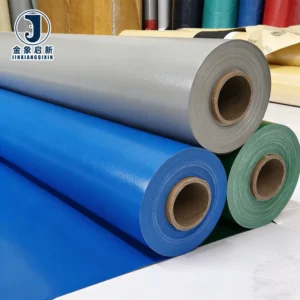
Verified Coating Weight Control — Three full production lines with in-process QA measure actual GSM at every coating stage, ensuring the roll you receive matches the specification sheet.
Technical Specifications
| Parameter | Value |
|---|---|
| Specification | 510Gsm PVC Coated Fabric Vinyl Tarp Factory PVC Tarpaulin Truck Material 15OZ Outdoor Waterproof PVC Tarpaulin Roll for Truck |
| Product Type | PVC Coated Tarpaulin Roll |
| Coating Material | PVC & Polyester Base Fabric |
| Base Fabric Denier Options | 500D×500D / 500D×840D / 500D×1000D / 1000D×1000D / 1000D×1300D / 1300D×1300D / 1000D×2000D |
| Weight | 510Gsm (15OZ) |
| Total Thickness Range | 0.29mm / 0.32mm / 0.38mm / 0.44mm / 0.46mm / 0.55mm / 0.65mm (varies by grade) |
| Mesh Count | 30×19 / 20×20 / 30×15 (varies by grade) |
| Tensile Strength Warp | 1650N – 3900N (varies by grade, test standard not stated) |
| Tensile Strength Weft | 1600N – 3500N (varies by grade, test standard not stated) |
| Density Parameter | 1.15–2.00 g/cm³ |
| Brittle Temperature | ≤ -50 to -60 °C |
| Softening Temperature | ≥ 80 °C |
| Melting Point | 212 °C |
| Key Features | Water resistant, flame retardant grades available (confirm grade required for your market), anti-UV treatment available (test basis not stated) |
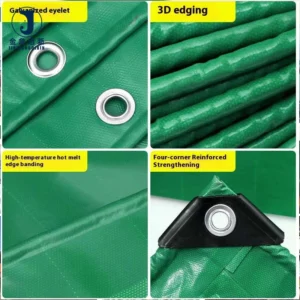
| Edge Finishing | High temperature heat sealed seamless edge wrapping |
| Eyelet Options | 3cm enlarged aluminum alloy buttonhole |
| Corner Reinforcement | Reinforced corners on all sides |
| Rope | 5mm thick rope without splicing |
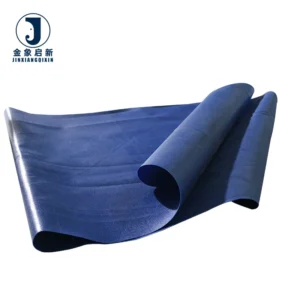
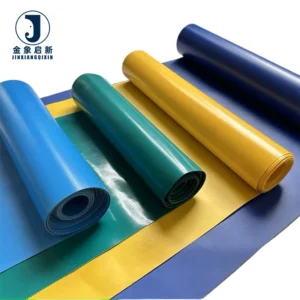
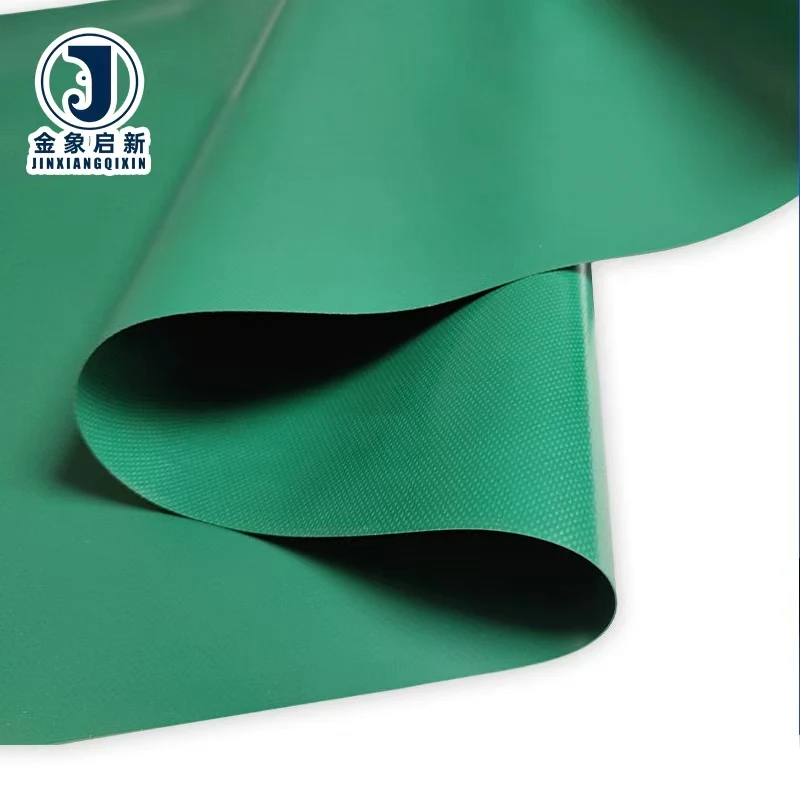
| Surface | Double-sided PVC coating, smooth leather-like texture |
Application Suitability
| Application | Exposure & Requirement |
|---|---|
| Truck and trailer side curtains | Constant flexing at tie-down points, road abrasion, highway UV exposure, rain and wind load during transit |
| Machine and equipment covers | Outdoor weathering, dust ingress prevention, repeated removal and refitting, contact with lubricants |
| Container roof covers | Prolonged UV exposure, standing water pooling, thermal cycling from direct sun to cold night air |
| Awning and tent structures | Tensile load from wind uplift, weld integrity at frame attachment points, surface cleanability |
| Construction site shelters | Abrasion from scaffold contact, puncture risk from sharp materials, flame retardant compliance for site safety |
Why PVC Coated Tarpaulin Base Fabric Denier Determines More Than Just Tensile Strength
The denier and mesh count of the polyester base fabric govern how the PVC coated tarpaulin base fabric denier coating weight GSM tensile strength relationship actually performs under load — not the GSM number alone.
Technical buyers often specify a target GSM and assume strength follows. In practice, a 510Gsm fabric woven with 500D×500D yarn at 30×19 mesh behaves very differently from one built on 1000D×1000D at 20×20, even when coating weight is identical. The heavier yarn carries tensile load through the weave structure, while the coating primarily provides waterproofing and surface protection. When a truck side curtain flexes thousands of times over a route, the yarn-to-yarn friction inside the weave — not the PVC layer — determines whether micro-tears propagate [NEED_CITE: tensile and tear test methods for coated fabrics per ISO 1421]. Selecting the correct denier-to-mesh ratio is where specification decisions either succeed or fail in the field.
How Coating Method and Weight Interact with the Polyester Weave
Double-sided PVC coating on a polyester base fabric requires the coating to penetrate and encapsulate the yarn intersections. The coating weight, expressed as part of the total GSM, must fill the gaps in the weave without sitting entirely on the surface. When coating penetration is thorough, the resulting PVC coated tarpaulin roll shows consistent thickness across the full width and strong adhesion at the yarn crossover points. Poor penetration leaves air pockets that become failure origins during heat-sealed fabrication or under sustained tensile stress. The total thickness range from 0.29mm to 0.65mm across available grades reflects different coating build-up levels matched to the base fabric mesh count.
Mesh Count Selection and Its Effect on Fabrication Behaviour
The available mesh densities — 30×19, 20×20, and 30×15 — each create a different balance between dimensional stability and coating adhesion area. A tighter mesh like 30×19 provides more yarn intersections per unit area, distributing point loads across a broader network. A more open mesh like 20×20 allows deeper coating penetration and stronger mechanical lock between the PVC layer and the base fabric. For fabricators welding seams on truck covers or awning panels, the mesh count influences the heat transfer rate through the material and the amount of molten PVC available at the joint line [NEED_CITE: heat-sealed seam performance on woven coated textiles]. Getting this parameter right prevents the common failure where seams open before the fabric body shows any sign of wear.
Reading the Specification Sheet: Denier, GSM and Strength Together
Base fabric denier defines the individual yarn mass per unit length, while GSM captures the total weight of base fabric plus coating combined. A 1000D×2000D construction produces higher warp and weft tensile values — up to 3900N warp and 3500N weft in the available range — because the heavier yarns carry more load before reaching yield. However, a lighter 500D×500D grade at the same 510Gsm total weight carries proportionally more coating, which improves waterproofing and surface durability at the expense of structural strength. The brittle temperature rating of ≤ -50 to -60 °C and softening threshold of ≥ 80 °C remain consistent across the range, governed by the PVC compound formulation rather than the weave. Buyers evaluating PVC coated tarpaulin base fabric denier coating weight GSM tensile strength must therefore treat these three variables as a system, not independent checkboxes.
What Happens When the Denier-to-Application Match Is Wrong
Specifying a lighter denier base fabric for an application that demands repeated flexing and high tie-down tension leads to a specific failure pattern. The coating remains intact while the internal yarn structure develops fatigue fractures at the weave crossover points. The damage is invisible from the surface until the fabric tears under a routine load. Conversely, over-specifying denier for a static cover application adds cost and weight without functional benefit, and the stiffer fabric may not drape correctly over the equipment it protects. Colour variation between rolls from different production runs compounds the problem when replacement panels are fitted alongside original material [NEED_CITE: batch colour consistency standards for coated industrial fabrics]. These specification errors are preventable when the denier, mesh count and coating weight are evaluated together against the actual installation conditions.
Why Fabricators Source PVC Coated Tarpaulin Roll Stock Here
Process control over coating weight and adhesion starts at the coating head, where GSM is monitored across the full width of each roll before it reaches the winding station. Three full production lines and 36 sets of professional equipment allow this PVC coated tarpaulin roll to be produced in volume while maintaining roll-to-roll consistency. The 10-person R&D team develops sample rolls against buyer specifications, enabling denier, mesh count and treatment grade to be confirmed before bulk production runs. Every roll undergoes 100% inspection before shipment, with measured weight recorded against the specification sheet. This approach eliminates the gap between the quoted GSM and the material that arrives at the fabrication workshop.
Documentation & Verification
- Material specification sheet stating exact GSM, base fabric denier, coating type and colour reference for each roll
- UV and flame retardant test reports provided where applicable, with the test standard clearly identified
- Pre-shipment inspection record documenting measured weight and visual check results per roll
- Roll packing list enabling batch traceability from production run to delivery
- Certificate of origin and ISO / CE documentation included with each dispatch
Fabrication, Handling & Storage
- Heat-seal temperature and dwell time must be calibrated to the 510Gsm total weight and double-sided coating thickness to achieve full weld penetration
- Reinforced corners and 3cm aluminum alloy buttonholes distribute tie-down point loads across the base fabric weave structure
- Store rolls upright on a flat surface to prevent edge compression marks that affect coating adhesion at the selvedge
- Allow cold-stored rolls to reach ambient temperature before unrolling to avoid cracking the PVC coating below its softening threshold
- Use only PVC-compatible cleaners on the smooth leather-like surface to prevent chemical attack on the plasticiser system
- Plan panel cutting layouts to align weld seams with the warp direction, maximising tensile continuity across joints
Request a Specification Recommendation
To match the correct base fabric denier and mesh count to your application, provide the intended use, the environmental exposure conditions, and any flame retardant or UV compliance requirements your market demands. Specify whether you need roll stock in standard widths or a custom width to minimise offcuts during fabrication. If colour matching or surface printing is part of the project, send a reference sample or RAL code so a sample roll can be developed for your approval before bulk production.
Frequently Asked Questions
Q: How is the GSM of each roll verified before shipment?
A: Each roll is weighed and measured during 100% pre-shipment inspection. The actual weight per square metre is recorded on the inspection record and compared against the stated 510Gsm specification. Rolls that fall outside the tolerance range are held for review. Buyers receive the inspection documentation with their shipment for independent verification on arrival.
Q: Which flame retardant grades are available and what test standards apply?
A: Flame retardant treatment is available in multiple grades, but the applicable standard depends on your regional compliance requirements. Confirm whether your project specifies DIN 4102, NFPA 701, or another classification. The relevant test report is supplied once the required grade is confirmed, ensuring the PVC coated tarpaulin roll meets the fire safety standard your site or market demands.
Q: What test basis supports the anti-UV treatment claim?
A: Anti-UV treatment is incorporated into the PVC compound during coating, but the specific test method and exposure rating depend on the grade selected. Request the UV test report for the grade under consideration, which documents the test standard used. This allows you to evaluate outdoor service suitability against your local climate conditions and expected installation lifespan.
Q: How does base fabric denier affect heat-sealed weld performance?
A: The denier and mesh count determine how much PVC coating is available at the yarn intersections to form the weld joint. A tighter mesh provides more coating material per unit area at the seam, supporting stronger heat-sealed bonds. The heat-seal temperature and dwell time must be adjusted to the specific base fabric construction to ensure full penetration without scorching the polyester yarns.
Q: What documentation ships with a roll order?
A: Each shipment includes a material specification sheet with GSM, denier and coating data, a pre-shipment inspection record, a roll packing list for batch traceability, and ISO or CE certificates. Where flame retardant or anti-UV grades are specified, the corresponding test reports are included. Certificate of origin is provided for customs clearance in the destination market.