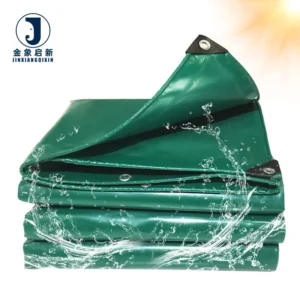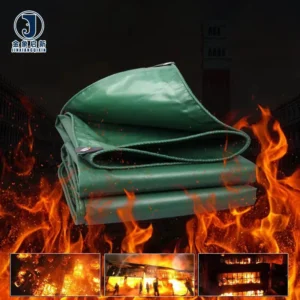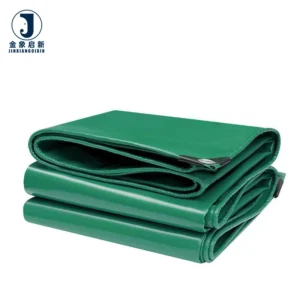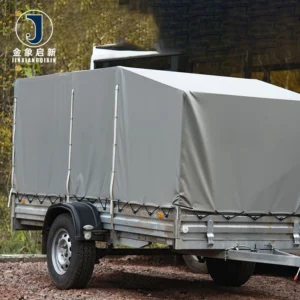
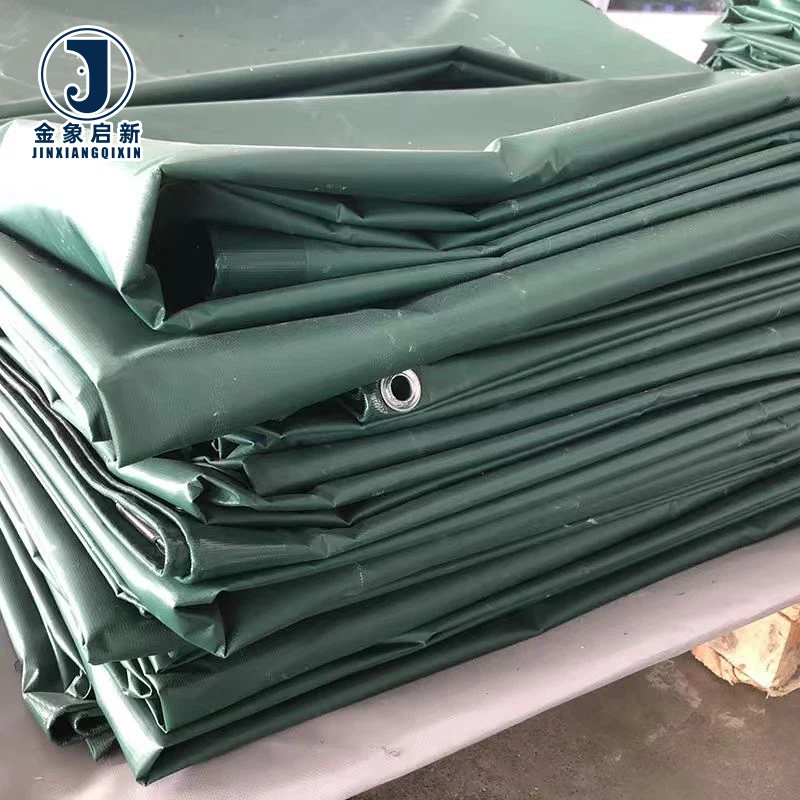
Coating Process Control — Every roll of 600gsm PVC coated tarpaulin is verified against material specification sheets for weight, base fabric denier and coating adhesion before leaving the production line.
Technical Specifications
| Parameter | Value |
|---|---|
| Product Type | PVC Coated Tarpaulin |
| Material | 100% high toughness polyester yarn with PVC coating |
| Weight | 600 g/m² |
| Base Fabric Denier | 1000D |
| Coating Method | Lamination technology and hot melt coating technology |
| Thickness | 0.70–1.0 mm |
| Tensile Strength | Meridian 2000–2500 / Latitude 1800–2200 N/5cm (test standard not stated) |
| Tear Strength | Excellent welding tear strength (test standard not stated) |
| Flame Retardant | Flame retardant (grade not stated — confirm grade required for your market) |
| UV Treatment | Anti-UV (test basis not stated — confirm standard for your region) |
| Anti-Static | Anti-static treatment (standard not stated — verify compliance requirement) |
| Anti-Mildew | Mold proof |
| Cold Resistance | Cold resistant cracking |
| Waterproof | Fully waterproof coated construction |
| Width | 6 m |
| Length | 15 m |
| Color Options | Blue, Blue/Orange, Green, Grey, Black, Clear, Grey/Green, Orange, or custom color |
| Standards | ISO, CE |
Application Suitability
| Application | Exposure & Requirement |
|---|---|
| Heavy truck covers | Constant UV exposure, road debris abrasion, wind loading at highway speeds, repeated tie-down tension cycles |
| Side curtain fabric for trailers | Continuous flexing at load points, weld seam integrity under dynamic stress, colour consistency across panels |
| Construction site equipment covers | Prolonged outdoor weathering, dust and chemical splash exposure, puncture risk from sharp edges |
| Farm machinery protection | Moisture ingress prevention, mold resistance during storage, UV degradation over multiple seasons |
| Logistics fleet cargo protection | Waterproof barrier under sustained rainfall, abrasion from shifting loads, cold crack resistance in winter transport |
Why Stated GSM Weight Rarely Matches the Roll on Arrival
A quoted GSM figure means nothing if the coating weight and base fabric contribution are never independently checked. For technical buyers specifying PVC coated tarpaulin for engineered end products, the gap between the stated weight and the actual weight on the cutting table is where most supply disputes begin.
The base fabric denier, coating thickness and the adhesion between them all contribute to the final weight. When a mill cuts corners on coating mass or substitutes a lower-denier base yarn, the finished roll can arrive lighter than agreed without the buyer noticing until it is unrolled and weighed. This is not a marginal variance — it directly affects tensile performance and the behaviour of the fabric at welded seams. [NEED_CITE: ISO 1421 tensile and tear test methods for coated fabrics]
What Hot Melt Coating Means for Coating-to-Substrate Adhesion
The 600gsm PVC coated tarpaulin on this page is produced using hot melt coating technology combined with lamination. This method forces molten PVC into the weave of the 1000D polyester base yarn rather than simply sitting on the surface. The result is a mechanical bond between coating and substrate that resists delamination when the fabric is flexed, folded or welded.
For fabricators cutting and joining panels into truck side curtains or equipment enclosures, adhesion quality determines whether the coating peels away at the weld line after months of service. Hot melt penetration into the yarn structure gives the weld zone a consistent material profile, reducing the risk of seam failure at the flex points where loads concentrate stress.
Weld Behaviour and Seam Integrity Under Dynamic Load
Coated fabric is only as strong as its weakest seam. When a truck cover flexes under wind load or a side curtain stretches during transit, the welded joint experiences the same dynamic forces as the body of the fabric. If the coating-to-yarn bond is uneven, the weld can crack or peel before the surrounding material shows any sign of fatigue.
The hot melt process used here aims to deliver uniform coating penetration across the full 6 m width, which gives fabricators a more predictable welding window. Consistent material composition through the cross-section means the weld parameters — temperature, pressure, dwell time — can be set and repeated with fewer rejected seams. [NEED_CITE: DIN 53354 test methods for weld strength of coated fabrics]
Reading the Numbers: Denier, Tensile Data and What They Actually Predict
The 1000D base fabric denier defines the thickness and strength of each individual polyester yarn in the weave. Combined with the hot melt coating, the finished 600 g/m² material reports tensile strength of 2000–2500 N/5cm in the meridian direction and 1800–2200 N/5cm in the latitude direction. These values indicate how much linear force the fabric can absorb before the yarns themselves begin to break.
For a fabricator designing a truck cover that spans several metres without intermediate support, the meridian figure matters most along the length of the panel where wind uplift and tie-down tension concentrate. The latitude value governs how the fabric behaves when it wraps around a load or is pulled sideways during installation. Neither figure should be considered in isolation — the tear propagation resistance of the weave determines whether a small puncture stays localised or runs across the panel.
Thickness of 0.70–1.0 mm reflects the combined contribution of the base fabric and coating layers. A thicker coating adds abrasion resistance on the exposed surface but also increases stiffness, which affects how easily the fabric can be folded or routed through welding equipment.
The Hidden Cost of Specifying on Weight Alone
When a buyer selects coated fabric based only on a GSM number, the specification leaves too many variables open. A roll that meets the weight target but uses a thinner coating on a heavier base yarn will behave very differently at the weld line compared to one with balanced coating-to-fabric distribution. The first roll may pass a quick weight check but still produce weak welds that fail during the first winter freeze.
Batch colour inconsistency across rolls in the same order is another consequence of loose specifications. If one roll is pulled from a different coating batch, the panels cut from it will show a visible shade difference once installed side by side on a trailer or equipment cover. For distributors and fleet operators, this means rework, wasted material and delayed delivery. [NEED_CITE: coating weight and colour consistency verification in batch production]
What This Production Line Brings to Your Specification
Three full production lines with dedicated hot melt coating capability allow this 600 g/m² PVC coated tarpaulin to be manufactured in volume without sacrificing coating uniformity across the roll width.
A 10-person R&D team handles material selection, custom width and colour development, and sample runs so that production parameters are locked before bulk coating begins. In-process quality checks at each stage verify coating weight, colour match and adhesion quality against the agreed specification.
Every roll undergoes inspection before dispatch, confirming that the GSM, width and treatment match the material specification sheet that accompanied the quotation. Custom widths, colours and functional treatments such as flame retardant or anti-static grades are produced on the same lines with documented process control. [NEED_CITE: ISO quality management for coated fabric production]
Documentation & Verification
- Material specification sheet stating 600 g/m², 1000D base fabric and hot melt coating method per roll
- Test reports for flame retardant and anti-UV grades referenced to the standard claimed
- Pre-shipment inspection record confirming weight, width and treatment on every roll
- Roll packing list with batch numbers for traceability across the order
- Certificate of origin and customs documentation for export shipments
Fabrication, Handling & Storage
- Set hot air weld temperature to match the 600 g/m² coating mass — test on offcuts before production runs
- Store rolls upright on end caps to prevent flat-spot creases across the 6 m width
- Allow cold-stored rolls to reach ambient temperature before unrolling to avoid coating crack damage
- Use compatible PVC-based repair patches for field repairs on the hot melt coated surface
- Plan panel cutting layouts to maximise yield from the 6 m × 15 m dimensions and reduce waste at seams
- Avoid solvent-based cleaners that can soften the PVC coating layer and reduce weld adhesion
What to Include in Your Enquiry
To specify this material accurately, provide the end-use application and the environmental exposure conditions the finished product will face — including temperature range, UV intensity and any fire safety or anti-static compliance requirements for your market.
If you need custom widths, colours or functional treatments, state the required roll dimensions and annual volume so that production scheduling and batch consistency can be planned from the outset. Confirm whether you require roll stock for your own fabrication or finished cut-to-size panels.
Frequently Asked Questions
Q: How is the 600 g/m² weight verified before shipment?
A: Each roll is sampled and weighed against the material specification sheet during pre-shipment inspection. The inspection record documents the actual weight per square metre and is included with the shipment documentation. Acceptable tolerance bands are agreed during the quotation stage based on the hot melt coating process parameters.
Q: Which flame retardant grades can be supplied and what standard applies?
A: Flame retardant treatment is available in multiple grades. The specific grade and the test standard backing it must be confirmed during specification to match your local fire safety regulations. Request the relevant test report when placing your enquiry so the correct formulation is selected before production begins.
Q: How does hot melt coating affect weld strength compared to knife coating?
A: Hot melt coating forces PVC into the weave of the 1000D base yarn, creating a mechanical bond through the cross-section. This gives the weld zone a more uniform material profile compared to surface-only coatings, which can delaminate at the joint under repeated flexing.
Q: Can custom colours be produced with consistency across multiple rolls?
A: Yes. Custom colours are developed as samples first and approved before bulk production. In-process quality checks verify colour match across all rolls in the order. Batch numbers are recorded on the packing list so that any variance can be traced and addressed before dispatch.
Q: Do you supply roll stock only or finished cut panels as well?
A: Both options are available. Roll stock in the standard 6 m width is supplied for fabricators cutting and welding in-house. Finished panels cut to specific dimensions, including truck and trailer model fitment, can be produced with hem reinforcement and welding as required.