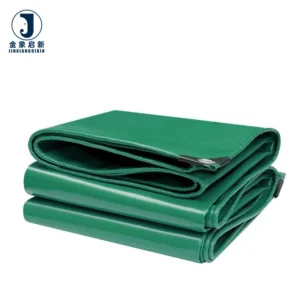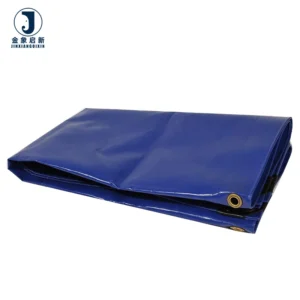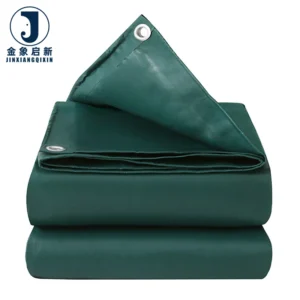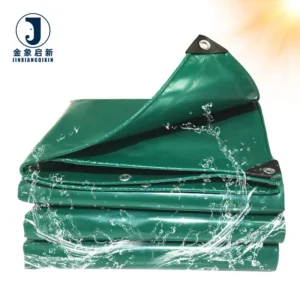
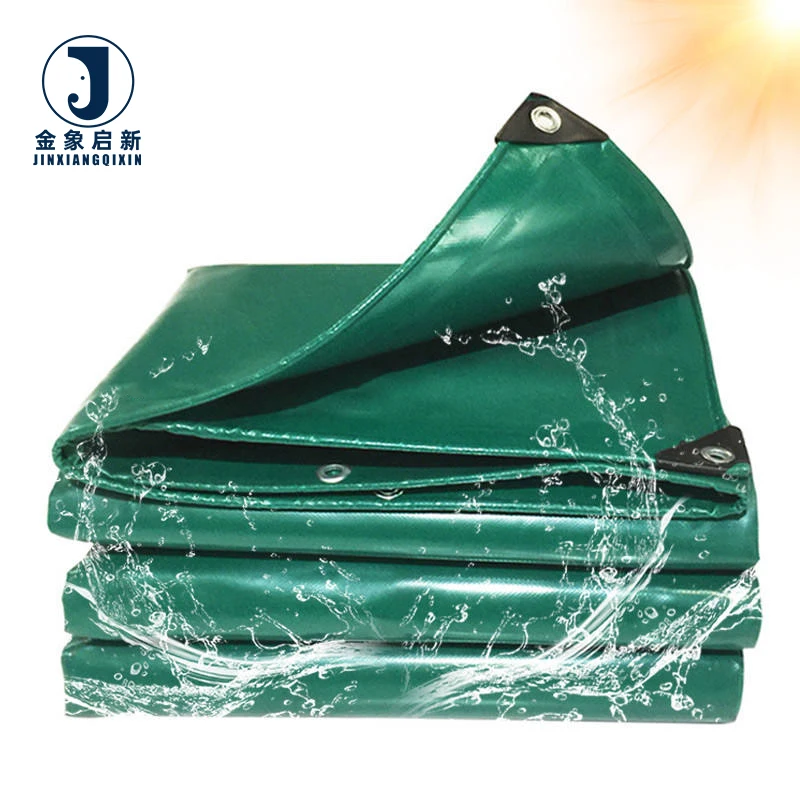
Consistent Coating Weight Control — Every roll of PVC coated fabric is verified for GSM at each production stage, ensuring the material you specify is the material delivered to your fabrication floor.
Technical Specifications
| Parameter | Value |
|---|---|
| Product Type | PVC Coated Fabric |
| Material | PVC vinyl coated woven fabric |
| Weight | At least 450 g/m² |
| Base Construction | Woven |
| Surface Treatment | PVC coating |
| Waterproof | Yes |
| Width | Customizable (confirm required width with supplier) |
| Certification | ISO, CE |
Application Suitability
| Application | Exposure & Requirement |
|---|---|
| Vehicle and transport covers | Road weather, abrasion at tie-down points, repeated flexing during loading and transit |
| Industrial equipment covers | Mechanical contact, moisture ingress, dust and chemical splash exposure on site |
| Outdoor structure protection | Continuous rain and snow contact, wind-driven moisture, UV exposure over extended periods |
| Construction site covers | Puncture risk from tools and debris, ground moisture, heavy handling during placement |
| Tent and awning fabric | Tension under frame load, repeated assembly and teardown, weather exposure at seams |
Why Coating Adhesion Matters More Than GSM on Paper
A heavier fabric that delaminates at the seam fails faster than a lighter one that holds together under load.
When buyers review quotations for PVC coated tarpaulin gsm coating technology specifications, the focus tends to land on the weight figure alone. Yet a material that meets the stated GSM but suffers poor coating adhesion will separate at heat-welded seams long before the base fabric reaches its tensile limit [NEED_CITE: tensile and tear test methods for coated fabrics per ISO 1421]. The coating must bond uniformly to the woven base across the entire roll width, and that bond quality depends on process variables that a specification sheet alone cannot communicate. We have seen rolls arrive at the correct weight but fail peel tests because the coating was applied at insufficient temperature or pressure during lamination.
How PVC Coating Weight Determines Waterproof Integrity
The PVC coating serves as the primary moisture barrier in this fabric system. A coating applied at consistent weight across the full roll width eliminates thin spots where water can penetrate under sustained rain exposure. For PVC coated fabric used in industrial and outdoor coverings, uniform coating thickness also ensures predictable behaviour during heat-welding, since the welder settings depend on knowing the exact coating mass that must reach melting temperature. Variations in coating weight between rolls force fabricators to adjust machine parameters mid-run, increasing scrap rates and seam rejection at the QC bench.
Base Fabric Weave Density and Tear Propagation Resistance
The woven base fabric provides the structural skeleton that carries tensile and tear loads. Weave density — the number of yarns per centimetre in both warp and weft directions — determines how far a puncture or cut will propagate before arresting at an intersection point. A loosely woven base may accept coating well and achieve the target GSM, but it will allow tears to run under the dynamic loads experienced by truck covers and site tarps [NEED_CITE: DIN 53354 tear resistance test for coated textiles]. Selecting the correct denier and weave density alongside the coating weight is what gives the finished PVC coated fabric its real-world durability under mechanical stress.
Reading the Specification Sheet Beyond the Weight Figure
The stated weight of at least 450 g/m² represents the combined mass of base fabric and PVC coating together, not the coating alone. A buyer evaluating PVC coated tarpaulin gsm coating technology options should request a breakdown showing base fabric weight and coating weight separately, because two materials at the same total GSM can behave very differently depending on how that weight is distributed. A heavier base with lighter coating may offer better tear resistance but reduced waterproof longevity, while a lighter base with heavier coating may weld easily but tear under load. The woven construction type, yarn denier, and weave pattern each influence how the material handles fabrication and field use, and these parameters deserve as much attention as the headline weight figure when comparing quotations.
The Hidden Cost of Unverified GSM and Coating Adhesion
When material arrives lighter than the quoted specification, the consequences compound through the fabrication process and into the field. Covers made from underweight rolls show premature wear at high-stress points, seams pull apart under loads the material should have handled, and end users file warranty claims against the fabricator rather than the mill [NEED_CITE: coating weight verification standards for industrial textiles]. Batch inconsistency between rolls in the same shipment forces fabricators to sort and match material on the shop floor, adding labour cost and delaying dispatch. A colour shift between rolls becomes visible once panels are installed side by side on a structure or vehicle, requiring costly rework or replacement to maintain professional appearance.
Why Technical Buyers Source PVC Coated Fabric Here
Process control over PVC coating weight and adhesion runs through every production stage, from base fabric inspection through final roll winding, giving fabricators confidence that each roll performs consistently on the welding table. The QA protocol includes per-roll GSM verification before dispatch, so the material specification sheet matches what arrives at the loading dock. Samples for custom width, colour, or treatment requirements are developed within days, allowing buyers to validate fabrication parameters before committing to full production runs. Three full production lines and 36 sets of professional equipment support bulk orders with reliable scheduling, reducing the lead-time uncertainty that disrupts project timelines.
Documentation & Verification
- Material specification sheet stating GSM, base fabric construction, and PVC coating type for every roll
- Pre-shipment inspection record with per-roll weight verification against the stated minimum 450 g/m²
- Test reports for UV and flame-retardant grades where applicable, available upon specification
- ISO and CE certification documentation included with each shipment for customs and compliance
- Certificate of origin and roll packing list supporting import clearance and inventory tracking
Fabrication, Handling & Storage
- Heat-weld settings must account for the PVC coating mass to achieve full seam fusion without scorching the woven base
- Store rolls upright on pallets to prevent flat-spot deformation that affects feeding through automated welding machines
- Avoid folding PVC coated fabric at sharp angles during transport, as crease marks may persist in the coating surface
- Use compatible PVC-based repair patches and adhesive for field repairs to maintain waterproof integrity at damage points
- Allow rolls to acclimatise to workshop temperature before unrolling to prevent coating stiffness and cracking in cold conditions
- Plan cut patterns to maximise material yield from the customisable roll width, reducing waste at seam allowances
What We Need to Prepare Your Quotation
To provide an accurate specification and lead time for your PVC coated fabric requirement, share the intended application and the environmental exposure conditions the material will face in service. Confirm whether you need rolls at a specific width for your fabrication line, or if finished panels cut to size are required. Let us know if your market mandates particular fire classification or UV treatment levels, and whether you would like samples produced for weld testing before placing the full order.
Frequently Asked Questions
Q: How is GSM verified before shipment and can I receive an inspection record?
A: Each roll is weighed and measured at the QC stage before packing, and the results are recorded on a pre-shipment inspection document. This record accompanies your shipment and shows the actual GSM measured per roll against the stated minimum of 450 g/m², so you can cross-check on arrival without relying on the quotation alone.
Q: What base fabric denier and weave options are available for different strength requirements?
A: The woven base fabric can be specified in different denier and weave densities depending on the tensile and tear demands of your application. Heavier denier yarns suit covers subject to mechanical puncture risk, while tighter weave patterns improve tear arrest. Request samples with your target specification to validate performance on your welding equipment.
Q: Can I get a test report for UV resistance or flame-retardant treatment?
A: UV and flame-retardant treatments are available in specific grades, and test reports can be supplied when these treatments are included in your order. Confirm the classification or standard required by your market — such as building code fire ratings — so the correct grade is applied and documented rather than a generic claim.
Q: What is the lead time and minimum order for custom width or colour?
A: Custom width and colour orders follow typical multi-week lead times depending on the volume and treatment specification. Minimum quantities apply to ensure batch consistency across the production run. Provide your required dimensions, annual volume estimate, and colour reference so we can confirm scheduling and MOQ for your project.
Q: How do you ensure colour consistency across multiple rolls in the same order?
A: Rolls within a single production run are manufactured from the same coating batch under controlled temperature and mixing conditions. The QA team checks colour reference against the approved standard before packing. If your order spans multiple runs, we flag this in advance and provide sample cuts for your visual approval before dispatch.