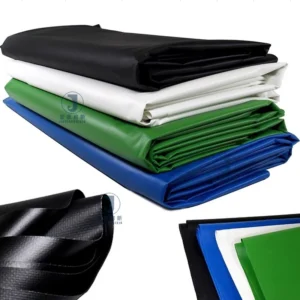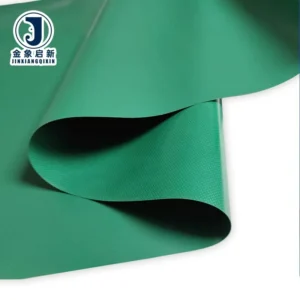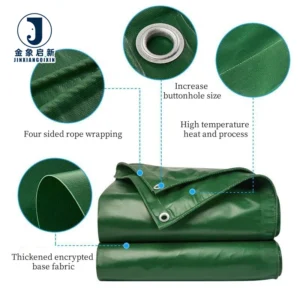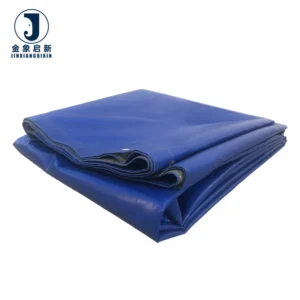
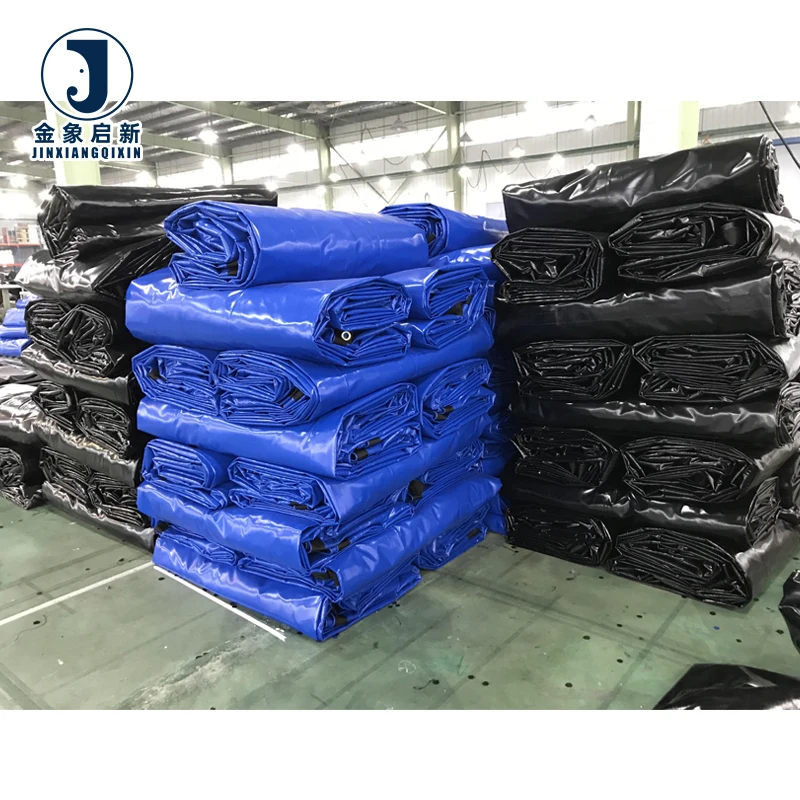
Coating Weight Control — every roll of 650 Gsm PVC coated tarpaulin is verified against the declared specification before dispatch, ensuring material consistency for tensile and membrane fabrication.
Technical Specifications
| Parameter | Value |
|---|---|
| Specification | 650 Gsm |
| Product Type | PVC Coated Tarpaulin Roll |
| Coating Material | PVC |
| Base Fabric | PVC Coated Polyester |
| Waterproof | Fully waterproof construction |
| Flame Retardant | Available in flame retardant grades — confirm the grade required for your market |
| UV Treatment | Available with anti-UV treatment — verify test basis for your application |
| Anti-Mildew | Antibacterial and mildew proof |
| Oil and Stain Resistance | Yes |
| Acid and Alkali Resistance | Yes |
| Temperature Resistance | High temperature and cold resistance |
| Anti-Oxidation | Yes |
| Surface Finish | Self-cleaning surface |
| Welding Options | HF, Hot Air, Sewing |
| Flexibility | Highly flexible, resistant to cracking |
Application Suitability
| Application | Exposure & Requirement |
|---|---|
| Tensile and stadium architectural structures | Long-term UV exposure, high structural tension, consistent coating weight for weld integrity |
| Airport hangars and portable storage | Wind load, temperature fluctuation, fire safety compliance, large unsupported spans |
| Shade systems and shadings | Direct solar exposure, thermal expansion, colour stability across installed panels |
| Tent fabrication | Repeated assembly and disassembly, flex stress at ridge and seam lines, weather resistance |
| Large format technical textiles | Roll-to-roll consistency, surface finish for printing or lamination, dimensional stability |
Why 650 Gsm PVC Coated Tarpaulin Demands More Than a Weight Claim
A stated GSM is only meaningful when the base fabric construction, coating adhesion and verified weight per roll are documented together.
Technical buyers reviewing coated fabric for tensile or architectural membrane projects often receive a quotation that declares a single GSM figure. When the roll arrives, the total weight may match, but the balance between base fabric and coating layer can vary — resulting in different tensile behaviour, weld response and long-term weathering. Without a material specification sheet that breaks down denier, weave density and coating method, the 650 gsm label becomes a number without engineering context [NEED_CITE: tensile and tear test methods for coated fabrics per ISO 1421].
Base Fabric Construction and Coating Adhesion
The performance of 650 Gsm PVC coated tarpaulin in structural applications depends on how the polyester base fabric is woven and how the PVC coating bonds to it. A tighter weave with higher denier yarns provides greater tear propagation resistance, while the coating method — knife-over-roll, dip or calender — determines peel strength and the behaviour of the fabric under high-frequency or hot air welding. Fabricators working with tensile membranes need to know these details before setting weld parameters, because a coating that is too thin or poorly adhered will delaminate at stress points long before the base fabric reaches its tensile limit.
Surface Finish and Long-Term Exposure Behaviour
Architectural membrane structures and shade systems remain installed for extended periods under direct sunlight and weather cycles. The self-cleaning surface on this PVC coated tarpaulin roll reduces particulate adhesion and simplifies maintenance on large-format installations. Anti-oxidation and weather-resistant formulation help the material retain flexibility across temperature fluctuations, while the antibacterial and mildew-proof treatment addresses biological growth in humid or coastal environments [NEED_CITE: UV degradation and service life correlation for PVC coated polyester in architectural use].
Reading the Specification Sheet Beyond GSM
GSM alone does not predict how a coated fabric will perform under tension or at the weld line. The base fabric denier and weave density determine how a tear initiates and propagates once the surface is punctured or cut. Coating weight — distinct from total GSM — governs weld pool formation during HF welding and the temperature window for hot air seaming. A 650 Gsm PVC coated tarpaulin with a heavy coating and light base will weld easily but may tear more readily than one with a lighter coating on a denser weave. Surface finish — glossy or matte — affects not only aesthetics but also how dirt accumulates, how ink adheres for printed membranes, and how the fabric responds to field cleaning. Acid and alkali resistance broadens the environments where the fabric can be installed without chemical degradation, from industrial sites to coastal locations with salt-laden air.
What Happens When Coating Weight Is Not Verified
When roll-to-roll coating weight varies across a large order, fabricators encounter inconsistent weld behaviour — some seams bond cleanly while others require parameter adjustments mid-production. On a tensile structure or airport hangar project, this inconsistency can mean rejected panels, re-fabrication costs and delayed installation. Colour variation between rolls from different production runs becomes visible once panels are installed side by side, forcing replacement of entire sections. These issues trace back to insufficient in-process quality control rather than the material specification itself [NEED_CITE: coating weight tolerance and batch consistency in coated fabric production].
Why Fabricators Source This PVC Coated Tarpaulin Here
Nearly 30 years of focused coated fabric production provide deep process control over coating weight and adhesion — critical when every roll must match the declared 650 Gsm specification. Three full production lines and 36 sets of professional equipment support the volume capacity needed for container-scale orders with reliable on-time delivery. A 10-person R&D team handles material selection, custom sizing and sample development, with samples produced within days for project-specific evaluation. Dedicated QA/QC at every production stage includes 100% pre-shipment inspection, with coating weight verification recorded before dispatch. ISO and CE certification underpins the documentation package that accompanies each shipment, meeting the compliance expectations of technical buyers across North America, Europe and Asia.
Documentation & Verification
- Material specification sheet stating 650 Gsm total weight, base fabric denier, weave and PVC coating method
- UV and flame retardant test reports supplied where applicable — confirm grade required for your target market
- Pre-shipment inspection record with per-roll coating weight verification against the declared specification
- Roll packing list with batch identification for colour and weight traceability across the full order
- Certificate of origin and customs documentation to support international shipment clearance
Fabrication, Handling & Storage
- HF welding parameters should be calibrated to the PVC coating formulation — request recommended temperature and speed settings for this 650 Gsm grade
- Hot air welding suitability confirmed; test seam peel strength before committing to full panel fabrication
- Sewn seams on this highly flexible material require UV-stable thread and reinforced stitching at high-stress points
- Store rolls horizontally on racking to prevent permanent creasing of the self-cleaning surface finish
- Allow cold-stored rolls to acclimatise before unrolling to avoid cracking in low-temperature conditions
Preparing Your Enquiry
To receive a specification-matched quotation, share your intended application and the environmental exposure conditions the fabric will face — including UV intensity, temperature range and any fire safety classification required by local building codes. Specify the roll width and linear metre quantity you need, along with colour references and whether you require the self-cleaning glossy finish or an alternative surface. If your project demands a particular flame retardant grade or third-party test standard, state this explicitly so that the correct formulation and documentation can be prepared.
Frequently Asked Questions
Q: How is the 650 Gsm weight measured and what tolerance is acceptable?
A: Total fabric weight is measured per square metre including both the polyester base fabric and the PVC coating layers. Acceptable tolerance depends on the coating method and project specification. Request the coating weight breakdown alongside total GSM to understand how weight is distributed between base and coating, which directly affects weld behaviour and tear performance.
Q: What flame retardant grades are available for architectural membrane projects?
A: Flame retardant treatment is available in multiple grades. The appropriate standard — such as M2, B1 per DIN 4102, or NFPA 701 — depends on the building code in your target market. Confirm the required grade at enquiry stage so the correct formulation is applied and the matching test report is included with your documentation package.
Q: How does UV treatment correlate to service life in tensile structures?
A: UV treatment slows degradation of the PVC coating and base fabric under solar exposure. The test basis and rating determine how the material performs over time. Request the UV test report for the specific formulation to evaluate suitability for your climate zone and expected installation duration.
Q: Which welding method works best for 650 Gsm PVC coated fabric?
A: HF, hot air and sewing are all compatible. HF welding produces strong, flexible seams suited to tensile structures. Hot air welding offers field-repair capability. The optimal method depends on seam geometry, production volume and whether the joint must flex under structural load. Request welding parameter recommendations for this specific coating formulation.
Q: How is roll-to-roll colour and coating consistency maintained across large orders?
A: Each production batch is monitored for coating weight and colour against the reference standard. Pre-shipment inspection verifies every roll before packing. For orders spanning multiple runs, batch identification on the packing list enables traceability, allowing you to confirm consistency across the entire shipment before fabrication begins.