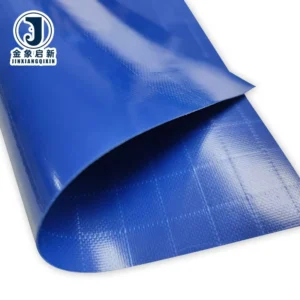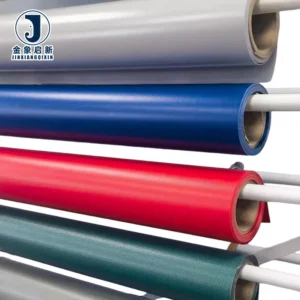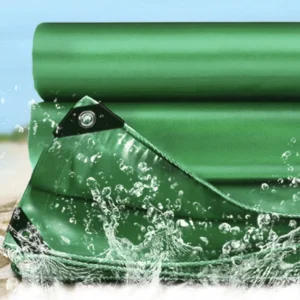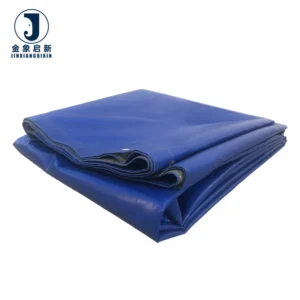
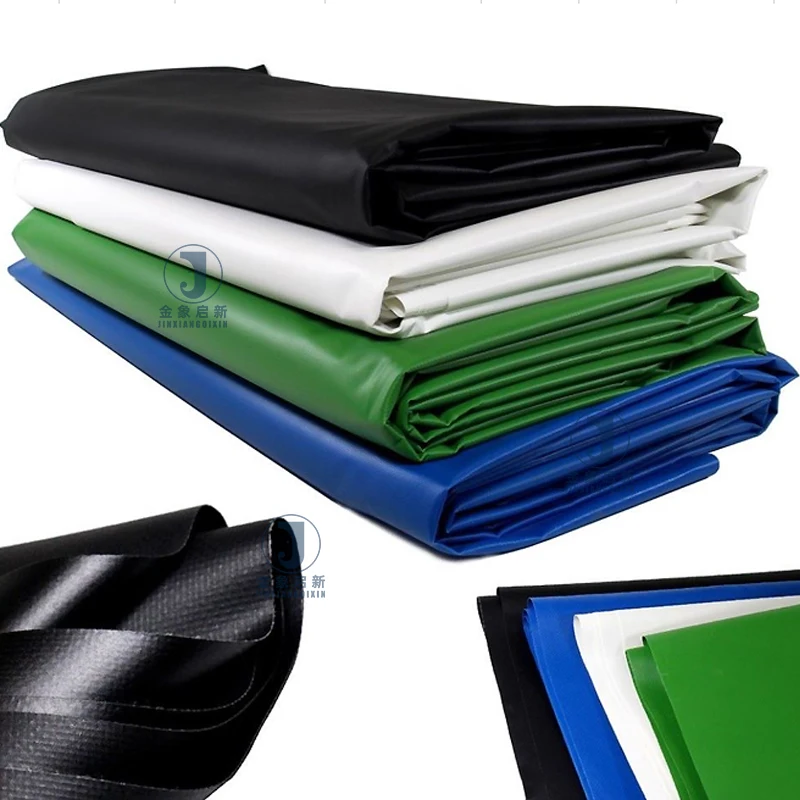
Coating Weight Control — Every roll of this PVC coated tarpaulin 650 gsm is spot-checked against the stated GSM during production and again before dispatch, ensuring the weight you specify is the weight you receive.
Technical Specifications
| Parameter | Value |
|---|---|
| Product Type | PVC Coated Tarpaulin Fabric |
| Weight | 650 GSM |
| Base Fabric | 100% high tenacity polyester yarns |
| Coating Material | PVC |
| Coating Technology | Laminated & Hot-melt Coating |
| Waterproof | Yes |
| Cold Crack Resistance | Yes |
| Anti-Mildew | Yes |
| Anti-Static | Available in anti-static grades — confirm the grade required for your market |
| Flame Retardant | Available in flame retardant grades — confirm the grade required for your market |
| Color Fastness | Best color fastness (test basis not stated) |
| Outdoor Life Assurance | 3–5 years (source value — verify against manufacturer catalog) |
| Digital Printing | Compatible |
Application Suitability
| Application | Exposure & Requirement |
|---|---|
| Truck bed tarpaulin covers | Road debris impact, constant flexing at tie-down points, UV exposure, rain ingress |
| Trailer side curtain fabric | Repeated tension cycling, abrasion against load edges, high weld seam integrity |
| Tent and caravan awning fabric | Folding and unfolding fatigue, weather cycling, mildew risk in stored conditions |
| Pick-up truck bed covers | Direct sun exposure, wind lift stress at mounting points, chemical splash from cargo |
| Advertising PVC tarpaulin and digital printing vinyl | Ink adhesion and color fidelity, outdoor UV exposure, large-format flatness |
| General waterproof covers | Prolonged moisture contact, mildew potential, handling abrasion |
Why Quoted GSM Does Not Guarantee Tear Strength at the Weld Line
Coating weight alone tells you nothing about how the fabric holds together where the load flexes most.
Technical buyers reviewing PVC coated tarpaulin 650 gsm quotations often focus on the weight figure, assuming a heavier number means a stronger weld. In practice, weld integrity depends on the adhesion between the PVC layer and the polyester base, which is governed by the coating method far more than the GSM reading. I have seen heavy-grade coated rolls fail at the weld line while lighter grades with hot-melt bonding held up under identical fabrication conditions. [NEED_CITE: tensile and tear test methods for coated fabrics per ISO 1421]
Base Fabric Construction and Coating Adhesion
The 650 GSM weight of this PVC coated tarpaulin is built on a 100% high tenacity polyester base fabric. The yarn selection and weave density determine how loads distribute across the material before they ever reach the coating layer. When the base fabric is woven tightly with high tenacity yarns, tear propagation slows significantly because each yarn intersection absorbs energy before the next one engages.
Laminated Versus Hot-Melt Coating for Weld Performance
This material is produced using both laminated technology and hot-melt coating technology, and the distinction matters for fabricators. Hot-melt coating drives the PVC into the interstices of the base fabric, creating a mechanical bond that resists delamination during high-frequency welding. Laminated construction bonds pre-formed PVC films to the base fabric under heat and pressure, producing a consistent surface well suited to digital printing applications. Fabricators running automated weld lines should request a sample of the specific coating variant to validate their temperature and dwell-time settings before committing to a production run. [NEED_CITE: peel strength testing methods for PVC-coated polyester per ISO 2411]
How GSM and Base Fabric Density Interact
A 650 GSM reading includes both the polyester base fabric and the PVC coating combined. Two rolls stamped at the same weight can perform very differently if one achieves that figure through a heavy coating over a light base, while the other uses a lighter coating over a denser weave. The denser-weave variant will typically show higher tear strength and better weld integrity because the structural contribution comes from the yarn matrix rather than the coating layer alone. This is why technical buyers should request both the GSM figure and the base fabric denier specification when evaluating PVC coated tarpaulin 650 gsm for structural applications.
The Hidden Cost of Specifying Weight Without Verifying Coating Adhesion
When a tarpaulin fails prematurely, the split rarely happens across the middle of the panel. It opens at the weld seam or along a fold line where stress concentrates repeatedly. If the coating has poor adhesion to the base fabric, the PVC layer separates under flex loading and the exposed yarn degrades rapidly from moisture and UV exposure. The result is a cover that needs replacement long before the expected service interval, and a warranty claim that stalls because the supplier’s quoted GSM was technically correct on arrival. Batch colour variation compounds this problem when replacement panels are welded beside originals in the field. [NEED_CITE: field failure analysis of PVC-coated fabric weld seams under cyclic loading]
Why Procurement Teams Choose This Material Source
Three full production lines and 36 sets of professional equipment allow this 650 GSM grade to be manufactured in volume without sacrificing the coating consistency that fabricators depend on. The 10-person R&D team handles material selection, pattern printing requirements, and custom sizing — developing samples within days rather than weeks. Dedicated QA and QC at every production stage, with 100% inspection before shipment, catches GSM deviation and colour drift before rolls leave the facility. ISO and CE certification frameworks underpin the documentation package, and nearly 30 years of focused coated-fabric production informs the process controls applied to each batch.
Documentation & Verification
- Material specification sheet stating exact GSM, base fabric denier, and coating method for this 650 GSM grade
- Test reports for flame retardant and anti-static treatments where applicable — confirm grade against your market
- Pre-shipment inspection record confirming coating weight and roll-to-roll consistency
- ISO and CE certificates supplied with customs documentation and certificate of origin
Fabrication, Handling & Storage
- Validate hot-melt or laminated coating variant before setting weld temperature and dwell time on automated lines
- Store 650 GSM rolls upright on cores to prevent flat-spot creasing that weakens the coating layer
- Use high-frequency welding rather than hot-air for laminated variants to maximise seam peel strength
- Allow cold-stored rolls to acclimatise before unrolling to avoid coating micro-cracking in low temperatures
- Cut panels with the weave orientation aligned to the primary stress direction to limit tear propagation
What We Need to Move Your Enquiry Forward
Provide the specific coating variant you need — laminated for printing applications or hot-melt for high-frequency welding — along with your target roll width and annual volume. If your market requires flame retardant or anti-static certification, share the test standard your end customer specifies so we can confirm grade availability before sampling. Let us know whether you require raw roll stock or finished cut sizes with hemming and eyelets, and whether digital printing will be applied downstream.
Frequently Asked Questions
Q: How is the 650 GSM weight verified and what tolerance applies on arrival?
A: Coating weight is controlled at every stage of the production line and verified by spot-check weighing before dispatch. A pre-shipment inspection record accompanies each order, documenting the measured GSM against the stated specification. Exact tolerance values depend on the coating variant and should be confirmed during the sampling stage.
Q: What flame retardant grade is available and which test standard does it meet?
A: This PVC coated tarpaulin is available in flame retardant grades, but the specific classification depends on the additive package selected. Share the test standard your market requires — such as DIN 4102, NFPA 701, or M2 — so we can confirm whether the available grade matches and provide the corresponding test report with your sample.
Q: How does hot-melt coating versus lamination affect weld seam strength?
A: Hot-melt coating penetrates the polyester base fabric interstices, creating a mechanical bond that typically supports stronger high-frequency welds. Laminated construction bonds pre-formed PVC films to the base, offering a smoother surface preferred for digital printing. Fabricators should test both variants with their weld equipment to determine the optimal temperature and pressure settings.
Q: What roll widths and lengths are available, and what is the MOQ for custom sizing?
A: Standard widths and roll lengths are available for immediate specification, with custom widths and lengths produced on request. Minimum order quantities for custom sizing depend on the specific width and colour combination. Share your required dimensions and annual volume so we can confirm lead time and MOQ during the quotation stage.
Q: Can you match a specific Pantone or RAL colour for this PVC coated tarpaulin?
A: Custom colour matching is supported through the R&D team, which develops samples within days. To ensure roll-to-roll consistency across your order, provide the exact Pantone or RAL reference at the enquiry stage and approve the physical sample before production begins. Batch colour consistency is verified during pre-shipment inspection.