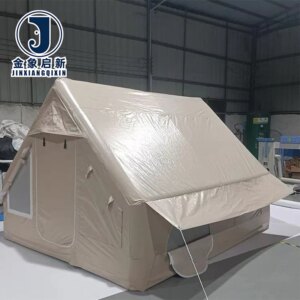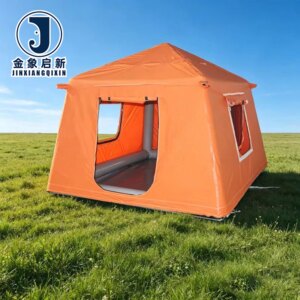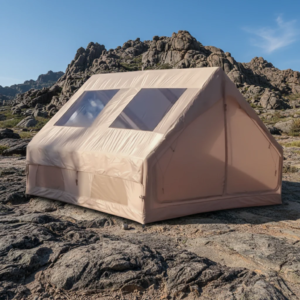
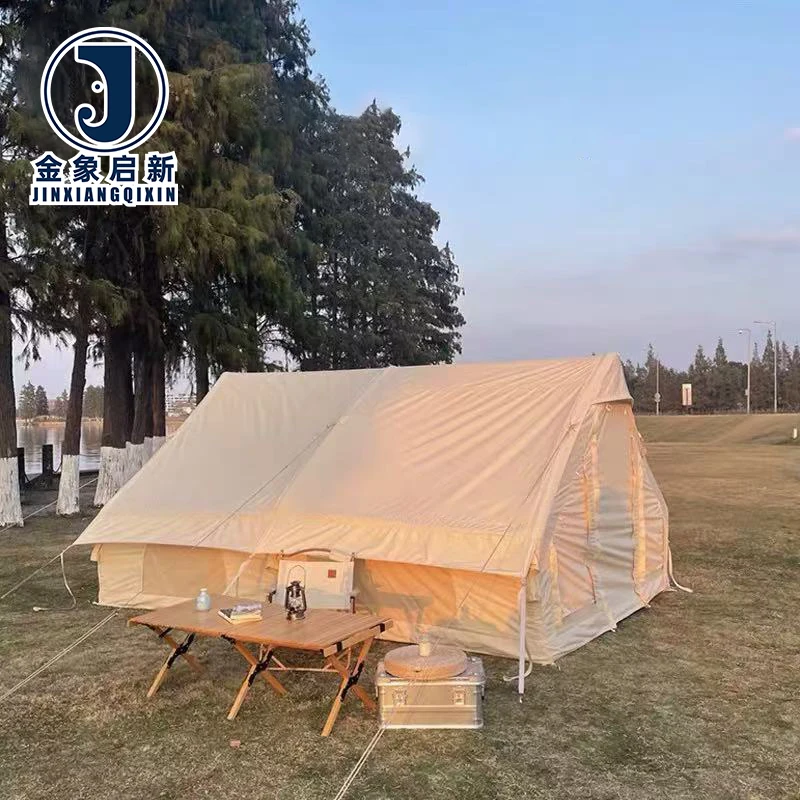
Coating Weight Control — Nearly three decades of PVC coating process mastery applied to inflatable tent fabric, ensuring consistent GSM and adhesion across every production run for commercial glamping structures.
Technical Specifications
| Parameter | Value |
|---|---|
| Product Type | Inflatable Tent Fabric / PVC Tent |
| Core Material | PVC Tarpaulin |
| Key Features | Waterproof, Tear-resistant |
| UV Resistance | Available in UV-resistant grades — confirm the grade required for your market |
| Fire Retardancy | Available in flame retardant grades — confirm the grade required for your market |
| Anti-static | Available in anti-static grades — confirm the standard required for your site |
| Product Forms | Single Layer Construction, Extended Type |
| Customization | OEM & ODM, sample customization, pattern printing |
| Production Lines | 3 full production lines |
| Processing Equipment | 36 sets of professional processing equipment |
| R&D Team | 10 technicians |
| Quality Control | Strict full-process inspection with dedicated QA & QC staff |
| Standards | ISO9001, ISO14001, ISO45001, CE |
Application Suitability
| Application | Exposure & Requirement |
|---|---|
| Commercial glamping tents | Continuous UV exposure, wind inflation load, seasonal temperature swings, fire safety compliance for guest accommodation |
| Large-scale event structures | Rapid deployment and teardown cycles, crowd safety fire codes, branding and pattern printing on exterior surfaces |
| Industrial temporary shelters | Heavy-duty weather resistance, anti-static requirements for sensitive environments, transport and repeated erection |
| Four-season camping facilities | Year-round thermal stress, snow and rain load on inflated chambers, long-term coating adhesion under flex |
Why PVC Inflatable Tent Material Buyers Must Verify Treatment Grades Before Ordering
A "flame retardant" label without a test standard is marketing, not a specification.
Inflatable glamping tent manufacturers regularly receive fabric that was described as UV-stable or fire-retardant on the quotation, only to discover at inspection that no test report exists to confirm the claim. When a commercial glamping site faces a fire safety audit or a tent structure fails prematurely under summer sun, the absence of documented test grades becomes a liability, not a negotiation point. PVC inflatable tent aftermarket supplier claims must be traceable to recognized standards — without that paper trail, the fabric is simply unverified for its intended duty cycle [NEED_CITE: recognized fire test standards for temporary structures and tent fabric].
Base Fabric Denier and Coating Construction for Inflation Integrity
The structural reliability of an inflatable tent chamber begins with the base fabric. Denier and weave density determine how the material distributes internal inflation pressure across the seam lines and chamber walls. A PVC coated tarpaulin with insufficient base fabric density will stretch unevenly under pressure, creating stress concentrations that accelerate coating delamination. For commercial glamping tents that remain inflated for extended periods, the coating-to-fabric bond must withstand constant tensile load without creep. The PVC inflatable tent aftermarket supplier must specify the base fabric construction alongside the coating weight, because neither value alone predicts performance under sustained inflation.
Coating Weight and GSM: Reading Beyond the Quotation Number
Grams per square metre is the most cited — and most misunderstood — specification in coated fabric procurement. GSM combines the weight of the base fabric and the PVC coating together, meaning two fabrics with identical GSM can have completely different base fabric densities and coating thicknesses. For inflatable glamping tent chambers, the coating weight governs weld seam strength and air retention, while the base fabric governs tensile and tear resistance. A technical buyer evaluating PVC inflatable tent aftermarket supplier options should request the base fabric weight and coating weight separately, not just the combined GSM figure [NEED_CITE: relationship between coating weight and tensile/tear strength in PVC tarpaulin per ISO 1421].
How Surface Finish Affects Welding, Printing and Field Cleaning
The choice between glossy and matte surface finish on PVC tarpaulin is not purely aesthetic. Glossy surfaces support sharper pattern printing and branding, which matters for glamping tents carrying commercial logos or decorative designs. Matte surfaces scatter light, reducing glare in hospitality settings, but may require adjusted heat-welding parameters to achieve equivalent seam strength. For inflatable tent fabricators, the surface finish directly influences the welding temperature window and the peel strength of the finished seam. Cleaning protocols also differ: glossy coatings tolerate more aggressive cleaning agents, while matte finishes may retain embedded dirt in the surface texture.
Specification Mismatches That Surface After the Tent Is Erected
The most costly specification errors in inflatable tent fabric procurement do not appear on the pre-shipment sample. They appear weeks or months after the tent is in commercial service. Coating weight below the required threshold leads to air leakage at weld seams that were visually sound at fabrication. A fire-retardant treatment that lacks the grade required by the local jurisdiction results in a failed site inspection and an unusable structure. Batch colour variation between rolls becomes visible only when adjacent panels are inflated side by side on the same glamping platform. These failures trace back to specification gaps at the inquiry stage, not to manufacturing defects [NEED_CITE: common failure modes in PVC coated inflatable structures].
What This Supply Chain Delivers to Inflatable Tent Fabricators
Deep process control over PVC coating weight and adhesion, developed across nearly three decades of coated fabric production, means the GSM stated on your quotation matches the GSM on the roll. Three full production lines with 36 sets of processing equipment support the volume consistency that inflatable tent production lines require across repeat orders. A 10-person R&D team handles material selection, pattern printing specification, and sample development for custom inflatable tent fabric requirements. Dedicated QA and QC staff conduct full-process inspection at every production stage, with 100% pre-shipment verification against the agreed specification sheet.
Documentation & Verification
- Material specification sheet stating GSM, base fabric denier, coating method, and colour reference for each inflatable tent fabric order
- Test reports for UV resistance and flame-retardant grades issued against recognized standards, provided per batch on request
- Pre-shipment inspection record confirming 100% inspection of every roll against the agreed PVC tarpaulin specification
- ISO and CE certificates supplied alongside certificate of origin and customs documentation for international shipments
- Sample approval record documenting the exact specification before mass production begins
Fabrication, Handling & Storage
- Heat-weld temperature and dwell time must be calibrated to the specific PVC coating weight and surface finish before production welding begins
- Store rolls horizontally on padded racks to prevent compression marks that telegraph through the coating surface of inflatable tent panels
- Unroll and allow PVC tarpaulin to acclimatize to workshop temperature before cutting, especially after cold-weather transport
- Use compatible PVC welding tape and adhesive for field repairs, matching the coating chemistry of the inflatable tent fabric
- Plan panel cutting layout to minimize weld seams across high-stress inflation chamber zones, optimizing roll width utilization
Requesting a Specification Match for Your Inflatable Tent Programme
Provide your target inflation chamber dimensions, the fire-retardant or anti-static standards required by your operating jurisdiction, and the expected seasonal exposure conditions. Specify whether you need raw PVC tarpaulin rolls or finished cut-to-size panels with pattern printing. Confirm your target market compliance requirements so the correct test grades can be matched to your inflatable tent fabric order from the outset.
Frequently Asked Questions
Q: What base fabric denier and GSM are recommended for inflatable glamping tent chambers under four-season conditions?
A: The appropriate denier and GSM depend on chamber diameter, inflation pressure, and local wind and snow loads. Higher denier base fabric provides greater tear resistance for larger chambers, while coating weight must be sufficient to maintain air retention and weld seam integrity. Request a specification recommendation based on your tent design and operating environment.
Q: Which fire-retardant test standard does the PVC coating meet, and can a test report be provided per batch?
A: Flame-retardant grades are available for PVC inflatable tent fabric — the specific standard depends on the fire code in your operating jurisdiction. Test reports can be issued against recognized standards per production batch. Confirm the required grade at the inquiry stage so the correct formulation is applied and documented before shipment.
Q: What is the UV treatment basis, and how does it relate to expected outdoor exposure?
A: UV-resistant grades are available with test verification — the appropriate grade depends on the expected annual UV exposure hours at the installation site. Request the UV test report for the specific formulation proposed for your inflatable tent fabric order to confirm suitability for your geographic location and seasonal operating window.
Q: How does PVC coating weight affect heat-weld seam strength for inflatable structure fabrication?
A: Coating weight directly influences the thermal energy required to achieve a consistent weld and the resulting peel strength of the seam. Heavier coatings generally require higher welding temperatures and longer dwell times. The PVC inflatable tent aftermarket supplier should provide welding parameter guidance matched to the specific coating weight and surface finish of your fabric.
Q: Can custom width, colour and pattern printing be specified, and what are the sample development lead times?
A: Custom widths, colours, and pattern printing are available for inflatable tent fabric orders. The 10-person R&D team develops samples for custom requirements, with sample turnaround dependent on the complexity of the specification. Submit your colour reference, print artwork, and width requirement to initiate sample development before mass production.