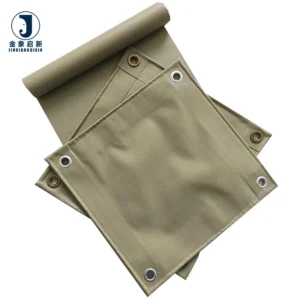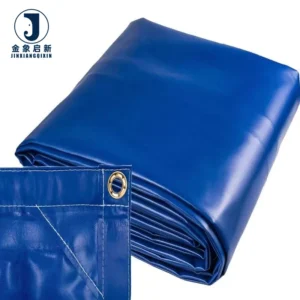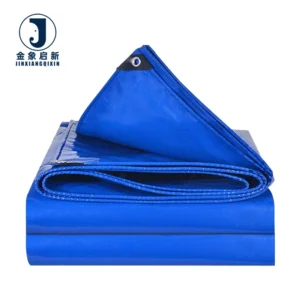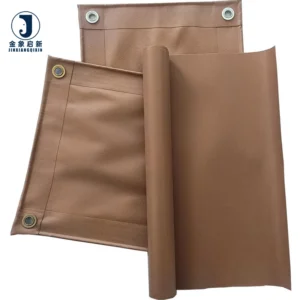
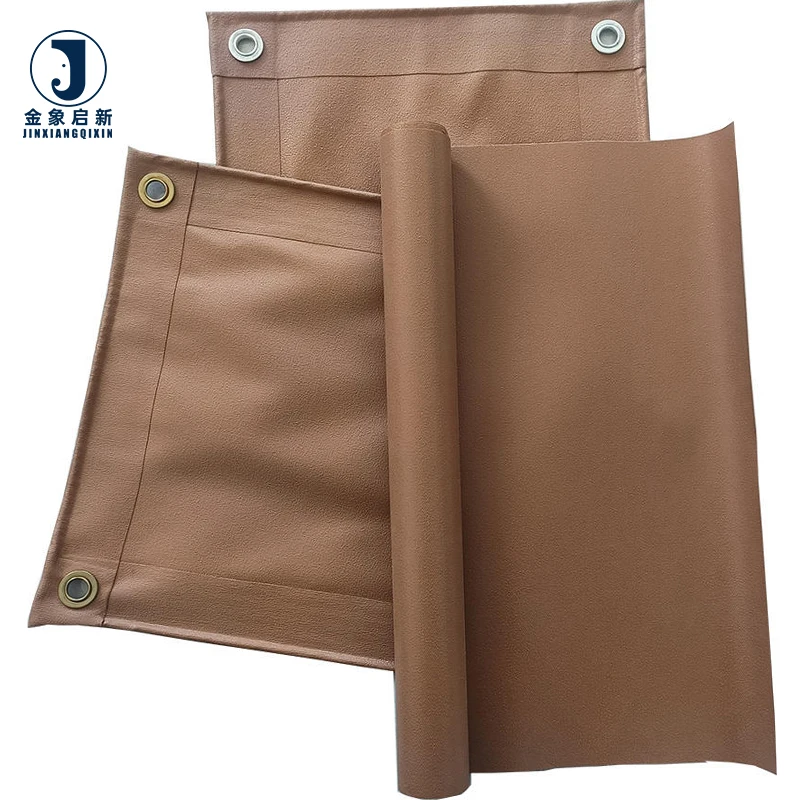
Coating Adhesion Control — Every roll of 1000D PVC Coated Tarpaulin passes through a three-line production setup with dedicated coating weight monitoring, ensuring the stated GSM matches what arrives at your workshop.
Technical Specifications
| Parameter | Value |
|---|---|
| Product Type | PVC Coated Tarpaulin |
| Base Fabric Denier | 1000D |
| Weight Options | 550GSM / 900GSM |
| Coating Material | PVC |
| Surface Finish | Self Clean |
| Waterproof | Yes |
| Flame Retardant | Available (grade not stated in source) |
| Anti-Static | Available (standard not stated in source) |
| Anti-Cold | Available |
| Anti-Mildew | Available |
| UV Treatment | Available (test basis not stated in source) |
| Width | Custom |
| Length | Custom |
| Colour | Custom |
| Certifications | ISO, CE |
Application Suitability
| Application | Exposure & Requirement |
|---|---|
| Truck side curtains and trailer covers | Constant flexing at tie-down points, road debris abrasion, prolonged UV and weather exposure |
| Tent and awning structures | Wind-driven rain, structural tension loads, repeated assembly and dismantling stress |
| Roof covers and temporary shelters | Standing water, thermal cycling, UV degradation over extended installation periods |
| Flood barriers and water containment | Permanent water contact, hydrostatic pressure, puncture risk from submerged debris |
| Car covers and outdoor equipment protection | Abrasion from wind-blown particulates, UV exposure, mildew in humid storage conditions |
Why GSM Without Base Fabric Data Leaves Technical Buyers Guessing
The number on the quotation means little if the base fabric denier and weave density are not disclosed alongside it.
A 550GSM PVC coated tarpaulin built on a 1000D base fabric behaves very differently under load than one built on a 500D base at the same coating weight. The coating contributes to waterproofing and surface protection, but tensile and tear resistance come primarily from the yarn structure underneath. When a supplier quotes only GSM without denier or thread count, you cannot assess whether the fabric will hold at flex points or resist tear propagation under wind load. [NEED_CITE: relationship between base fabric denier and tensile performance per ISO 1421]
This PVC coated tarpaulin specifies a 1000D base fabric across both the 550GSM and 900GSM options, giving fabricators and technical buyers a clear reference point for comparing mechanical performance before committing to a roll order.
Coating Weight Selection for Different Stress Environments
The two weight grades serve distinct mechanical demands. The 550GSM option suits applications where the fabric is tensioned but not subject to heavy point loads — tent roofs, static equipment covers, and light-duty truck tarps. The 900GSM grade adds coating mass on the same 1000D base, increasing stiffness and abrasion resistance at contact points, which matters for side curtains that rub against load edges and trailer frames during transit.
Both grades share the self-clean surface finish, which reduces dirt accumulation and makes field cleaning faster for installed covers. The finish also affects how well printed branding adheres to the surface, a factor for fleet operators applying logos to PVC coated tarpaulin rolls.
Treatment Options and the Documentation That Should Back Them
Flame retardant, anti-static, anti-cold, and anti-mildew treatments are available across both weight grades. The critical point for procurement is that each treatment carries specific performance criteria depending on the end-use market and regulatory environment. A mining ventilation contract may require anti-static certification to a different standard than a warehouse partition application. [NEED_CITE: flame retardant classification systems applicable to coated technical textiles]
When specifying this PVC coated tarpaulin, confirm which grade or test standard your project documentation requires. Request the corresponding test report before production begins, not after the rolls arrive at your facility.
How Base Fabric Denier and Coating Weight Interact
The 1000D denier refers to the linear mass density of the yarns in the base fabric — higher denier generally means thicker individual yarns, which resist tear initiation and propagation more effectively than finer yarns. However, denier alone does not determine strength; warp and weft thread count (ends per inch) defines how load distributes across the weave. A 1000D base with a tight weave delivers dimensional stability under biaxial tension, critical for tensioned tent structures and truck side curtains.
Coating weight (GSM) adds mass to the surface and fills the weave interstices, contributing to waterproofing, stiffness, and abrasion resistance at the coating surface. The 550GSM grade provides sufficient coating fill for most outdoor cover applications, while the 900GSM grade builds a thicker coating layer that withstands repeated contact with sharp or rough surfaces without exposing the base fabric. The self-clean finish is applied as a top layer, affecting how contaminants bond to the surface and how easily they release during rain or washing. Treatment additives — flame retardant, anti-static, anti-mildew — are compounded into the PVC formulation and must be verified against specific test standards to confirm they meet site requirements. [NEED_CITE: coating weight and tensile test methods for coated fabrics per DIN 53354]
What Happens When Specification Gaps Reach the Job Site
A roll that arrives lighter than the quoted GSM may pass a visual inspection but fail at the weld line when the fabricator applies heat — insufficient coating mass means the weld penetrates through to the base fabric, creating a weak point that tears before the panel does. Colour variation between rolls in the same order becomes visible only after installation, when adjacent panels are viewed side by side in sunlight. Flame retardant claims unsupported by a test report leave the contractor exposed when a site inspector requests documentation, potentially halting installation until compliance is demonstrated. [NEED_CITE: common failure modes in coated fabric installations]
These are not theoretical risks — they are recurring complaints from buyers who specified on GSM alone without verifying the full material profile before production.
Why Fabricators Source This PVC Coated Tarpaulin Here
Three full production lines with 36 sets of professional coating equipment maintain consistent coating weight across long roll runs, reducing batch-to-batch variation that causes colour and weight drift. A 10-person R&D team handles custom width, colour matching, and treatment formulation, developing samples within days so you can verify the material before bulk production begins. Every roll undergoes dedicated QA/QC inspection at multiple production stages, with 100% pre-shipment verification of coating weight, surface consistency, and dimensional accuracy. The facility holds ISO and CE certifications, with documentation packages assembled per order to match your market’s compliance requirements.
Documentation & Verification
- Material specification sheet stating exact GSM, 1000D base fabric denier, and coating method per roll
- Test reports for flame retardant and anti-static grades, referenced to recognised standards on request
- Pre-shipment inspection record confirming coating weight adhesion and surface consistency across the batch
- ISO and CE certificates available for download with each dispatch
- Roll packing list detailing net weight, dimensions, and roll count for container loading verification
Fabrication, Handling & Storage
- Heat-weld parameters should be adjusted between the 550GSM and 900GSM grades to avoid burn-through on lighter material
- Self-clean finish tolerates mild detergent cleaning; avoid solvent-based cleaners that may degrade the top coat
- Store rolls horizontally on pallets to prevent edge crushing and permanent creasing of the 1000D base fabric
- Allow cold-stored rolls to reach ambient temperature before unrolling to prevent coating cracking at low flex points
- Cut patterns should account for custom width to minimise offcut waste and reduce the number of welded seams in the final assembly
- Reinforce high-stress eyelet zones with additional fabric patches to distribute tie-down loads across the coated surface
Specifying Your Requirement
To move from inquiry to sample, provide the application scenario and the mechanical or environmental loads the fabric will face — this determines whether 550GSM or 900GSM is the appropriate grade. State any flame retardant, anti-static, or fire safety standards your end market requires so the correct treatment formulation is selected. Confirm the roll width and colour reference, along with whether you need raw rolls or cut-to-size panels with finished edges.
Frequently Asked Questions
Q: How is the GSM of each roll verified before shipment?
A: Each roll is weighed and measured during the pre-shipment inspection to confirm the coating weight matches the stated 550GSM or 900GSM specification. The inspection record documents the result per roll, and any roll outside tolerance is flagged before dispatch. You receive this record with your shipping documentation.
Q: What test standards support the flame-retardant and anti-static treatment claims?
A: Flame retardant and anti-static treatments are available in multiple grades. The specific standard applicable depends on your market and end-use environment — confirm the grade required for your project before production. Test reports referencing recognised standards are provided on request with each treated batch.
Q: How does the 1000D base fabric compare to lower denier options for tear resistance?
A: The 1000D denier provides thicker individual yarns in the base weave, which resist tear initiation and slow tear propagation compared to lighter denier fabrics. Combined with the PVC coating that locks the weave structure, the result is a fabric suited to applications involving repeated flexing and point-load stress.
Q: Can I receive a sample in my specified colour and weight before placing a bulk order?
A: Yes. The R&D team develops custom samples within days, matching your specified colour, GSM grade, and treatment requirements. Approving the sample before production ensures roll-to-roll colour consistency and confirms the material meets your fabrication requirements.
Q: How do I choose between 550GSM and 900GSM for a truck cover versus a static roof application?
A: The 550GSM grade suits static or semi-static applications where the fabric is tensioned but not subject to heavy abrasion. The 900GSM grade adds coating thickness for environments with repeated contact stress — truck side curtains that rub against load edges during transit benefit from the additional coating mass and surface durability.