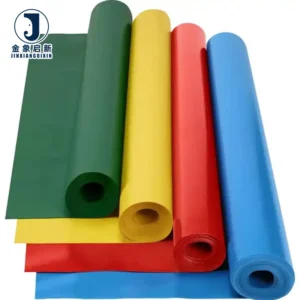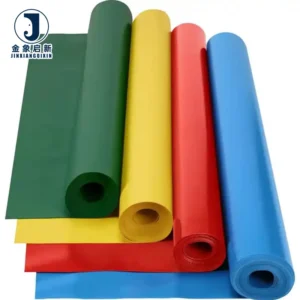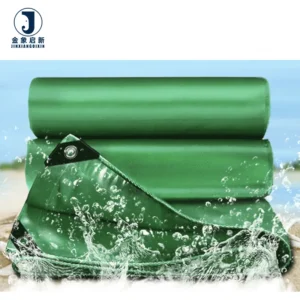
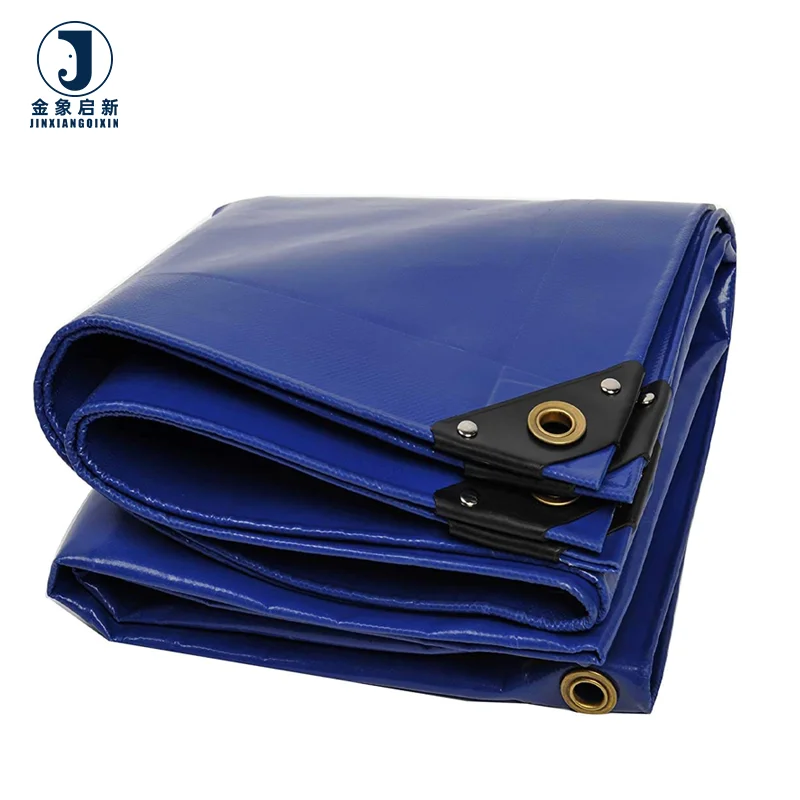
Coating Weight Precision — deep process control over lamination adhesion and GSM consistency verified at every production stage for poultry curtain rolls.
Technical Specifications
| Parameter | Value |
|---|---|
| Product Type | PVC Coated Tarpaulin Roll |
| Base Fabric | HDPE woven substrate |
| Coating Material | LDPE lamination on both sides |
| Weight Range (GSM) | 50gr/m² ~ 220gr/m² available |
| Total Thickness | 0.2 mm – 0.4 mm / 8 mil – 16 mil / Custom |
| Weave Density Options | 6×6, 6×7, 7×7, 7×8, 8×8, 9×9, 8×10, 10×10, 12×12, 14×14, 14×16 |
| Width Options | 6 ft, 8 ft, 10 ft, 12 ft / 2 m, 4 m, 6 m |
| Roll Length Options | 100 yards, 100 meters, or custom |
| Anti-Static | Stated in product identifier — confirm surface resistance standard required for your market |
| UV Treatment | Available — confirm test basis and grade for your exposure conditions |
| Anti-Mildew | Yes |
| Waterproof | Yes — fully laminated construction |
| Edge Finish | PP rope reinforced hem on all four edges |
| Eyelet Specification | Galvanised eyelets at 3 ft or 1 m intervals |
| Corner Reinforcement | Reinforced plastic corners |
| Colour Options | Blue, Blue/Orange, Green, Grey, Black, Clear, Grey/Green, Orange, or custom |
| Printing | Custom brand printing available |
Application Suitability
| Application | Exposure & Requirement |
|---|---|
| Poultry house curtain systems | Daily mechanical roll-up and roll-down, ammonia-rich atmosphere, moisture, UV from ventilation openings |
| Chicken coop external covers | Continuous rain and sun exposure, wind load on grommets, temperature fluctuation |
| Agricultural stockpile covers | Multi-season UV, ground moisture, abrasion from stacked bales or feed bags |
| Truck and container covers | Road vibration, flex fatigue at tie-down points, diesel fume exposure |
| Construction scaffolding wraps | Wind shear, puncture from scaffolding joints, site dust and chemical splash |
| Hay and crop covers | Condensation underneath, repeated handling, UV degradation over growing seasons |
Why GSM Alone Does Not Tell You How Strong This Poultry Curtain Fabric Will Be
Mesh count and base fabric denier define the tear path — GSM only confirms coating mass was applied.
Buyers reviewing PVC coated tarpaulin roll quotations often focus on the stated weight per square metre, assuming a heavier number means a stronger fabric. In practice, a 220 gr/m² roll woven at 6×6 density with thick yarns will resist tear propagation differently from a 220 gr/m² roll at 14×14 density with finer yarns. The coating adds water resistance and surface protection but does not replace the structural role of the woven substrate. [NEED_CITE: tensile and tear test methods for coated fabrics per ISO 1421]
When curtain fabric is cycled through daily roll-up mechanisms on poultry houses, the flex fatigue concentrates at the weave intersections. A specification that pairs the correct mesh count with the required GSM band avoids premature yarn fracture at those crossover points. [NEED_CITE: flex fatigue failure modes in woven coated fabrics]
Base Fabric Weave Density and Curtain Longevity
The weave options span from 6×6 through 14×16, covering open constructions suited to lightweight covers and tight weaves needed for high-wind curtain installations. Tighter meshes distribute load across more yarns per square centimetre, reducing the stress on individual filaments when wind gusts press the curtain against the house frame. Selecting the correct density prevents localised yarn pull-out around eyelet zones.
Coating Method and Lamination Adhesion
LDPE lamination on both sides of an HDPE woven base creates a bonded film layer that seals the weave intersections against moisture ingress. Compared to single-side coating, double-side lamination prevents delamination at the edges where roll-up hardware grips the fabric. The PVC coated tarpaulin roll format allows fabricators to heat-weld seams where panels overlap, though the lamination method requires specific temperature control to achieve consistent peel strength. [NEED_CITE: peel strength test methods for laminated tarpaulin]
Thickness, Weight and the Puncture Question
Thickness options from 0.2 mm to 0.4 mm correspond to different GSM bands within the available range. A thicker laminated film resists puncture from sharp hardware edges and scaffolding tube ends, while a thinner film keeps the roll weight manageable for manual curtain installation. The relationship between thickness and puncture resistance is not linear — base fabric denier plays an equal role in stopping a puncture from propagating into a full tear.
Specification Mismatches That Surface After Installation
Colour variation between rolls in the same shipment becomes visible the moment panels are hung side by side on a poultry house facade. Coating weight that falls below the quoted GSM reduces stiffness, causing curtains to billow excessively in wind and accelerate wear at the hem rope channel. Where flame-retardant treatment is claimed without a documented test basis, site inspectors can reject the entire installation, forcing a costly full replacement mid-season. [NEED_CITE: batch colour consistency standards for coated fabrics]
Welded seams on laminated fabric that are processed at incorrect temperatures peel away from the substrate before the fabric itself reaches its tensile limit — a failure pattern concentrated at the zones where the curtain flexes most during daily operation.
Why Material Buyers Source These Rolls Here
Three full production lines running dedicated coating and lamination processes maintain batch-to-batch GSM consistency across multi-roll orders. The 10-person R&D team develops custom colour matches and sample rolls within days, allowing buyers to validate mesh density and lamination adhesion before committing to container volumes. Every roll passes through stage-by-stage QA inspection, with 100% pre-shipment verification of weight and colour against the specification sheet. Custom widths and printed branding are accommodated with defined lead times and reasonable minimums rather than open-ended delays.
Documentation & Verification
- Material specification sheet stating confirmed GSM, HDPE base fabric denier and weave count, LDPE lamination method
- UV treatment test report issued against recognised standards where the anti-UV grade is specified
- Pre-shipment inspection record confirming roll-to-roll GSM and colour uniformity for the full order
- ISO and CE certificates accompanying dispatch for customs clearance in destination markets
- Roll packing list with individual roll weights, widths and lengths for receiving verification
Fabrication, Handling & Storage
- Heat-weld laminated seams at manufacturer-recommended temperatures to prevent LDPE film peel-back at stress points
- Space galvanised eyelets at 1 m intervals maximum to distribute wind load across the PP rope reinforced hem
- Store rolls horizontally on pallets to avoid compression marks on the 0.2–0.4 mm laminated surface
- Unroll in ambient temperatures above 5 °C to prevent LDPE film cracking at the fold lines
- Clean with mild detergent only — solvent-based cleaners degrade the anti-mildew treatment on the coating surface
- Allow 2–3 % overlap at panel joins to compensate for thermal expansion across 4 m and 6 m widths
What We Need to Move Your Inquiry Forward
Share the specific poultry house curtain dimensions, the daily roll-up mechanism type, and the wind load conditions at your farm locations. Let us know whether you need rolls in standard widths or custom-cut finished panels with eyelets and hem reinforcement already installed. If your market requires documented UV or anti-static performance, specify the test standard your buyer or inspector will check on arrival.
Frequently Asked Questions
Q: How is the actual GSM verified per roll and what documentation comes with shipment?
A: Each roll is weighed and measured during pre-shipment inspection, with results recorded against the quoted GSM. The inspection report accompanies the shipment alongside a material specification sheet confirming base fabric weave count, lamination type, and thickness. Rolls that fall outside the specified tolerance band are held and replaced before dispatch.
Q: What is the relationship between mesh count, denier and the final strength of the curtain fabric?
A: Mesh count defines how many yarns cross per unit area, while denier measures individual yarn thickness. A tighter weave with higher denier yarns produces greater tensile and tear resistance than a loose weave at the same GSM. We recommend confirming the target mesh count and denier combination with our R&D team against your specific wind load and curtain mechanism requirements.
Q: What test basis supports the UV treatment claim and how does it relate to service life?
A: UV treatment is available across the range, but the applicable test standard depends on your destination market and exposure conditions. Request the UV test report matched to your regional requirements during the sampling stage so you can verify performance before placing a bulk order.
Q: How do you control colour consistency across multiple rolls in one order?
A: Colour matching is set at the compounding stage using reference standards, and every roll passes visual inspection under controlled lighting before packing. Rolls showing visible deviation from the batch standard are removed from the shipment. A pre-shipment colour inspection record is provided with the documentation package.
Q: Do you provide sample rolls before bulk production for custom widths or printed branding?
A: Yes. The R&D team produces sample rolls to your specified width, colour, mesh count and printing layout. Approval of the sample locks in the production parameters for the full order, ensuring the bulk shipment matches the validated specification in every measurable aspect.