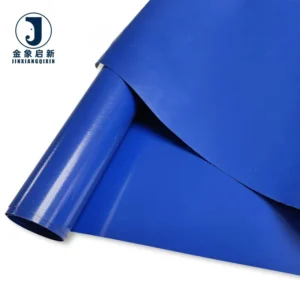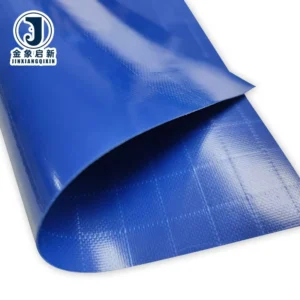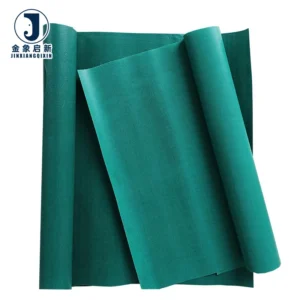
Proven Coating Expertise — Nearly 30 years of process control over PVC coating weight and adhesion, applied to every PVC Coated Waterproof and Anti-Static Tarpaulin Roll leaving the production line with verified GSM documentation.
Technical Specifications
| Parameter | Value |
|---|---|
| Product Type | PVC Coated Tarpaulin Roll |
| Base Fabric | PVC Coated Fabric |
| Weight Range | 50gr/m2 ~ 300gr/m2 |
| Total Thickness | 0.2-0.4mm / 8 mil-16 mil / Custom |
| Available Widths | 6ft, 8ft, 10ft, 12ft or 2m, 4m, 6m / Custom |
| Roll Length | 100 yards, 100 meters, or custom |
| Weave Density Options | 6×6, 6×7, 7×7, 7×8, 8×8, 9×9, 8×10, 10×10, 12×12, 14×14, 14×16 |
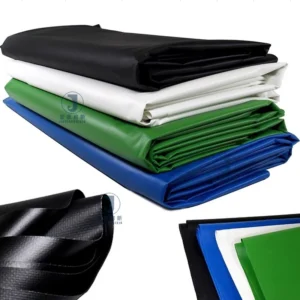
| Available Colors | Blue, Blue/Orange, Green, Grey, Black, Clear, Grey/Green, Orange, or custom |
| Key Features | Waterproof, Washable, Tear Resistant, Weather Proof, Mildew Proof, Anti-aging |
| UV Treatment | Available — confirm the grade required for your market |
| Anti-Static | Available — confirm the grade required for your market |
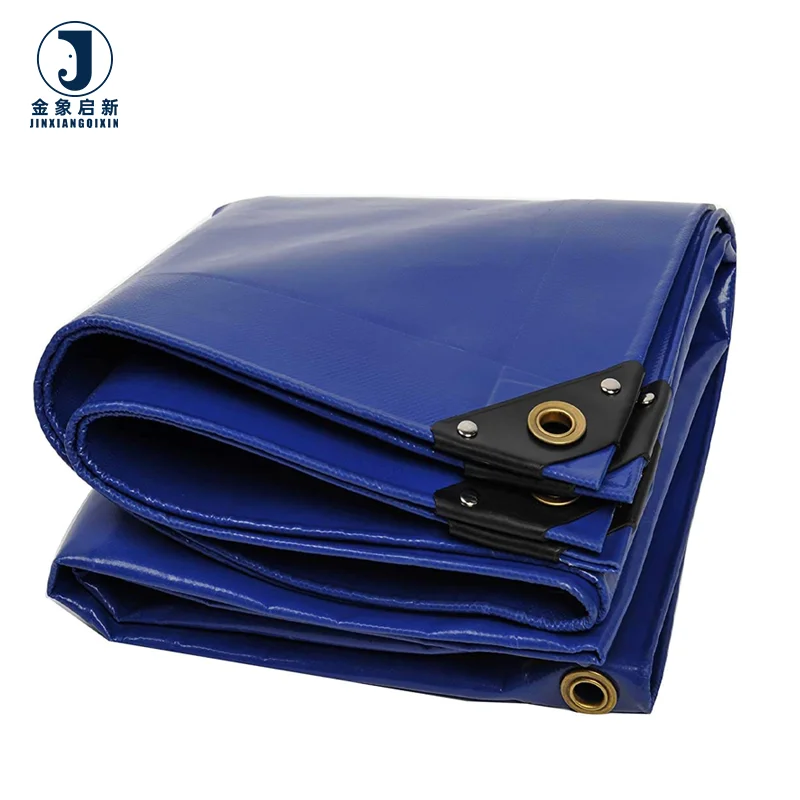
| Edge Finish | All four edges reinforced with PP rope in hem |
| Eyelets | Galvanized eyelets every 3ft or 1 meter interval |
| Corners | Reinforced plastic corners |
| Certifications | ISO, CE |
Application Suitability
| Application | Exposure & Requirement |
|---|---|
| Poultry coop curtains | Constant humidity, ammonia exposure, frequent washdown, thermal insulation demands |
| Truck and container covers | Road abrasion, UV exposure, wind flap fatigue, tie-down point stress |
| Timber and hay covers | Prolonged outdoor weathering, moisture ingress prevention, wind uplift |
| Construction scaffolding wraps | Debris impact, wind load, site safety visibility, temporary installation |
| Swimming pool covers | Chlorine and chemical exposure, sustained water contact, UV degradation |
Why the Coating Weight Matters More Than the Label Suggests
A PVC coated tarpaulin roll specified at one GSM on the quotation can arrive measurably lighter, and without a mill certificate the discrepancy goes unnoticed until the fabric fails prematurely in the field. Verified coating weight per roll is the only reliable indicator of what you actually received.
Buyers who have experienced material arriving below the stated specification often discover the problem only after installation, when the fabric shows early signs of pinholing or delamination at stress points. The gap between quoted and delivered GSM is not always intentional — it can stem from inconsistent coating application across a production run. [NEED_CITE: coating weight tolerance standards for PVC coated fabrics] Without in-process QA checkpoints and pre-shipment weight verification, the specification on paper means very little once the roll is unrolled on site.
Coating Method and Adhesion Control
The way PVC compound is applied to the base fabric determines how the coating performs under mechanical stress. This PVC coated tarpaulin roll range is produced with controlled coating weight across three full production lines, where adhesion between the PVC layer and the woven substrate is monitored during manufacturing. Poor adhesion reveals itself when the coating separates from the base fabric at fold lines or around eyelet reinforcements — typically the first sign that process control was inadequate during coating.
How Weave Density Shapes Tear Behaviour
The woven base fabric carries the structural load while the PVC coating provides environmental protection. Weave densities from 6×6 through 14×16 are available across this PVC Tarpaulin Roll range, and each density maps to a different tear propagation resistance. A looser weave at the same GSM will rely more heavily on coating thickness for strength, while a tighter weave distributes load across more yarn intersections. The right combination depends on whether the fabric will face puncture risk, flexing fatigue, or sustained tensile load in its end application. [NEED_CITE: tensile and tear test methods for coated fabrics per ISO 1421]
Reading the Specification Sheet Beyond GSM
GSM tells you the total weight per square metre but nothing about how that weight is distributed between base fabric and coating. Two rolls at the same GSM can perform very differently if one carries a heavier base fabric with a thinner coating while the other reverses the ratio. Thickness readings of 0.2-0.4mm across the available range indicate how much compound sits on the surface, influencing abrasion resistance and low-temperature flexibility. Weave density options from 6×6 to 14×16 further define the mechanical character of each grade. For applications like poultry curtains that require repeated rolling and unrolling, the balance between base fabric denier and coating flexibility matters more than the headline weight figure alone.
What Happens When Specification and Delivery Diverge
When a PVC coated tarpaulin roll arrives lighter than the agreed GSM, the consequences compound across the installation. Thinner coating means reduced abrasion resistance at contact points, lower hydrostatic head at seam overlaps, and faster UV degradation as less compound protects the base fabric from direct sunlight. [NEED_CITE: relationship between coating thickness and UV degradation rate in PVC fabrics] For buyers ordering container-load volumes, a systematic weight shortfall across an entire batch represents a significant gap between what was paid for and what was delivered. Colour variation between rolls in the same order creates visible inconsistency once the fabric is installed side by side — a problem that becomes apparent only after installation is complete and rework is costly.
Production Infrastructure Behind Every Roll
Three full production lines with 36 sets of professional equipment provide the capacity to maintain batch consistency across container-load orders of PVC coated tarpaulin rolls. A dedicated 10-person R&D team handles material selection and sample development for custom width, colour and treatment requirements, with samples produced within days rather than weeks. Every production stage carries in-process QA checks, culminating in 100% pre-shipment inspection so that each roll is verified against the agreed specification before packing. The coating weight and adhesion control built up over nearly 30 years of focused coated fabric production translates directly into roll-to-roll uniformity.
Documentation & Verification
- Material specification sheet stating exact GSM, base fabric type and PVC coating compound per roll
- Weight verification per roll measured against the stated GSM before dispatch
- Test reports for UV and anti-static grades where applicable, linked to batch numbers
- Roll packing list with individual roll identification for customs clearance
- Pre-shipment inspection record confirming 100% QA coverage
- Certificate of origin included for import documentation
Fabrication, Handling & Storage
- Heat welding parameters should match the specific coating thickness of 0.2-0.4mm to avoid burn-through or incomplete bonding
- Galvanized eyelets spaced at 3ft or 1 meter intervals distribute load across the reinforced PP rope hem
- Store rolls upright on pallets to prevent permanent creasing in the PVC coating layer
- Allow cold-transported rolls to reach ambient temperature before unrolling to avoid coating crack
- Clean with mild detergent compatible with PVC surfaces to preserve anti-mildew treatment integrity
- Plan cutting layouts to maximise yield from custom width rolls and minimise welded seam joints
Before You Request a Quote
Share the specific environmental conditions your installation will face — humidity levels for poultry houses, wind load exposure for scaffolding wraps, or chemical contact for agricultural covers. Confirm your target market’s requirements for UV treatment grade or anti-static certification so the correct specification is quoted from the start. Indicate the roll width, GSM range and annual volume you need, and whether you require finished panels with eyelets or raw roll stock for your own fabrication line.
Frequently Asked Questions
Q: How is GSM verified on each roll before shipment?
A: Every roll undergoes weight sampling at defined intervals during production. The QA team records actual GSM readings against the specification agreed at order confirmation. These readings are documented in the pre-shipment inspection record, and any roll falling outside the agreed tolerance is flagged before packing. This ensures the PVC coated tarpaulin roll you receive matches the quotation.
Q: Can you supply a test report for UV or anti-static treatment with the shipment?
A: Test reports are provided for grades where testing has been conducted and the specific standard is stated. If your application or local regulation requires a particular UV stability level or anti-static classification, communicate this at inquiry stage so the appropriate grade is selected and documented. Available grades vary by product line and intended market.
Q: What is the minimum order and lead time for custom width or colour?
A: Custom width and colour orders typically require a minimum volume tied to production line setup. Lead times depend on whether the base fabric and colour compound are in stock or need to be prepared. Requesting a sample first allows you to approve the material before full production begins, reducing the risk of specification mismatch on the main order.
Q: How do you ensure colour consistency across multiple rolls in one order?
A: Colour matching is controlled at the compound mixing stage using reference standards. Rolls produced in the same batch share identical dye lots, and the QA team checks colour under standardised lighting during pre-shipment inspection. For orders spanning multiple production runs, retained samples from earlier batches are used to match subsequent runs.
Q: How are rolls packed and loaded for container transport?
A: Rolls are packed according to the agreed format — by roll, bale or carton — and container loading plans account for roll diameter and weight distribution. Packing lists identify each roll for traceability. The loading arrangement prevents compression damage to the PVC coating during transit, particularly for heavier GSM grades on long sea voyages.