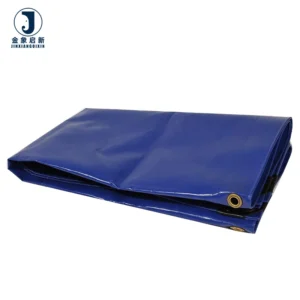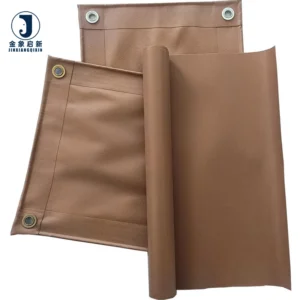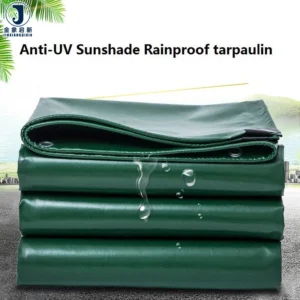
Process Control — coating weight and adhesion verified at every production stage across 700gsm, 850gsm and 900gsm PVC coated tarpaulin grades, with documented batch consistency for technical buyers and fabricators.
Technical Specifications
| Parameter | Value |
|---|---|
| Product Type | PVC Coated Tarpaulin |
| Material | PVC Coated Fabric |
| Weight Options | 700gsm / 850gsm / 900gsm |
| Coating Method | Knife Coated |
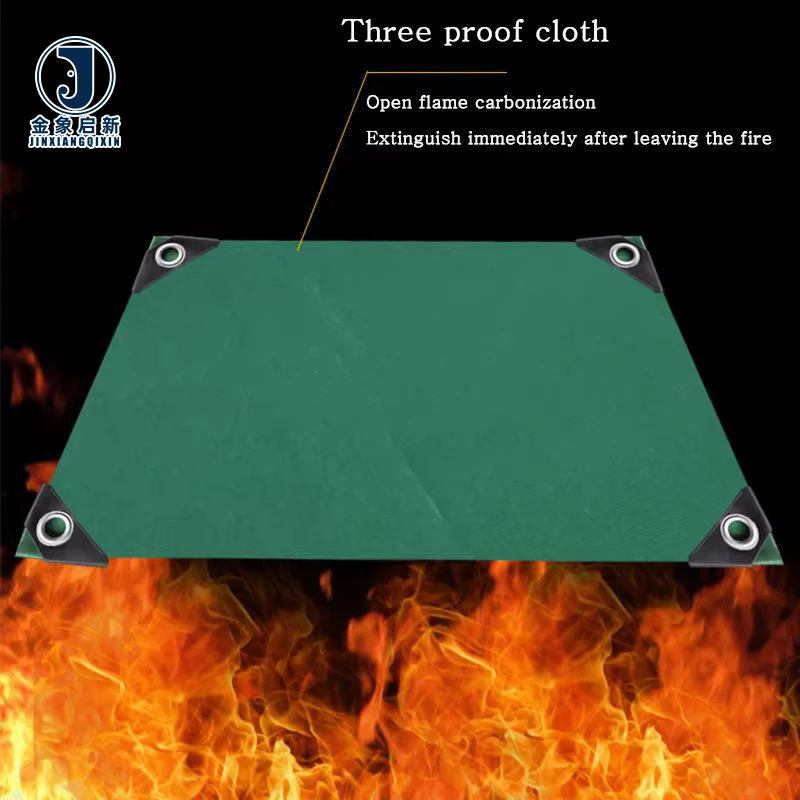
| Flame Retardant | Available (grade not stated — confirm the grade required for your market) |
| Anti-Static | Available (standard not stated — request test documentation) |
| Anti-Mildew | Available |
| Anti-Cold | Available |
| Waterproof | Fully waterproof coated construction |
| Strength Feature | High-strength base fabric construction to resist damage during installation and load flexing |
| Outdoor Life Assurance | Suited to extended outdoor exposure (verify against manufacturer catalog for specific grade) |
| Application | Truck cargo cover, outdoor weather-exposed load covering, transport fleet load protection |
Application Suitability
| Application | Exposure & Requirement |
|---|---|
| Truck cargo cover | Constant road vibration, load flexing at tie-down points, UV and rain exposure, abrasion from cargo contact |
| Transport fleet side curtain | Repeated opening and closing cycles, wind loading at speed, flex fatigue at curtain runners |
| Outdoor equipment covering | Prolonged UV exposure, wind-driven rain, temperature cycling across seasons |
| Construction site load protection | Dust and debris impact, site handling abrasion, extended weather exposure during project timelines |
Why Coating Weight Matters More Than Stated GSM for PVC Coated Tarpaulin Fabric
GSM alone does not predict how a PVC coated tarpaulin performs under load — coating adhesion and base fabric construction determine real-world service life.
Technical buyers often specify PVC coated tarpaulin by weight, yet two rolls at the same GSM can behave very differently once fabricated into truck covers. When coating weight is not controlled independently from base fabric density, the fabric may pass a weight check but fail at the weld line or tear under tie-down tension [NEED_CITE: tensile and tear test methods for coated fabrics per ISO 1421]. The relationship between PVC coating technology, base fabric denier, and the resulting tensile and tear strength is what separates a cover that survives its first winter from one that delaminates at the seams.
How Base Fabric and PVC Coating Interact Under Load
The base fabric provides the structural skeleton of any PVC coated tarpaulin material. Coating weight fills the weave, locks the yarns in place, and provides the waterproof and chemical-resistant surface. When a truck cargo cover flexes under wind load or cargo movement, the base fabric carries the tensile load while the PVC coating transfers stress between yarns. If coating adhesion is weak, the coating separates from the fabric at flex points — a failure mode that no amount of GSM can compensate for.
What Treatment Options Mean for Regulated Environments
Flame retardant and anti-static treatments are available in this PVC coated tarpaulin range, but the applicable grade and test standard must be confirmed against your target market’s compliance requirements [NEED_CITE: DIN 4102 fire classification for building materials]. Anti-cold and anti-mildew treatments address specific environmental exposures — cold-climate transport routes and humid storage conditions respectively. Requesting the material specification sheet and relevant test reports before approving a sample ensures the treatment matches the regulatory environment where the fabricated cover will operate.
Reading the Specification Sheet Beyond GSM
GSM tells you the total weight per square metre, but it does not distinguish between a heavy base fabric with a thin coating and a light base fabric with a thick coating. The former delivers higher tensile and tear strength; the latter may pass a weight check but underperform mechanically. Coating method — knife coated in this product range — affects how evenly the PVC penetrates the base fabric weave. Knife coating typically produces stronger adhesion and better peel strength at welded seams compared to simpler coating methods, which matters when fabricators heat-weld panels together to build truck covers. Width and roll length determine cutting yield and the number of welded seams required per cover, directly influencing fabrication labour and the number of potential failure points in the finished product.
The Hidden Cost of Specifying PVC Tarpaulin on Weight Alone
When a buyer approves a truck cargo cover specification based only on GSM, the first sign of trouble often arrives after installation. Covers that appear identical on the quotation can vary in actual coating weight once delivered, leading to premature failures at the points where the load flexes most [NEED_CITE: coated fabric delamination failure modes under cyclic loading]. Flame retardant treatment claimed without a supporting test report creates compliance risk at the job site inspection. Colour variation between rolls in the same order becomes visible once panels are installed side by side on a fleet of trucks. These are not cosmetic issues — they trigger warranty claims, fleet downtime, and re-fabrication costs that far exceed the savings on the initial material purchase.
Why Fabricators Source This PVC Coated Tarpaulin Material Here
Three full production lines and 36 sets of professional equipment support bulk roll output with on-time delivery, critical when fabricators are working against fleet maintenance schedules. The 10-person R&D team handles material selection and sample development for custom GSM, treatment, and colour requirements — samples developed within days rather than weeks. Dedicated QA/QC at every production stage includes weight verification per roll against the stated GSM, with 100% inspection before shipment. ISO and CE certified production processes underpin the documentation package that ships with every order. Nearly 30 years of focused coated fabric production experience translates into process control over coating weight and adhesion that shows up in the consistency of every roll.
Documentation & Verification
- Material specification sheet stating GSM, base fabric denier and weave, and PVC coating weight for each roll
- Test reports for flame retardant and anti-static grades where applicable — request before approving samples
- Pre-shipment inspection record with weight verification against the stated GSM
- ISO and CE certificates matching the product specification supplied
- Roll packing list with batch reference for traceability across the order
- Certificate of origin and customs documentation to support international shipment
Fabrication, Handling & Storage
- Heat-weld knife coated PVC panels using temperature and dwell time settings matched to the selected GSM grade
- Reinforce tie-down and eyelet areas to match the high-strength base fabric construction
- Store rolls horizontally on a flat surface to prevent permanent creasing in the PVC coating layer
- Allow cold-stored rolls to reach ambient temperature before unrolling to avoid coating surface cracking
- Select cleaning agents compatible with the PVC coating surface to preserve treatment effectiveness over time
- Plan cutting layout to minimise the number of welded seams across the finished truck cargo cover
What to Include in Your PVC Coated Tarpaulin Inquiry
Provide the target application and exposure conditions — whether the covers will face highway-speed wind loading, chemical splash, or extreme temperature cycling. Specify the flame retardant or anti-static grade required by your market’s regulatory framework so the correct treatment can be selected. Confirm whether you need roll stock in specific widths and lengths for your own fabrication line, or finished covers cut to vehicle dimensions, along with colour and any printing requirements.
Frequently Asked Questions
Q: How is GSM verified and what does it tell me about tensile and tear strength?
A: GSM is the total weight per square metre including base fabric and PVC coating. We verify weight per roll during production QA and document it before dispatch. However, tensile and tear strength depend on base fabric denier and weave density as much as coating weight — a higher GSM with a light base fabric will not outperform a balanced construction at the same weight.
Q: Can you provide test reports for flame retardant or anti-static treatments?
A: Flame retardant and anti-static treatments are available across this PVC coated tarpaulin range. The applicable test standard varies by market — we supply test reports for the grade specified on your order. Confirm the standard required for your application before sample approval so the correct treatment is applied and documented.
Q: How do you ensure colour consistency across multiple rolls in one order?
A: Batch-to-batch colour consistency is maintained through controlled PVC coating process parameters. All rolls in a single order are produced under the same coating batch where possible, and colour reference is verified during pre-shipment inspection. Request a colour sample before full production if exact match to an existing fleet livery is required.
Q: What documentation ships with each roll order?
A: Each shipment includes a material specification sheet stating GSM and coating details, a pre-shipment inspection record, ISO and CE certificates, a roll packing list with batch references, and a certificate of origin. Test reports for any specified flame retardant or anti-static grade are included where applicable.