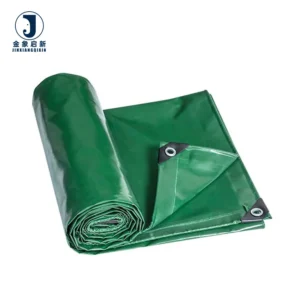
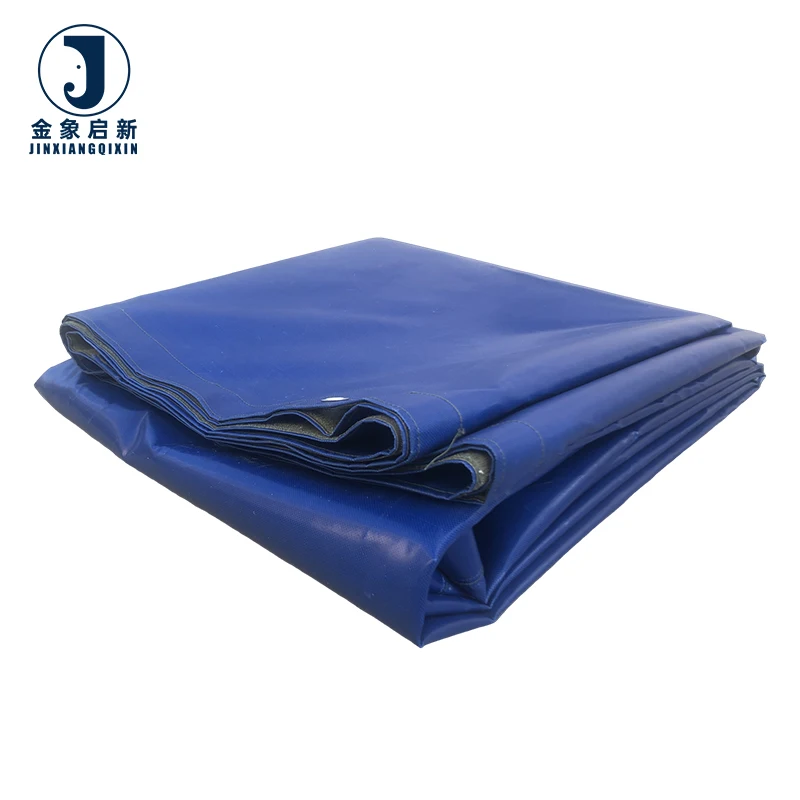
Precision Coating Control — Every roll of this industrial grade waterproof PVC coated fabric is produced under strict process monitoring, ensuring the stated GSM and base fabric denier match the delivered material.
Technical Specifications
| Parameter | Value |
|---|---|
| Product Type | PVC Coated Tarpaulin Fabric |
| Base Fabric | 100% High Toughness Polyester Yarn (500D / 1000D / up to 2000D depending on grade) |
| Coating Material | PVC (Polyvinyl Chloride) |
| Coating Method | Lamination technology and hot melt coating technology |
| Thickness (Medium) | 0.35–0.45 mm |
| Thickness (Heavy-duty) | 0.70–1.0 mm |
| Thickness (Super Heavy) | 1.2–1.5 mm |
| Weight (Medium) | 400–500 g/m² |
| Weight (Heavy-duty) | 700–1000 g/m² |
| Weight (Super Heavy) | 1100–1500 g/m² |
| Tensile Strength (Medium) | Warp 1500–2000 N/5cm / Weft 1200–1800 N/5cm (test standard not stated) |
| Tensile Strength (Heavy-duty) | Warp 2000–2500 N/5cm / Weft 1800–2200 N/5cm (test standard not stated) |
| Tensile Strength (Super Heavy) | Warp 2500–3000 N/5cm / Weft 2200–2800 N/5cm (test standard not stated) |
| Key Features | Waterproof, cold resistant, mold proof, excellent welding tear strength, color fastness |
| Treatment Options | Flame retardant, anti-static, cold resistant, mold prevention (confirm grade required for your market) |
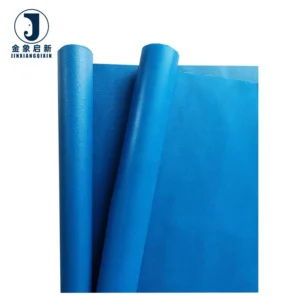
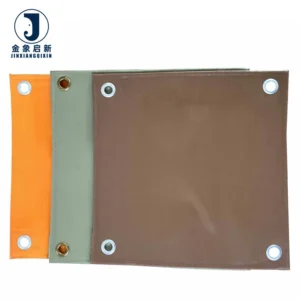
| Color | Blue (standard listing), custom colors available |
Application Suitability
| Application | Exposure & Requirement |
|---|---|
| Truck and Trailer Side Curtains | Constant flexing, road debris abrasion, weather exposure, requires high weld integrity |
| Mining Ventilation Ducts | Airflow pressure, dust accumulation, requires fire safety compliance and anti-static properties |
| Tensioned Membrane Structures | High tension loads, permanent UV exposure, requires dimensional stability and heavy GSM |
| Industrial Equipment Covers | Outdoor storage, moisture, chemical dust, requires waterproofing and mold resistance |
| Inflatable Structure Fabric | Internal pressure, repeated inflation cycles, requires high tensile strength and seam adhesion |
Why Coating Adhesion Matters More Than Stated GSM
Welded seams failing before the fabric does is often a coating adhesion problem, not a base fabric weakness.
When you specify a PVC coated tarpaulin fabric, the quoted GSM tells you the total weight, but it does not reveal how well the PVC layer bonds to the polyester base [NEED_CITE: tensile and tear test methods for coated fabrics per ISO 1421]. A heavy fabric with poor adhesion will delaminate at the weld line under load. Technical buyers must look at both the coating method and the peel strength data to predict fabrication performance, because a roll that feels substantial can still fail during high-frequency welding.
Hot Melt Coating and Structural Welding Integrity
The PVC coated tarpaulin fabric in this range uses hot melt coating technology, where liquid PVC is applied directly to the woven polyester substrate. This method allows the coating to penetrate the weave structure, creating a mechanical bond that resists separation during thermal welding. Fabricators producing truck side curtains or inflatable structures rely on this adhesion to ensure the welded seam reaches a percentage of the base fabric tensile strength.
Lamination Technology for Surface Consistency
For applications demanding a uniform surface finish, lamination technology bonds pre-formed PVC films to the base fabric under heat and pressure. This approach delivers consistent thickness and a controlled surface texture [NEED_CITE: coating adhesion and peel strength testing standards for technical textiles]. The choice between hot melt and lamination directly influences how the material behaves when cut, welded, or subjected to flex cycles in finished products.
Decoding Denier and Tensile Strength Across Weight Tiers
The relationship between base yarn denier and tensile strength is not linear; it depends on weave density and coating penetration. A 500D yarn in the medium weight tier delivers adequate strength for lightweight engineering covers, while the 1000D and 2000D options in heavy and super heavy grades provide the warp and weft resistance needed for tensioned structures. The PVC coating adds dimensional stability but does not compensate for an under-specified base fabric. Technical buyers should match the denier to the peak load, not just the GSM.
The Consequence of Specifying Without Test Standards
When flame retardant or anti-static treatments are claimed without referencing a specific grade or test standard, the material may fail site inspection or regulatory audit. A mining contractor receiving unverified duct fabric faces shutdown delays; a construction project using non-compliant membrane fabric risks rejection by the fire marshal [NEED_CITE: DIN 4102 fire classification for building materials]. Always request the test report that matches your local compliance requirement before confirming a production run.
Why Technical Buyers Source This Coated Fabric Here
- Process Control: Three full production lines and 36 sets of professional equipment allow consistent coating weight application across the 400 to 1500 GSM range.
- Material Engineering: A 10-person R&D team handles base fabric selection and coating formulation adjustments for specific tensile and welding requirements.
- Quality Verification: Dedicated QA/QC inspects every production stage, ensuring the GSM, thickness, and coating adhesion meet the specification sheet before dispatch.
- Sample Speed: Custom material samples, including specific color matches and treatment options, are developed within days for technical evaluation and weld testing.
Documentation & Verification
- Material specification sheet detailing base fabric denier, coating method, and exact GSM per roll.
- Test reports for flame retardant and anti-static treatments — verify the standard matches your site requirement.
- Pre-shipment inspection record confirming roll weight, thickness, and visual consistency against the order.
- Roll packing list specifying batch numbers for traceability of coating formulation and base fabric lot.
Fabrication, Handling & Storage
- Adjust high-frequency welding power and dwell time based on the specific thickness tier (0.35–1.5 mm) to achieve full seam fusion.
- Store rolls horizontally on pallets to prevent edge crushing, which affects weld consistency on heavy-duty 1000D grades.
- Allow cold-resistant grades to acclimate to workshop temperature before unrolling to avoid coating stiffness and crease damage.
- Use compatible PVC-based repair patches and solvent cements that match the hot melt or laminated coating chemistry.
Initiating a Technical Inquiry
To receive an accurate material recommendation, provide the target GSM, the required base fabric denier, and the specific environmental exposure your finished product will face. If your application requires fire safety or anti-static compliance, state the governing standard so the correct treatment grade is formulated. Indicate whether you need roll stock for your own fabrication or if custom width and color matching are required for a production run.
Frequently Asked Questions
Q: How is the total GSM of the PVC coated tarpaulin fabric verified before shipment?
A: The total GSM includes both the base polyester fabric and the PVC coating. Our pre-shipment inspection involves weighing sample cuts from the production roll to verify the combined weight matches the specification sheet. We provide a weight verification record per roll, allowing you to confirm the material received matches the technical data provided at the quotation stage.
Q: What test standards support the flame retardant treatment claims?
A: Flame retardant treatments are available in various grades, but the specific standard must be confirmed for your market. We can supply fabric treated to meet standards such as B1 per DIN 4102, M2, or NFPA 701, provided the requirement is stated during the inquiry. A test report from an accredited laboratory is generated for the specific production batch to verify compliance.
Q: How does base fabric denier affect the welding tear strength of the finished product?
A: Higher denier yarns, such as 1000D or 2000D, provide greater tear resistance that propagates through the welded seam. However, the coating method must be matched to the base fabric density to ensure the PVC penetrates the weave. Our hot melt coating process is calibrated to the specific denier, ensuring the weld line achieves maximum tear strength without delamination during flexing.
Q: Is it possible to obtain samples with custom colors and treatments for lab testing?
A: Yes, our R&D team develops custom samples within days, including specific color matches and functional treatments like anti-static or flame retardant. These samples are produced on our pilot line using the same hot melt or lamination technology as bulk production, allowing you to perform accurate weld tests, tensile checks, and compliance verification before authorizing the full order.
Q: What is the difference in application between the lamination and hot melt coating methods?
A: Hot melt coating provides superior adhesion for applications involving frequent welding and high flexing, such as truck side curtains. Lamination technology delivers a more uniform surface and consistent thickness, which is often preferred for architectural membranes and printed applications. We recommend the coating method based on your fabrication process and the mechanical demands of the end use.