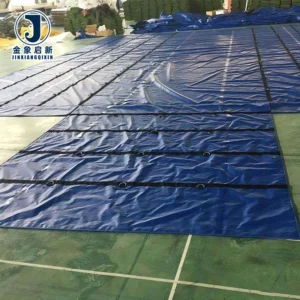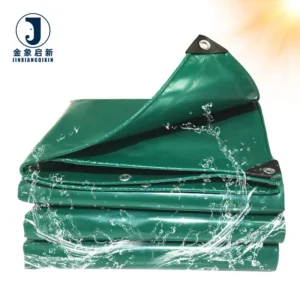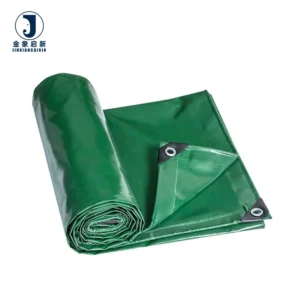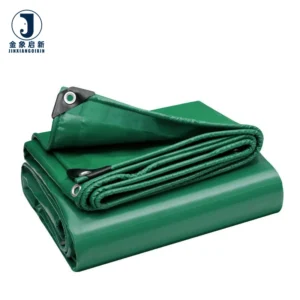
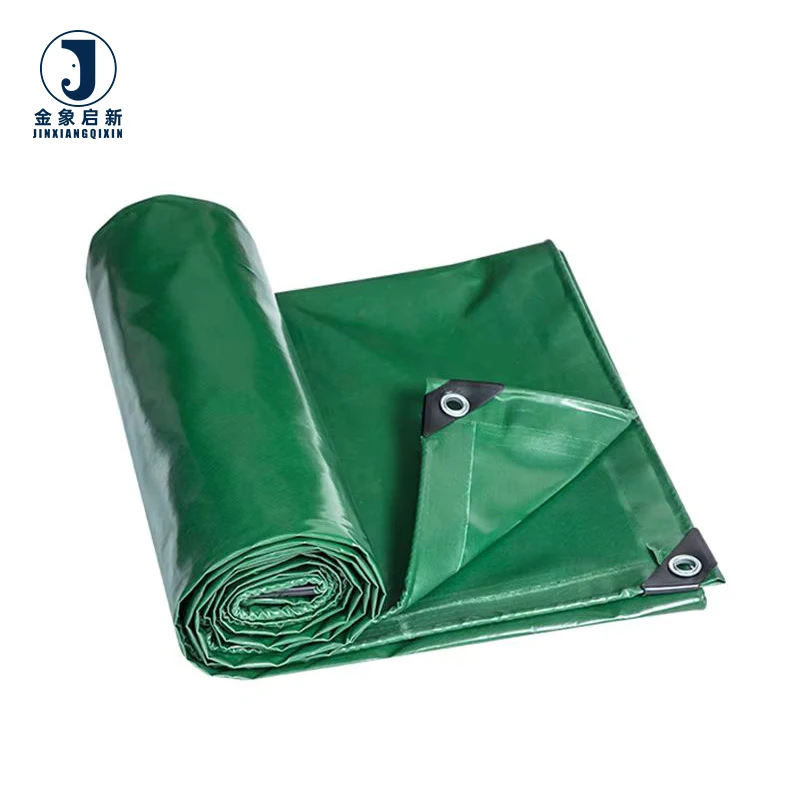
Proven Coating Adhesion Control — Every roll of this laminated PVC coated fabric undergoes in-process weight verification, ensuring the hot melt coating bonds consistently to the high toughness polyester base across the full production run.
Technical Specifications
| Parameter | Value |
|---|---|
| Product Type | PVC Coated Fabric |
| Base Fabric | 100% high toughness polyester yarn |
| Weight Range | 400–1500 g/m² |
| Thickness Range | 0.35–1.5 mm |
| Knitting Density | 500D–2000D |
| Tensile Strength | Longitude 1500–3000 N/5cm / Latitude 1200–2800 N/5cm |
| Coating Technology | Lamination technology and hot melt coating technology |
| Surface Finish | Available in glossy or matte finish |
| Color Fastness | Best color fastness (test basis not stated in source) |
| Flame Retardant | Available in flame retardant grades — confirm the grade required for your market |
| Anti-Static | Available with anti-static treatment (surface resistance or standard not stated in source) |
| Anti-Mildew | Mold proof treatment available |
| Cold Resistance | Cold resistant cracking treatment available |
| UV Treatment | Available with weather resistance treatment — request UV exposure test report |
| Waterproof | Fully waterproof coated construction |
| Welding Tear Strength | Excellent welding tear strength (test basis not stated in source) |
| Standards | ISO certified, CE certified |
Application Suitability
| Application | Exposure & Requirement |
|---|---|
| Membrane structure roofing | Continuous tensile load, wind uplift, UV exposure, thermal cycling |
| Stadium roof canopy | Large-span tension, weather extremes, fire safety compliance, public safety codes |
| Industrial pipe canopy | Chemical exposure, abrasion from maintenance access, water ingress prevention |
| Tensioned structural fabric | Biaxial stress, long-term creep under load, seam integrity at anchor points |
| Heavy truck tarpaulin | Road vibration, flex fatigue, abrasion at tie-down points, UV degradation |
| Engineering protective cloth | Impact resistance, puncture from site debris, temporary weather shielding |
Why a Coating Method Matters More Than GSM for PVC Coated Tarpaulin 620gsm Membrane Structure Fabric
The coating process determines whether the fabric holds together at the seam, not just how heavy it feels in your hand.
Technical buyers routinely specify GSM as the primary acceptance criterion, yet two rolls at the same weight can behave completely differently under tensile load depending on how the PVC was applied to the base fabric [NEED_CITE: tensile and tear test methods for coated fabrics per ISO 1421]. Lamination and hot melt coating produce different adhesion profiles, which directly affect how the material responds at welded seams — the exact point where membrane structures fail first. When the coating delaminates under flex stress, the base fabric is left exposed and the entire panel loses structural continuity. This is why specifying the coating technology alongside the weight is non-negotiable for any tensile architecture project.
Hot Melt Coating and Adhesion Integrity
Hot melt coating technology forces the PVC compound into the polyester yarn interstices under heat and pressure, creating a mechanical bond that resists peel forces at the weld line. For PVC coated tarpaulin 620gsm membrane structure fabric, this means the seam strength tracks closely with the fabric’s inherent tear resistance rather than becoming the weak point. Lamination technology adds a secondary bonding step that can improve surface uniformity, though the adhesion mechanism differs and must be validated for your specific welding equipment and temperature profile.
Base Fabric Denier and Tensile Translation
The 500D to 2000D knitting density range covers the spectrum from mid-weight architectural panels to heavy-duty structural membranes. Higher denier yarns distribute tensile load across more filaments per bundle, reducing the chance of yarn pull-out under sustained biaxial stress [NEED_CITE: relationship between denier and tear propagation in coated polyester fabrics]. The longitude and latitude tensile values reflect the knitting pattern and yarn orientation — warp strength typically exceeds weft strength due to the loom tension during weaving, and membrane designers must align the stronger axis with the primary load path.
Treatment Options and the Test Report Gap
Flame retardant, anti-static, cold resistant, and UV treatments are available across this PVC coated fabric range, but each treatment carries its own verification requirement. A flame retardant claim without a stated grade — such as B1 per DIN 4102 or M2 per French standard — cannot be matched to your local building code [NEED_CITE: DIN 4102 fire classification for building materials]. Request the specific test report before confirming your order, particularly for stadium roof and public assembly applications where fire safety certification is a contractual prerequisite, not an optional extra.
Reading the Specification Sheet Beyond the Weight Number
GSM tells you how much material is present per square metre, but it does not tell you how that weight is distributed between base fabric and coating. A heavier coating with a lighter base yarn may meet the same GSM as a lighter coating on a denser weave, yet the two fabrics will perform very differently under load. Coating weight influences weld temperature settings, surface flexibility at low temperatures, and UV absorption rate. Base fabric denier and mesh count determine how a tear propagates once initiated — a tighter weave arrests crack growth faster but costs more to produce. Understanding this balance lets you specify the right combination for your structural load case rather than paying for weight that does not contribute to performance.
The Hidden Cost of Specifying on Weight Alone
When a membrane structure fabricator selects material based only on GSM, the consequences surface during installation or, worse, after the structure is commissioned. A roll that meets the quoted weight but uses a lower-denier base fabric will show reduced tear resistance at the anchor points where stress concentrates. Coating that was applied without adequate adhesion control will delaminate at the heat-welded seams after repeated thermal cycling [NEED_CITE: coating adhesion failure mechanisms in PVC architectural membranes]. Color variation between rolls in the same order becomes visible once panels are installed side by side on a stadium canopy, forcing a costly panel replacement. These failures trace back to incomplete specifications, not to manufacturing defects.
Why Fabricators Source This PVC Coated Fabric Here
Three full production lines and 36 sets of professional equipment support consistent coating weight control across high-volume orders, reducing roll-to-roll variation that causes panel mismatch on large membrane projects. The 10-person R&D team develops samples within days when you need to validate a specific denier, coating weight, or treatment combination against your structural calculations. Dedicated QA/QC at every production stage means the GSM on the pre-shipment inspection record matches the quotation — not an approximation rounded down during finishing. ISO and CE certification documentation ships with every order, supporting customs clearance and compliance submission in your destination market. Nearly 30 years of focused coated fabric production means the process parameters for hot melt coating and lamination are established baselines, not experimental runs.
Documentation & Verification
- Material specification sheet stating exact GSM, base fabric denier, and coating method for this PVC coated fabric
- Test reports for flame retardant and UV treatment grades — request before order confirmation
- Pre-shipment inspection record with weight verification per roll against the stated specification
- ISO and CE certificates included with dispatch documentation for compliance submission
- Roll packing list detailing net weight, dimensions, and batch reference for each unit
- Certificate of origin provided for customs clearance in destination market
Fabrication, Handling & Storage
- Set welding temperature based on the hot melt coating thickness to avoid burning through the PVC layer
- Allow cold-resistant treated rolls to acclimatise before unrolling to prevent cracking at low ambient temperatures
- Store rolls upright on pallets to avoid flat spots that create permanent creases in the coated surface
- Use gloss or matte finish selection to match your cleaning protocol and surface dirt accumulation expectations
- Align the longitude tensile axis with the primary load direction when cutting membrane panels
- Seal cut edges with compatible PVC adhesive to prevent moisture ingress into the polyester base yarn
Before You Enquire
Provide your membrane structure load case, including the primary tension direction and expected wind uplift values, so the correct denier and tensile axis can be matched to your project. Confirm the fire safety classification required by your local building authority — whether DIN 4102, NFPA 701, or a regional standard — so the appropriate flame retardant grade is applied and documented. Specify whether you need full rolls at standard width or custom widths to minimise offcut waste on your panel layout.
Frequently Asked Questions
Q: How is the actual GSM verified before each roll ships?
A: Each roll is sampled and weighed against the material specification sheet during pre-shipment inspection. The inspection record documents the measured weight per square metre, and any roll falling outside the stated tolerance is held for review. This verification step is standard across all production runs, not a special request.
Q: Which flame retardant grade applies to this PVC coated fabric?
A: Flame retardant treatment is available, but the specific grade must be confirmed against your target market’s fire safety code. Standards such as DIN 4102 B1, NFPA 701, or M2 each require different formulations. Request the relevant test report before placing your order to ensure compliance with your project specification.
Q: What test basis supports the weather resistance and UV treatment claim?
A: UV and weather resistance treatments are available for this fabric range, and the supporting test report can be provided upon request. Ask for the UV exposure test data that documents the test method and duration, so you can validate the treatment against your project’s expected service environment and maintenance schedule.
Q: How does hot melt coating differ from knife coating for weld performance?
A: Hot melt coating forces PVC into the polyester yarn interstices under heat and pressure, producing a mechanical bond that supports strong heat-welded seams. Knife coating applies a surface layer that may require different welding temperature profiles. Your fabricator should run weld tests on sample material to confirm the optimal settings for their equipment.
Q: What base fabric denier options are available and how do they affect strength?
A: The range covers 500D to 2000D knitting density, with higher denier providing greater tear resistance and load distribution across the yarn bundles. The longitude and latitude tensile values shift with denier selection. Provide your structural load requirements so the appropriate base fabric can be matched to your membrane design.