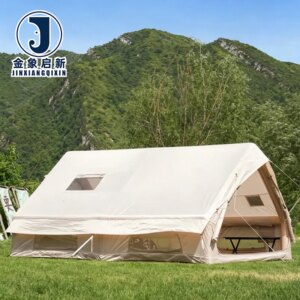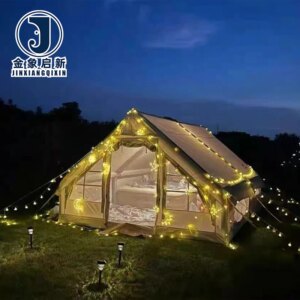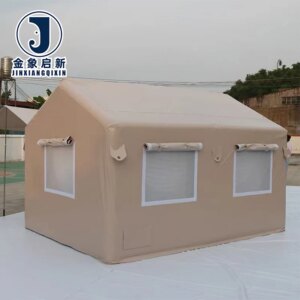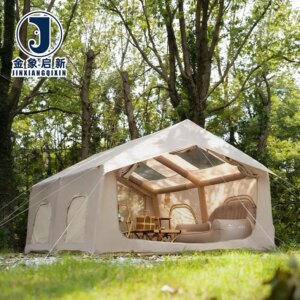
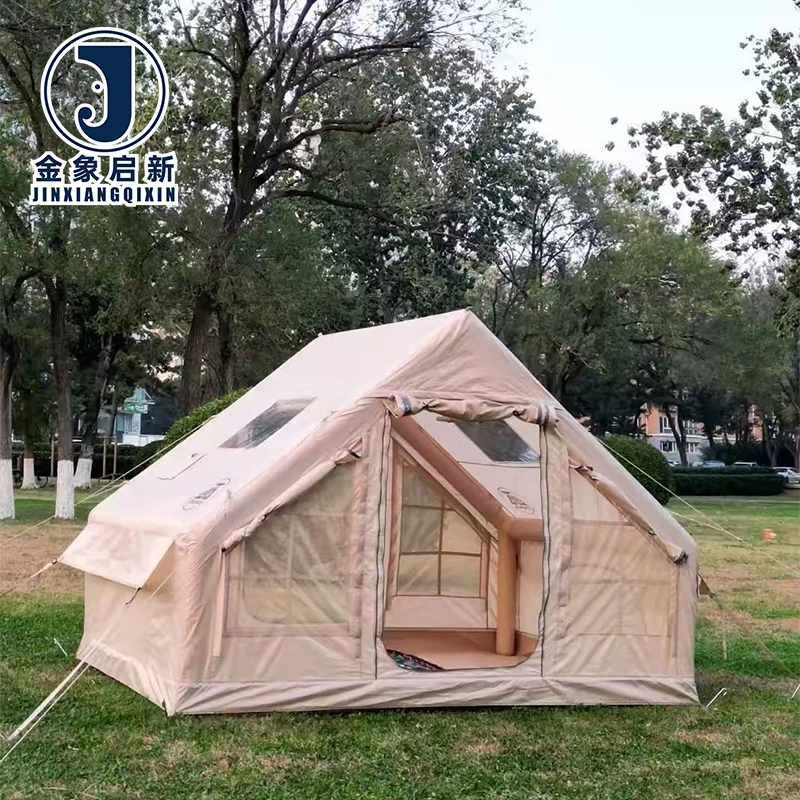
Coating Weight Control — every roll of PVC inflatable tent fabric is verified against the stated GSM with dedicated QA staff inspecting adhesion and coating uniformity before release.
Technical Specifications
| Parameter | Value |
|---|---|
| Product Type | Inflatable Tent |
| Core Material | PVC waterproof fabric |
| Product Forms | Automatic opening, four-season design, single layer construction, extended type |
| Key Performance | Waterproof, UV-resistant (test basis not stated in source), tear-resistant |
| Customization Service | OEM & ODM customization, sample customization, pattern printing |
| Quality Control System | Strict full-process quality inspection with dedicated QA&QC staff on site |
| Standards | ISO9001, ISO14001, ISO45001, CE |
Application Suitability
| Application | Exposure & Requirement |
|---|---|
| Disaster relief operations | Rapid inflation cycles, unpredictable weather, repeated deployment and pack-down |
| Temporary storage facilities | Sustained internal pressure, dust and moisture ingress prevention, structural stability |
| Construction site shelters | Abrasion from site debris, UV exposure across seasons, wind-load stress at anchor points |
| Emergency response centers | Immediate deployment under time pressure, four-season temperature variation, high visibility requirements |
Why the Weld Line Fails Before the Fabric Does on Inflatable Structures
Seam integrity under repeated inflation is determined by coating adhesion, not fabric tensile strength alone.
When an inflatable tent cycles through inflation and deflation, the welded seams experience concentrated stress at every pressure change. The PVC inflatable tent fabric may hold its rated tensile load, but if the coating-to-base-fabric adhesion is weak, the weld zone delaminates first. Technical buyers specifying material for emergency shelters often review GSM and tensile data while overlooking peel strength [NEED_CITE: tensile and tear test methods for coated fabrics per ISO 1421]. The result is a structure that passes initial inspection but fails at the seam after several deployment cycles, precisely when reliability matters most.
Coating Method and Air-Holding Seam Integrity
The PVC coating applied to this inflatable tent fabric determines how well heat-welded seams hold under internal pressure. During inflation, every seam acts as a structural joint bearing the full air load. The coating must bond to the base fabric with sufficient adhesion strength so that the weld zone transfers stress into the body of the material rather than peeling apart at the interface. For four-season emergency deployment, this adhesion must remain stable across temperature swings that cause the PVC to stiffen in cold conditions and soften in heat.
Base Fabric Contribution to Tear Resistance at Flex and Anchor Points
Inflatable tents concentrate mechanical stress at anchor points and wherever the structure flexes during wind loading. The base fabric denier and weave pattern within this PVC inflatable tent fabric govern how a small puncture or cut propagates under load. A tightly woven base restricts tear propagation, keeping damage localised rather than allowing it to run along a warp or weft line. This matters especially for single-layer construction, where there is no secondary fabric layer to arrest a tear once it starts [NEED_CITE: tear propagation behaviour in coated technical textiles].
Reading the Specification Sheet Beyond GSM
GSM tells you the total mass of the coated fabric per square metre, but it does not distinguish between base fabric weight and coating weight. A high GSM achieved mostly through heavy coating may offer good waterproofing yet show lower tear resistance than a lighter fabric with a denser base weave. For inflatable tent applications, the balance between coating thickness and base fabric denier determines both air-holding capability and mechanical durability. Surface finish also plays a role — glossy surfaces shed water and dirt more readily, while matte finishes reduce glare and may improve print adhesion for branding or identification markings. The single-layer construction of this product means every performance property must come from one integrated fabric system, making the specification balance particularly critical.
What Happens When the Specification Does Not Match the Deployment
Ordering inflatable tent fabric based on a single property creates predictable field failures. If the UV-resistant treatment is specified without confirming the test basis, the fabric may degrade faster than expected under sustained sun exposure at remote project sites. If the coating adhesion is not verified against the inflation pressure the structure will carry, seams open during the first storm. Batch-to-batch colour variation across rolls becomes visible once multiple shelters are erected side by side at an emergency response centre, undermining the professional appearance the operation requires [NEED_CITE: colour consistency standards in batch-produced coated fabrics]. These are not cosmetic issues — they compromise the shelter’s function and the credibility of the procurement decision.
Sourcing PVC Inflatable Tent Fabric With Verified Process Control
Coating weight and adhesion are controlled through in-process monitoring across three full production lines, not checked only at final inspection. A ten-person R&D team handles material selection and sample development, allowing specification adjustments before bulk production begins. Dedicated QA and QC staff inspect every production stage, with one hundred percent inspection conducted before shipment. Custom widths, colours, and pattern printing are developed as samples within days, giving technical buyers physical confirmation before committing to volume. Documentation accompanies every dispatch, including material specification sheets and test reports matched to the batch produced.
Documentation & Verification
- Material specification sheet stating GSM, base fabric denier and coating type for each roll
- Test report for UV-resistant grade with method and exposure basis where applicable
- ISO and CE certificates traceable to the producing facility
- Pre-shipment inspection record covering inflation test and seam integrity
- Roll packing list with batch reference for traceability
Fabrication, Handling & Storage
- Heat-weld parameters must match the PVC coating thickness to ensure full seam fusion without burn-through
- Store rolls upright on clean pallets to prevent flat-spot deformation of the PVC inflatable tent fabric
- Avoid dragging cut panels across abrasive surfaces that score the coated surface before welding
- Clean with mild detergent only — solvent-based cleaners attack the PVC plasticiser and weaken coating adhesion
- Inflate test structures in moderate temperatures to allow the PVC to reach full flexibility before stress loading
What We Need to Quote Accurately
Provide the intended deployment environment and the temperature range the inflatable tent will face across its service seasons. Specify whether the structure must meet fire-retardant or anti-static requirements for your market, and to which standard. Confirm the required width, colour, and whether you need rolls or finished cut-to-size panels. If pattern printing or branding is required, share the artwork so we can assess print compatibility with the specified surface finish.
Frequently Asked Questions
Q: How is the GSM of the inflatable tent fabric verified on arrival and what is the tolerance?
A: Each roll is weighed and measured before dispatch, with the result recorded on the pre-shipment inspection report. On arrival, you can cut a measured sample and verify the GSM against the stated value. We recommend confirming the acceptable tolerance band during the quotation stage so both parties agree on the verification method before production begins.
Q: What is the test basis for the UV-resistant claim and how does it relate to expected outdoor service life?
A: UV-resistant treatment is applied during coating, but the specific test method and exposure duration should be confirmed against your deployment climate. We provide the test report where applicable, stating the standard used. Technical buyers should match the test basis to the UV index and seasonal exposure expected at the installation site.
Q: How do welded seams perform against the fabric itself under repeated inflation and deflation cycles?
A: Welded seams on PVC-coated inflatable fabric transfer load through the coating-to-base-fabric bond. When adhesion is properly controlled, the weld holds through repeated pressure cycles. We recommend requesting the peel strength data for the specific coating weight you specify, as this directly determines whether the seam or the fabric body reaches its limit first.
Q: Which fire-retardant or anti-static grades are available for inflatable tent fabric, and to what standard?
A: Fire-retardant and anti-static treatments are available in multiple grades. The appropriate grade depends on the compliance requirements of your market and the specific application — mining ventilation, construction shelter, or public-assembly use each carry different classifications. State the standard your project requires during inquiry so we can match the formulation and provide the corresponding test documentation.