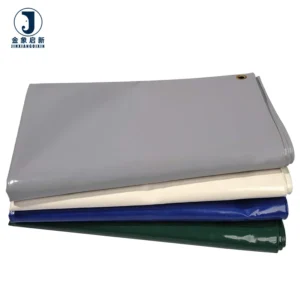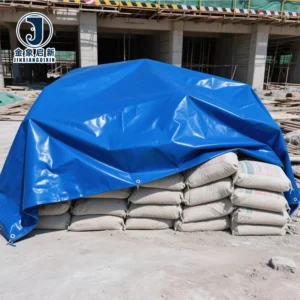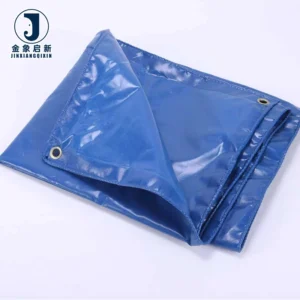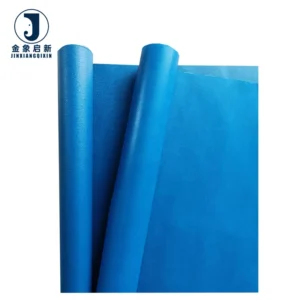
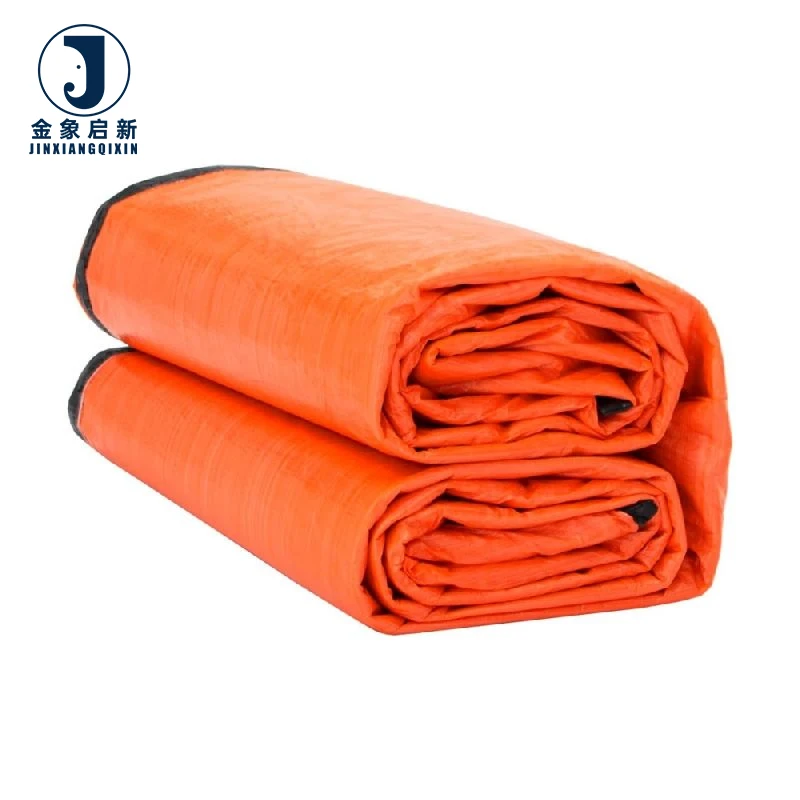
Multi-layer insulation engineering — Each PE insulated tarpaulin roll is produced with verified layer adhesion and closed-cell core density, ensuring thermal retention performance holds throughout the curing or enclosure cycle.
Technical Specifications
| Parameter | Value |
|---|---|
| Product Type | PE Insulated Tarpaulin |
| Structure | PE cloth + closed cell PE foam core + PE cloth |
| Total Thickness Options | 2x2mm, 3×1.5mm, 1x4mm, 5mm, 6mm, 8mm, 12mm |
| Dimensions | 6ftx24ft, 8ftx25ft, 12ftx20ft, 12ftx24ft |
| Color Options | Orange, Black, White, Silver, Customized color |
| Grommet Configuration | Aluminum grommets, hole distance 61cm and 91.5cm |
| Edge Finish | Reinforced stitch, rust-proof brass grommets around all finished stitched edges |
| Waterproof | Yes — surface fabric waterproof on both faces |
| UV Treatment | Applied (confirm test standard and duration for your market) |
| Flame Retardant | Available in flame retardant grades — confirm the grade required for your market |
| Standards | ISO, CE |
Application Suitability
| Application | Exposure & Requirement |
|---|---|
| Concrete curing blankets | Sub-zero ambient temperatures, sustained thermal retention required to maintain hydration, moisture exposure from curing compounds |
| Heated building enclosures | Vertical hang on scaffolding, wind load on grommet and edge reinforcement, interior heat retention |
| Wind blocks on construction sites | Medium to high wind exposure, frequent repositioning, abrasion against scaffolding tubes |
| Equipment and material covers in cold weather | Freezing conditions, snow load, waterproof barrier to prevent moisture ingress into insulation core |
What Thermal Claims Mean Without Layer-Level Evidence
Insulation performance stated on a tarpaulin datasheet often reduces to a single R-value or temperature rating — yet the factor that determines whether that rating holds after weeks on site is the core cell structure and how the layers bond together. Specifying PE insulated tarpaulin by thickness alone misses the difference between closed-cell and open-cell foam, and that difference decides whether moisture compromises thermal performance over time.
I have reviewed enclosure projects where insulation panels lost effectiveness within one winter season because the core absorbed moisture through micro-tears in the facing fabric. Closed-cell PE foam resists this failure path: each cell is sealed, so water cannot migrate through the core even when the outer PE cloth sustains minor damage. The PE insulated tarpaulin material coating technology matters here because the lamination method between PE cloth and foam determines peel strength — and peel strength determines whether delamination creates hidden air gaps that defeat the insulation. [NEED_CITE: thermal insulation testing methods for flexible composite materials]
How the Three-Layer Construction Retains Heat Under Job-Site Conditions
The PE cloth facings on both sides serve two distinct functions: waterproofing and mechanical protection. The outer face sheds rain, snow and curing compound splash, while the inner face contains the closed-cell PE foam core and prevents compression damage from contact with concrete forms or scaffolding clamps. The PE insulated tarpaulin material coating technology determines how reliably these layers stay bonded when the panel flexes during installation.
Closed-cell foam maintains its insulation value because the gas trapped inside each cell has low thermal conductivity. Unlike open-cell structures, compression from tie-down straps or stacked materials does not permanently collapse the cell structure — the foam recovers its thickness when the load is removed, restoring the original thermal barrier.
Grommet Spacing and Edge Reinforcement for Vertical Enclosure Use
When PE insulated tarpaulin panels hang vertically as wind blocks or heated enclosure walls, every grommet carries a share of the wind load. The aluminum grommets spaced at 61cm and 91.5cm distribute this load across a sufficient number of attachment points to prevent tear-out under medium to high wind conditions. The reinforced stitch along all finished edges, combined with rust-proof brass grommets, addresses the failure point I see most often on site: the edge hem separating from the panel body under repeated gust loading. [NEED_CITE: wind load calculation methods for temporary enclosure membranes]
Spacing selection depends on panel orientation and local wind exposure. The 61cm interval suits high-wind coastal or elevated sites where gust loads concentrate on upper attachment rows, while the 91.5cm interval is adequate for sheltered inland enclosures where panels serve primarily as thermal barriers rather than structural wind screens.
Reading Thickness Grades Against Actual Insulation Requirements
Total thickness ranges from 2x2mm through 12mm, and the numbering convention matters: a 2x2mm panel has two millimetres of foam core with approximately two millimetres of combined PE cloth facing, while a 1x4mm panel concentrates more thickness in the core itself. For concrete curing blankets, the core thickness drives thermal retention — a thicker core slows heat loss from the hydration reaction during cold-pour cycles. The PE insulated tarpaulin specification should match the minimum temperature differential between concrete surface and ambient air.
The waterproof PE cloth facings prevent moisture from reaching the foam core, which is critical because wet insulation loses thermal resistance regardless of core thickness. Both surfaces maintain waterproof integrity, so rain, snow melt and concrete bleed water do not penetrate into the foam layer where they would degrade performance and add weight. The aluminum grommets resist corrosion in these wet conditions, maintaining pull-out strength across multiple installation cycles.
When the Wrong Core Type Costs You the Pour
I have seen projects where open-cell foam insulation was substituted on site because the specification did not explicitly require closed-cell — the material passed initial inspection but absorbed concrete bleed water within days, adding dead weight and losing insulating value precisely when nighttime temperatures dropped below freezing. The cost of a failed cure is not the tarpaulin replacement; it is the concrete removal and re-pour, plus the schedule delay that cascades through every trade downstream. [NEED_CITE: cold weather concreting practices and temperature maintenance requirements per ACI 306]
Delamination between facing and core is another failure that appears only after installation. When layer adhesion is insufficient, air pockets form between the PE cloth and foam, creating thermal bridges that allow heat to escape through channels invisible from the surface. Panels that appear intact externally no longer deliver uniform insulation across their area, and concrete surface temperatures drop below the minimum curing threshold in isolated zones.
Production Controls That Apply to This Product Range
Three full production lines and 36 sets of professional equipment support consistent lamination pressure across every PE insulated tarpaulin panel, which is the process variable that most directly affects layer adhesion and long-term delamination resistance. The 10-person R&D team develops samples within days when custom dimensions or thickness grades are needed outside the standard range.
Dedicated QA/QC inspection covers layer bond integrity, grommet pull-out strength and edge stitch consistency before dispatch. Pre-shipment inspection records document thickness measurements across the order so buyers can verify that the grade specified matches the material received. [NEED_CITE: pre-shipment inspection standards for composite textile products]
Documentation & Verification
- Material specification sheet stating exact layer composition, core type and total thickness per grade
- UV treatment test basis and accelerated weathering duration stated on documentation
- Pre-shipment inspection record with thickness and grommet spacing measurements per panel
- Certificate of origin and customs documentation for cross-border shipment
- ISO and CE certificates referenced against the production facility scope
Fabrication, Handling & Storage
- Store PE insulated tarpaulin panels flat or loosely rolled to prevent permanent compression marks on the closed-cell foam core
- When folding for transport, avoid sharp creases at grommet rows to maintain reinforced stitch integrity
- Clean waterproof PE cloth surfaces with mild detergent; solvent-based cleaners may degrade the facing laminate bond
- Repair minor facing tears with compatible PE repair tape before moisture reaches the foam core layer
- Cut panels with sharp blades to prevent foam core compression at edges, maintaining clean lamination lines
Requesting a Specification Match for Your Application
Provide the target ambient temperature range and the minimum concrete surface temperature your curing protocol requires so we can recommend the appropriate thickness grade from the available range. Specify whether panels will hang vertically as enclosure walls or lay flat as curing blankets, as this determines whether 61cm or 91.5cm grommet spacing is more suitable for the expected wind load. If your site requires a specific flame retardant grade for insurance or regulatory compliance, state the test standard so we can confirm availability before production begins.
Frequently Asked Questions
Q: How does closed-cell PE foam core compare to open-cell for long-term insulation performance?
A: Closed-cell PE foam maintains thermal resistance because sealed cells prevent moisture absorption, even when the outer PE cloth facing sustains minor damage on site. Open-cell foam absorbs water, which degrades insulation value and adds weight. For concrete curing and enclosure use where moisture exposure is constant, closed-cell construction preserves performance across the full service period.
Q: What thickness grade is recommended for concrete curing vs. enclosure wind-block applications?
A: Concrete curing blankets typically need greater core thickness — 6mm to 12mm grades — to maintain hydration temperature through sub-zero nights. Enclosure wind blocks may perform adequately at 2x2mm or 3×1.5mm when the primary function is wind reduction with supplemental heating inside. Match the grade to the temperature differential your application must sustain.
Q: Is the UV treatment backed by a specific test standard or accelerated weathering duration?
A: UV treatment is applied to the PE cloth facings, but the test standard and accelerated weathering hours are not stated in the base specification. Request the test report referencing the specific standard and duration before committing to extended outdoor exposure, particularly for enclosure panels that remain in direct sunlight for multiple seasons.
Q: How is layer adhesion between PE cloth and foam core verified during production?
A: Layer adhesion is verified through peel strength testing at defined intervals during lamination, ensuring the bond between PE cloth facing and closed-cell foam core meets the threshold required to prevent delamination under job-site flexing. Pre-shipment inspection records document these test results so buyers can confirm bond integrity before the material leaves the facility.
Q: What grommet material and spacing options are available for high-wind vertical installations?
A: Aluminum grommets are standard at 61cm or 91.5cm spacing, with rust-proof brass grommets used along reinforced stitch edges. For high-wind vertical installations, the 61cm spacing distributes load across more attachment points and reduces tear-out risk. Edge reinforcement with brass grommets addresses the highest-stress zone where panel weight and wind gust combine.