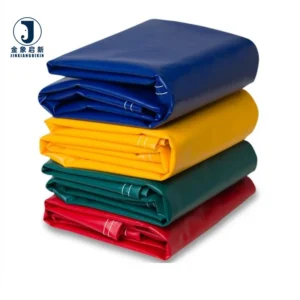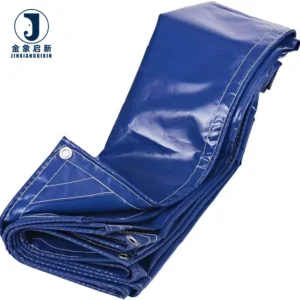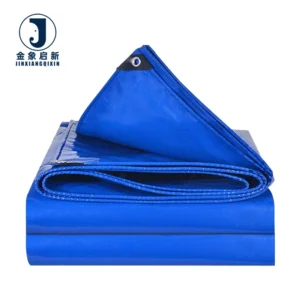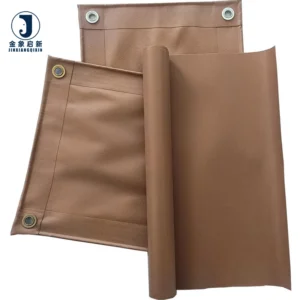
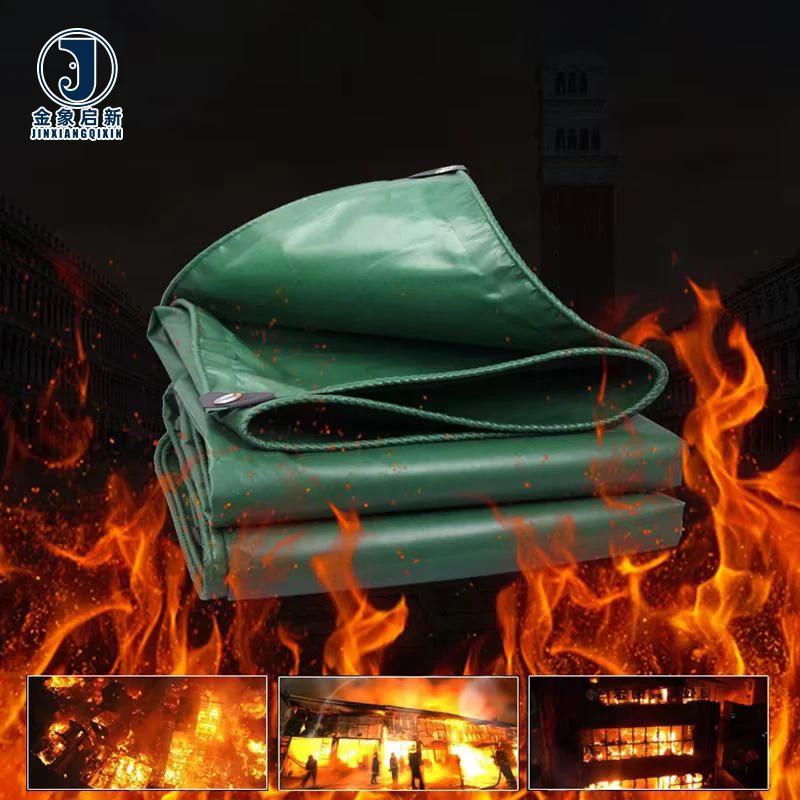
Deep Coating-Weight Process Control — Our knife coated PVC tarpaulin fabric delivers verified GSM with a material specification sheet for every roll, ensuring technical buyers receive the exact construction ordered.
Technical Specifications
| Parameter | Value |
|---|---|
| Product Type | PVC Coated Tarpaulin Fabric |
| Material | PVC Vinyl |
| Weight | ≥450 GSM |
| Fabric Construction | Woven |
| Coating Method | Knife Coated |
| Waterproof | Yes |
| Anti-UV Treatment | Available (test basis not stated in source) |
| Surface Finish | Double-side available |
| Color Options | Black back / Custom colors |
| Customization | Custom size roll |
| Tear Resistance | High |
| Standards | ISO, CE |
Application Suitability
| Application | Exposure & Requirement |
|---|---|
| Truck and trailer covers | Constant flexing at load points, road abrasion, UV exposure, weather resistance |
| Outdoor tent fabric | Wind loading, seam stress, water penetration, repeated folding |
| Industrial equipment covers | Chemical splash, dust ingress, mechanical impact, outdoor storage |
| Vehicle protection | Abrasion from tie-downs, temperature fluctuation, UV degradation |
| Structure coverings | Long-term weathering, wind uplift, membrane tension, UV stability |
Why Base Fabric Construction Determines Real-World Durability
Woven base fabric with knife coated PVC construction delivers tear resistance that matters when the material flexes under load.
Technical buyers evaluating PVC coated tarpaulin fabric material supplier options often focus on GSM alone, but the base fabric denier and weave pattern determine how tears propagate once initiated. I have seen coated fabrics fail at stress concentrations where the weave structure could not arrest crack growth, regardless of total weight [NEED_CITE: tensile and tear test methods for coated fabrics per ISO 1421]. The relationship between warp and weft density directly influences how the material handles biaxial loading during installation and service.
Coating Adhesion and Long-Term Performance
Knife coated PVC construction provides controlled coating weight and penetration into the woven base fabric, creating mechanical interlock that resists delamination under repeated flex cycles. This coating method allows precise GSM control while maintaining the base fabric’s inherent tear resistance. The coating thickness must balance protection against flexibility — too thin and the base fabric degrades from UV and abrasion, too thick and the material becomes brittle at fold lines. PVC coated tarpaulin fabric material supplier documentation should specify both total GSM and coating weight separately to allow proper specification.
Weld Behavior and Fabrication Considerations
The woven base fabric structure influences heat transfer during thermal welding, affecting seam strength relative to parent material strength. Knife coated surfaces typically provide consistent weld parameters across the roll width, reducing the risk of weak spots at seams. Fabricators working with PVC coated tarpaulin fabric must match welding temperature and dwell time to the specific coating formulation and base fabric construction [NEED_CITE: thermal welding parameters for PVC coated fabrics]. Seam failure before parent material failure indicates a mismatch between fabrication parameters and material construction.
Reading the Specification Sheet Correctly
GSM alone does not predict service performance because two fabrics at identical weight can have vastly different base fabric densities and coating ratios. A heavier base fabric with lighter coating provides higher tensile strength but reduced chemical resistance, while a lighter base with thicker coating offers better waterproofing but lower tear resistance. The woven construction type — plain, twill, or ripstop — determines how tears propagate and where stress concentrations develop. Surface finish affects cleanability and print adhesion, with glossy surfaces shedding dirt more effectively but showing scratches more readily than matte finishes. Anti-UV treatment effectiveness depends on both the additive package and coating thickness protecting the base fabric from degradation.
The Hidden Cost of Specification Shortcuts
When GSM on the quotation does not match what arrives, fabricators face material that fails earlier than designed, leading to warranty claims and customer dissatisfaction. Anti-UV or flame retardant claims without supporting test reports create liability exposure when installed materials degrade prematurely or fail fire code inspections [NEED_CITE: fire classification standards for temporary structures]. Color variation between rolls in the same order becomes visible once panels are installed side by side, forcing selective cutting or complete rejection. Weld seams failing before the fabric itself indicates either incorrect welding parameters for the material construction or coating formulation inconsistency between production batches.
Why Source From This Production Facility
Three full production lines with 36 sets of professional equipment support consistent batch-to-batch quality across large orders of PVC coated tarpaulin fabric. The 10-person R&D team handles material selection and custom sizing, developing samples within days for specific application requirements. Dedicated QA/QC at every production stage with 100% inspection before shipment catches GSM deviations and coating defects before material leaves the facility. Nearly 30 years focused on coated fabric production provides deep process control over coating weight and adhesion that newer operations cannot match. ISO and CE certified production ensures documentation meets international trade requirements.
Documentation & Verification
- Material specification sheet stating GSM, base fabric type, and coating method for every roll
- Test report for UV and flame retardant grades supplied where applicable
- Pre-shipment inspection record verifying weight against quoted specification
- Roll packing list with batch identification for traceability
- Certificate of origin and customs documentation for international shipment
Fabrication, Handling & Storage
- Match welding temperature and dwell time to knife coated PVC construction for optimal seam strength
- Store rolls horizontally on pallets to prevent permanent creasing in the woven base fabric
- Allow material to reach ambient temperature before unrolling to avoid coating damage in cold conditions
- Use compatible PVC adhesives for field repairs, matching the coating formulation for proper bonding
- Plan cutting layout to minimize waste and avoid placing seams at high-stress flex points
Requesting a Technical Quotation
Provide your specific application, environmental exposure conditions, and any fire code or regulatory requirements for your target market. Specify required roll width, annual volume, and whether you need custom colors or printed branding on the PVC coated tarpaulin fabric. Indicate whether you require raw roll stock or finished cut-to-size panels with reinforced edges and eyelets. Sample approval before bulk production ensures the material meets your fabrication and performance requirements.
Frequently Asked Questions
Q: How is GSM verified before shipment and what documentation supports the quoted weight?
A: Every roll undergoes weight verification against the stated GSM during pre-shipment inspection, with results documented on the material specification sheet provided with your order. This sheet details base fabric construction, coating method, and total weight, allowing you to verify upon arrival that the PVC coated tarpaulin fabric matches what was quoted.
Q: Can I get a test report for UV or flame retardant treatment?
A: Test reports are supplied for anti-UV and flame retardant grades where applicable, documenting the specific test method and results achieved. Confirm the grade required for your market and application before ordering, as different regions mandate different fire classification standards for temporary structures and vehicle covers.
Q: Will color be consistent across all rolls in my order?
A: Batch-to-batch color consistency is maintained through controlled pigment dosing and in-process quality checks during production. For critical applications where panels install side by side, we recommend ordering full project quantity in a single production run and requesting a color sample for approval before bulk manufacturing begins.
Q: What base fabric denier options are available for different strength requirements?
A: The woven base fabric construction can be specified in various denier weights to match your tensile and tear strength requirements. Higher denier base fabrics provide greater tear resistance for applications with high mechanical stress, while lighter base fabrics reduce overall weight for applications prioritizing handling ease.
Q: Can I order custom width or printed branding on the roll?
A: Custom width rolls and pattern printing are available with sample approval before bulk production. Provide your exact width requirement, print artwork, and color references to receive a quotation with lead time and minimum order quantity for your specific PVC coated tarpaulin fabric configuration.