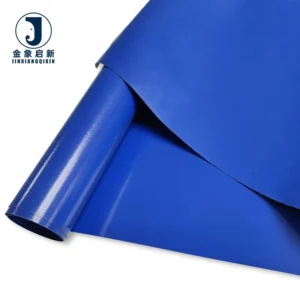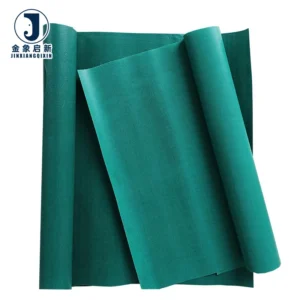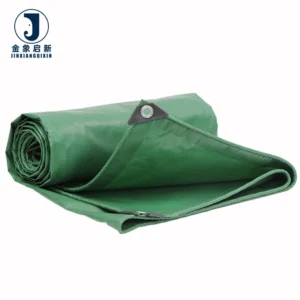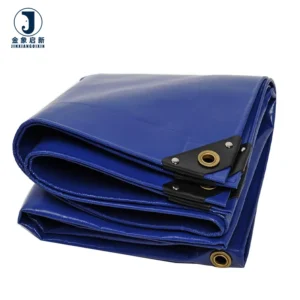
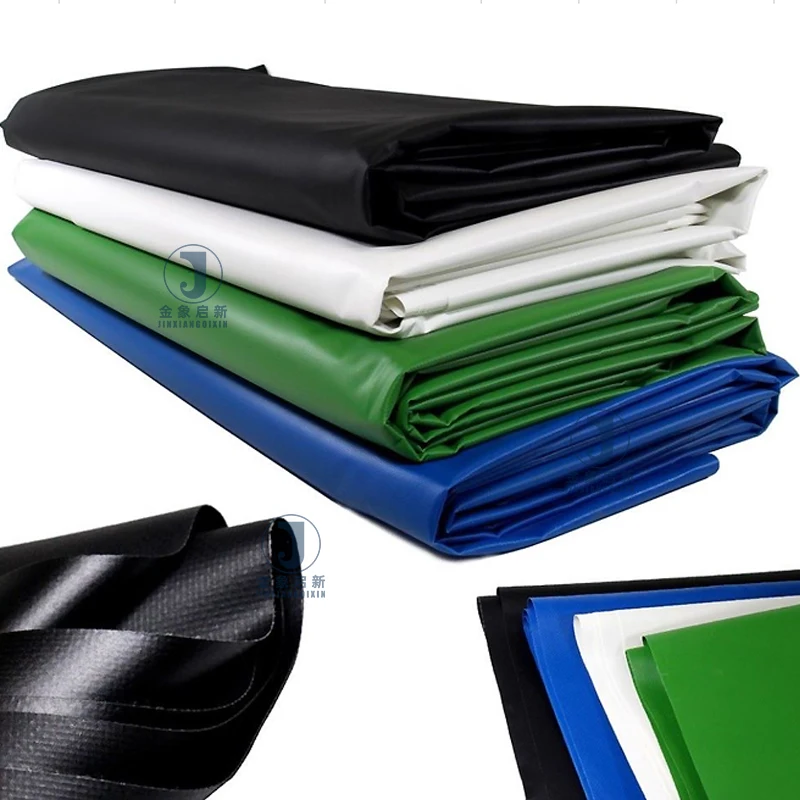
Proven Process Control — Nearly three decades focused on coated fabric manufacturing ensures every roll of PVC coated tarpaulin maintains consistent coating adhesion and dimensional stability from start to finish.
Technical Specifications
| Parameter | Value |
|---|---|
| Product Type | PVC Coated Tarpaulin Roll |
| Base Fabric | 100% high tenacity polyester yarns |
| Coating Material | PVC |
| Coating Technology | Laminated technology & Hot-melt Coating technology |
| Special Treatments Available | Flame retardant (grade not stated); Anti-static (standard not stated); Anti-cold; Anti-mildew; 3P |
| Waterproof Construction | Yes |
| Cold Crack Resistance | Yes |
| Color Fastness | Best color fastness (test basis not stated) |
| Outdoor Life Assurance | Good weather resistance (3-5 years) |
| Welding Performance | Outstanding tearing strength for welding (test standard not stated) |
| Edge Reinforcement | Reinforced edges (rip-stop) |
| Certifications | ISO and CE |
Application Suitability
| Application | Exposure & Requirement |
|---|---|
| Truck side curtains and transport covers | Constant flexing at load points, road abrasion, UV and weather exposure, weld seam integrity |
| Tent and awning structures | Prolonged outdoor exposure, wind load tension, repeated folding and unfolding |
| Industrial equipment and stockpile covers | Mechanical abrasion, moisture ingress prevention, long-term static load bearing |
| Inflatable and membrane structures | Air retention under tension, coating adhesion under continuous stress, fire compliance |
| Ventilation ducting (industrial) | Internal airflow friction, potential spark exposure requiring verified fire and static treatments |
Why Coating Adhesion Matters More Than GSM Alone
A heavy fabric with weak coating adhesion will delaminate at the weld before the base fabric ever reaches its tensile limit.
When sourcing PVC coated tarpaulin fabric, buyers often focus on GSM as the primary indicator of quality. Yet field failures rarely originate from the base fabric tearing — they start at the weld line where the coating separates from the polyester yarns under flex load [NEED_CITE: tensile and tear test methods for coated fabrics per ISO 1421]. This delamination is a direct consequence of insufficient bonding between the PVC layer and the substrate, a variable that GSM alone cannot capture. Two rolls with identical weight can perform vastly differently in fabricated applications depending on how thoroughly the coating penetrates and bonds to the base weave.
Dual Coating Processes and Their Effect on Bond Strength
This PVC coated tarpaulin employs both laminated and hot-melt coating technologies on a high-tenacity polyester base. Laminated coating bonds a pre-formed PVC film to the substrate under heat and pressure, producing a uniform surface with reliable thickness. Hot-melt coating forces molten PVC into the weave interstices, creating a mechanical lock that resists separation at the interface. The choice between these methods — or their combination — directly influences how the material behaves when heat-welded during fabrication.
Weld-Zone Behaviour Under Fabrication Stress
The tearing strength at the weld zone determines whether a fabricated truck cover or tent panel fails at the seam or the field. When hot air or wedge welding melts the coating to join two panels, the bond must reform with sufficient strength to match or exceed the parent material. Fabricators working with this PVC coated polyester tarpaulin consistently report that weld-zone integrity depends on coating adhesion values established during production — a parameter that should be confirmed with test data before committing to roll stock [NEED_CITE: peel adhesion and weld strength testing for PVC coated textiles].
Reading Beyond the Specification Sheet
Base fabric denier and weave density work together to establish the tensile and tear baseline. Higher denier yarns contribute to break strength, while tighter mesh counts limit tear propagation once a cut initiates. The PVC coating adds weight and surface protection but does not compensate for an underspecified base cloth. Technical buyers evaluating PVC coated tarpaulin fabric should request the base fabric construction details — denier, thread count, and weave pattern — alongside the stated GSM to understand how strength is distributed across the material structure.
What Specification Oversights Cost in the Field
Selecting coated fabric on price per kilogram without verifying coating adhesion or weld performance leads to predictable outcomes. Welded seams on truck curtains separate after months of highway flexing, forcing warranty returns and fleet downtime. Rolls arriving with GSM below the quoted value produce covers that tear prematurely under wind load [NEED_CITE: field failure analysis of PVC tarpaulin weld seams in transport applications]. Flame retardant claims unsupported by test documentation cause project rejections at the inspection stage, leaving fabricated material stranded without compliance approval. Batch-to-batch colour variation becomes visible only after panels are installed side by side, triggering costly rework.
Why Technical Buyers Source This Fabric Here
Dedicated QA and QC checkpoints at every production stage mean coating weight and adhesion are verified in-process, not only at final inspection. Three full production lines equipped with professional coating machinery deliver the throughput volume that large roll orders demand without sacrificing consistency. The ten-person R&D team handles material selection and sample development, allowing fabricators to validate weld parameters and treatment performance before production begins. A documented pre-shipment inspection protocol records actual GSM values per roll against the quotation, preventing the weight discrepancy disputes that plague the industry.
Documentation & Verification
- Material specification sheet stating exact GSM, base fabric denier, weave construction, and coating method
- Test reports for flame retardant or anti-static treatments matching the grade specified on your order
- Pre-shipment inspection record with per-roll weight verification against quoted values
- ISO and CE certificates available for compliance documentation
- Roll packing list with batch identification for traceability
Fabrication, Handling & Storage
- Confirm weld temperature and speed settings against the specific coating technology (laminated or hot-melt) before full production runs
- Store rolls horizontally on padded racks to prevent compression creasing that affects coating surface finish
- Allow cold-stored rolls to acclimatise before unrolling to avoid cracking the PVC coating in low temperatures
- Use compatible PVC-based repair patches and solvent cements matching the coating chemistry for field repairs
- Plan cut layouts to minimise waste across the available roll width, accounting for reinforced rip-stop edges
What We Need to Quote Your Requirement
To provide an accurate specification recommendation, share your end-use application, the environmental exposure conditions the fabric will face, and any compliance requirements for your target market — particularly fire classification or anti-static standards. Specify whether you need roll stock for your own fabrication line or finished cut sizes, along with your required width, colour, and annual volume. If treatment grades are critical to your project approval, state the exact standard and classification so we can match test documentation to your order.
Frequently Asked Questions
Q: How is the stated GSM verified before my rolls ship?
A: Every roll undergoes weight measurement during the pre-shipment inspection. The recorded GSM is documented per roll and compared against the quotation value. This inspection record accompanies your shipment, giving you a verifiable baseline to check on arrival rather than relying on a stated figure alone.
Q: What flame retardant grade does this fabric achieve?
A: Flame retardant treatment is available, but the specific grade depends on the formulation ordered. Confirm the classification required for your market — such as B1, M2, or NFPA 701 — so the appropriate test report can be provided with your material specification documentation.
Q: How do laminated and hot-melt coating differ for welding?
A: Laminated coating produces a smooth, uniform PVC surface that welds consistently with standard hot air settings. Hot-melt coating penetrates deeper into the base fabric, creating stronger mechanical adhesion that may require adjusted weld parameters. Request samples of each to test on your equipment before committing to production volume.
Q: Can batch-to-batch colour vary across rolls in one order?
A: Colour consistency is controlled through dedicated QA checkpoints at the coating stage. All rolls within a single order are produced under the same batch parameters and inspected side by side before dispatch to ensure uniform appearance when installed as adjacent panels.
Q: What base fabric options are available for different strength requirements?
A: The base fabric uses high-tenacity polyester yarns, with denier and weave density selectable based on your tensile and tear requirements. Request the base construction details alongside the coating specification to evaluate how the complete material structure meets your application demands.