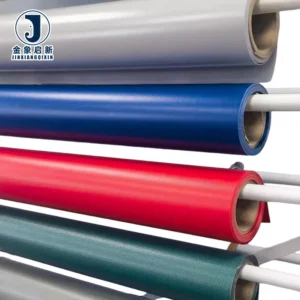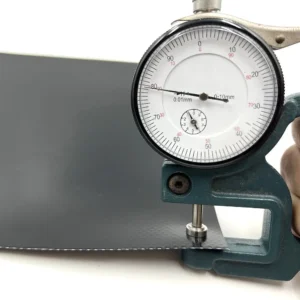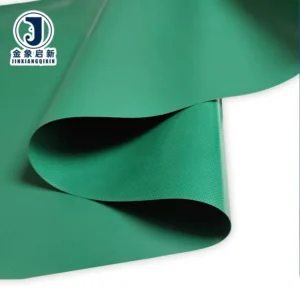
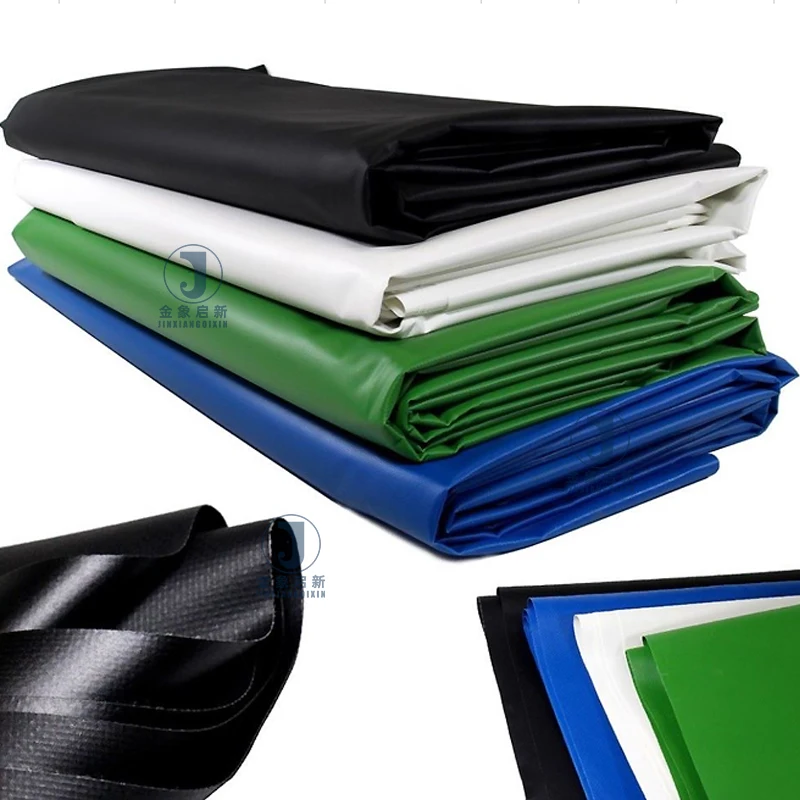
Process-Controlled Coating Adhesion — every roll of this PVC coated tarpaulin fabric is produced on lines where hot-melt and laminated coating parameters are monitored at each stage, ensuring consistent bond strength between the PVC layer and the high-tenacity polyester base fabric.
Technical Specifications
| Parameter | Value |
|---|---|
| Product Type | PVC Coated Tarpaulin Fabric |
| Base Fabric | 100% high tenacity polyester yarns |
| Coating Material | PVC |
| Coating Method | Laminated technology & Hot-melt Coating technology |
| Waterproof | Yes |
| Cold Crack Resistance | Available |
| Anti-Mildew Treatment | Available |
| Flame Retardant | Available in selectable grades — confirm the grade required for your market |
| Anti-Static | Treatment available — confirm test standard for your application |
| Outdoor Durability | Suited to extended outdoor exposure |
| Color Fastness | Rated best by manufacturer test basis |
| Adhesion Strength | Rated good by manufacturer evaluation |
| Tearing Strength for Welding | Rated outstanding for welded seam applications |
Application Suitability
| Application | Exposure & Requirement |
|---|---|
| Truck side curtains and covers | Constant flexing at load points, road abrasion, UV exposure, requirement for high-frequency weldable seams |
| Industrial tarpaulin and equipment covers | Outdoor weathering, mechanical handling stress, need for dimensional stability under tension |
| Tent and awning fabrication | Repeated folding and unfolding, UV exposure, requirement for clean weld lines and colour consistency across panels |
| Flame retardant enclosures | Compliance with site-specific fire codes, requirement for certified test documentation on delivery |
| Anti-static ventilation and containment | Sensitive environments requiring surface resistivity control, compliance with electrostatic discharge standards |
Why Coating Method Determines Weld Integrity in PVC Coated Tarpaulin
The weld line is where fabricated covers fail first, and the coating method governs how well that seam holds under repeated flexing.
When a truck side curtain flexes at every corner and a tensile load transfers through the welded seam, the adhesion between the PVC coating and the polyester base fabric becomes the governing factor. Hot-melt coating technology drives the PVC into the yarn structure under heat and pressure, creating a mechanical bond that resists delamination at the weld zone. Laminated coating, by contrast, bonds pre-formed PVC films to the base fabric, offering different peel strength characteristics. Fabricators who specify PVC Coated Tarpaulin without distinguishing between these methods often discover the difference when a seam peels under load. [NEED_CITE: adhesion and peel strength test methods for coated fabrics] The consequence is not a fabric failure — it is a bond failure at exactly the point where the assembly is stressed most.
Hot-Melt Coating and Base Fabric Bond Mechanics
Hot-melt coating forces molten PVC into the interstices of the high-tenacity polyester yarn structure, creating a bond that extends below the surface of the weave. This penetration depth directly affects how the material behaves when a high-frequency weld is applied: the energy must fuse the PVC layers without disrupting the coating-to-yarn bond underneath. PVC Coated Tarpaulin produced with consistent hot-melt parameters yields predictable weld behaviour, which is what fabricators need when setting machine temperature and dwell time. Inconsistent coating penetration, by contrast, causes welds that appear sound on inspection but delaminate after weeks of flexing in service.
Laminated Technology and Its Role in Tearing Strength
Laminated PVC coating bonds pre-calendered films to the base fabric under controlled heat and pressure. The resulting material presents a uniform coating thickness across the full width, which contributes to consistent behaviour when the fabric is cut, welded, or mechanically fastened. The tearing strength at welded seams depends on how the laminated PVC transfers stress from the weld line into the base fabric yarns. When the polyester base is constructed from high-tenacity yarns, the load path from the weld into the weave remains intact even under cyclic flexing. [NEED_CITE: tearing strength evaluation of coated fabrics at welded seams per relevant ISO methods] This is why the specification should address both the base fabric construction and the coating method as a combined system, not as isolated parameters.
Reading the Specification Sheet Beyond GSM
GSM tells you the total mass per square metre of the PVC Coated Tarpaulin, but it does not tell you how that mass is distributed between the base fabric and the coating. A heavy coating on a light base fabric may reach the same GSM as a balanced construction, yet the tear performance and weld behaviour will differ substantially. The base fabric denier and weave density determine how the material resists tear propagation once a cut or puncture initiates. The coating method — hot-melt versus laminated — determines the adhesion strength that keeps the PVC bonded to those yarns under stress. Specifiers who evaluate only GSM risk accepting material that meets the weight target while underperforming at the weld line or tearing readily once a flaw develops in the field. The relationship between these parameters is why technical buyers request the full material breakdown rather than relying on a single mass figure.
What Happens When Specifications Are Not Verified Before Dispatch
A roll that arrives lighter than the quoted GSM is not merely a commercial discrepancy — it is a material that will behave differently under tension, weld differently on the fabrication table, and degrade faster in outdoor service. Flame retardant grades claimed on a quotation but unsupported by a test report create a compliance gap that surfaces only when the site inspector asks for documentation. Colour variation between rolls in the same order becomes visible once panels are installed side by side on a truck curtain or tent structure. These failures share a common root: specification parameters were agreed but not verified at the production stage. [NEED_CITE: pre-shipment inspection practices for coated fabric rolls] The cost of catching these issues at the factory is a fraction of the cost of replacing fabricated covers in the field.
Why Technical Buyers Source This Fabric Here
Dedicated QA and QC protocols run at every production stage for this PVC Coated Tarpaulin, with inspection checkpoints covering coating weight, adhesion strength, and colour consistency before any roll is cleared for dispatch.
The production facility operates full coating lines equipped for both hot-melt and laminated processes, giving specifiers the ability to select the coating method that matches their fabrication technique and end-use exposure.
A technical R&D team handles material selection and sample development, producing confirmation samples within days when a custom treatment combination — such as flame retardant with anti-static — is required for a specific market.
Every shipment includes documentation matched to the material specification: GSM verification records, treatment test reports where applicable, and packing lists that identify each roll by its production batch.
The coating process parameters are controlled to maintain roll-to-roll consistency across an order, reducing the risk of weld parameter adjustments or colour mismatch during fabrication runs.
Documentation & Verification
- GSM measurement record per roll verified against the quoted specification before dispatch
- Flame retardant test report supplied matching the grade specified on the purchase order
- Anti-static surface resistivity data provided when that treatment is included in the order
- Material specification sheet listing base fabric denier, coating method, and treatment package
- Pre-shipment inspection record confirming colour consistency across all rolls in the batch
- Certificate of origin and customs documentation prepared for the destination market
Fabrication, Handling & Storage
- High-frequency welding parameters should be set based on sample welds from the delivered roll batch, as coating method affects energy absorption
- Store rolls upright on end caps to prevent flat-spot deformation of the PVC coating under the weight of the wound layers
- Allow cold-stored rolls to reach ambient temperature before unrolling to prevent coating crack at the fold line
- Clean fabricated surfaces with mild detergent only; solvent-based cleaners may affect the PVC coating surface and any anti-mildew treatment
- Plan cutting layouts to minimise transverse welds on truck curtain panels, as each seam is a potential flex point in service
- Reinforce eyelet and tie-down zones with additional fabric patches welded over the base PVC coated layer for load-bearing attachment points
Requesting a Technical Quotation
Provide the intended application, the exposure conditions the fabricated product will face, and any fire code or anti-static standard your target market requires. Specify whether you need rolls at a particular width or if you are evaluating standard stock widths for your cutting layout. Indicate the treatment combination you require — flame retardant grade, anti-static, anti-cold, or anti-mildew — so that confirmation samples can be prepared to match your specification before bulk production begins.
Frequently Asked Questions
Q: How does hot-melt coating differ from laminated coating in terms of weld performance?
A: Hot-melt coating penetrates the polyester yarn structure under heat and pressure, creating a mechanical bond that typically supports strong high-frequency weld adhesion. Laminated coating bonds pre-formed PVC films to the base fabric and may present different peel strength characteristics at the weld line. Fabricators should request sample rolls of both types and conduct weld tests to determine which method suits their equipment and end-use requirements.
Q: How do I verify the GSM of PVC Coated Tarpaulin when the rolls arrive?
A: Request that the supplier includes a per-roll GSM measurement record with the shipment documentation. On receipt, cut a measured sample from the outer layer of a representative roll, weigh it on a calibrated scale, and compare the result against the quoted specification. Discrepancies should be flagged before fabrication begins, as a lighter material will behave differently under welding and tension.
Q: What flame retardant grade should I specify for my market?
A: Fire code requirements vary by jurisdiction and application. Common standards include B1 per DIN 4102 for European building applications, M2 for French market compliance, and NFPA 701 for North American textile flammability. Specify the exact standard your end-use market requires and request a test report from an accredited laboratory confirming the grade before committing to production.
Q: Can I receive a sample roll before placing a bulk order?
A: Sample rolls can be developed within days for custom treatment combinations and colour requirements. Requesting a sample allows you to verify coating adhesion, conduct trial welds on your fabrication equipment, and confirm colour consistency before authorising full production. This step is recommended when specifying flame retardant or anti-static treatments that must meet documented test standards.
Q: How is colour consistency maintained across multiple rolls in a single order?
A: Colour consistency is controlled through monitored pigment dosing during the coating process and verified by visual inspection against the approved reference standard before dispatch. Rolls within a single production batch are matched to each other, and the pre-shipment inspection record documents this verification. For orders spanning multiple production runs, request that all rolls be held until the full quantity is produced and inspected together.