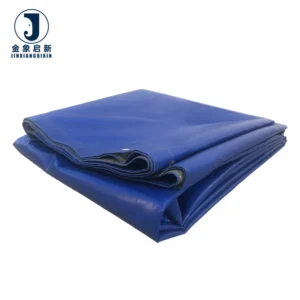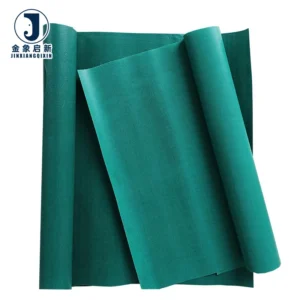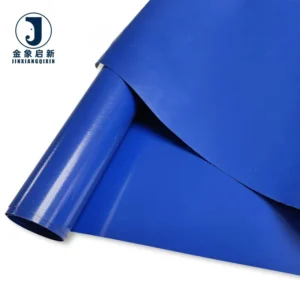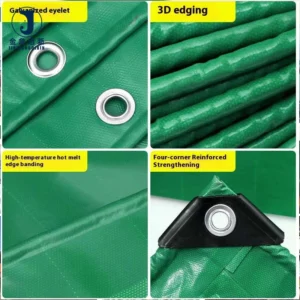
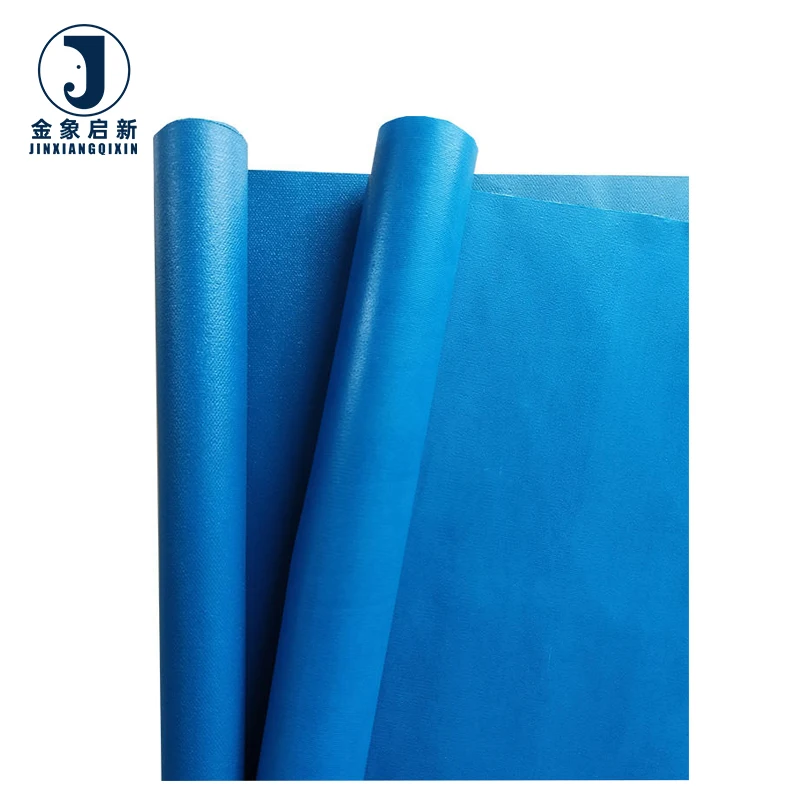
Coating Weight Control — In-process QA at every production stage ensures the GSM stated on the material specification sheet matches the roll you receive, verified before dispatch.
Technical Specifications
| Parameter | Value |
|---|---|
| Product Type | PVC Coated Tarpaulin Roll |
| Material | PVC + High-strength polyester mesh fabric |
| Coating Technology | Laminated technology & Hot-melt coating technology |
| Weight (GSM) | 350gsm, 420g, 500gsm, 550gsm, 600gsm, 750gsm |
| Total Thickness | 0.32mm, 0.35mm, 0.4mm, 0.45mm, 0.5mm, 0.65mm |
| Roll Size | 2m width × 75m length / 2.1m width × 50m length |
| Color | Blue / Red / Yellow / Light blue / Grey (Customized) |
| Surface Finish | Glossy / Matte (available in both finishes — confirm availability per grade) |
| Key Features | Flame retardant (grade not stated), Anti-static (standard not stated), Anti-mildew, Cold crack resistance, Waterproof |
| Service Life | 3-7 years under normal circumstances |
| Standards | ISO, CE |
Application Suitability
| Application | Exposure & Requirement |
|---|---|
| Truck awning and side curtain | Constant flexing at fold lines, road abrasion, UV exposure — demands high weld seam strength and base fabric tear resistance |
| Tent and inflatable structure | Wind loading, repeated assembly and teardown, weather cycling — requires consistent coating adhesion across long roll lengths |
| Construction and scaffolding enclosure | Wind-driven rain, site abrasion, potential spark or flame proximity — may require verified flame retardant grade for site compliance |
| Industrial equipment cover | Outdoor storage exposure, handling abrasion, moisture ingress — benefits from hot-melt coating for long-term adhesion |
| Pond liner and fish tank | Permanent water contact, soil chemistry, puncture risk from substrate — requires full waterproof integrity and coating stability |
| Plant and refinery maintenance | Chemical splash, temporary enclosure during shutdown — anti-static treatment may be required in classified zones |
Why GSM Alone Does Not Define Fabric Performance for PVC Coated Tarpaulin
A 500gsm roll with hot-melt coating on a high-tenacity base can outperform a 600gsm laminated roll at the weld seam.
Purchasing teams often specify PVC coated tarpaulin by weight, only to discover on arrival that the material does not behave as the data sheet implied. The coating method, base yarn denier and weave density all influence tensile and tear behaviour independently of GSM. When the quoted weight is not verified against the actual production roll, fabricators cut and weld material that fails prematurely at flex points. [NEED_CITE: tensile and tear test methods for coated fabrics per ISO 1421]
Coating Method and Adhesion Behaviour
The distinction between laminated technology and hot-melt coating technology is the single largest factor in how PVC coated tarpaulin performs during fabrication. Hot-melt coating drives PVC into the interstices of the polyester mesh, producing a bond where the coating and base fabric behave as one layer during high-frequency welding. Laminated construction bonds a pre-formed film to the mesh surface, which can delaminate when the welded seam flexes under load. For fabricators producing truck side curtains or tensioned membrane panels, hot-melt coated stock typically delivers more predictable weld behaviour and fewer seam failures in service.
Base Fabric Construction as the Structural Backbone
The high-strength polyester mesh behind each PVC coated tarpaulin roll determines how loads transfer through the material. Yarn denier and weave density govern tear propagation resistance — the point where a puncture or cut edge begins to run. Two rolls at identical GSM can show different tear values if one uses a finer yarn at higher density and the other a heavier yarn at lower density. Technical buyers specifying material for inflatable structures or high-wind tensioned covers should request base fabric construction data alongside the GSM figure to assess suitability accurately. [NEED_CITE: relationship between base fabric weave density and tear propagation in coated textiles]
GSM-to-Thickness Mapping Across the Product Range
The available grades span from 350gsm at 0.32mm through 420g, 500gsm, 550gsm, 600gsm up to 750gsm at 0.65mm. This range covers applications from light temporary covers to heavy-duty truck awning and membrane structure fabric. Thicker grades carry more coating mass, which improves abrasion resistance and puncture tolerance, but also increases roll weight and stiffness — a factor during fabrication and installation. Selecting the correct grade requires matching the mechanical demand of the end use, not simply choosing the heaviest option. Glossy and matte finish options are available, with the choice affecting surface cleanability and print adhesion for branded applications.
The Cost of Specifying on Weight Without Verification
When coating weight drifts below the stated value, the material thins at the edges of the roll first, creating weak zones that the fabricator may not detect until the welded seam splits during installation. Colour variation between rolls in a single order becomes visible when panels hang side by side on a scaffolding wrap or truck curtain, forcing rejection of material already cut and welded. Flame retardant treatment claimed without a supporting test report can result in failed site inspections and project delays, particularly on construction and refinery sites where compliance documentation is mandatory. [NEED_CITE: common causes of coated fabric rejection at pre-installation inspection]
Why Fabricators Source This PVC Coated Tarpaulin Here
Three full production lines and 36 sets of professional equipment support consistent output across bulk roll orders, reducing the risk of batch-to-batch variation that disrupts fabrication schedules.
A 10-person R&D team handles material selection and sample development, delivering samples within days when a custom GSM, width or colour is required for a new project specification.
Dedicated QA/QC at every production stage with 100% pre-shipment inspection means coating weight and colour are checked against the specification before any roll leaves the facility.
Deep process control over coating weight and adhesion — developed through nearly 30 years focused exclusively on coated fabric — translates into predictable behaviour during welding and finishing.
Full documentation accompanies every shipment, so technical buyers and fabricators receive the verification data they need without chasing suppliers after delivery.
Documentation & Verification
- Material specification sheet stating GSM, base fabric construction and coating type for each roll
- Test report for UV and flame retardant grades where applicable — confirm the grade required for your market
- Pre-shipment inspection record verifying coating weight and colour consistency across all rolls in the order
- Roll packing list with individual roll identification for traceability during fabrication
- ISO and CE certificates included in the dispatch documentation package
- Certificate of origin and customs documentation for international shipment
Fabrication, Handling & Storage
- High-frequency welding parameters should be adjusted between laminated and hot-melt coated grades — test on a cut sample from your production batch before full run
- Store rolls horizontally on a clean, flat surface to prevent permanent creasing in the PVC coating layer
- Allow cold-stored rolls to reach ambient temperature before unrolling to avoid cracking in cold crack resistant treated grades
- Cut panels with a margin for weld seam overlap, accounting for the 2m or 2.1m roll width to minimise offcut waste
- Use compatible PVC-based repair adhesive and patch material matching the coating technology for on-site field repairs
- Matte finish surfaces may require adjusted print settings compared to glossy for pattern or branding applications
What We Need to Specify Your Roll Correctly
Provide the end-use application and the mechanical or environmental loads the fabric will face in service — including wind load, flex frequency, and any flame retardant or anti-static standards your market requires. Specify the GSM grade or let us recommend based on your fabrication method and the tear strength you need at the weld seam. Confirm whether you need stock roll widths or a custom width, and whether rolls or finished cut panels are required for your production line.
Frequently Asked Questions
Q: How is GSM verified on each roll before shipment, and what documentation confirms it?
A: Every roll undergoes coating weight verification during the 100% pre-shipment inspection. The actual measured GSM is recorded on the inspection report included with your dispatch documentation. If your procurement specification requires a specific tolerance band, confirm this at the inquiry stage so the QA team can set the acceptance criteria accordingly.
Q: What is the difference between laminated and hot-melt coated PVC tarpaulin for welding?
A: Hot-melt coating penetrates the polyester mesh, producing stronger coating-to-fabric adhesion that holds up better during high-frequency welding and flex cycling. Laminated construction bonds a film to the mesh surface and can delaminate under repeated weld-line flexing. We can supply samples of both types so you can test weld parameters on your own equipment before placing a bulk order.
Q: Do flame retardant and anti-static treatments come with third-party test reports?
A: Flame retardant and anti-static treatments are available across the product range, but the applicable test standard and grade must be confirmed at the inquiry stage. Specify the standard your market requires — such as DIN 4102, NFPA 701, or a local building code classification — and the test report will be included with your shipment documentation package.
Q: Can I mix different GSM grades or colours in one container order?
A: Yes. Roll orders can combine multiple GSM grades and colours within a single shipment, provided each variant meets the production minimum. The pre-shipment inspection verifies colour consistency roll-to-roll within each colour batch. Confirm your required mix at the quotation stage so production can schedule accordingly.
Q: What base fabric denier options are available behind the listed GSM grades?
A: The high-strength polyester mesh base fabric varies by GSM grade, with higher grades typically using heavier denier yarns or denser weaves to achieve the target tensile and tear values. Request the base fabric construction data sheet for the specific GSM grade you are evaluating, and our R&D team can recommend alternatives if your application demands a particular tear resistance profile.