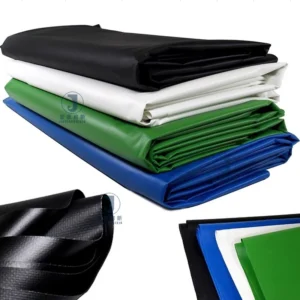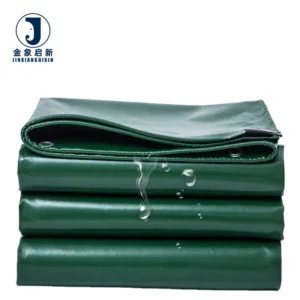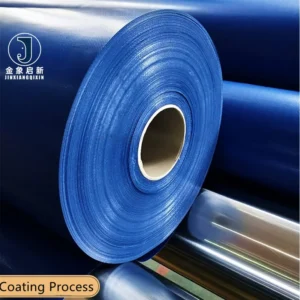
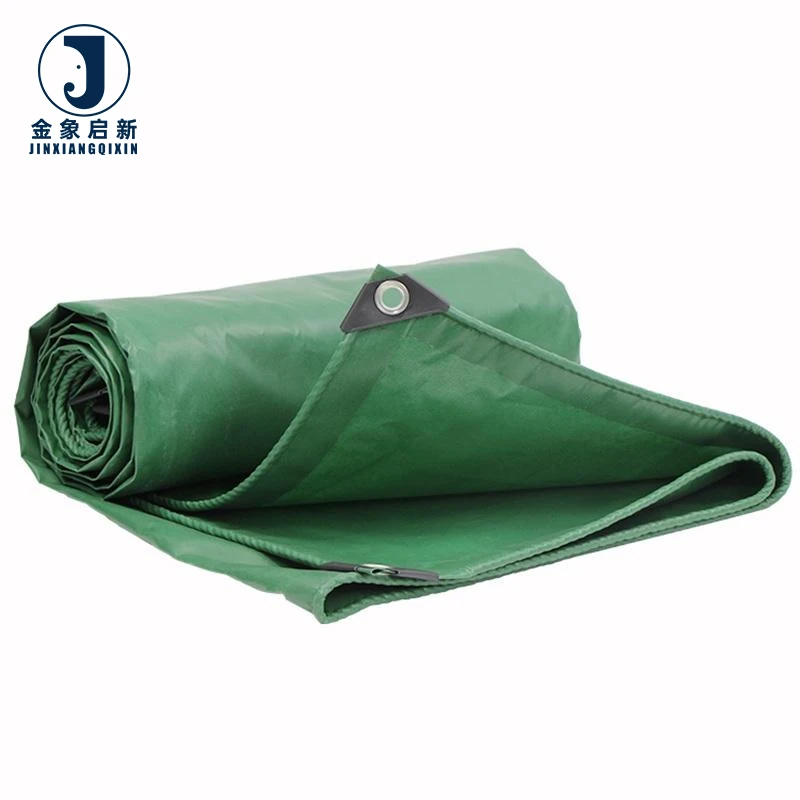
Coating Process Control — Verified GSM and base fabric weight measured at every production stage across three full lines to ensure roll-to-roll consistency.
Technical Specifications
| Parameter | Value |
|---|---|
| Product Type | PVC Coated Tarpaulin Roll |
| Specification | 350gsm / 420gsm / 500gsm / 550gsm / 600gsm / 750gsm |
| Base Fabric | High-strength polyester mesh |
| Coating Method | Laminated technology & Hot-melt Coating technology |
| Total Thickness | 0.32mm / 0.35mm / 0.4mm / 0.45mm / 0.5mm / 0.65mm |
| Standard Roll Dimensions | 2m × 75m / 2.1m × 50m |
| Surface Finish | Glossy or Matt (available options) |
| Available Colours | Blue / Red / Yellow / Light blue / Grey (custom colours available) |
| Key Features | Double-sided waterproof, cold crack resistance, anti-mildew, anti-static treatment, sunproof (UV test basis not stated in source) |
| Certification Context | ISO and CE certified manufacturing facility |
Application Suitability
| Application | Exposure & Requirement |
|---|---|
| Fish tank and pool liners | Permanent water immersion, hydrostatic pressure, chemical resistance to water treatments |
| Tent and awning covers | Wind load tension, UV exposure, repeated folding and deployment stress |
| Truck awnings and side curtains | Constant flexing at hinge points, road debris abrasion, weather and UV exposure |
| Cargo ship covers | Salt spray corrosion, high wind uplift forces, heavy cargo compression |
Why Technical Buyers Need More Than a GSM Number on the Quotation
A PVC coated tarpaulin roll specified only by grams per square metre leaves critical material variables undefined. Coating weight, base fabric denier, and the lamination method together determine how the fabric behaves under tension, at the weld line, and over years of field exposure.
Fabricators regularly receive material that matches the quoted GSM on a scale but fails during high-frequency welding because the coating chemistry or base fabric weave was substituted for a lower-cost alternative. The result is a seam that peels under load while the fabric body remains intact. [NEED_CITE: tensile and tear test methods for coated fabrics per ISO 1421] When you are converting roll stock into truck side curtains or tensioned structures, this distinction between weight and functional performance is where project margins are won or lost.
Coating Chemistry and Weld Line Integrity
The PVC coated tarpaulin roll range is produced using both laminated and hot-melt coating technology on a high-strength polyester mesh base. Each method produces a different bond structure between the PVC layer and the yarn. Laminated construction typically yields a distinct interface that can be tuned for specific high-frequency welding parameters, while hot-melt coating penetrates the mesh more deeply, altering how heat transfers through the material during seam formation. Fabricators must confirm the coating method on their order to set welder dwell time and pressure correctly.
Thickness-to-Weight Mapping Across the Grade Range
Selecting the correct grade requires understanding how thickness scales with weight. The 350gsm grade measures 0.32mm total thickness, rising through 0.45mm at 550gsm to 0.65mm at 750gsm. This correlation matters because total caliper influences both the drape behaviour during fabrication and the compression resistance when the finished product is under load. A fabricator building a tensioned membrane structure will specify differently than one producing a flat pond liner, even if both applications demand full waterproofing. [NEED_CITE: caliper measurement standards for coated technical textiles]
Base Fabric Construction and Its Role in Tear Propagation
The high-strength polyester mesh base is the structural skeleton of every PVC coated tarpaulin roll. The denier of the yarn and the warp-weft density determine how a tear initiates and propagates once the coating is breached. A heavier coating alone does not stop a tear from running; it is the yarn count and weave pattern that arrest crack growth. This is why two rolls at the same GSM can exhibit markedly different tear behaviour in the field. The glossy or matte surface finish option further influences how the material interacts with fabrication tooling and whether dirt and biological growth adhere to the installed surface.
The Cost of Specifying on Weight Alone
When a buyer approves a sample at one GSM and the production batch arrives lighter or with a different base fabric construction, the failure mode is rarely immediate. The material passes initial inspection but underperforms at the stress points — typically the welded seams and eyelet zones — after months of service. [NEED_CITE: field failure analysis of coated fabric structures] For fabricators supplying end users under warranty, this delayed failure creates liability that far exceeds the material cost saving. Batch-to-batch consistency in both GSM and base fabric specification is therefore not a quality preference but a commercial necessity.
Why Fabricators Source This Roll Stock Here
Dedicated QA and QC operates at every production stage across three full coating lines, with 100% inspection before dispatch to verify roll weight and dimensional accuracy against the purchase order. A 10-person R&D team supports custom width, colour, and sample development, typically turning around samples within days for fabricators who need to validate weld parameters before committing to a bulk run. The coating process control extends to colour consistency across rolls within a single order, addressing the visible shade variation that occurs when multiple panels are installed side by side. Production capacity supports container-load volumes with documented batch traceability.
Documentation & Verification
- Material specification sheet stating exact GSM, base fabric construction, and coating method for each roll grade supplied.
- Weight verification per roll against the stated GSM recorded during pre-shipment inspection.
- Test reports for UV and flame-retardant grades provided where applicable — confirm the grade required for your market.
- Roll packing list with batch reference numbers enabling traceability back to the production run.
- Certificate of origin and customs documentation prepared for export shipment.
Fabrication, Handling & Storage
- Set high-frequency welder parameters to match the confirmed coating method — laminated and hot-melt grades require different dwell times.
- Store rolls horizontally on pallets to prevent edge compression marks that telegraph through the glossy or matte surface finish.
- Allow cold-stored rolls to reach ambient temperature before unrolling to avoid coating micro-cracking on the 0.65mm heavy grades.
- Plan cut patterns around the 2m or 2.1m standard width to minimise off-cuts and welded seam joints on large panels.
- Use mild detergent for cleaning; avoid solvent-based agents that attack the PVC coating layer on both glossy and matt surfaces.
Preparing Your Specification for Quotation
To receive an accurate quotation, confirm the GSM grade, coating method preference, and surface finish required for your fabrication process. Provide the target roll width and annual volume so that production can be scheduled on the line best matched to your specification. If your end market requires flame-retardant or anti-static certification, state the standard your customer demands so the correct test report is generated for your batch.
Frequently Asked Questions
Q: How is the GSM of each roll verified before shipment?
A: Every roll undergoes weight measurement against the stated GSM during the pre-shipment inspection. The result is recorded and can be supplied as a weight verification document with your dispatch. This ensures the material you receive matches the PVC coated tarpaulin roll GSM specification on your purchase order.
Q: What is the difference between laminated and hot-melt coated PVC tarpaulin?
A: Laminated coating bonds a PVC film to the polyester mesh, producing a defined interface suited to specific welding parameters. Hot-melt coating penetrates the mesh more deeply, changing heat transfer during seam formation. Confirm your fabrication method before ordering to receive the correct coating type.
Q: Can you supply flame-retardant or anti-static grades with certificates?
A: Flame-retardant and anti-static treatments are available in specific grades. You must confirm the standard required for your market so that the correct grade is produced and the matching test report is included with your shipment documentation.
Q: How is colour consistency maintained across multiple rolls in one order?
A: Colour is controlled at the compounding stage and verified across the production run. Rolls within a single order are batch-referenced to ensure shade uniformity, preventing the visible variation that occurs when panels of different tint are installed adjacent to each other.
Q: What roll widths and lengths are available, and can custom sizes be produced?
A: Standard roll sizes are 2m × 75m and 2.1m × 50m. Custom widths and lengths can be developed through the R&D team, with samples produced for your approval before the bulk run is scheduled on the production line.