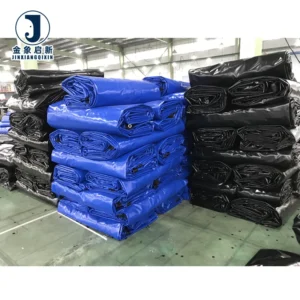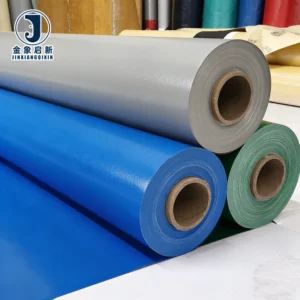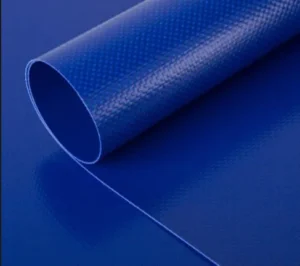
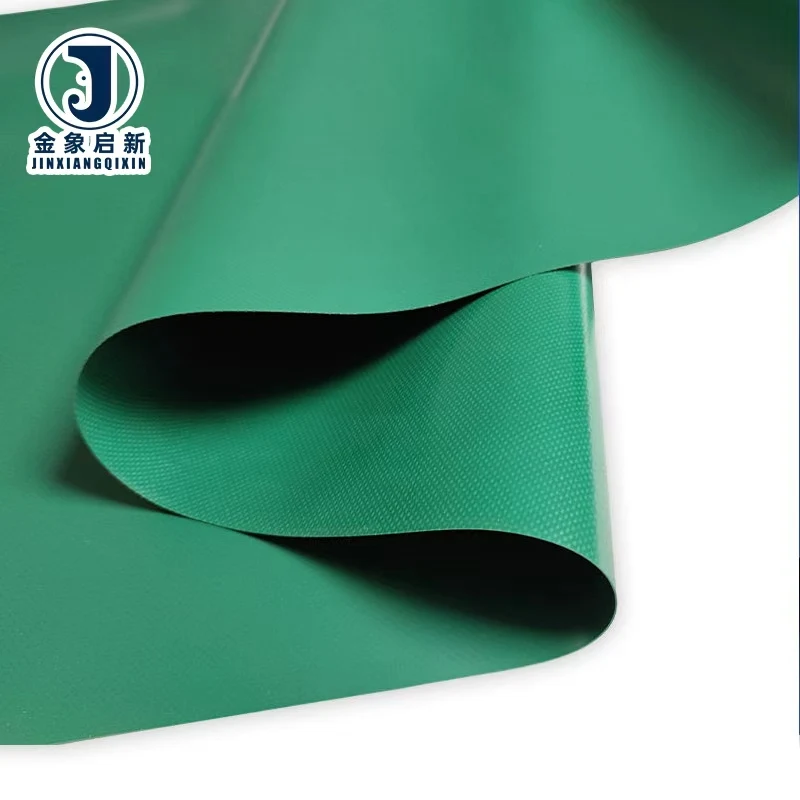
Roll-to-Roll Consistency — every roll of PVC coated tarpaulin verified against stated GSM, base fabric denier and coating weight before it leaves the production line.
Technical Specifications
| Parameter | Value |
|---|---|
| Product Type | PVC Coated Tarpaulin Roll |
| Material | PVC + High-strength polyester mesh fabric |
| Weight Options | 350gsm / 420gsm / 500gsm / 550gsm / 600gsm / 750gsm |
| Thickness Options | 0.32mm / 0.35mm / 0.4mm / 0.45mm / 0.5mm / 0.65mm |
| Roll Size | 2m width × 75m length / 2.1m width × 50m length |
| Coating Technology | Laminated & Hot-melt Coating |
| Color | Blue / Red / Yellow / Light blue / Grey (Customized) |
| Flame Retardant | Available in flame retardant grades — confirm the grade required for your market |
| Anti-Static | Available in anti-static grades — confirm the grade required for your application |
| Cold Crack Resistance | Yes |
| Anti-Mildew | Yes |
| Waterproof | Yes |
| Certifications | ISO, CE |
Application Suitability
| Application | Exposure & Requirement |
|---|---|
| Tent and awning structures | Tensioned fabric under wind load, UV exposure, seasonal assembly and disassembly |
| Inflatable and membrane structures | Internal air pressure, welded seam integrity, fire-retardant compliance for public venues |
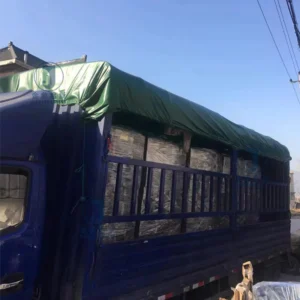
| Truck side curtains and transport covers | Constant flexing at road speed, abrasion at tie-down points, weather exposure |
| Construction and scaffolding enclosure | Wind-driven rain, dust containment, site safety visibility requirements |
| Industrial equipment covers | Long-term outdoor storage, mildew in humid climates, UV degradation |
| Pond and reservoir liners | Permanent water immersion, soil chemistry contact, puncture from substrate |
Why the GSM on Your Quotation Does Not Match the Roll That Arrives
Coating weight and base fabric density are where the real specification gaps hide.
Technical buyers who specify PVC coated tarpaulin roll stock by GSM alone often discover on receipt that the material tests lighter than the agreed value. The discrepancy is rarely random — it typically sits in the coating layer, where weight is easiest to reduce without visible change to the fabric surface. A roll quoted at 550gsm can arrive measuring closer to 500gsm once the base fabric and coating are weighed separately [NEED_CITE: tensile and tear test methods for coated fabrics per ISO 1421]. This matters because tensile and tear performance correlate directly to total construction weight, and a lighter roll will not deliver the structural behaviour the specification was built around. The only way to close this gap is to require a material specification sheet that breaks down GSM into base fabric weight and coating weight for every roll dispatched.
Coating Method Determines What Happens at the Weld Line
Laminated and hot-melt coating technologies produce fundamentally different adhesion profiles between the PVC layer and the polyester base fabric. For fabricators who cut and weld PVC coated tarpaulin roll stock into finished structures, this distinction controls whether the seam holds or delaminates under tension. Laminated construction bonds the coating to the base fabric through heat and pressure, creating a uniform interface suited to high-frequency welding. Hot-melt coating penetrates the mesh structure more deeply, which can improve peel strength but requires adjusted welding parameters to avoid burning through the coating layer at the seam.
Base Fabric Construction Controls Tear Propagation
The polyester mesh underneath the PVC coating is what stops a small puncture from becoming a full-width tear. Denier count and weave density together determine how the fabric resists tear propagation — a higher denier yarn in a tighter weave will arrest a tear more effectively than a lighter construction at the same total GSM. When evaluating PVC coated tarpaulin roll for tensioned applications such as membrane structures or truck side curtains, the base fabric specification matters as much as the coating weight. Requesting the denier and mesh count alongside the GSM gives a complete picture of how the material will behave under load [NEED_CITE: DIN 4102 fire classification for building materials].
Reading the Specification Sheet Beyond Total GSM
Six weight grades from 350gsm to 750gsm correspond to thickness values from 0.32mm to 0.65mm, but these numbers alone do not describe the full material construction. The relationship between GSM and thickness reveals the coating density — a 550gsm roll at 0.45mm thickness has a different coating-to-fabric ratio than a 550gsm roll at 0.55mm, and this ratio directly affects flexibility, weld behaviour and long-term coating adhesion. Flame retardant and anti-static treatments are available across the range, but the specific grade must be confirmed against your market’s regulatory requirements before production. Cold crack resistance and anti-mildew treatment are standard, which matters for rolls stored or deployed in climates with wide temperature swings or sustained high humidity. Colour options span blue, red, yellow, light blue and grey, with custom colours available subject to minimum roll quantities.
What Happens When Roll Consistency Fails Across a Single Order
Fabricators who cut multiple panels from different rolls in the same batch face two failure modes that are not visible until the material is unrolled side by side. Colour variation between rolls forces a choice between rejecting stock or accepting a visible mismatch across the finished structure — neither option is acceptable to the end client. More critically, inconsistency in coating weight from roll to roll means that welding parameters set on the first roll may produce weak or burned seams on the next, because the thermal behaviour of the coating layer has shifted without warning [NEED_CITE: coating weight variation and weld seam performance in PVC fabrics]. Both problems trace back to process control during coating and calendaring, and both are preventable through documented in-process quality checks at the coating stage.
Why Fabricators Source PVC Coated Tarpaulin Roll Stock From This Line
Three full production lines with 36 sets of professional equipment support bulk roll output with consistent coating application across long production runs. A 10-person R&D team handles material selection and sample development, producing test rolls within days so fabricators can validate weld parameters and colour before committing to a full order. Dedicated QA/QC operates at every production stage — base fabric inspection before coating, coating weight verification during the run, and 100% inspection of finished rolls before dispatch. Material specification sheets document GSM, base fabric denier and weave, coating material and method for every roll. Roll packing lists record exact width, length and GSM per roll, giving importers full container loading verification against the purchase order.
Documentation & Verification
- Material specification sheet stating GSM breakdown into base fabric weight and coating weight per roll
- Test reports for flame retardant and anti-static grades showing the specific standard and classification achieved
- Pre-shipment inspection record confirming GSM, colour reference and surface quality before dispatch
- Roll packing list with individual roll dimensions, GSM and total roll count for container loading
- Certificate of origin and customs documentation for international shipment
Fabrication, Handling & Storage
- High-frequency welding parameters must be adjusted to coating thickness — test on each GSM grade before production runs
- Store rolls horizontally on racking to prevent permanent creasing in the laminated or hot-melt coating layer
- Allow rolls to acclimatise to workshop temperature before unrolling to avoid cold-crack stress in the PVC surface
- Use compatible PVC-based adhesives for patch repairs to maintain coating adhesion at the repair boundary
- Plan cutting layout to maximise yield from 2m or 2.1m roll widths and reduce offcuts at welded panel joins
What to Include in Your Specification Enquiry
Provide the application and the environmental exposure conditions the finished fabric will face — wind load, UV intensity, temperature range and any fire safety classification your market requires. Specify the GSM grade, preferred coating technology and the total linear metres you need so we can confirm roll availability and batch consistency. If you require custom colour or flame retardant certification, state the standard and grade your end client demands so the correct treatment chemistry is applied from the first production run.
Frequently Asked Questions
Q: How is GSM verified on each roll before shipment and what documentation is provided?
A: Each roll is weighed and measured against the stated GSM during pre-shipment inspection. A material specification sheet accompanies every dispatch, documenting total GSM, base fabric weight and coating weight separately. The roll packing list records individual roll dimensions and confirmed GSM, giving you full traceability from production batch to container loading.
Q: What is the difference between laminated and hot-melt coating for weld strength?
A: Laminated coating bonds the PVC to the base fabric under heat and pressure, producing a uniform surface well-suited to high-frequency welding. Hot-melt coating penetrates deeper into the mesh, increasing peel strength but requiring adjusted weld parameters. Fabricators should request sample rolls of each type to validate seam performance before ordering production volume.
Q: How does base fabric denier relate to tear performance at each GSM grade?
A: Higher denier yarn in the polyester mesh resists tear propagation more effectively, independent of the total coating weight. A 550gsm roll with a high-denier base will outperform a 550gsm roll with lighter yarn under puncture stress. Requesting the denier and mesh count alongside GSM gives a complete picture of structural performance.
Q: How is batch-to-batch colour consistency controlled across rolls in the same order?
A: Colour is matched against a confirmed reference standard at the coating stage, and in-process checks monitor shade consistency across the production run. Rolls from the same order are grouped and inspected side by side before packing. If your project requires panels from multiple rolls to sit adjacent, state this in your enquiry so batch grouping is planned accordingly.
Q: What test standards are available for flame retardant and anti-static treatment?
A: Flame retardant and anti-static grades are available across the GSM range, but the specific standard and classification depend on your market’s regulatory requirements. State the standard your end client or site specification demands — such as DIN 4102, NFPA 701 or equivalent — so the correct treatment is applied and documented with a test report.