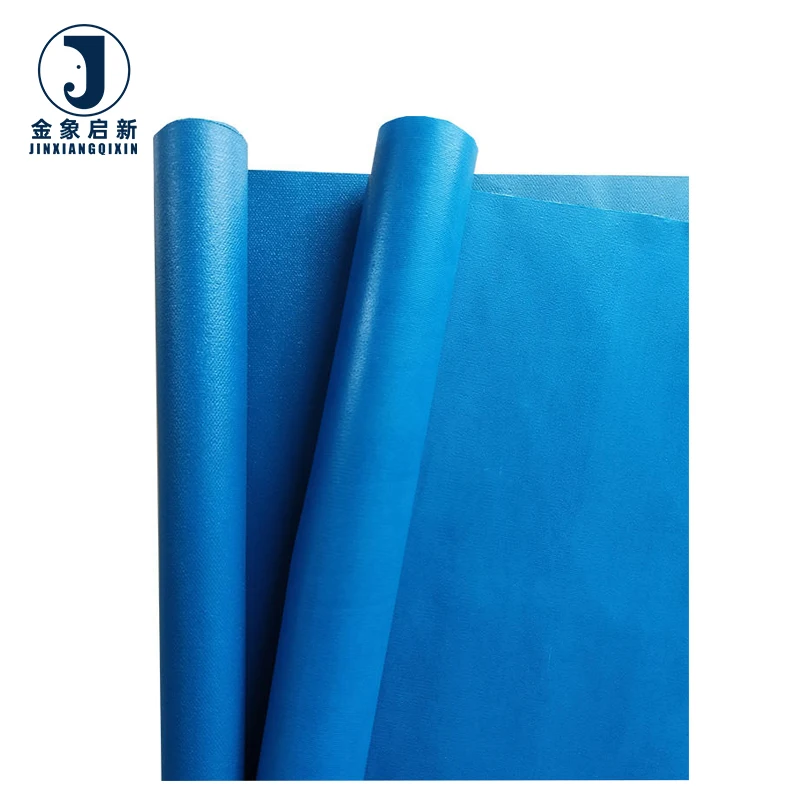
Coating Weight Control — Every roll undergoes in-process QA and 100% pre-shipment inspection to confirm the stated GSM matches the coating weight delivered, verified against the material specification sheet before dispatch.
Technical Specifications
| Parameter | Value |
|---|---|
| Product Type | PVC Tarpaulin Roll |
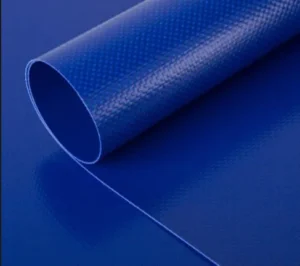
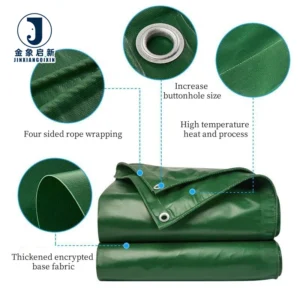
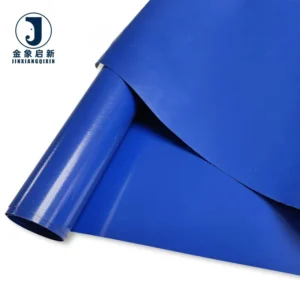
| Material | PVC coated high-strength polyester mesh fabric |
| Available Weight (GSM) | 350gsm / 420gsm / 500gsm / 550gsm / 600gsm / 750gsm |
| Available Thickness | 0.32mm / 0.35mm / 0.4mm / 0.45mm / 0.5mm / 0.65mm |
| Coating Method | Laminated technology & Hot-melt coating technology |
| Roll Width | 2m / 2.1m |
| Roll Length | 75m (2m width) / 50m (2.1m width) |
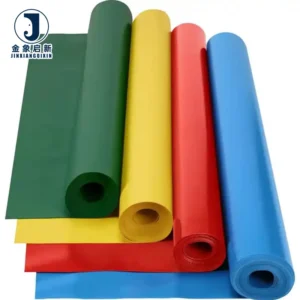
| Available Colors | Blue / Red / Yellow / Light blue / Grey (Customized) |
| Waterproof | Yes |
| Anti-Mildew | Yes |
| Cold Crack Resistance | Yes |
| Flame Retardant | Available in flame retardant grades — confirm the grade required for your market |
| Anti-Static | Available in anti-static grades — confirm the grade required for your market |
| Custom Printing | Available |
| Standards | ISO, CE |
Application Suitability
| Application | Exposure & Requirement |
|---|---|
| Truck awning fabrication | Constant flexing at hinges, road debris abrasion, UV exposure, heat-seam assembly at weld lines |
| Construction scaffolding enclosure | Wind load, prolonged weather exposure, anti-mildew demand, waterproof containment |
| Cargo ship cover | Saltwater spray, heavy wind stress, puncture resistance for securing over irregular loads |
| Tent and awning manufacturing | Roll-to-roll color consistency, weldability for panel joining, color fastness under sun exposure |
| Fish tank and pool liner | Permanent water contact, coating adhesion under hydrostatic pressure, anti-mildew performance |
| Temporary industrial equipment cover | Outdoor storage exposure, cold temperature handling, repeated deployment and folding |
Why Coating Weight Verification Matters More Than the Quoted GSM
GSM on paper means nothing if the roll arriving at your dock weighs less than what you paid for.
Technical buyers sourcing PVC coated tarpaulin for fabrication or resale know the frustration: the quotation states a specific weight, but the material on arrival feels lighter, and cutting into the roll reveals a coating that does not match the agreed specification. This is not a rare occurrence in the coated fabric trade — it is a pattern that repeats when production oversight is absent [NEED_CITE: tensile and tear test methods for coated fabrics per ISO 1421]. When a roll is underweight, the base fabric carries less PVC, which reduces both waterproof integrity and the coating’s ability to hold a heat-welded seam. The fabricator then faces seam failures in the field, and the end user blames the finished product rather than the roll stock. Dedicated QA/QC at every production stage, with 100% inspection before shipment, is the mechanism that prevents this gap between quoted and delivered coating weight.
How Laminated and Hot-Melt Coating Methods Shape the Final Fabric
The PVC coated tarpaulin range is produced using both laminated technology and hot-melt coating technology, each creating a different bond between the PVC layer and the high-strength polyester mesh base. Laminated construction bonds pre-formed PVC films to the base fabric under heat and pressure, producing a uniform coating thickness that supports consistent heat-seam fabrication. Hot-melt coating applies molten PVC directly to the mesh, allowing the coating to penetrate the weave and create a mechanical lock that influences peel strength. The choice between these methods affects how the material behaves during welding, how it handles repeated flexing, and what GSM range is achievable on the production line.
What Base Fabric Denier and Weave Density Mean for Tear Propagation
The high-strength polyester mesh base fabric is the structural backbone of every PVC coated tarpaulin roll. The denier of the yarn and the density of the warp-and-weft weave determine how a tear initiates and propagates once the coating surface is breached. A tighter weave with higher denier yarns forces a tear to change direction at each intersection, dissipating energy and slowing propagation [NEED_CITE: tear propagation behavior in woven coated fabrics per ISO 1421]. This is why two rolls at the same GSM can perform very differently in the field — one may resist a puncture spreading into a rip, while the other may tear freely once cut. The base fabric specification must be reviewed alongside GSM when selecting material for high-stress applications like side curtains or tensioned structures.
Reading the GSM and Thickness Matrix for Material Selection
Six distinct GSM grades — 350gsm, 420gsm, 500gsm, 550gsm, 600gsm, and 750gsm — correspond to thickness values from 0.32mm to 0.65mm, but the relationship between weight and thickness is not linear. A 550gsm roll produced with hot-melt coating may have a different thickness profile than a 550gsm roll made with laminated technology, because the coating penetration into the base fabric changes the overall caliper. For truck awning fabrication, a mid-range grade with strong weld adhesion is often preferred, since the material must hold heat-seamed panels without the seam peeling under flex load. For construction enclosure, a heavier grade with cold crack resistance and anti-mildew treatment handles prolonged outdoor exposure and repeated folding during site redeployment. Selecting by GSM alone without considering coating method and base fabric construction leads to material that meets the weight spec but fails the performance requirement.
The Hidden Cost of Specifying on Price Per Kilogram Alone
When procurement decisions center on the lowest cost per kilogram of coated fabric, the supplier has an incentive to reduce coating weight while keeping the base fabric thin — the roll still hits the target GSM on the scale, but the PVC layer is too thin to protect the mesh from moisture ingress and UV degradation. Over time, the fabric becomes brittle, the coating delaminates at fold lines, and heat-welded seams fail because there is insufficient coating material to fuse properly [NEED_CITE: field failure analysis of coated fabric seams under flex fatigue]. Batch-to-batch color variation compounds the problem when multiple rolls from the same order are installed side by side, making the inconsistency visible to the end client and triggering a replacement claim. These costs are never reflected in the original quotation.
What Process Control Looks Like on the Production Floor
Three full production lines with 36 sets of professional equipment run PVC coated tarpaulin across the full GSM range, with in-process QA checkpoints at coating, lamination, and winding stages. A 10-person R&D team handles material selection, custom color matching, and sample development — samples are developed within days for custom requirements, so buyers can verify weight, color, and coating adhesion before committing to a bulk order. Dedicated QA/QC at every production stage means each roll is measured for coating weight and thickness before it is cleared for packing. The 100% pre-shipment inspection record documents the actual GSM of every roll against the specification, providing traceability that goes beyond a certificate of compliance. This is process control built around the material, not around the paperwork.
Documentation & Verification
- Material specification sheet stating exact GSM, base fabric denier, coating method, and color reference for each roll
- Test report for flame retardant and anti-static grades where applicable, with grade confirmed per order
- Pre-shipment inspection record verifying coating weight and thickness against the quoted specification
- Roll packing list with batch identification for multi-roll orders and color consistency tracking
- ISO and CE certificates supporting material and manufacturing compliance
- Certificate of origin and customs documentation for international shipment
Fabrication, Handling & Storage
- Heat-seam welding parameters should be adjusted to the specific coating method — laminated and hot-melt coated rolls respond differently to temperature and dwell time at the weld bar
- Store rolls upright on a flat surface to prevent flat-spotting on the coating, particularly on heavier grades like 600gsm and 750gsm where the roll weight compresses the bottom layer
- Allow cold-stored rolls to reach ambient temperature before unrolling to prevent cracking, as cold crack resistance does not eliminate the risk of forced flexing at low temperatures
- Cut panels with a sharp blade or rotary cutter to avoid fraying the high-strength polyester mesh base, which can compromise the weld line if loose yarns are trapped in the seam
- Clean the PVC surface with mild detergent and soft cloth — abrasive cleaners can damage the coating finish and reduce color fastness over repeated washing cycles
- Plan panel layout to maximize utilization from the 2m or 2.1m roll width, minimizing transverse welds in high-stress zones like awning hinges and curtain flex points
What to Include in Your Inquiry
To receive an accurate specification recommendation and sample, share the end-use application and the environmental conditions the fabric will face — including temperature range, UV exposure level, and whether flame retardant or anti-static certification is required by the project or local regulation. Specify the GSM grade and coating method preference if known, along with roll width, color requirements, and estimated annual volume. If the material is for fabrication into a finished product, indicate the welding method and seam construction so the R&D team can tailor the sample accordingly.
Frequently Asked Questions
Q: How is GSM verified on each roll before shipment and what documentation is provided?
A: Each roll is measured for coating weight and thickness during in-process QA and again at the 100% pre-shipment inspection stage. The pre-shipment inspection record documents the actual GSM against the quoted specification. A material specification sheet accompanies the shipment, stating the exact GSM, base fabric details, coating method, and color reference for full traceability.
Q: What is the difference between laminated and hot-melt coating technology and how does it affect weld strength?
A: Laminated technology bonds pre-formed PVC films to the base fabric under heat and pressure, producing uniform coating thickness. Hot-melt coating applies molten PVC* the weave. Both methods support heat-seam fabrication, but the welding parameters — temperature, pressure, and dwell time — differ between them, and the R&D team can advise on the optimal settings for each.
Q: How do I select the right GSM and thickness for my application?
A: GSM alone does not determine performance — the base fabric denier, coating method, and treatment package all contribute. For truck awning fabrication, mid-range grades with strong weld adhesion are typical. For construction enclosure, heavier grades with anti-mildew and cold crack resistance are preferred. Share your application and exposure conditions, and a specification recommendation with sample will be prepared.
Q: Are flame retardant and anti-static treatments available with certified test reports?
A: Both flame retardant and anti-static treatments are available across the PVC coated tarpaulin range. The specific grade must be confirmed for your market and application, as requirements vary by region and project. Test reports supporting the stated grade are provided with the shipment documentation upon confirmation at the order stage.
Q: How is color consistency maintained across rolls in a bulk order?
A: Color consistency is managed through batch-level production control and verified during pre-shipment inspection. All rolls within a single order are produced from the same coating batch, and color is checked against the agreed reference before packing. The roll packing list includes batch identification so that any future reorders can be matched to the original production run.