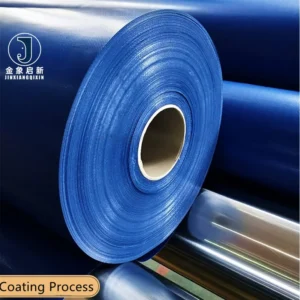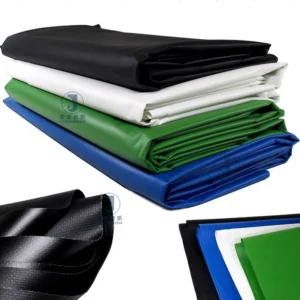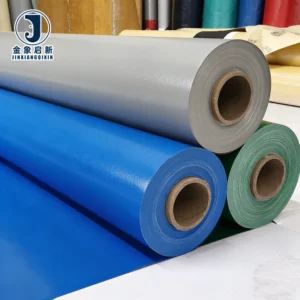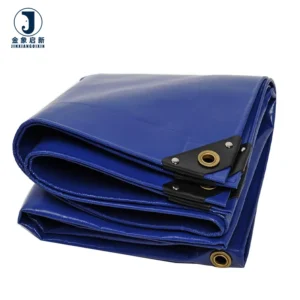
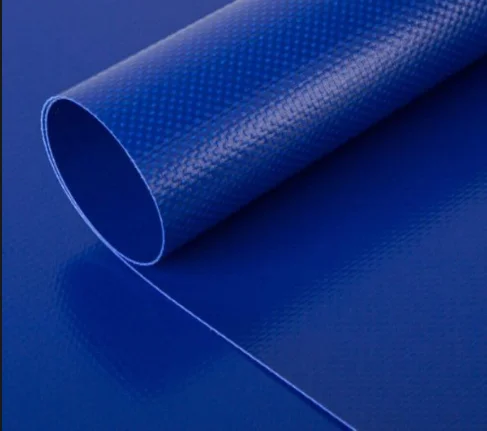
Process-Controlled Coating Weight — Knife coated PVC with verified GSM on every roll, supported by material specification sheets for independent lab testing upon arrival.
Technical Specifications
| Parameter | Value |
|---|---|
| Product Type | PVC Knife Coated Tarpaulin Roll |
| Coating Method | Knife coated |
| Coating Material | PVC |
| Welding Options | HF, Hot Air, Sewing |
| Flame Retardant | Fire retardant (grade not stated in source — confirm grade required for your market) |
| UV Treatment | UV resistance (test basis not stated in source — request test report for your specification) |
| Anti-Mildew | Mildew proof |
| Surface | Self-cleaning |
| Temperature Resistance | High temperature and cold resistance |
| Tensile Strength | Excellent (standard not stated in source) |
| Tear Strength | Excellent (standard not stated in source) |
Application Suitability
| Application | Exposure & Requirement |
|---|---|
| Tensile and membrane structures | Permanent tension loading, wind uplift, UV degradation, fire code compliance for public spaces |
| Airport hangar enclosures | Large-span coverage, fuel and chemical vapour exposure, aviation fire safety requirements |
| Stadium architectural roofs | Long-term UV and weathering, structural wind loads, spectator safety fire ratings |
| Shade systems and canopies | Daily thermal cycling, UV breakdown, water pooling on low-slope panels |
| Portable storage structures | Repeated assembly and disassembly flex, ground contact abrasion, wind-driven rain ingress |
| Large format technical textiles | Converter fabrication requiring batch-to-batch colour and GSM consistency across rolls |
| Truck cover fabric | Constant flexing at load points, road debris abrasion, tie-down strap friction |
Why Stated PVC Knife Coated Tarpaulin GSM Does Not Match What Arrives
Every roll leaves our facility with a material specification sheet stating the exact GSM, base fabric construction, and coating weight for your own verification.
Technical buyers know the frustration: the quotation states a certain PVC knife coated tarpaulin gsm / base fabric denier specification, but the roll that arrives measures lighter on the scale. Coating weight drift during production is a real phenomenon when line speed and knife gap are not monitored between runs [NEED_CITE: coating weight verification methods for PVC coated textiles]. A fabric that arrives below the agreed GSM also arrives below the agreed tensile and tear performance, because those properties depend directly on the mass of PVC locked into the base fabric. Without a documented pre-shipment inspection record tied to the specific roll number, you have no basis for a claim and no material to show your client when the structure fails early.
Knife Coating Adhesion and Coating Weight Control
The knife coated process forces PVC paste through a precision gap onto the moving base fabric, controlling the mass of coating deposited per square metre. This direct mechanical control over coating weight is what gives PVC knife coated tarpaulin roll its consistent GSM from the first metre to the last on a production run. Adhesion between the coating and the yarn depends on the paste viscosity, oven temperature profile, and line speed remaining stable throughout the run.
Welding Behaviour Across Different Fabrication Methods
Fabricators working with this material have three joining routes: high-frequency welding, hot air welding, and sewing. The PVC coating composition responds to HF energy by melting at the interface to form a bond that can be as strong as the parent fabric. Hot air welding suits field repairs and complex geometries where HF press access is limited [NEED_CITE: HF versus hot air weld strength comparison on PVC coated polyester]. Sewing remains necessary for edge hems carrying eyelet loads, where the thread must pass through the coated fabric without delaminating the layers.
How Base Fabric and Coating Interact to Define Performance
The base fabric denier and weave pattern set the mechanical skeleton — the warp and weft yarns carry the tensile and tear loads. Coating weight adds mass, waterproofing, and chemical protection, but a heavy coating on a low-denier base does not produce high tear strength. The GSM-to-strength relationship only holds when the base fabric construction is matched to the intended load. Knife coating locks PVC into the weave interstices, improving peel strength compared to laminated alternatives and giving the fabricator a more reliable heat-weld interface [NEED_CITE: peel strength test methods for coated fabrics per ISO 1421]. The self-cleaning surface treatment reduces dirt adhesion on horizontal and low-slope installations, slowing the biological growth that degrades coatings over time.
The Hidden Cost of Specifying on GSM Alone
A buyer who selects material based only on a target GSM without verifying base fabric denier may receive a roll that meets the weight but tears prematurely under point loads. Fire retardant claimed without a test certificate means the local building inspector can reject the installed structure, forcing a full replacement at site cost. Colour variation between rolls in the same order becomes visible the moment panels are hung side by side on a tensile frame, turning a material issue into an architectural punch-list dispute [NEED_CITE: colour consistency tolerance standards for architectural PVC membrane]. Welds that fail before the fabric does usually trace back to a coating formulation that does not respond to the fabricator’s standard heat settings.
Why Technical Buyers Source This Fabric Here
Thirty years of knife coated PVC production means the coating weight and adhesion parameters are managed through accumulated process data, not trial and error on each new order. Three full production lines and 36 sets of equipment allow large-volume roll orders to be completed within a single production window, reducing batch-to-batch variation. The 10-person R&D team develops material samples matched to specific denier, weave, and treatment combinations before the production run is scheduled. QA inspection at every production stage catches coating weight drift and surface defects before the roll reaches the packing area. Every shipment includes the documentation package — specification sheet, test reports, and inspection records — that your project file requires.
Documentation & Verification
- Material specification sheet stating exact GSM, base fabric denier and weave, and coating type for each roll
- UV and flame retardant test reports supplied with applicable grades — confirm required standard before ordering
- Pre-shipment inspection record with roll-level GSM verification against the stated specification
- ISO and CE certificates included in the shipping documentation package
- Roll packing list cross-referencing roll numbers to production batch for traceability
- Certificate of origin and customs documentation prepared for international dispatch
Fabrication, Handling & Storage
- HF welding parameters should be calibrated to the specific knife coated PVC formulation before production runs begin
- Hot air welding temperature and speed must match the coating thickness to avoid scorching or incomplete bonding
- Store rolls horizontally on racking to prevent permanent creasing in the self-cleaning surface layer
- Allow cold-stored rolls to reach workshop temperature before unrolling to prevent coating cracking at low flexibility
- Use compatible PVC-based cleaners only — solvent-based products can attack the coating adhesion to the base fabric
- Plan cut layouts to minimise off-cuts and reduce the number of welded seams across high-load panels
Requesting a Material Specification for Your Project
When enquiring, state the application type, the fire classification required by your local building code, and the annual roll volume you anticipate. Specify whether you need the PVC knife coated tarpaulin roll in stock widths or a custom width to minimise fabrication waste. If colour matching to an architectural palette is required, provide the RAL or Pantone reference so a sample can be produced for approval before bulk production.
Frequently Asked Questions
Q: How is the stated GSM verified before the roll ships?
A: Each roll is weighed and measured during the pre-shipment inspection, and the result is recorded on a roll-level inspection report that travels with the shipment. This allows you to cross-check the actual coating weight against the material specification sheet independently upon receipt at your warehouse.
Q: Which flame retardant grades are available and what test reports come with them?
A: Fire retardant grades are available — confirm the specific classification your project requires, such as M2, B1, or NFPA 701, and the corresponding test report will be supplied with the shipment. Different markets mandate different standards, so specifying the exact grade at enquiry stage avoids re-testing on arrival.
Q: How does base fabric denier relate to tensile and tear strength?
A: Higher denier yarns in the warp and weft generally increase tensile and tear resistance, but the weave density and coating adhesion also contribute. The base fabric construction and coating weight together define the final mechanical properties, so requesting a full specification sheet is the most reliable way to compare options.
Q: Which welding method works best for knife coated PVC at different thicknesses?
A: High-frequency welding delivers strong bonds on most PVC knife coated tarpaulin roll grades in a factory setting, while hot air welding is preferred for on-site repairs and complex joint geometries. Sewing is used for hems carrying mechanical fixings. Confirm the recommended method for your specific material selection during sampling.
Q: How is colour consistency maintained across multiple rolls in one order?
A: All rolls in a single order are produced within the same coating batch using matched pigment formulation and controlled oven conditions. A roll packing list identifies batch numbers, and pre-shipment inspection includes a visual colour check between rolls before dispatch to flag any visible variation.