Deep Coating Process Control — Every roll of PE tarpaulin material is produced with strict monitoring of HDPE weaving density and LDPE lamination weight, ensuring the GSM and tensile values on the specification sheet match what arrives at your facility.
Technical Specifications
| Parameter | Value |
|---|---|
| Product Type | PE Tarpaulin |
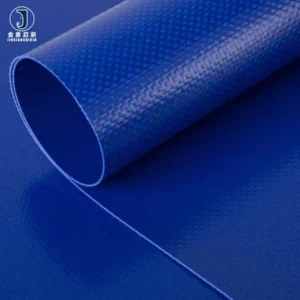
| Coating Material | HDPE weaving with LDPE lamination on both sides |
| Weight (GSM) | 50gr/m2 ~ 220gr/m2 available (range covers product family — confirm the grade for this item) |
| Total Thickness | 0.18–0.35 mm (8 mil–16 mil) depending on grade |
| Mesh Count | 8×8 (lightweight) / 10×10 (medium) / 12×12 (heavy-duty) |
| Tensile Strength | Meridian 300–1200 N/5cm / Latitude 250–1000 N/5cm depending on grade (test basis not stated in source) |
| Roll Width | 6ft, 8ft, 10ft, 12ft, 2m, 4m, 6m or custom |
| Roll Length | 100 yards, 100 meters, or custom |
| Finish | Matte |
| UV Treatment | Available (test basis not stated in source) |
| Waterproof | Yes |
| Anti-Mildew | Mildew proof and anti-aging (test basis not stated in source) |
| Edge Reinforcement | All four edges reinforced with PP rope in hem |
| Eyelets | Galvanized eyelets every 3ft or 1 meter interval |
| Corners | Reinforced plastic corners |
| Color | Blue, Blue/Orange, Green, Grey, Black, Clear, Grey/Green, Orange, or custom |
| Printing | Custom brand printing available |
| Certifications | ISO, CE (stated in company profile) |
Application Suitability
| Application | Exposure & Requirement |
|---|---|
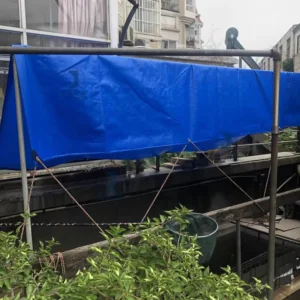
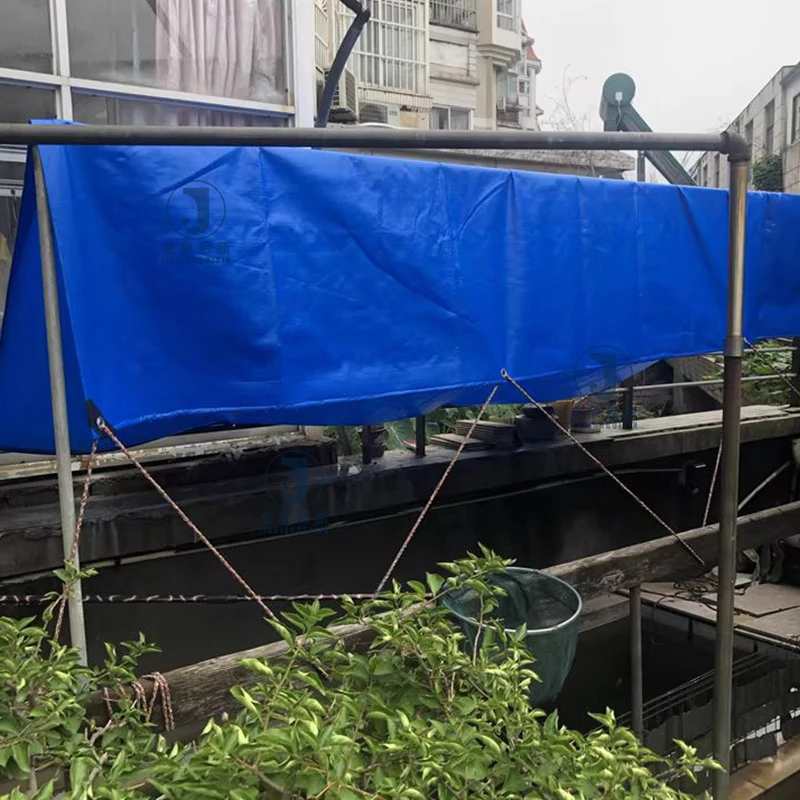
| Agricultural sunshade for poultry farms | Continuous UV exposure, temperature fluctuation, lightweight drape needed to cover large spans without excessive structural load |
| Greenhouse shading and crop protection | High humidity, condensation, need for light transmission control and water runoff resistance |
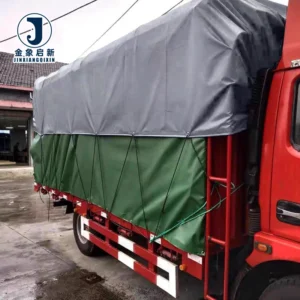
| Truck tarpaulin for transport fleets | Road abrasion, wind flex at highway speed, tie-down tension at eyelet points, weather exposure during transit |
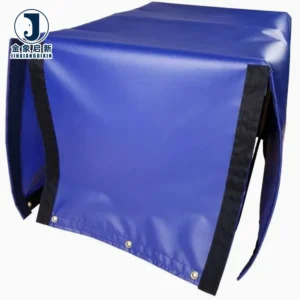
| Warehouse and equipment covering | Dust and moisture ingress prevention, occasional handling and folding, stacking abrasion on pallet loads |
| Industrial protective sheeting | Chemical splash resistance at mild levels, puncture risk from tools or sharp edges on construction sites |
Why the Stated GSM Does Not Guarantee the Strength You Need
GSM alone is an incomplete indicator of PE tarpaulin material coating technology GSM tensile strength performance.
When a quotation lists a specific GSM, the figure represents the combined weight of the HDPE base fabric and the LDPE lamination on both sides. Two rolls carrying identical GSM can deliver vastly different tensile behaviour if one uses a denser 12×12 mesh with thinner coating while the other uses a looser 8×8 mesh compensated by heavier lamination. The first will resist tearing under tension; the second may feel thicker but split along the weave under load. [NEED_CITE: relationship between mesh density and tensile strength in woven polyethylene fabrics] Technical buyers who specify PE tarpaulin by GSM alone, without locking in knitting density and base fabric denier, frequently receive material that passes a weight check but fails the application demand. This gap between quoted and delivered performance is a recurring sourcing issue across the PE tarpaulin supply chain.
How Base Fabric Knitting Density Drives Real-World Tensile Behaviour
The PE tarpaulin material coating technology GSM tensile strength relationship starts at the loom. An 8×8 knit produces a lighter, more flexible sheet suited to temporary covers and agricultural shading, where drape and low structural load matter more than absolute tear resistance. Moving to a 10×10 knit increases the yarn intersection count per square inch, distributing tension across more fibre contact points. The 12×12 knit pushes this further, creating a base fabric that resists tear propagation even when punctured by a sharp edge or a tie-down hook. The LDPE lamination on both sides locks the weave in place, but the base fabric determines how far a tear will travel once initiated.
Lamination Weight and Coating Adhesion at Flex Points
Where the tarpaulin folds around a load edge or flexes under wind pressure, the LDPE coating must maintain adhesion to the HDPE base fabric. If lamination weight is concentrated on one side, the opposite face can delaminate after repeated flex cycles, exposing the woven base to moisture and UV degradation. Dual-side lamination with balanced coating weight keeps the PE tarpaulin sheet dimensionally stable through temperature swings. [NEED_CITE: peel strength and delamination behaviour in dual-side laminated polyethylene fabrics] This balance matters especially at welded seams, where heat must penetrate the coating layer without melting the base fabric yarns, demanding consistent coating thickness across the roll width.
Reading the Specification Sheet Beyond the GSM Number
Mesh count, total thickness, and tensile strength form a three-point verification system that confirms whether the PE tarpaulin material matches its quoted grade. A lightweight 8×8 fabric typically reads 0.18–0.22 mm in thickness with meridian tensile values in the 300–500 N/5cm band, suited to shade cloth and light protective covers. A heavy-duty 12×12 fabric measures 0.30–0.35 mm thick with meridian tensile reaching 900–1200 N/5cm, appropriate for truck covers and industrial sheeting exposed to mechanical stress. Thickness measured with a micrometer provides a physical cross-reference against the stated GSM; if the micrometer reading falls below the expected range for a given weight tier, the coating weight may be lighter than specified, indicating a production variance worth investigating before the roll enters fabrication.
The Hidden Cost of Specifying on Weight Without Verification
A PE tarpaulin that arrives lighter than the GSM stated on the quotation rarely fails on day one. The shortfall reveals itself gradually — a truck cover that tears at the eyelet reinforcement after a few months of highway wind, a greenhouse shade sheet that splits along the hemline when pulled taut, or a warehouse cover that develops pinholes where pallet edges press through. The root cause traces back to coating weight that was below specification, or a base fabric knit that was looser than agreed. [NEED_CITE: field failure modes of underweight PE tarpaulin in transport and agricultural applications] The cost extends beyond material replacement: labour for removal and reinstallation, load damage from water ingress, and fleet downtime while a new cover is fabricated. These downstream losses consistently exceed the savings from accepting a cheaper, underweight roll.
Why Sourcing PE Tarpaulin Material Here Makes Sense
Three full production lines and 36 sets of professional equipment handle bulk roll orders with consistent lamination weight across every batch. A 10-person R&D team manages material selection, custom colour matching, and sample development, producing samples within days for confirmation before bulk runs. Dedicated QA/QC inspects every roll at multiple production stages, with 100% pre-shipment inspection verifying GSM, colour consistency, and edge reinforcement before the container is sealed. Nearly 30 years of focused coated fabric production means the relationship between mesh count, coating weight, and tensile outcome is controlled from yarn selection through to final winding. ISO and CE certified processes support export documentation for North American, European, and Asian markets.
Documentation & Verification
- Material specification sheet stating verified GSM, base fabric weave, and LDPE coating weight for each roll
- Test report for UV treatment grades where applicable — request before order confirmation
- Pre-shipment inspection record confirming weight, colour, and edge reinforcement per roll
- Roll packing list with individual roll weights and dimensions for receiving verification
- Certificate of origin and customs documentation for international shipment
- ISO and CE certificates on file, traceable to the production batch
Fabrication, Handling & Storage
- Heat welding parameters must match the LDPE lamination thickness to avoid burning through the HDPE base fabric
- Galvanized eyelets at 3ft or 1m intervals distribute tie-down load across the reinforced PP rope hem
- Store rolls flat or upright on cores; laying heavy rolls horizontally can compress the 0.18–0.35 mm coating into permanent creases
- Unfold matte-finish sheets at temperatures above freezing to prevent cracking at the lamination interface
- Clean with mild detergent only; solvents can degrade the LDPE lamination and compromise waterproof integrity
- Cut patterns to maximise yield from 2m–6m roll widths and reduce the number of welded seams in large covers
Before You Request a Quote
Provide the end-use application and the environmental conditions the tarpaulin will face — UV intensity, temperature range, mechanical stress from wind or tie-downs. Specify the target GSM and mesh count you need, along with roll width and length preferences, so the PE tarpaulin material coating technology GSM tensile strength alignment can be confirmed before sampling. If your market requires UV test documentation or specific certifications, state this upfront to ensure the right additives and test reports are prepared with the shipment.
Frequently Asked Questions
Q: How is the GSM of PE tarpaulin verified, and how does mesh count relate to actual coating weight?
A: GSM is measured by cutting a standard-area sample from the roll and weighing it on a calibrated scale. The total GSM comprises the HDPE base fabric weight plus the LDPE lamination on both sides. A denser mesh count like 12×12 contributes more base fabric weight per square metre, meaning less of the GSM comes from coating alone. This distinction matters because tensile and tear performance depend primarily on the base fabric, not the lamination thickness.
Q: What is the difference in tensile strength between the lightweight, medium, and heavy-duty PE tarpaulin grades?
A: Lightweight grades built on an 8×8 knit deliver meridian tensile in the 300–500 N/5cm range, suitable for shade cloth and temporary covers. Medium 10×10 grades reach 500–800 N/5cm meridian, balancing flexibility with tear resistance for general transport use. Heavy-duty 12×12 grades push meridian tensile to 900–1200 N/5cm, designed for truck covers and industrial sheeting where mechanical stress and tie-down tension are constant.
Q: Is the UV treatment backed by a test report, and what is the test basis for the anti-aging claim?
A: UV treatment is available across the PE tarpaulin range, but the specific test basis and exposure rating must be confirmed before order placement. We recommend requesting the UV test report during the sampling stage so you can verify the additive concentration and test method match your market requirements. The anti-aging claim covers mildew resistance and material longevity; documentation supporting these properties can be included with your shipment on request.
Q: What base fabric and lamination method is used, and how does it affect heat welding and seam behaviour?
A: The base fabric is HDPE woven tape yarn, laminated on both sides with LDPE. This construction welds well using hot-air or wedge welding, with the LDPE melting and fusing while the HDPE base remains intact. Consistent dual-side lamination thickness is critical: uneven coating can cause one side to weld faster than the other, leading to weak seams. The PP rope hem and galvanized eyelets add mechanical reinforcement at stress points that welding alone cannot protect.