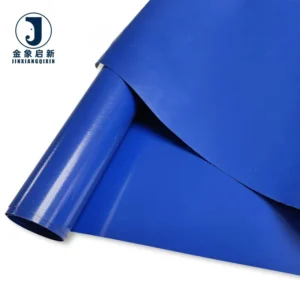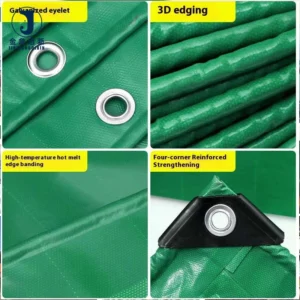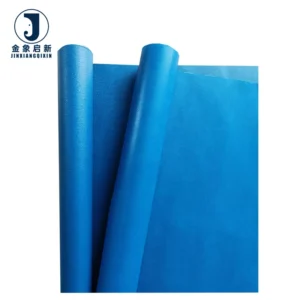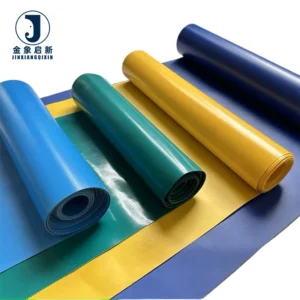
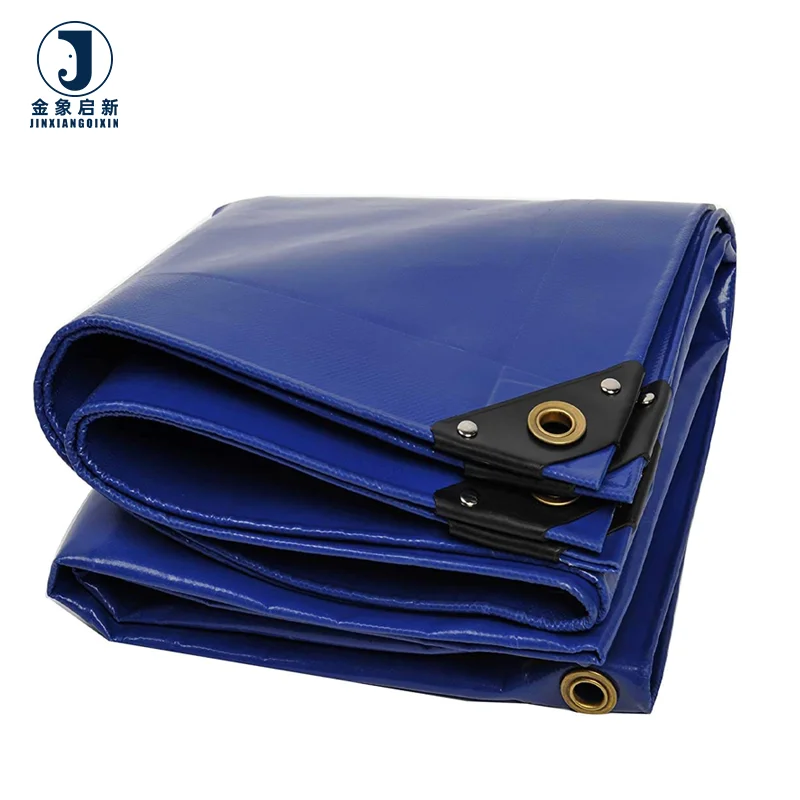
Batch-Matched Roll Consistency — every roll of PE tarpaulin is weighed and inspected against the quoted GSM before dispatch, so your container arrives with uniform weight and colour across the entire shipment.
Technical Specifications
| Parameter | Value |
|---|---|
| Product Type | PE Tarpaulin Roll |
| Base Fabric | HDPE weaving |
| Coating Material | LDPE lamination on both sides |
| Weight (GSM) | 50 gr/m² to 220 gr/m² available |
| Total Thickness | 0.2–0.4 mm / 8 mil–16 mil / Custom |
| Weave Density Options | 6×6, 6×7, 7×7, 7×8, 8×8, 9×9, 8×10, 10×10, 12×12, 14×14, 14×16 |
| Roll Width | 2 m, 4 m, 6 m / 6 ft, 8 ft, 10 ft, 12 ft |
| Roll Length | 100 yards, 100 metres, or custom |
| Colour Options | Blue, Blue/Orange, Green, Grey, Black, Clear, Grey/Green, Orange, or custom |
| UV Treatment | Available (grade to be confirmed per order) |
| Anti-Static | Available (grade to be confirmed per order) |
| Waterproof | Yes |
| Mildew Proof | Yes |
| Edge Reinforcement | PP rope reinforced hem on all four edges (finished tarpaulin) |
| Eyelets | Galvanised, every 3 ft or 1 m interval (finished tarpaulin) |
| Certifications | ISO, CE |
Application Suitability
| Application | Exposure & Requirement |
|---|---|
| Poultry coop curtains | Daily wash-down moisture, ammonia vapour, constant tension on roller systems |
| Agricultural crop covers | Direct sunlight, wind uplift, seasonal temperature swings |
| Pond and reservoir liners | Permanent water immersion, soil chemistry, puncture from substrate |
| Truck and container covers | Road abrasion, flexing at load points, weather exposure during transit |
| Construction scaffolding wrap | Wind-driven rain, UV degradation, tearing at tie-off points |
| Timber and hay storage covers | Moisture ingress, fungal growth, repeated handling and re-draping |
Why Roll-to-Roll GSM Consistency Matters More Than the Quoted Number
The GSM on the quotation is meaningless if the roll you receive weighs less.
Distributors and importers sourcing PE tarpaulin roll wholesale regularly face a familiar problem: the specification sheet states one weight, but the material arriving in the container is lighter. This is not a rounding error — it is a production control failure. When roll stock is extruded and laminated at speed, coating weight can drift across the web width and along the roll length [NEED_CITE: tensile and tear test methods for coated fabrics per ISO 1421]. A 90 gsm roll that arrives at 78 gsm will tear earlier, sag under its own weight, and fail to hold eyelets under tension. Buyers who convert rolls into finished tarpaulins downstream then inherit the problem, cutting and hemming fabric that does not perform to the specification they sold to their own customers.
How Density and GSM Map to Real-World Performance
Choosing the right PE tarpaulin roll aftermarket supplier starts with understanding the relationship between weave density and weight. A 6×6 weave at 50–60 gsm serves light-duty seasonal covers, while a 14×14 weave at 150–250 gsm provides the tear resistance needed for heavy-duty transport and construction applications. The density-to-GSM mapping ensures you select the exact grade your market demands, rather than guessing from a product name.
Controlling Colour and Coating Across a Full Container Order
When you order multiple rolls in a single container, batch-to-batch colour variation becomes a visible problem once the fabric is unrolled and installed side by side. Our production process controls pigment dosing and LDPE lamination temperature at every stage, so rolls from the same production run match within a tight colour tolerance [NEED_CITE: colour fastness and batch consistency standards for coated textiles]. Custom brand printing on roll stock is available with the same batch-controlled approach, keeping your logo sharp and consistent across the entire order.
Reading the Specification Sheet Like a Technical Buyer
The base fabric is HDPE woven tape yarn, which determines the fundamental tensile strength in both warp and weft directions. LDPE lamination on both sides provides waterproofing and mildew resistance, but the lamination weight must be balanced — too heavy and the fabric becomes stiff and difficult to fabricate, too light and the coating fails to seal the weave intersections. GSM alone does not tell the full story: a 10×10 weave at 110 gsm will have different tear propagation behaviour than an 8×10 weave at the same weight, because the tighter weft spacing resists tear spread more effectively. Roll width selection affects cutting yield — a 4 m roll may produce less waste than a 2 m roll when fabricating wide poultry curtains, but requires more handling equipment on the factory floor.
The Hidden Cost of Specifying on Price Per Roll Alone
Buyers who select roll stock based on the lowest unit cost often discover the problem at the fabrication stage. A lighter coating means the fabric frays at cut edges before eyelets can be set, and PP rope hem reinforcement pulls through the weakened weave. Rolls that sit in container shipping for weeks in high heat can develop blocking — where lamination layers fuse together — if the LDPE formulation is not designed for tropical transit conditions [NEED_CITE: coating adhesion and blocking resistance in laminated PE fabrics]. The cost of re-ordering and air-freighting replacement stock far exceeds the saving on the original purchase.
Why Wholesale Buyers Consolidate Their Roll Orders Here
Three dedicated production lines run PE tarpaulin roll stock with in-process QA at every lamination stage, catching coating weight drift before it reaches the winding station. The 10-person R&D team develops custom width and colour samples within days, not weeks, so you can confirm batch consistency before committing to a full container. Every roll undergoes 100% pre-shipment inspection with actual GSM recorded against the quoted grade. Roll packing on hard paper tubes with matching tarpaulin wrap protects the inner layers during ocean freight. Container loading plans are provided by roll count, weight, and CBM so your logistics team can plan ahead.
Documentation & Verification
- Material specification sheet stating GSM, HDPE weave density, and LDPE coating type per roll batch
- Pre-shipment inspection record confirming actual measured weight against the quoted GSM grade
- Roll packing list with tube-packed rolls wrapped in protective tarpaulin sheet for transit
- Container loading plan detailing roll count, total weight, and CBM per container
- Certificate of origin and customs documentation for destination import clearance
- UV and anti-static treatment test reports where applicable to the ordered grade
Fabrication, Handling & Storage
- Heat-seal LDPE laminated rolls at moderate temperature to avoid melting through the HDPE base fabric
- Store rolls upright on tubes to prevent flat-spot creases that become permanent in cold weather
- Cut HDPE woven fabric with rotary blades to minimise fraying at edges before eyelet setting
- Allow rolls to acclimatise before unrolling in cold climates to prevent lamination cracking
- Clean finished tarpaulins with mild detergent — harsh solvents degrade LDPE lamination adhesion
- Plan cutting layout around the roll width to minimise offcuts and seam lines on large covers
Requesting a Quotation That Matches Your Market
Tell us the end-use application and the environmental exposure your customers face — poultry farm humidity, outdoor construction UV, or transport abrasion — so we can recommend the correct weave density and GSM grade. Specify your required roll width, length, and colour, along with the annual volume you plan to order, so we can plan batch-consistent production runs. If your market requires UV or anti-static treatment, state the standard or test method your buyers expect so we can match the formulation.
Frequently Asked Questions
Q: How is the actual GSM verified before my rolls ship?
A: Every roll is weighed on calibrated scales during our 100% pre-shipment inspection. The measured weight is recorded against the quoted GSM on the inspection report, which is shared with you before dispatch. Rolls that fall outside the agreed tolerance are held back and reworked.
Q: Can I mix widths and colours in one container order?
A: Yes. We plan production so that all rolls in a single container order are coated in the same batch run, maintaining colour consistency across different widths and GSM grades. Your container loading plan shows exactly which rolls are in each bale.
Q: What lead time applies to custom width or colour?
A: Standard widths and stock colours ship from inventory or within typical multi-week lead times. Custom widths or matched colours require a production run, and samples are developed within days for your approval before bulk coating begins.
Q: How are rolls packed for ocean freight?
A: Each roll is wound on a hard paper tube and wrapped in the same PE tarpaulin material to protect against moisture and abrasion during transit. Rolls are then baled and loaded according to a weight and CBM plan we provide in advance.
Q: Do UV and anti-static treatments come with test reports?
A: Where UV or anti-static treatment is specified on your order, we supply the corresponding test documentation. Confirm the grade required for your destination market at inquiry stage so we can match the correct formulation and testing standard.