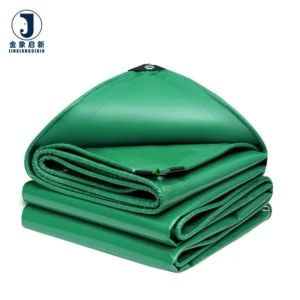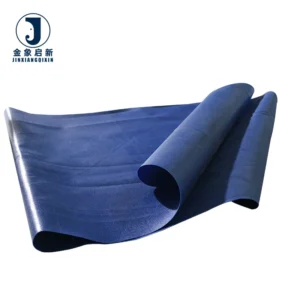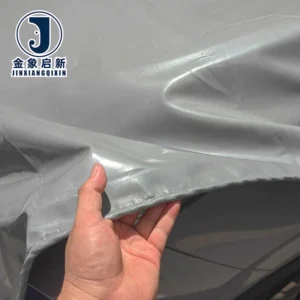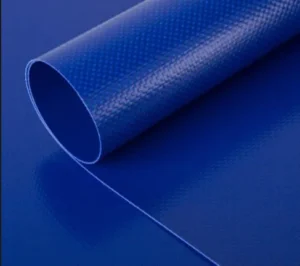
Coating Weight Control — deep process control over PVC coating adhesion and consistency built across nearly three decades of coated fabric production, verified roll by roll before dispatch.
Technical Specifications
| Parameter | Value |
|---|---|
| Product Type | PVC Coated Tarpaulin Roll |
| Coating Material | PVC |
| Coating Method | Knife coated |
| Weight Range | 500 to 800 GSM (confirm specific grade per order) |
| Waterproof Performance | Anti-permeable ≥20KPa |
| Flame Retardant | Available in flame retardant grades — confirm the grade required for your market (source states ≤10 seconds, test standard not declared) |
| Low-Temperature Flexibility | Remains pliable, not fractured at -30°C |
| Water Absorption | Almost none, quick drying after rain |
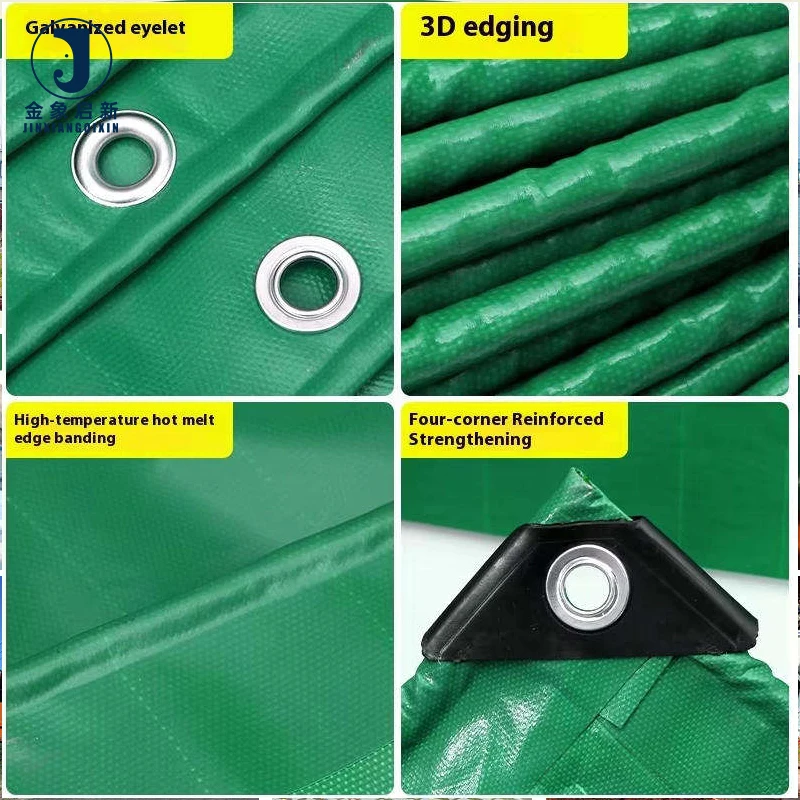
| Seaming Method | High-frequency heat combined |
| Tensile Strength | High strength (test basis not stated — request test report) |
| Corrosion Resistance | Acid, alkali and brine corrosion resistant |
| Anti-Static | Available in anti-static grades — verify against manufacturer catalog for your application |
| Anti-Mildew | Mildew proofing properties stated (test basis not stated) |
Application Suitability
| Application | Exposure & Requirement |
|---|---|
| Truck and trailer side curtains | Constant flexing at load points, road debris abrasion, sustained weather exposure, weld seam integrity under tension |
| Industrial equipment covers | Chemical splash contact with acids, alkalis or brine, UV and rain cycling, repeated handling and folding |
| Outdoor stockpile sheeting | Long-term weathering, wind-driven rain, ponding water on flat sections, ground contact moisture |
| Tent and inflatable structure fabric | Tensile load from frame or air pressure, seam stress at panel joins, fire classification for occupied structures |
| Agricultural and aquaculture covers | Permanent water contact, biological growth environment, soil chemistry exposure, low-temperature winter conditions |
Why GSM Alone Fails to Predict How a PVC Coated Tarpaulin Roll Will Perform in Service
GSM tells you what the fabric weighs, not how the coating bonds to the base fabric or how the seams will hold under load.
A roll that arrives at the correct weight but with poor coating adhesion will delaminate at the first flex cycle. I have seen heavy-grade coated rolls fail not because the PVC wore through but because the weld seam separated under tension at the point the load flexes most. The relationship between base fabric denier, weave density, and coating weight determines whether the PVC coated tarpaulin roll survives its first season or its fifth [NEED_CITE: tensile and tear test methods for coated fabrics per ISO 1421]. Technical buyers who specify only on GSM leave too much to chance.
How Coating Adhesion Separates One Roll from Another
The PVC coating must penetrate and lock into the base fabric weave during the knife coating process. When coating weight is controlled but adhesion is not, the surface may pass a visual inspection yet separate at the weld line under stress. This is why coating method matters as much as coating weight. Our production maintains process parameters that drive the PVC into the fabric interstices, producing a bond that survives repeated folding, welding, and tension cycling.
Base Fabric Denier and Its Role in Tear Propagation
The denier of the yarns and the density of the weave determine how a small puncture behaves once the fabric is under tension. A loose weave with heavy coating may hit the target GSM but will allow a tear to propagate rapidly across the panel. Higher denier yarns in a tight weave arrest tear spread and distribute load across multiple yarn intersections. When you request a material data sheet, the base fabric denier and weave count should sit alongside the GSM [NEED_CITE: relationship between base fabric construction and tear strength in coated textiles].
Reading the Specification Sheet Beyond the Headline Weight
The waterproof rating of anti-permeable ≥20KPa confirms that water penetration is resisted under measurable hydrostatic pressure, which matters for flat-sheet applications where water pools before draining. Low-temperature flexibility at -30°C indicates the PVC formulation retains plasticiser stability in cold climates, avoiding the brittle fracture that ends a cover’s service life in winter transport. Corrosion resistance to acid, alkali, and brine points to suitability for chemical environments and coastal or marine exposure. Each of these properties should appear on the specification sheet you receive before order confirmation.
What Happens When the Wrong Grade Reaches the Site
A roll specified at one GSM but delivered at another creates problems that surface only during fabrication or installation. The fabricator sets welding parameters for the expected thickness, and a lighter coating burns through or produces a weak join. A flame retardant grade claimed without a named test standard means the fabric may pass a supplier test but fail the site inspector’s requirement for DIN 4102 B1 or NFPA 701 compliance. Colour variation between rolls in the same order becomes visible once panels are installed side by side, forcing selective replacement or full rework [NEED_CITE: batch-to-batch colour consistency standards for coated fabric rolls].
Why Material Buyers Source This PVC Coated Tarpaulin Roll Here
Three full production lines and 36 sets of professional equipment support bulk roll output with consistent coating weight across the run. A 10-person R&D team handles material selection and custom formulation, developing samples within days when standard grades do not match the requirement. Dedicated QA and QC operates at every production stage, with 100% pre-shipment inspection verifying GSM and coating integrity on each roll before it is packed. Nearly 30 years of focused coated fabric production means process variables that newer lines are still learning have long been brought under control. ISO and CE certification is held at the facility level, and documentation is matched to each batch on request.
Documentation & Verification
- Material specification sheet stating exact GSM, base fabric denier, weave construction, and coating weight for every roll
- Flame retardant test report naming the applicable standard where retardant grades are specified
- Pre-shipment inspection record with roll-by-roll GSM verification and visual defect check before dispatch
- ISO and CE certificates available, referenced to the specific product batch on request
- Roll packing list with colour reference and batch number for traceability across multi-roll orders
Fabrication, Handling & Storage
- High-frequency heat welding suits this PVC coated construction; confirm temperature and dwell time against the specific GSM grade ordered
- Cut edges should be sealed or hemmed before eyelet installation to prevent coating peel-back at stress points
- Store rolls upright on pallets in a covered, ventilated area to avoid compression marks on the coating surface
- Allow cold-stored rolls to reach ambient temperature before unrolling to prevent low-temperature creasing below -30°C flexibility range
- Clean with mild detergent and soft brush; avoid solvent-based cleaners that may attack the PVC coating plasticiser
What We Need to Quote Your Roll Requirement Accurately
Send us the end-use application and the environmental conditions the fabric will face, including chemical exposure, temperature extremes, and fire classification requirements for your market. Specify the GSM grade, required roll width and length, colour reference or RAL number, and annual volume so we can confirm production lead time and minimum order. If you need samples for welding trials or third-party testing, tell us at inquiry stage and we will develop them before you commit to a container.
Frequently Asked Questions
Q: How is GSM verified on each roll before shipment?
A: Our QA team samples from each production roll, cuts a standard area, and weighs it against the quoted GSM grade. Rolls that fall outside tolerance are held and re-coated or downgraded. The pre-shipment inspection record documents the measured weight per roll and ships with your order for receiving verification.
Q: Can flame retardant performance be supported with a named test standard?
A: Yes, when you specify the standard required for your market — such as DIN 4102 B1, NFPA 701, or M2 — we formulate the coating accordingly and supply the test report from a recognised laboratory. Confirm the classification your site inspector or local authority requires before order placement.
Q: How do you ensure colour consistency across multiple rolls in one order?
A: All rolls in a single order are produced from the same coating batch using matched pigment formulation. A colour reference sample is retained for comparison, and the roll packing list records the batch number so any future reorder can be matched to the original production run.
Q: What custom widths and roll lengths can be produced?
A: Custom widths and lengths are available subject to line capability and minimum run requirements. Provide your required dimensions, colour, and GSM grade at inquiry stage so we can confirm feasibility, lead time, and minimum quantity for your specification.