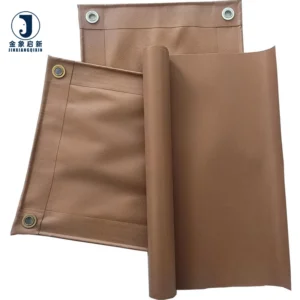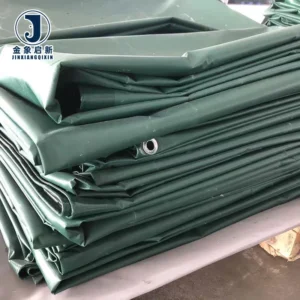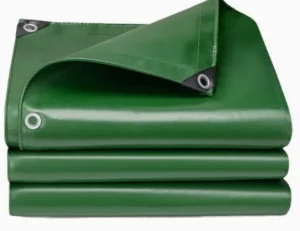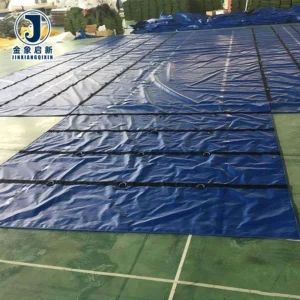
Deep Coating Adhesion Control — knife coated construction verified at every production stage to ensure the stated 420 gsm weight and base fabric integrity match your material specification sheet on arrival.
Technical Specifications
| Parameter | Value |
|---|---|
| Product Type | PVC Coated Banner Fabric |
| Base Fabric Denier | 1000×1000 |
| Weight | 420 gsm |
| Coating Method | Knife coated |
| Coating Material | PVC |
| Water Resistance | Waterproof (test basis not stated in source) |
| UV Treatment | Anti-UV coated (test basis not stated in source) |
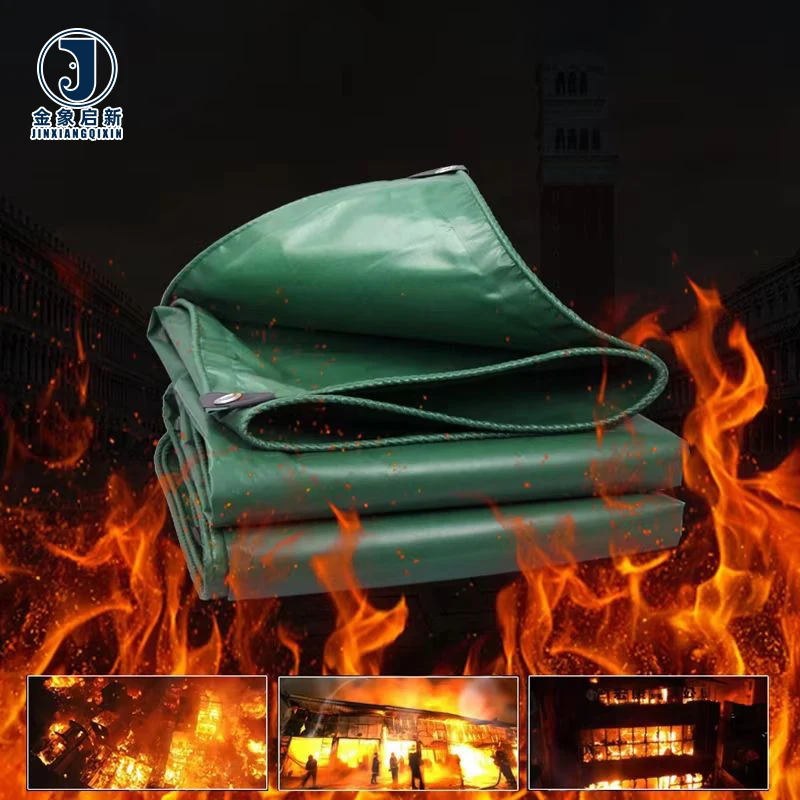
| Flame Retardant Grade | Available in flame retardant grades — confirm the grade required for your market |
| Key Features | Tear-resistant woven construction, waterproof PVC coating, anti-UV treated surface |
Application Suitability
| Application | Exposure & Requirement |
|---|---|
| Large-format outdoor banners and signage | Continuous UV exposure, wind loading, surface printability for solvent and UV ink adhesion |
| Truck and trailer covers | Road abrasion, constant flexing at tie-down points, welded seam stress under load movement |
| Outdoor tent and awning fabric | Rain and wind exposure, repeated folding and unfolding, UV degradation resistance |
| Industrial equipment covers | Dust and moisture ingress protection, mechanical handling abrasion, verified GSM for procurement compliance |
What Happens When the Quoted GSM Does Not Match the Roll on Arrival
The coating weight and base fabric denier must be verified together — GSM alone does not confirm material integrity.
Technical buyers sourcing PVC coated banner fabric often specify a weight on the purchase order, only to receive rolls where the actual coating mass falls below the agreed threshold. A 1000×1000 base fabric provides the structural backbone, but if the PVC knife coating is applied too thin, the resulting material lacks the tensile mass needed for outdoor banner and cover use. This discrepancy surfaces weeks after installation when the fabric tears at stress points that a correctly weighted roll would have withstood [NEED_CITE: tensile and tear test methods for coated fabrics per ISO 1421]. The problem compounds when multiple rolls from the same shipment show inconsistent weights, making batch-level quality control impossible.
Base Fabric Denier and Dimensional Stability for Banner Applications
A 1000×1000 denier base fabric provides the woven foundation that determines how the PVC coated banner fabric behaves under tension. This denier count delivers a balanced weave where warp and weft threads share load evenly, reducing the risk of directional tearing when the material is stretched across frames or subjected to wind load. For large-format banner applications, this stability means the printed surface remains flat without distortion at the edges.
Coating Weight Consistency Across the Roll Surface
The knife coated process applies a controlled PVC layer onto the 1000×1000 base fabric, producing a uniform surface weight across the full roll width. Unlike calendered or laminated alternatives, knife coating allows the PVC to penetrate the weave structure, creating mechanical adhesion that resists delamination during flexing. For buyers ordering banner fabric by the roll, this consistency means every linear metre meets the stated 420 gsm specification, whether cut from the roll centre or the edge [NEED_CITE: coating adhesion test standards for PVC coated fabrics].
Specification Interpretation for Technical Buyers
The relationship between 420 gsm total weight and the 1000×1000 base fabric defines how this material performs in practice. A significant portion of the stated weight sits in the PVC coating itself, which provides the waterproof barrier and the printable surface, while the woven base contributes tear resistance and dimensional stability. The knife coated method ensures the coating penetrates the weave rather than sitting as a surface film, which improves peel strength at welded seams — a critical factor when fabricating truck covers or tensioned banners. Buyers comparing materials should evaluate both the base denier and the coating method together, because a lighter base fabric with heavier coating may behave differently at flex points than this 1000×1000 construction.
The Hidden Cost of Underspecified Banner Fabric
When the base fabric denier or coating weight is not verified before shipment, the failure rarely appears during initial handling — it emerges after the banner is hung or the cover is fitted. A material with insufficient coating adhesion will delaminate at welded seams, particularly where the fabric flexes under wind load or load movement. Rolls with inconsistent GSM across the batch produce banners that age at different rates, with lighter sections fading or tearing first [NEED_CITE: field failure patterns in outdoor PVC coated fabrics]. For fleet operators and sign makers, this means rework costs that far exceed the savings from accepting unverified material.
Why This Material Source Supports Technical Procurement
Three full production lines with 36 sets of professional equipment support bulk roll orders with batch-to-batch consistency on this PVC coated banner fabric. The 10-person R&D team handles material selection and sample development, producing custom-width and custom-colour samples within days for buyer approval before full production. Every roll passes through dedicated QA/QC inspection at each production stage, with 100% pre-shipment verification confirming that the coating weight, base fabric denier, and surface treatment match the material specification sheet. This process control extends to documentation — each shipment includes the test reports, packing lists, and traceability records that technical buyers require for their own compliance files.
Documentation & Verification
- Material specification sheet confirming 420 gsm weight, 1000×1000 base denier, and knife coated method per roll
- Pre-shipment inspection record verifying coating adhesion and surface uniformity against the quoted specification
- Anti-UV test report issued against a recognized standard — confirm the UV hours required for your target market
- Roll packing list with batch reference number enabling traceability from production line to delivery point
- ISO and CE certificates supporting customs clearance and procurement compliance documentation
Fabrication, Handling & Storage
- Knife coated PVC surface accepts solvent, eco-solvent, and UV-curable inks for banner printing applications
- Welded seams on 1000×1000 base fabric require matched heat and dwell time settings to prevent coating burn-through
- Store rolls horizontally on racking to prevent creasing that could compromise the PVC coating surface
- Allow cold-stored rolls to reach ambient temperature before unrolling to avoid coating cracking on the 420 gsm material
- Use PVC-compatible adhesive patches for field repair of minor punctures on the knife coated surface
Request a Specification Match for Your Application
Provide your end-use application, the environmental exposure conditions, and the roll width and quantity you require for your production run. If your market has specific fire classification or UV performance requirements, include the applicable standard so we can confirm whether this 420 gsm PVC coated banner fabric meets your compliance threshold or whether an alternative grade from our range is more suitable. Sample rolls can be dispatched for your print testing and weld parameter calibration before you commit to a production order.
Frequently Asked Questions
Q: How is the 420 gsm coating weight verified — what distinguishes knife coated from calendered PVC?
A: Knife coating applies liquid PVC directly onto the 1000×1000 base fabric, allowing the material to penetrate the weave for mechanical adhesion. Calendering presses a pre-formed PVC film onto the fabric, which can result in lower peel strength. We verify the coating weight per roll during pre-shipment inspection and document the result on the material specification sheet.
Q: What test basis supports the anti-UV treatment claim on this banner fabric?
A: Anti-UV treatment is applied during the coating process, but the specific UV hour rating depends on the additive package and the test standard used. When you specify your target market and the applicable standard, we confirm the treatment level and provide the corresponding test report with your shipment documentation.
Q: How do I ensure batch-to-batch GSM consistency across multiple roll orders?
A: Each production run undergoes in-process QA checks at the coating stage, and 100% of rolls are inspected before dispatch. The roll packing list includes batch reference numbers so you can trace each roll back to its production parameters. For repeat orders, we hold the coating formulation on file to maintain consistency.
Q: How do welded seams perform on this 1000×1000 knife coated fabric at flex points?
A: The knife coated process creates coating penetration into the weave, which improves peel strength at weld lines compared to surface-laminated alternatives. We recommend that fabricators run test welds on sample material to calibrate heat, pressure, and dwell time before full production, and we supply sample rolls for this purpose.