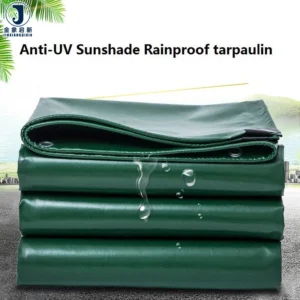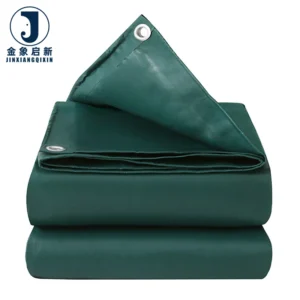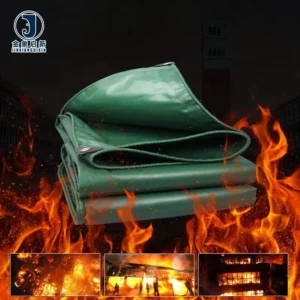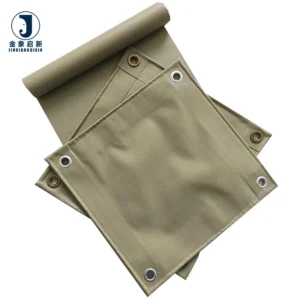
Proven Coating Adhesion — Nearly 30 years of focused coated fabric production delivers consistent PVC adhesion across base fabric deniers, verified through in-process quality checks at every production stage.
Technical Specifications
| Parameter | Value |
|---|---|
| Product Type | PVC Coated Tarpaulin |
| Weight | 250gsm-1500gsm |
| Base Fabric Denier | 200D×300D, 500D×500D, 840D×840D, 1000D×1000D |
| Coating Material | PVC |
| Surface Finish | Glossy or matte |
| Temperature Range | -15°C to 70°C |
| Flame Retardant | FR treated (grade not stated — confirm the grade required for your market) |
| UV Treatment | Customized (test basis not stated — request test report before bulk order) |
| Anti-Fungal | Treated |
| Waterproof | Yes |
| Working Life | 3-10 years (source value — verify against manufacturer catalog) |
| Sizes | 3x4m, 6x8m, 8x10m, 10x12m or custom made |
| Colors | Blue, yellow, black, green, white, etc. |
| OEM/ODM | Accepted |
| Standards | ISO, CE |
Application Suitability
| Application | Exposure & Requirement |
|---|---|
| Dump trailer cover | Constant load flexing, road debris abrasion, UV exposure, waterproof seal at welded seams |
| Firewood covering | Moisture ingress, ground contact, repeated handling and folding |
| Boat cover | Salt spray, permanent moisture exposure, UV degradation on horizontal surfaces |
| Roof protection | Rain pooling, wind uplift stress at tie-down points, thermal expansion cycles |
| Patio and pool cover | Chlorine vapor exposure, standing water weight, prolonged UV on flat planes |
Why Coating Technology Determines Real-World PVC Coated Tarpaulin Performance
Coating weight and base fabric selection together define mechanical behaviour — one without the other is incomplete specification.
Buyers regularly receive PVC coated tarpaulin that meets the quoted GSM on paper but underperforms in the field because the base fabric denier was never matched to the application’s tensile and tear demands. A high-GSM fabric built on a low-denier base will flex and fatigue at stress points faster than a balanced construction. Technical buyers who specify only by weight leave critical performance gaps that surface months after installation. [NEED_CITE: tensile and tear test methods for coated fabrics per ISO 1421]
Base Fabric Denier and Coating Weight Interaction
The PVC coated tarpaulin range spans base fabric deniers from 200D×300D through 1000D×1000D, each suited to different mechanical demands. Lower deniers such as 200D×300D pair with lighter coating weights for covers where flexibility and folding ease take priority. Higher deniers like 840D×840D and 1000D×1000D provide the tensile foundation needed when the fabric faces sustained load stress, such as dump trailer side curtains that flex every time the bed tilts.
Coating weight from 250gsm to 1500gsm controls thickness and abrasion protection, but the base fabric weave density governs how tears propagate once initiated. A 1000D×1000D base resists tear spread even if the PVC coating surface is scored during transport or installation.
Surface Finish and Temperature Behaviour
Glossy finish sheds dirt and water more readily, which matters for horizontal covers where debris accumulates. Matte finish reduces glare and can improve adhesion for printed branding when custom identification is required. Both finishes operate within the -15°C to 70°C range, though PVC coating adhesion behaviour shifts at temperature extremes. At the cold boundary, the coating stiffens and becomes more susceptible to cracking if folded sharply. At the upper boundary, the coating softens, which can affect seam integrity under sustained tension. [NEED_CITE: PVC coating glass transition and low-temperature flexibility testing for tarpaulin fabrics]
Specification Parameters That Define Field Performance
GSM alone does not predict tensile or tear strength because coating weight adds mass without adding structural fibre. A 900gsm fabric on a 500D×500D base may weigh more than a 650gsm fabric on a 1000D×1000D base, yet the latter typically resists tearing more effectively. The PVC coating method — whether knife-over-roll, dip, or calender — determines how deeply the polymer penetrates the base fabric weave. Deeper penetration improves peel strength at welded seams, which is where most field failures originate in heavy-duty covers. Base fabric denier and thread count per centimetre define the rip-stop behaviour: when a puncture occurs, higher thread density limits how far the tear travels before the weave arrests it. Surface finish choice between glossy and matte affects more than appearance; glossy surfaces reflect more solar radiation, reducing heat buildup under direct sun, while matte surfaces diffuse light and resist showing scuff marks from repeated handling. Temperature range boundaries of -15°C to 70°C indicate where the PVC coating maintains adhesion to the base fabric without embrittlement or excessive softening — operating outside this range risks delamination at the coating-to-yarn interface.
The Hidden Cost of Specification Mismatches
Selecting a lighter denier to save on material cost often results in covers that fail at welded seams within the first season of use, particularly where the fabric flexes around trailer corners or equipment edges. Flame retardant grades specified without matching the destination market’s test standard lead to rejected shipments and compliance delays. [NEED_CITE: flame retardant classification systems for PVC coated fabrics in construction and transport] Colour inconsistency between rolls in the same batch forces fabricators to reject entire panels when covers are assembled from multiple pieces and the shade variation becomes visible once installed side by side. These mismatches cost far more in rework and replacement than specifying the correct grade initially.
Why Technical Buyers Source This PVC Coated Fabric Here
Three full production lines with 36 sets of professional equipment ensure batch-to-batch consistency in coating weight and colour across large-volume orders. A 10-person R&D team handles material selection, denier matching, and sample development so that technical buyers can verify the exact PVC coated tarpaulin grade before committing to bulk production. Dedicated QA/QC at every production stage means coating adhesion and GSM are checked in-process rather than only at final inspection. Sample turnaround within days allows fabricators to run their own weld tests and confirm compatibility with their hot-air or wedge welding equipment. The material specification sheet accompanying each order states exact GSM, base fabric denier, and coating method for the specific grade purchased — not a generic product family range.
Documentation & Verification
- Material specification sheet stating exact GSM, base fabric denier, and coating method for the purchased grade
- Independent test reports for UV resistance and flame retardant grade with traceable standard references
- Pre-shipment inspection record confirming coating adhesion and colour consistency roll-to-roll
- Roll packing list with net and gross weight per unit for container loading verification
- Certificate of origin and customs documentation for cross-border shipment clearance
Fabrication, Handling & Storage
- Hot-air welding temperature and speed must be adjusted to the specific GSM grade and coating thickness
- Store rolls vertically on pallets to prevent flat-spot creasing that weakens the PVC coating at fold lines
- Allow cold-stored rolls to reach ambient temperature before unrolling to avoid coating crack at low-denier base
- Use mild detergent for cleaning glossy surfaces to avoid dulling the finish over repeated wash cycles
- Plan cutting layout across roll width to minimize offcut waste on custom-sized dump trailer covers
Requesting a Technical Quote
To specify the correct PVC coated tarpaulin grade for your project, provide the application environment including UV exposure duration, temperature extremes, and mechanical stress points. Confirm the flame retardant or fire safety standard required by your destination market so the treatment chemistry can be matched before production. Specify whether you need rolls for in-house fabrication or finished cut-and-welded covers to exact dimensions.
Frequently Asked Questions
Q: How is GSM weight verified on arrival and what is acceptable tolerance?
A: Each roll undergoes pre-shipment inspection where a sample swatch is cut and weighed against the stated GSM specification. The material specification sheet documents the exact coating weight and base fabric denier for the grade shipped. Buyers should request the inspection record before container dispatch to confirm the delivered fabric matches the purchase order without unapproved substitution.
Q: Which flame retardant test standards apply and how do I match them to my market?
A: Flame retardant grades are available for PVC coated tarpaulin, but the specific test standard — whether DIN 4102, NFPA 701, or another national code — must be stated at the inquiry stage. The R&D team develops samples treated to the requested standard and provides the corresponding test report. Confirm your end-market compliance requirement before placing the bulk order.
Q: What test basis supports anti-UV treatment claims?
A: UV treatment is customized per order and the supporting test basis should be requested with the material specification sheet. Base fabric denier affects long-term outdoor performance independently: higher denier fabrics maintain structural integrity longer even when surface coating degrades under prolonged solar exposure. Ask for test documentation referencing the specific grade and denier combination you are purchasing.
Q: How do glossy and matte finishes differ in heat absorption and abrasion resistance?
A: Glossy PVC coating reflects more solar radiation, reducing heat buildup on horizontal covers exposed to direct sunlight. Matte finish diffuses light and resists showing surface scuffs from handling and transport. Both finishes share the same temperature operating range and waterproof performance, so the choice depends on the installation environment and whether surface appearance matters for the end application.