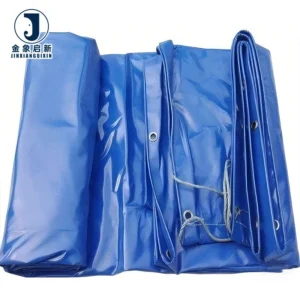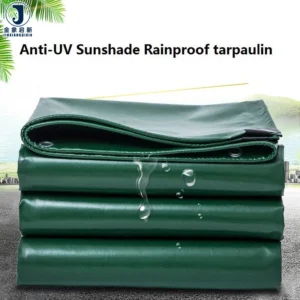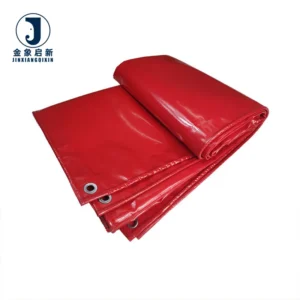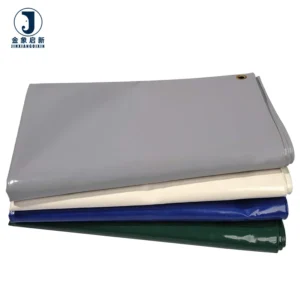
Coating Weight Mastery — nearly 30 years of controlled PVC application, with every roll verified against stated GSM before leaving the production line.
Technical Specifications
| Parameter | Value |
|---|---|
| Product Type | PVC Coated Tarpaulin |
| Weight (GSM) | 700gsm, 850gsm, 900gsm (confirm grade per application) |
| Coating Material | PVC |
| Coating Method | Knife coated |
| Flame Retardant | Available in flame retardant grades — confirm the grade required for your market |
| Anti-Static | Available in anti-static grades — confirm the standard applicable to your site |
| Anti-Cold | Available |
| Anti-Mildew | Available |
| Waterproof | Yes — fully waterproof coated construction |
| Weather Resistance | Suited to extended outdoor exposure |
| Application Form | Roll or custom cut |
| Key Features | High strength, weather resistance, waterproof, soundproof |
Application Suitability
| Application | Exposure & Requirement |
|---|---|
| Truck side curtain | Constant flexing at load points, road abrasion, UV and rain exposure |
| Flatbed cargo cover | Tie-down stress at hems, wind flutter, sun and precipitation |
| Construction equipment cover | Puncture risk from sharp edges, standing water, site dust |
| Outdoor storage enclosure | Prolonged weather exposure, wind load, temperature fluctuation |
What "Verified GSM" Actually Means When PVC Coated Tarpaulin Arrives at Your Dock
GSM on the quotation must match the roll on the scale — and the base fabric denier must match the spec sheet.
Buyers frequently receive PVC coated tarpaulin that measures lighter than agreed. The discrepancy often hides in the coating layer: a thinner PVC film applied over the same base fabric reduces total weight while the weave appears identical at first glance. Over time, that shortfall surfaces as early delamination at welded seams or reduced tear resistance under tie-down tension [NEED_CITE: tensile and tear test methods for coated fabrics per ISO 1421]. Technical buyers in fleet and fabrication operations increasingly demand per-batch weight records rather than relying on catalogue claims alone.
Coating Method and Adhesion Control for Welded Seams
Knife coating applies a measured PVC compound layer directly onto the base fabric under controlled tension and temperature. This process produces a uniform coating weight across the full width, which is critical when the fabric will be heat-welded into truck covers or side curtains. Consistent adhesion between the PVC film and the polyester base yarn prevents the weld line from becoming the weakest point in the finished cover.
Base Fabric Denier, Weave Density, and Their Role in Tear Behaviour
The tensile and tear performance of any PVC coated tarpaulin depends on the interplay between base yarn denier and mesh count. A higher denier increases individual yarn strength, while a tighter weave distributes stress across more yarns when a puncture or cut initiates a tear. For truck cargo covers that flex under load and experience abrasion from tie-down straps, both factors must be matched to the specific route conditions and cargo type [NEED_CITE: relationship between base fabric construction and tear propagation in coated textiles].
Reading the Spec Sheet: GSM, Coating Weight, and Strength
GSM measures total weight per square metre — base fabric plus coating combined. A 900gsm grade with a heavy coating but a light base fabric may feel stiff yet tear more easily than a 700gsm grade built on a denser weave. Knife-coated PVC achieves strong mechanical bonding, supporting reliable heat-weld performance. Flame retardant and anti-static treatments are available in various grades, and the correct specification depends on the compliance framework in the destination market.
The Hidden Cost of Specifying on Price Per Kilogram Alone
When procurement decisions rest solely on cost per kilogram, suppliers have an incentive to reduce coating weight while maintaining the stated GSM by shifting to a lighter base fabric. The finished roll passes a casual weight check, but tear resistance and weld seam durability drop. Fleet operators discover the problem months into service, when covers split at high-stress flex points and replacement costs exceed the original savings [NEED_CITE: common failure modes in PVC truck covers linked to base fabric substitution]. Colour variation between rolls from different batches compounds the issue when panels are installed side by side on a single trailer.
Why Fabricators Source This PVC Coated Tarpaulin Here
Three full production lines and 36 sets of professional equipment maintain batch-to-batch coating consistency across roll stock orders. A dedicated 10-person R&D team develops custom GSM, treatment, and colour samples within days, reducing the gap between specification and bulk production. In-process quality checks at every coating stage catch weight deviations before the roll is wound. Pre-shipment inspection covers every roll dispatched, with documented records available per order. Nearly 30 years of coated fabric focus means process parameters are calibrated from long production history rather than trial and error.
Documentation & Verification
- Material specification sheet stating exact GSM, base fabric denier, weave density, and coating method per roll
- Flame retardant and anti-static test reports provided with applicable grade and batch reference
- Weight verification record per roll against the stated GSM before dispatch
- ISO and CE certificates included with shipment documentation
- Pre-shipment inspection report confirming coating adhesion and surface quality
Fabrication, Handling & Storage
- Heat-weld temperature and dwell time should be adjusted to the selected GSM grade and PVC coating thickness
- Reinforced hems at tie-down points distribute strap load across multiple yarns in the base fabric
- Store rolls upright on a flat surface to avoid edge creasing that affects coating integrity
- Unroll cold-weather stock in a heated area before fabrication to prevent PVC cracking at low temperature
- Clean with mild detergent; avoid solvents that degrade the PVC coating surface or anti-mildew treatment
- Plan panel layout to minimise cross-grain welds on truck covers where flex stress concentrates
Requesting a Specification Match
Provide the intended application, expected mechanical stress at weld points, and the compliance framework applicable in your market — such as fire classification or anti-static requirements for mining or aviation sites. Confirm whether you need roll stock at standard widths or custom-cut panels with hemming. Share target GSM, colour references, and estimated annual volume so the R&D team can prepare matched samples before bulk commitment.
Frequently Asked Questions
Q: How is the stated GSM verified before my PVC coated tarpaulin order ships?
A: Every roll is weighed during the pre-shipment inspection. The measured value is recorded against the stated GSM on the specification sheet. Base fabric denier and coating weight are also checked to confirm the construction matches your order. The inspection record travels with the shipment documentation for your receiving team to verify on arrival.
Q: What fire or anti-static certifications are available for this fabric?
A: Flame retardant and anti-static treatments are available in multiple grades. The specific test standard — such as DIN 4102, NFPA 701, or a market-specific mining regulation — determines which grade is appropriate. Share your destination market and compliance requirement during the inquiry stage so the correct treatment is selected and the matching test report is issued with your order.
Q: How does knife coating affect weld seam strength compared to other coating methods?
A: Knife coating produces a uniform PVC layer with strong mechanical adhesion to the base fabric. This consistency supports predictable heat-weld parameters during fabrication, reducing the risk that the seam fails before the fabric itself. Calendered or laminated coatings can show variable adhesion at the weld zone, especially where the cover flexes repeatedly under load.
Q: Can I confirm tensile and tear strength before placing a bulk order?
A: Samples are developed within days for your specified GSM and treatment combination. The material specification sheet provided with the sample states base fabric denier, weave density, and coating weight. You can conduct your own tensile and tear tests per ISO 1421 or request test reports from the production batch to verify performance before committing to a full order.
Q: What causes colour variation between rolls, and how is it controlled here?
A: Colour shifts occur when pigment batches are mixed separately or when coating temperature fluctuates between production runs. In-process quality checks monitor colour consistency across each batch. For orders requiring multiple rolls installed side by side on a single truck or structure, all rolls are produced in a single continuous run to eliminate visible panel-to-panel variation.