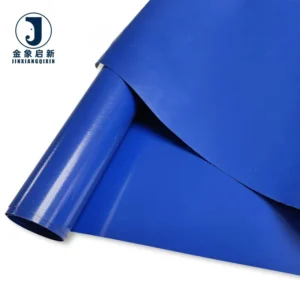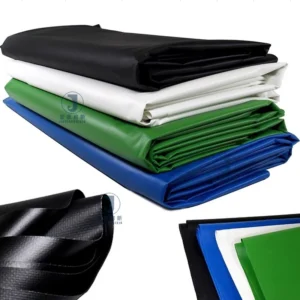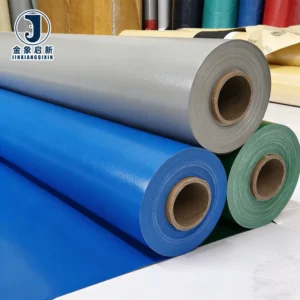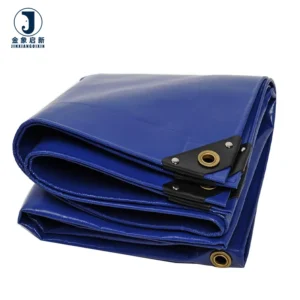
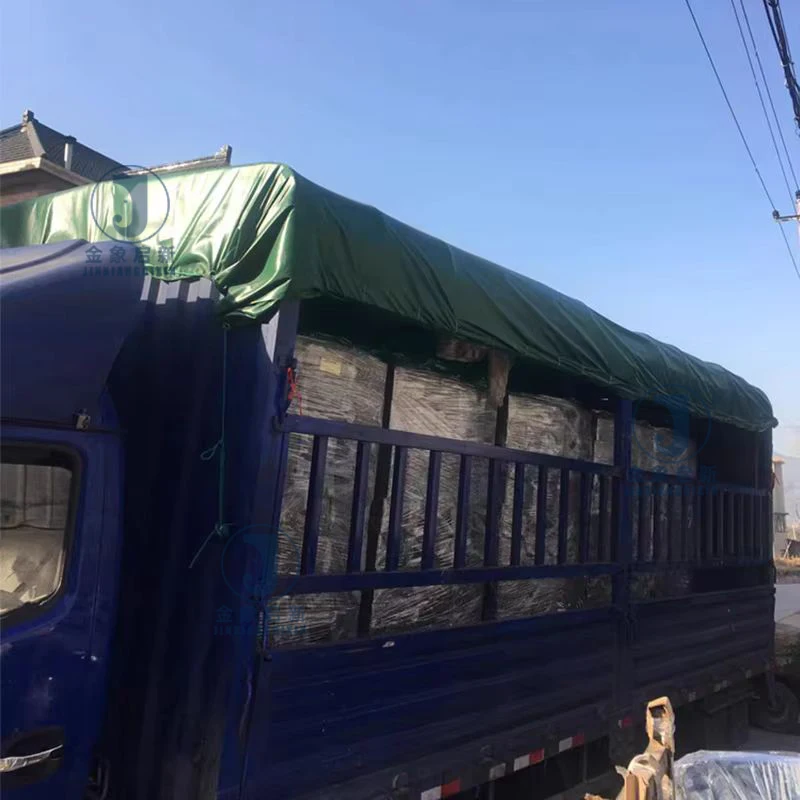
Precision Coating Control — PVC coating weight and base fabric denier are verified against the stated areal density at every production stage, ensuring the material you receive matches the specification sheet.
Technical Specifications
| Parameter | Value |
|---|---|
| Product Type | PVC Coated Tarpaulin Roll |
| Coating Material | PVC |
| Base Fabric | Warp Knitted |
| Weave Style | Plain |
| Waterproof | Yes |
| Anti-Static | Available — confirm surface resistance or test standard required for your application |
| Tear Resistance | Claimed tear resistant (test basis not stated) |
| Color | Customizable |
| Application Grade | Industrial / Agricultural heavy-duty |
| Weight (GSM) | Not stated in source — confirm required GSM at inquiry |
| Base Fabric Denier | Not stated in source |
| Flame Retardant Grade | Available in flame retardant grades — confirm the grade required for your market |
| UV Treatment | Available — confirm UV stability grade and test standard at inquiry |
Application Suitability
| Application | Exposure & Requirement |
|---|---|
| Poultry and broiler house side curtains | Sustained humidity, ammonia-rich atmosphere, dust accumulation, frequent wash-down cycles |
| Pig and sheep shelter covers | Chemical exposure from animal waste, wind-load flexing, rain and UV exposure |
| Agricultural tent and temporary shelter | Roll-fed fabrication requiring weld and seam consistency across long panel runs |
| Farm equipment and feedstock covers | Abrasion from rough surfaces, puncture risk, repeated handling and folding |
Why GSM Alone Does Not Tell You How Waterproof a Farm Cover Will Stay
A quoted GSM is only meaningful when base fabric denier, mesh count and coating weight per side are stated together.
Technical buyers sourcing PVC coated tarpaulin roll for livestock environments often receive material that reads correctly on a scale but fails at the coating-to-fabric interface within one season. The PVC layer may be thick enough to pass a weight check, yet if the warp knitted substrate lacks the density to anchor the coating, moisture and ammonia vapour penetrate at flex points and eyelet lines. [NEED_CITE: coating adhesion and delamination behaviour in PVC coated fabrics under chemical exposure] This is why material-level verification matters more than a single areal density figure.
Base Fabric Construction and Coating Adhesion
The warp knitted plain weave base fabric in this PVC coated tarpaulin provides dimensional stability when the roll is cut and welded into farm cover panels. Knitted substrates distribute tensile load across multiple yarn paths rather than relying on single warp or weft threads, which reduces the chance of tear propagation starting at a cut edge or welded seam. Coating adhesion to a knitted surface depends on how fully the PVC penetrates the yarn structure during application — incomplete penetration leaves micro-channels where moisture collects and degrades the bond over time.
PVC Coating Method and Waterproof Integrity
The coating method used — whether knife-over-roll or dip coating — directly affects how much PVC bonds to each side of the knitted substrate and how the finished material behaves under high-frequency welding. Knife-over-roll coating allows precise control of coating weight per side, which is critical when fabricators need predictable weld parameters across a production run. [NEED_CITE: knife-over-roll versus dip coating adhesion comparison for PVC tarpaulin] Dip coating can produce a thicker overall layer but may result in uneven weight distribution between the two faces, affecting how the material seals at overlapped seams.
Understanding GSM, Denier and Coating Weight as a System
Areal density in a PVC coated tarpaulin roll is the sum of base fabric weight and coating weight — not a single variable you can adjust in isolation. A high denier yarn with a loose mesh count and thin coating can produce the same GSM as a low denier yarn with a tight weave and thick coating, yet the two materials will perform very differently under wind load and repeated flexing. The base fabric denier and weave density determine tensile and tear resistance, while the coating weight determines waterproof barrier continuity and UV protection. Specifying all three independently — rather than relying on GSM alone — gives technical buyers a reliable basis for comparing material from different production batches.
The Cost of Underspecifying Farm Cover Material
When a poultry house side curtain is manufactured from material where the coating weight was not matched to the base fabric, the most common field failure is delamination at the hem line where the cover is tensioned and flexed daily. For pig shelter roofs exposed to ammonia, an underspecified coating layer allows chemical vapour to reach the knitted substrate, degrading yarn strength from the inside before any visible surface damage appears. [NEED_CITE: ammonia degradation of PVC coated fabric in livestock ventilation environments] These failures rarely show up in pre-shipment inspection because the material passes a GSM check — the weakness only emerges after sustained environmental exposure.
Material Verification and Production Control
Jinan Jinxiang maintains dedicated QA and QC checkpoints at every production stage for this PVC coated tarpaulin, from base fabric incoming inspection through coating weight verification to final roll packing. The 10-person R&D team handles material selection and sample development, producing custom colour and specification samples within days so buyers can confirm coating adhesion, weld behaviour and surface finish before committing to a bulk order. Three full production lines with 36 sets of professional equipment support consistent output across large-volume roll orders. Pre-shipment inspection covers 100% of finished rolls, with GSM, colour reference and coating integrity checked against the agreed specification sheet before any material leaves the facility.
Documentation & Verification
- Material specification sheet stating GSM, base fabric denier, coating weight per side and colour reference for the ordered PVC coated tarpaulin roll
- Test reports for UV stability and flame retardant grades provided where applicable to your market requirements
- Pre-shipment inspection record confirming areal density and coating adhesion per roll against agreed specification
- Roll packing list with individual roll identification for traceability from production batch to installed cover
Fabrication, Handling & Storage
- High-frequency welding recommended for this PVC coated tarpaulin to achieve seam strength matching the base fabric tensile specification
- Confirm weld temperature and dwell time on sample panels before production to avoid coating scorch on the knitted substrate
- Store rolls upright on end caps to prevent flat-spot deformation of the warp knitted base fabric that affects unrolling tension
- Allow rolls to acclimatise before unrolling in cold conditions to prevent coating stiffness and crease marking on the PVC surface
- Use mild detergent for cleaning — aggressive solvents may soften the PVC coating and reduce adhesion at welded seams
- Plan panel cutting layout to minimise waste across the roll width and reduce the number of welded joints in the finished cover
Inquiry and Specification Guidance
To specify the right material for your farm cover application, provide the target GSM range, the base fabric denier and weave density your fabrication process requires, and any anti-static or flame retardant test standard your market mandates. Confirm whether you need rolls in stock widths or custom widths, and whether colour matching across the full order quantity is critical for side-by-side panel installation. Request a welded seam sample alongside the material sample so you can verify fabrication compatibility before the bulk production run.
Frequently Asked Questions
Q: How is GSM verified — base fabric denier plus coating weight versus finished roll measurement?
A: We verify GSM by weighing a measured sample from each roll and cross-referencing it against the base fabric denier and coating weight stated on the material specification sheet. This ensures the areal density is achieved through the correct combination of substrate and coating, not by over-applying one layer at the expense of adhesion strength.
Q: Warp knitted versus woven base fabric — which construction suits farm cover applications?
A: Warp knitted plain weave distributes load across multiple yarn paths, reducing tear propagation at cut edges and welded seams common in poultry house side curtains. Woven fabrics offer higher initial tensile in one direction but may split along a single thread line under sustained flex. The choice depends on your panel shape and tensioning method.
Q: What coating method is used and how does it affect adhesion strength at welded seams?
A: Coating method selection — knife-over-roll or dip — determines how evenly PVC penetrates the knitted substrate. Uniform penetration produces consistent weld behaviour across the roll width, which is critical when fabricating long side curtain panels. We confirm the method and weld compatibility on sample material before bulk production.
Q: How is batch-to-batch colour consistency controlled across rolls in the same order?
A: Pigment is integrated at the coating stage using a master batch reference matched to your colour specification. Each production batch is checked against this reference under standardised lighting before packing. For large farm installations where rolls are installed side by side, we recommend confirming colour approval on the first production roll before the remaining quantity is run.
Q: What anti-static test standard applies and how is surface resistance measured before shipment?
A: Anti-static performance in PVC tarpaulin for enclosed poultry housing requires a specified surface resistance value or test standard. Confirm the standard applicable to your market at inquiry stage so we can arrange the correct treatment and provide a test report with your shipment documentation.