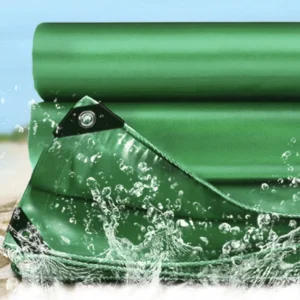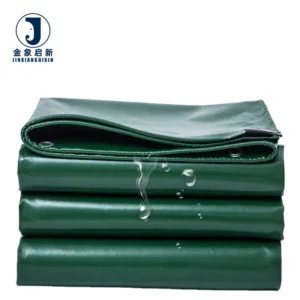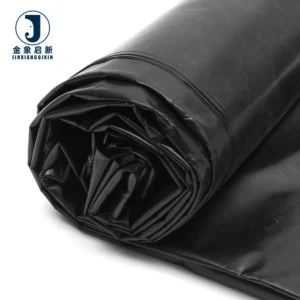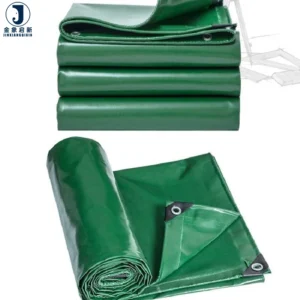
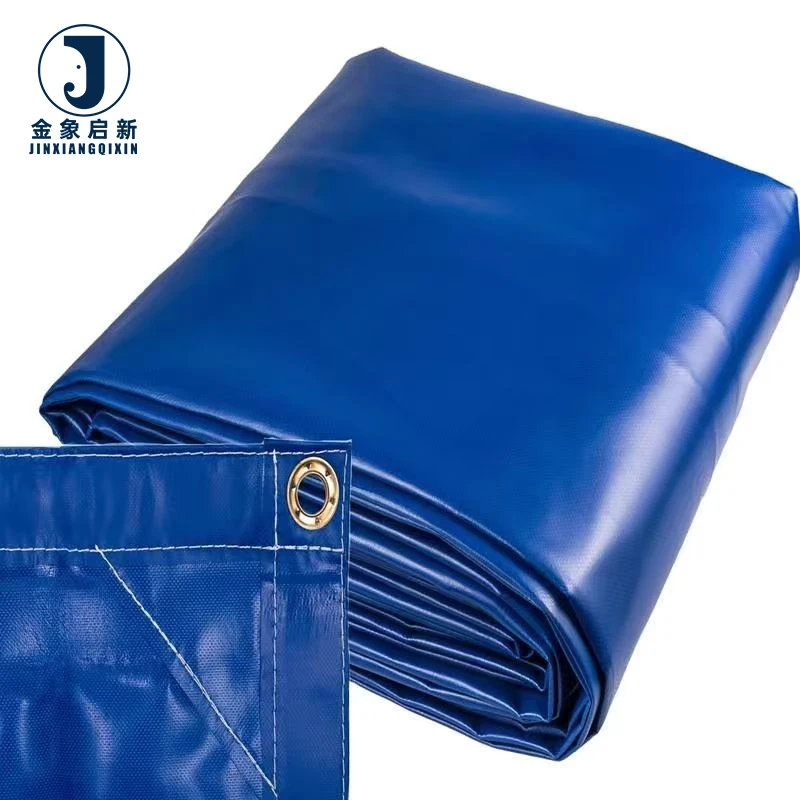
Coating Weight Consistency — Every roll of PVC Coated Tarpaulin base fabric denier coating weight GSM is verified against the stated specification at multiple points during production, preventing the lighter-than-quoted material that causes premature failure in the field.
Technical Specifications
| Parameter | Value |
|---|---|
| Product Type | PVC Coated Tarpaulin Roll |
| Coating Material | PVC (vinyl coated) |
| Base Fabric | Polyester |
| Fabric Construction | Rip-Stop weave |
| Weight (GSM) | 500 to 800 g/m² (confirm the grade for your application) |
| Waterproof Rating | Anti-permeable ≥20KPa |
| Flame Retardant Grade | ≤10 seconds (grade not stated — confirm DIN 4102 / NFPA 701 / M2 for your market) |
| Temperature Range | Low-temperature flexibility to -30°C |
| Coating Method | Heat combined with high-frequency |
| Anti-Mildew | Mildew proofing properties stated (test basis not stated) |
| Corrosion Resistance | Acid, alkali and brine resistant |
| Edge Treatment | Reinforced Edges |
| Water Absorption | Almost none, quick drying |
| Seaming Method | High-frequency heat combined welding |
Application Suitability
| Application | Exposure & Requirement |
|---|---|
| Truck and trailer covering | Constant flexing at load points, road spray, UV exposure, abrasion against cargo edges |
| Industrial equipment covering | Outdoor weathering, chemical-laden atmosphere, acid and alkali contact, puncture risk |
| Transport fleet load protection | High-speed wind load, sustained rain, temperature cycling across climate zones |
| Open-air stockpile covering | Long-term UV exposure, wind uplift stress, water pooling on flat sections |
What "Flame Retardant" Means When No Grade Is Cited on the Spec Sheet
A flame retardant claim without a named standard leaves the buyer carrying the compliance risk.
Many coated tarpaulin datasheets state "flame retardant" as a blanket attribute. Without referencing a recognised classification such as DIN 4102, NFPA 701, or M2, the buyer has no way to confirm the material will pass the fire safety inspection required at the installation site. This gap surfaces most often when a PVC Coated Tarpaulin base fabric denier coating weight GSM roll clears customs but fails the local authority’s burn test, forcing a full replacement under deadline pressure [NEED_CITE: fire classification standards for temporary structures and transport covers].
How Base Fabric Denier and Rip-Stop Weave Define Tear Behaviour
The polyester base fabric is the structural backbone of any PVC coated tarpaulin roll. Denier — the linear mass density of the yarn — directly governs tensile capacity, while the rip-stop weave introduces thicker reinforcement threads at regular intervals that arrest a tear before it propagates across the panel. A plain weave of the same GSM may show comparable initial tensile readings but will allow a puncture to unzip under load. When specifying PVC Coated Tarpaulin base fabric denier coating weight GSM for applications where the fabric is tensioned or subject to point loading, the rip-stop construction provides a measurable advantage in damage containment.
Coating Weight, Adhesion, and the High-Frequency Weld Line
The PVC coating is applied using heat combined with high-frequency energy, a method that drives the vinyl compound into the interstices of the polyester weave rather than simply sitting on the surface. This penetration governs peel strength — the force required to separate coating from yarn — which in turn determines whether a heat-welded seam holds under repeated flexure. High-frequency welding at the join melts the PVC layers into a continuous bond, and the integrity of that bond depends entirely on coating thickness and compound consistency across the weld zone [NEED_CITE: high-frequency welding parameters for PVC coated polyester fabrics].
Reading the Specification Sheet Beyond the GSM Number
GSM tells you the total mass per square metre but nothing about how that mass is distributed between base fabric and coating. A 650 g/m² roll with a heavy coating over a light base fabric will show very different tensile and tear behaviour compared to a roll of the same GSM built on a heavier yarn with a thinner coat. The anti-permeable rating of ≥20KPa indicates the coating layer is continuous enough to resist hydrostatic pressure, but sustained waterproof performance also depends on seam integrity and edge sealing. Low-temperature flexibility to -30°C is governed by the plasticiser system in the PVC compound; a cheaper plasticiser may deliver the same initial cold-bend result but migrate out of the coating over time, leading to embrittlement. Acid, alkali, and brine resistance stated for this material makes it a candidate for chemical-adjacent industrial storage, though prolonged contact concentrations should always be confirmed against the specific chemical environment.
The Hidden Cost of Specifying on Price Per Kilogram Alone
When a buyer selects coated tarpaulin roll stock based primarily on cost per kilogram, the supplier has an incentive to reduce coating weight or substitute a lower-denier base fabric while still hitting the quoted GSM figure. The roll arrives within tolerance, passes a cursory weight check, and enters production. Failures then appear months later — seams splitting at flex points, coating delaminating under UV load, or tears propagating from a single puncture across an entire truck curtain [NEED_CITE: common failure modes in PVC coated tarpaulin installations]. The remediation cost — re-fabrication, freight, installation labour, and vehicle downtime — routinely exceeds the original material saving many times over.
Why Procurement Teams Source This Material Here
Deep process control over coating weight and adhesion is maintained across three full production lines, with in-process QA checks at every stage ensuring roll-to-roll consistency. A dedicated 10-person R&D team handles material selection and sample development, producing custom GSM, width, and colour samples within days so you can verify performance before committing to bulk volume. Every roll undergoes 100% pre-shipment inspection with documented GSM spot-check results, eliminating the lighter-than-quoted material problem. High-frequency welding equipment — part of the 36-set professional production array — ensures seam parameters are matched to the specific coating compound, not set to a generic default. Batch colour consistency is controlled at the compounding stage, so rolls from the same order install side by side without visible variation.
Documentation & Verification
- Material specification sheet stating exact GSM, base fabric denier, coating weight, and colour reference for incoming roll inspection
- Flame retardant test report citing the specific standard (DIN 4102 / NFPA 701 / M2) where applicable to your market
- Pre-shipment inspection record with per-roll GSM spot-check results from the production batch
- Roll packing list detailing per-roll weight, dimensions, and roll count for container loading planning
- Certificate of origin and customs documentation supporting export clearance
Fabrication, Handling & Storage
- Set high-frequency welder power and dwell time to match the 500–800 g/m² coating thickness range for full seam fusion
- Store rolls horizontally on racking to prevent permanent creasing in the PVC coating layer
- Allow cold-stored rolls to acclimatise above 10°C before unrolling to avoid coating crack at low-temperature stiffness
- Use mild pH-neutral cleaners on the vinyl surface; solvent-based products may attack the plasticiser system
- Plan panel cutting layout to maximise yield from the roll width and minimise cross-grain weld seams
What to Include in Your Enquiry
To receive an accurate specification recommendation, provide the end-use application and the environmental exposure conditions the fabric will face — including temperature extremes, chemical contact, and fire safety requirements in your target market. State whether you need roll stock in standard widths or custom dimensions, along with your annual volume estimate. If colour matching or pattern printing is required, share the reference codes so that sample development can begin before your bulk order is placed.
Frequently Asked Questions
Q: How is GSM verified on arrival and what tolerance is acceptable against the quoted weight?
A: Each roll ships with a pre-shipment inspection record showing spot-check GSM results from the production batch. On receipt, weigh a measured sample cut from the roll end and compare against the specification sheet. Industry practice accepts a narrow tolerance band — request the specific tolerance applicable to your grade before ordering.
Q: What flame retardant standard applies to my target market and how do I confirm the grade?
A: Requirements vary by region and application — building covers may need DIN 4102 B1, while transport interiors often reference NFPA 701 or M2. State your target market and end-use in your enquiry so the correct test report can be prepared. A grade claim without a named standard should not be accepted for compliance-critical projects.
Q: How does rip-stop base fabric weave affect tear strength compared to plain weave polyester?
A: Rip-stop construction inserts heavier reinforcement yarns at regular intervals across the weave, creating a grid that arrests tear propagation at each intersection. Plain weave of equivalent GSM may show similar initial tensile readings but allows a puncture to spread unimpeded. For applications involving tension, flex, or point-load risk, rip-stop delivers superior damage containment.
Q: What documentation ships with each roll and can test reports be reviewed before dispatch?
A: Standard documentation includes the material specification sheet, pre-shipment inspection record, roll packing list, and certificate of origin. Flame retardant and UV test reports are available matched to the applicable standard. Request all documents during the sample approval stage so you can verify compliance before bulk production begins.