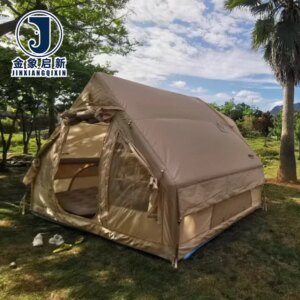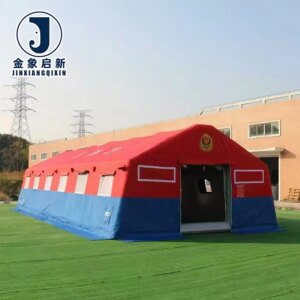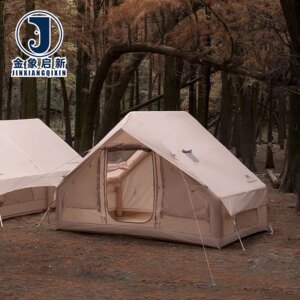
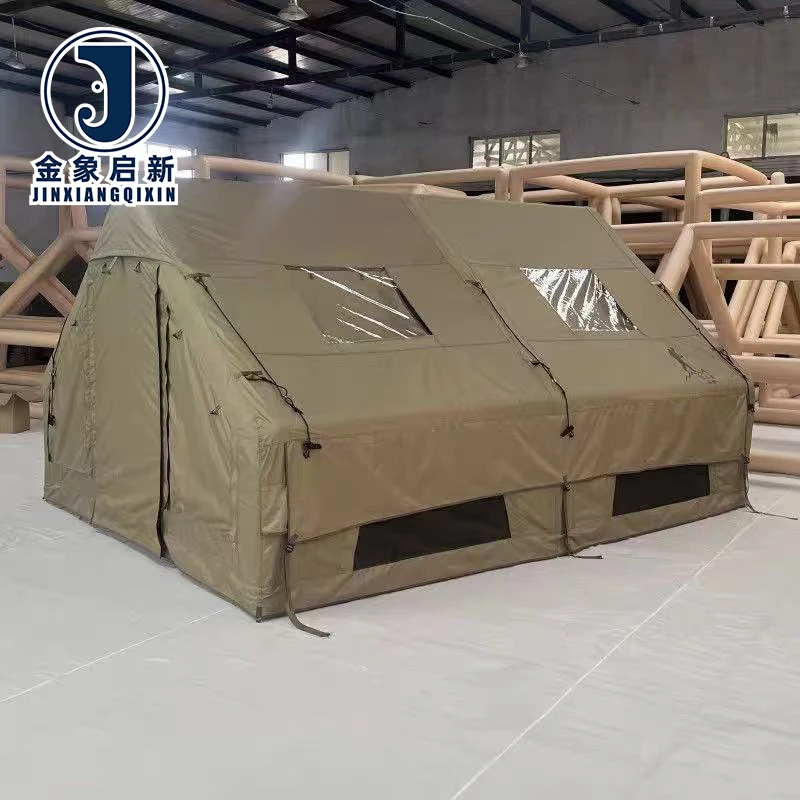
Coating Weight Control — nearly 30 years of PVC-coated fabric process expertise applied to inflatable tent material, ensuring stated GSM matches actual delivered weight with documented inspection at every production stage.
Technical Specifications
| Parameter | Value |
|---|---|
| Product Type | Inflatable Tent |
| Core Material | PVC Tarpaulin |
| Capacity | 4-6 Person |
| Layer | Single layer |
| Waterproof | Yes (rating not stated in source) |
| UV-resistant | (test basis not stated in source) |
| Tear-resistant | (test standard not stated in source) |
| Opening Mechanism | Quick Automatic Opening |
| Intended Use Season | Summer |
| Customization | OEM & ODM — sample customization, pattern printing, size adjustments, material thickness variations, color matching |
| Production Facility | 9,180 m² with 3 full production lines and 36 sets of processing equipment |
| R&D Capability | 10-technician team |
| Quality System | Full-process QA & QC with 100% pre-shipment inspection |
| Certifications | ISO 9001, ISO 14001, ISO 45001, CE |
Application Suitability
| Application | Exposure & Requirement |
|---|---|
| Commercial camping equipment manufacturing | Repeated inflation-deflation cycles, ground abrasion, seasonal UV exposure, waterproof integrity under summer storms |
| Adventure tourism inflatable shelters | Quick deployment and pack-down, transport wear, outdoor weather resistance across varied terrain |
| Event organizer temporary structures | Crowd contact and scuffing, wind load on inflated panels, visual appearance consistency across multiple units |
| Equipment rental fleet inventory | High-frequency use cycles, field repair compatibility, batch colour match for fleet uniformity |
Why Coated Weight Consistency Decides Inflatable Tent Durability
The GSM on your quotation means nothing if the rolls arriving at your factory floor are lighter than agreed.
When an inflatable tent fabric manufacturer states a coating weight but ships material that measures below it, the consequences show up months later. Panels that should hold air pressure begin to sag. Welded seams at inflation points fail because the coating thickness was insufficient to maintain bond strength under flex stress. For commercial camping operations running rental fleets, this means tents pulled from service mid-season, warranty claims, and replacement costs that far exceed the original material saving [NEED_CITE: tensile and tear test methods for coated fabrics per ISO 1421]. The inflatable tent fabric you specify must arrive at the weight you paid for, every roll, every shipment.
Coating Formulation Engineered for Air-Beam Structures
Inflatable tent construction places demands on PVC tarpaulin that differ fundamentally from static cover applications. The fabric must tolerate continuous internal pressure without coating creep at stress concentration points, particularly where air beams meet cross-members and valve housings. As an inflatable tent fabric manufacturer, the R&D team develops formulations that balance flexibility for folding and packing against coating adhesion strength needed for heat-welded seam integrity. Available in flame retardant grades — confirm the grade required for your market and application.
Colour Match and Surface Finish Across Production Runs
When a rental fleet operator orders twenty inflatable tents, every panel across every unit must present a consistent colour once inflated side by side in the field. Batch-to-batch colour variation in PVC tarpaulin is a common failure point in multi-roll orders. The production process controls pigment dosing and coating temperature to maintain colour reference alignment throughout the run. Glossy and matte finish options are available depending on whether the priority is easy-clean performance or reduced glare for photography-heavy glamping installations. Pattern printing and branding can be integrated during production for operators requiring logo or sponsor visibility on tent exteriors.
Reading the Specification Sheet Beyond GSM
GSM alone does not define how an inflatable tent fabric will perform under inflation load. The base fabric denier and weave density determine tear propagation resistance — a higher GSM achieved through heavier coating on a lighter base fabric may pass a weight check but tear more easily at puncture points. The coating method, whether knife-over-roll or calender, influences peel strength at welded seams [NEED_CITE: coating adhesion and peel strength testing for PVC tarpaulin per ISO 2411]. A knife-coated PVC tarpaulin typically delivers stronger coating-to-yarn bonding, which translates directly to weld performance at air-beam flex points. Buyers specifying inflatable tent material should request the full material specification sheet showing base fabric construction alongside total GSM, because both values together predict real-world structural behaviour.
The Hidden Cost of Underspecified Weld Zones
The most frequent failure point in inflatable tent construction is not the fabric body but the welded seam where air beams flex during inflation and deflation. When coating weight or adhesion falls below what the weld geometry demands, the seam peels before the fabric tears — a failure mode that is invisible during flat-sheet inspection but appears within the first season of field use. Batch inconsistency compounds the problem: a fabric that welds cleanly on the sample roll may behave differently three months later if coating formulation drifts. For OEM manufacturers building inflatable tents under contract, a weld failure in the field traces back to the material supplier, not the end user [NEED_CITE: seam strength requirements for inflatable structure fabric].
Why Procurement Teams Source Inflatable Tent Fabric Here
Three full production lines with 36 sets of processing equipment mean bulk roll output without sacrificing coating consistency across the run. The 10-technician R&D team handles material formulation, sample development, and pattern printing in-house, so specification changes do not require external coordination. Pre-production sample approval ensures colour, weight, and weld behaviour are validated before mass production begins. Every roll undergoes inspection against the stated material specification sheet before dispatch, with documented verification records shipped alongside the order. This is an inflatable tent fabric manufacturer that treats each OEM project as a controlled production run, not a commodity transaction.
Documentation & Verification
- Material specification sheet stating GSM, base fabric denier, coating weight, and colour reference
- UV resistance and flame retardant test reports provided where applicable grades are specified
- Pre-shipment inspection record confirming weight verification per roll before dispatch
- ISO 9001, ISO 14001, ISO 45001, and CE certificates supporting compliance documentation
- Roll packing list with certificate of origin and customs support documentation
Fabrication, Handling & Storage
- Heat-weld parameters should be validated against the specific PVC tarpaulin coating formulation before production runs begin
- Roll storage on horizontal racks prevents permanent crease marks that compromise coating integrity at fold lines
- Cold-temperature transport requires gradual acclimatization before unrolling to avoid PVC coating crack at low flexibility
- Surface cleaning with mild detergent preserves coating finish; solvent-based cleaners may degrade the waterproof layer
- Cut pattern layout should account for directional weave alignment to maintain tear resistance along air-beam stress axes
Requesting a Specification for Your Inflatable Tent Project
Provide your target deployment conditions, expected inflation cycle frequency, and any fire classification requirements for your destination markets. Specify required roll widths, annual volume, and whether you need finished cut sizes or bulk roll stock. If colour matching or pattern printing is required, submit reference samples or Pantone codes so the R&D team can develop pre-production samples for your approval before committing to full production.
Frequently Asked Questions
Q: How can I verify that the delivered inflatable tent fabric matches the quoted GSM?
A: Every shipment includes a pre-shipment inspection record documenting the measured weight per roll against the stated specification. Buyers may also conduct incoming quality checks using standard GSM cutters and precision scales. The material specification sheet accompanying each order lists the target GSM, base fabric construction, and coating weight so your QA team has reference values for verification.
Q: What UV treatment options are available for inflatable tent fabric?
A: UV-resistant treatment is available for inflatable tent fabric intended for extended outdoor deployment. The specific test basis and expected service conditions should be confirmed during the inquiry stage so the formulation can be matched to your target market. Where applicable, test reports supporting the UV treatment specification are included in the shipment documentation package.
Q: How is colour consistency maintained across large-volume inflatable tent orders?
A: Pigment dosing and coating temperature are controlled throughout the production run to maintain alignment with the approved colour reference. Pre-production samples are submitted for buyer approval before mass production begins. If your order spans multiple production batches, specify your colour tolerance requirements at the inquiry stage so the QA team can plan batch-to-batch verification accordingly.
Q: What is the lead time for custom width, pattern printing, or sample development?
A: Sample development typically proceeds within days once material specification and colour references are confirmed. Production lead times for custom widths or printed patterns depend on order volume and current line scheduling. Submit your required dimensions, print artwork, and target delivery window during the inquiry stage so the team can provide an accurate timeline with your quotation.
Q: What certifications and export documentation are provided with each shipment?
A: Each shipment includes ISO 9001, ISO 14001, ISO 45001, and CE certificates alongside the roll packing list, certificate of origin, and pre-shipment inspection record. Additional compliance documentation for specific destination markets can be prepared when requirements are communicated at the inquiry stage. Customs support documentation is provided to facilitate smooth import clearance.