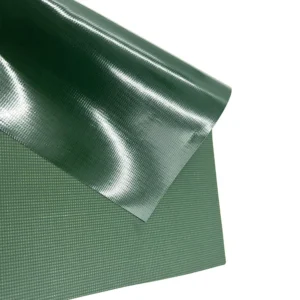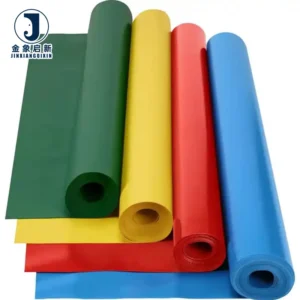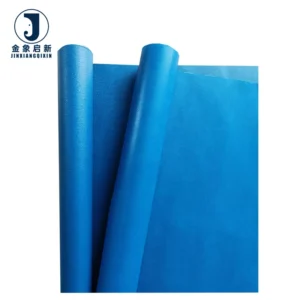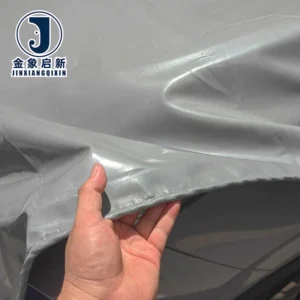
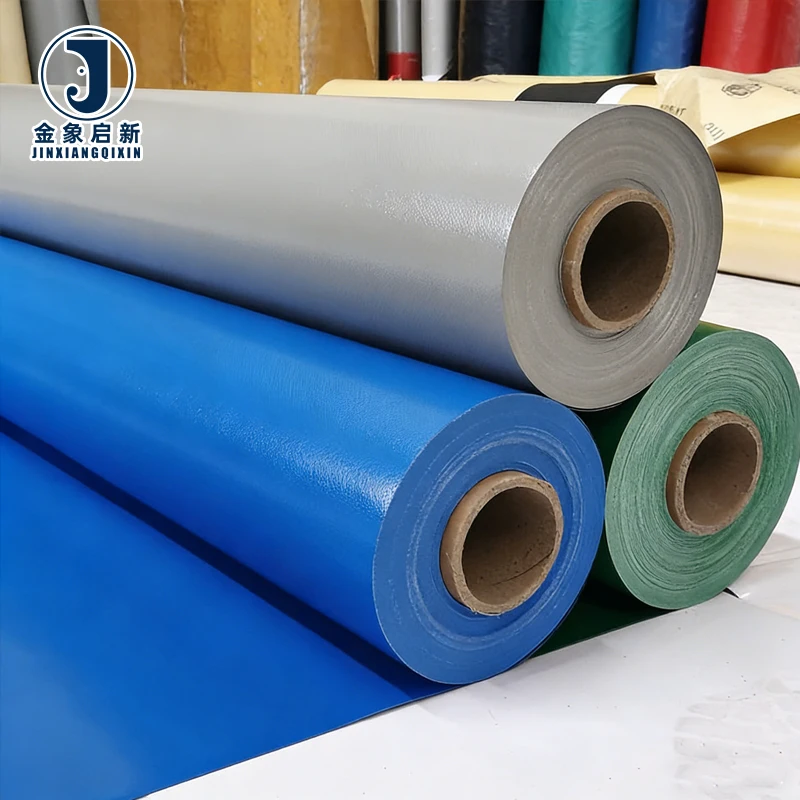
Precision Coating Control — Every roll of PVC Coated Breathable Tarpaulin Fabric Rolls leaves the line with verified coating weight and documented GSM, so fabricators can trust the material specification before cutting.
Technical Specifications
| Parameter | Value |
|---|---|
| Product Type | PVC Coated Tarpaulin Roll |
| Base Material | High-strength polyester mesh fabric with PVC coating |
| Weight Options | 350gsm, 420gsm, 500gsm, 550gsm, 600gsm, 750gsm |
| Thickness Range | 0.32mm, 0.35mm, 0.4mm, 0.45mm, 0.5mm, 0.65mm |
| Roll Dimensions | 2m width × 75m length / 2.1m width × 50m length |
| Coating Technology | Laminated technology & Hot-melt Coating technology |
| Surface Finish | Available in glossy or matte surface |
| Colour Options | Blue, Red, Yellow, Light blue, Grey (customised colours available) |
| Key Features | Waterproof, cold crack resistance, anti-mildew, anti-static treatment, flame retardant grades available |
| Service Life | 3–7 years under normal circumstances |
| Standards | ISO, CE |
*Specific grade and test standard to be confirmed per market requirement — request test report before ordering.
Application Suitability
| Application | Exposure & Requirement |
|---|---|
| Tent and awning covers | Continuous UV exposure, wind load flexing, rain ingress prevention — requires stable colour and consistent weld strength across multiple rolls |
| Truck awning and side curtains | Road abrasion, constant vibration, repeated flex at mounting points — demands high tensile base fabric and strong coating adhesion |
| Cargo ship covers | Salt spray, heavy weather, prolonged sun exposure — requires waterproof integrity and cold crack resistance across temperature swings |
| Fish tank and pool liners | Permanent water contact, hydrostatic pressure, chemical balance of treated water — requires verified waterproof coating with no pinhole defects |
Why GSM Alone Does Not Tell You How Strong the Fabric Is
Coating weight without base fabric denier is an incomplete specification.
Technical buyers often compare PVC tarpaulin rolls by GSM alone, assuming a heavier roll delivers proportionally higher strength. In practice, tensile and tear performance depend on the interplay between yarn tenacity, weave density of the polyester mesh, and how the PVC coating bonds to that base. A 550gsm roll built on a high-denier mesh with hot-melt coating can outperform a 600gsm roll laid over a lighter base with weaker adhesion [NEED_CITE: tensile and tear test methods for coated fabrics per ISO 1421]. When the coating separates from the base under load, the seam fails long before the fabric reaches its rated strength.
Coating Method and Adhesion Behaviour
Our PVC coated tarpaulin rolls are produced using both laminated and hot-melt coating technology. Laminated construction bonds pre-formed PVC films to the polyester mesh under heat and pressure, creating a uniform coating thickness that performs predictably during heat welding. Hot-melt coating applies liquid PVC directly into the mesh structure, allowing the compound to penetrate the weave and lock around individual yarns. Fabricators working with hot-melt coated rolls typically report stronger seam adhesion because the weld fuses coating that is mechanically anchored to the base fabric.
How the Base Fabric Construction Determines Tear Propagation
The polyester mesh beneath the PVC surface controls how the material behaves once a cut or puncture initiates. High-tenacity yarns resist the initial tear force, while the weave density determines whether a tear arrests or propagates along the warp or weft line. For applications like truck awnings where flex fatigue creates micro-stress at fold points, specifying a tighter weave on the base fabric helps contain damage [NEED_CITE: ISO 1421 tear propagation test for coated fabrics]. The PVC coating contributes waterproof integrity and surface protection, but the structural work happens at the yarn level. Requesting the base fabric denier and thread count alongside the GSM gives you a complete material picture.
Interpreting Thickness, Finish, and Coating Weight
Thickness values from 0.32mm to 0.65mm correspond to the PVC coating depth applied over the base mesh. A thicker coating increases abrasion resistance and waterproof redundancy but adds stiffness that can complicate fabrication on complex shapes. The glossy surface finish sheds dirt and water more readily and accepts heat-transfer branding cleanly, while the matte surface reduces glare and offers better grip during handling and installation. When specifying a PVC coated tarpaulin roll for fabrication, consider that coating weight and surface finish together influence how the material feeds through automated welding equipment and how consistently eyelets seat without pulling through. Colour fastness depends on pigment dispersion within the PVC compound — consistent across-batch colour requires controlled mixing at the coating stage rather than surface-applied colour.
The Hidden Cost of Unverified Material Claims
When anti-UV or flame retardant treatment is stated on a quotation without an accompanying test report, there is no way to verify compliance until the material is already on site. Fabricators who discover coating adhesion failure during welding must scrap cut panels and reorder, absorbing both material waste and project delay. Rolls that arrive lighter than the quoted GSM compromise structural calculations made during the design phase. Colour variation between rolls in the same shipment becomes visible only after installation, when panels sit side by side under natural light [NEED_CITE: colour consistency standards in coated textile manufacturing]. These failures are preventable when the specification sheet, test documentation, and pre-shipment inspection are aligned before dispatch.
Why Fabricators Source PVC Coated Tarpaulin Rolls Here
Coating weight control is maintained across all three production lines, so GSM stated on the quotation is the GSM measured at dispatch. The 10-person R&D team develops material samples against your specification within days, allowing you to test weld parameters and flex behaviour before committing to a full roll order. A dedicated QA and QC process inspects every roll individually — not by batch sampling — generating a pre-shipment record that travels with your documentation. Hot-melt and laminated coating options let you match the construction method to your fabrication process rather than adapting your process to a single available grade. Custom width and colour development is supported with the same production controls applied to stock grades.
Documentation & Verification
- Material specification sheet stating exact GSM, base fabric denier, and coating method per roll
- Test reports for UV resistance and flame retardant grades supplied with verified test standard reference
- Pre-shipment inspection record with individual roll-level QA data, not batch averages
- ISO and CE certificates available for compliance documentation packages
- Certificate of origin and customs support documentation for international roll shipments
Fabrication, Handling & Storage
- Hot-melt coated rolls accept heat welding at standard PVC temperatures — test seam peel strength on sample before full production
- Matte surface rolls may require adjusted welding pressure compared to glossy surface equivalents
- Store rolls upright on cores to prevent flat-spot creasing that transfers into finished panels
- Unroll heavier grades such as 750gsm in temperatures above 5°C to avoid cold crack risk at fold points
- Allow 2m and 2.1m roll widths to lay flat for 24 hours before cutting to release winding tension
What to Include in Your Enquiry
To receive a specification-matched quotation for PVC coated tarpaulin rolls, provide your target GSM and thickness, the coating technology preferred for your fabrication method, and any flame retardant or anti-static grade required by your market regulations. Include roll width and length requirements along with annual volume to confirm pricing tier and production scheduling. If colour consistency across multiple rolls is critical to your installation, state the colour reference and request a pre-production sample for approval.
Frequently Asked Questions
Q: How is the GSM of each PVC coated tarpaulin roll verified before shipment?
A: Each roll is weighed and measured individually during pre-shipment inspection, not averaged across a production batch. The inspection record documents the actual GSM against the material specification sheet. Buyers can conduct their own weight check on arrival using a scale and a measured sample cut to confirm the documented value.
Q: What flame retardant grade does this PVC tarpaulin carry, and which standard applies?
A: Flame retardant treatment is available in multiple grades depending on market requirements. The specific test standard — such as DIN 4102 or NFPA 701 — must be confirmed at the enquiry stage so the correct compound is selected and the matching test report is supplied with your documentation package.
Q: How do laminated and hot-melt coating differ for welding applications?
A: Laminated coating provides a uniform film thickness that delivers predictable weld behaviour across the roll. Hot-melt coating penetrates the polyester mesh weave, creating mechanical anchoring that typically yields higher peel strength at welded seams. The choice depends on your welding equipment and seam performance requirement.
Q: How is colour consistency maintained across rolls in a bulk order?
A: Pigment is mixed into the PVC compound at the coating stage under controlled ratios, and rolls from the same production run are compared side by side during QA inspection. If your project requires panels installed adjacent to each other, request batch-matched rolls and approve a colour sample before full production begins.