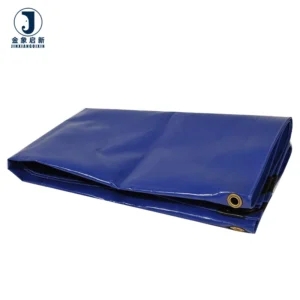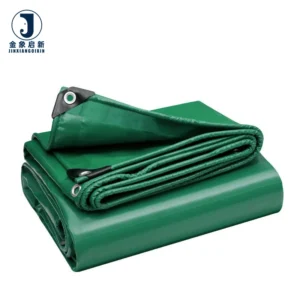
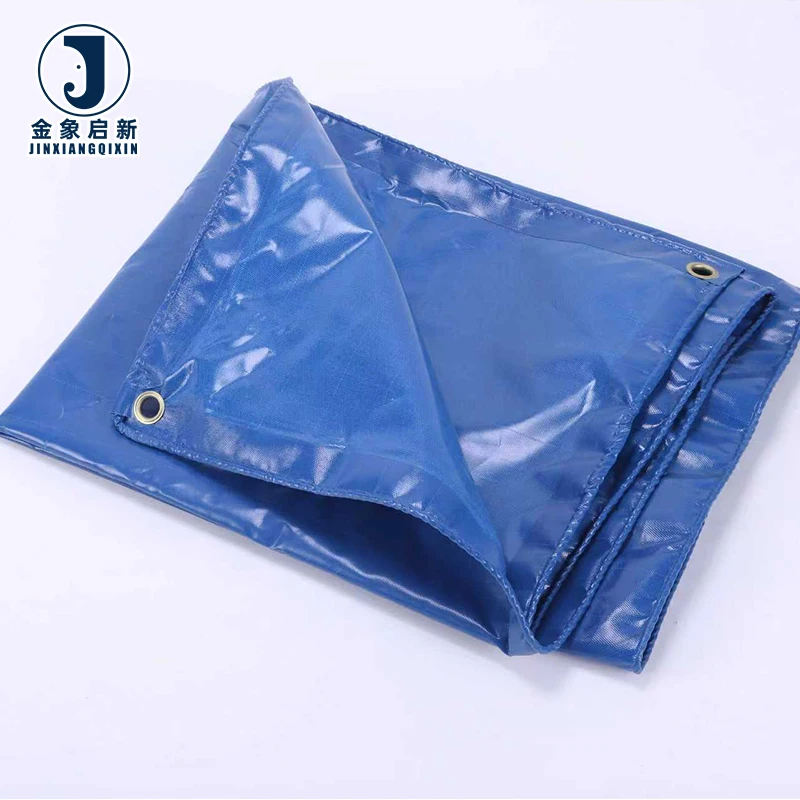
Coating Process Control — Every roll of this knife-coated PVC polyester fabric is backed by a material specification sheet stating exact GSM, base fabric denier, and coating type, ensuring transparent incoming inspection against your purchase order.
Technical Specifications
| Parameter | Value |
|---|---|
| Product Type | PVC Coated Tarpaulin |
| Base Fabric Denier | 500D-500D Polyester |
| Coating Material | PVC (Knife Coated, Double-Sided) |
| Key Features | Water Resistant, Waterproof, Flame Retardant (grade not stated in source), Anti-UV (test basis not stated in source) |
| Usage | Truck, Car, Trailer, Machine, Wood Cover, Awning, Tent |
Application Suitability
| Application | Exposure & Requirement |
|---|---|
| Truck & Trailer Side Curtains | Constant flexing, road abrasion, high-speed wind load, UV exposure |
| Construction Site Covers | Weather protection, debris containment, potential site fire safety requirements |
| Awning & Tent Fabrication | Prolonged sun exposure, rain sealing, structural tension at seams |
| Machinery & Equipment Covers | Outdoor weathering, dust ingress prevention, custom fitment |
| Wood & Timber Storage | Moisture barrier, ventilation management, long-term outdoor stacking |
Why Base Fabric Denier Matters More Than Coating Weight Alone
A 500D-500D polyester weave provides the dimensional stability that determines how the PVC coated tarpaulin fabric behaves under tension and at welded seams.
Many technical buyers focus on the GSM figure on a quotation, assuming a heavier number means a stronger cover. In practice, the base fabric denier and weave density govern tensile behaviour and tear propagation far more than the coating thickness. When a truck side curtain flexes at high speed, it is the polyester yarn structure absorbing the dynamic load, while the PVC coating primarily seals against moisture and abrasion [NEED_CITE: relationship between denier count and tensile strength in coated textiles]. Specifying PVC coated tarpaulin fabric without confirming the base fabric construction leaves the most critical performance variable unverified.
The Role of the Polyester Weave in Load-Bearing Performance
The 500D-500D yarn count in this PVC coated polyester fabric indicates the linear density of the warp and weft threads, which directly influences how the material distributes point loads across the weave. A balanced denier in both directions means the fabric resists diagonal tearing when tensioned over irregular loads or when wind catches a partially secured trailer curtain.
Coating Adhesion and Weld Seam Integrity
Double-sided PVC coating applied by knife coating ensures the polymer penetrates the weave and locks into the polyester structure, which is critical when fabricators hot-air weld seams for truck curtains or inflatable structures. Poor adhesion causes the coating to delaminate at the weld line before the base fabric reaches its tear limit. This PVC coated tarpaulin fabric is engineered so the weld zone retains strength proportional to the parent material, provided the fabricator uses the correct temperature and dwell time for the coating thickness [NEED_CITE: hot air welding parameters for PVC coated polyester].
Interpreting Flame Retardant and Anti-UV Claims
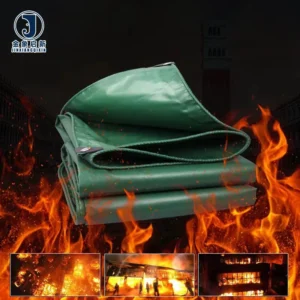
This material is available in flame retardant grades — confirm the specific grade required for your market, as different regions mandate different test standards such as DIN 4102 B1, NFPA 701, or local building codes for temporary structures. Similarly, anti-UV treatment is available to extend service life in prolonged outdoor exposure — request the test basis and UV stabiliser type to ensure it matches the expected solar radiation levels in the deployment region.
Reading the Specification Sheet Correctly
The base fabric denier of 500D-500D sets the foundational strength, but the final tensile and tear performance also depends on the weave density (ends per centimetre) and the PVC coating weight applied to each side. Knife coating allows precise control over coating thickness compared to dip or spray methods, producing a uniform layer that supports consistent welding behaviour roll-to-roll. For fabricators producing awnings or truck side curtains, this consistency means welding parameters set on the first roll remain valid through the entire batch, reducing scrap and rework. Flame retardant treatment, where specified, is integrated into the PVC compound rather than applied as a topical finish, which maintains the treatment through weathering and cleaning cycles.
The Hidden Cost of Specifying on Price Per Square Metre
When buyers select PVC coated fabric primarily on cost, the supplier may compensate by reducing coating weight or substituting a lower-denier base fabric while maintaining the same quoted GSM through heavier filler loading. The material arrives looking correct but fails prematurely at flex points, or the weld seams peel under load because the coating composition does not match the expected hot-air welding window. Batch-to-batch colour variation also emerges when production runs are optimised for speed rather than pigment dispersion consistency, forcing fabricators to reject panels that show visible differences when installed side by side on a single trailer or awning [NEED_CITE: coating weight verification methods for incoming inspection].
Why Procurement Teams Source This Fabric Here
Deep process control over PVC coating weight and adhesion means every roll leaves the production line with a verified specification sheet, not just a label. Three full production lines and 36 sets of professional equipment provide the capacity to fulfil bulk orders with reliable on-time delivery, avoiding the project delays that arise when a fabricator is waiting on a single delayed container. A 10-person R&D team handles material selection and custom formulation, supporting technical buyers who need a specific flame retardant grade or colour match confirmed before committing to a production run. Dedicated QA/QC at every production stage with 100% pre-shipment inspection catches coating defects, GSM deviations, and colour drift before the material is packed, rather than leaving discovery to the buyer’s incoming inspection.
Documentation & Verification
- Material specification sheet stating GSM, 500D-500D base fabric denier, and PVC coating type per roll.
- Flame retardant test report provided where applicable, matched to the grade ordered.
- Anti-UV treatment documentation stating test basis and stabiliser type on request.
- ISO and CE certificates included with roll packing list and certificate of origin.
- Pre-shipment inspection record confirming weight, colour, and coating integrity before dispatch.
Fabrication, Handling & Storage
- Hot air weld at temperature and speed matched to the PVC coating thickness for seam strength.
- Store rolls horizontally on racking to prevent creasing the 500D-500D polyester base fabric.
- Allow cold-stored rolls to reach ambient temperature before unrolling to avoid coating crack.
- Use compatible PVC-based cleaners to protect the surface finish from chemical degradation.
- Plan cutting layout to maximise yield from roll width and minimise weld seams on finished covers.
Request a Material Sample for Your Application
Provide the specific application, expected environmental exposure, and any fire safety or compliance standards required in your destination market. Include target roll width, annual volume estimate, and whether you require the material in roll form or as finished cut-and-welded covers. Requesting a sample roll allows your fabrication team to validate welding parameters and colour consistency before placing a bulk order.
Frequently Asked Questions
Q: How is GSM verified and what is the procedure for incoming inspection?
A: Every order ships with a material specification sheet stating the exact GSM, base fabric denier, and coating type. At destination, buyers can verify by cutting a measured sample from the roll and weighing it on a calibrated scale. Discrepancies beyond standard tolerance should be reported with the roll number for immediate resolution.
Q: Which flame retardant grades are available for this PVC coated polyester fabric?
A: The fabric is available in flame retardant grades suitable for various markets. Specify the test standard required — such as DIN 4102, NFPA 701, or a local building code — and the R&D team will formulate the PVC compound accordingly and provide a matching test report.
Q: What is the recommended hot air welding approach for this material?
A: Welding temperature and speed should be matched to the PVC coating thickness and the 500D-500D base fabric. Run test welds on a sample piece to establish parameters that produce a seam strength equal to the parent fabric, avoiding delamination at flex points.
Q: How is roll-to-roll colour and coating consistency maintained?
A: Production runs are controlled through in-process QA checks on pigment dispersion and coating weight. The 100% pre-shipment inspection verifies colour uniformity across all rolls in an order, ensuring panels installed side by side show no visible variation.
Q: Can custom widths and colours be supplied for large-volume orders?
A: Custom widths beyond standard roll sizes and specific colour matches are available, subject to minimum order quantities. Provide the Pantone or RAL reference and required roll width, and the R&D team will develop a sample for approval before production begins.