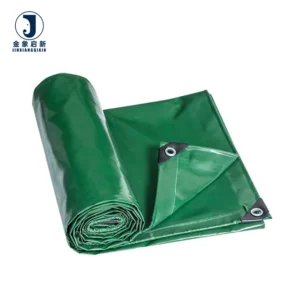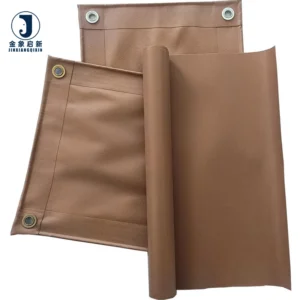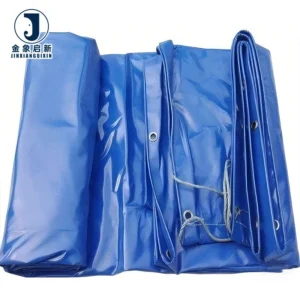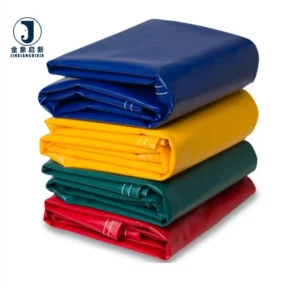
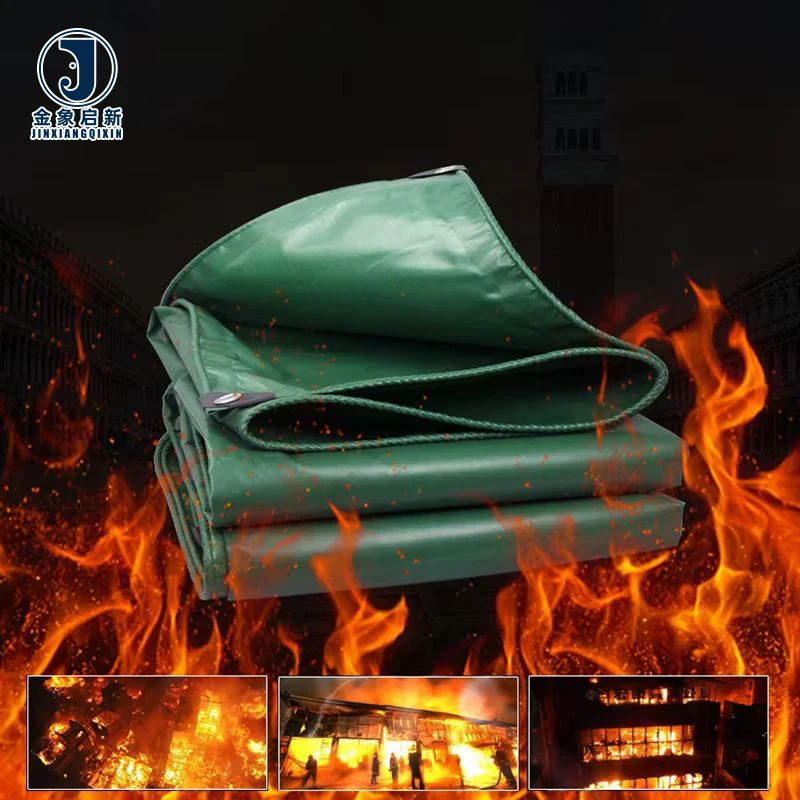
Three-Decade Process Control — Deep expertise in coated fabric adhesion and coating weight consistency ensures every roll of 500D polyester PVC material meets exacting technical buyer specifications without deviation.
Technical Specifications
| Parameter | Value |
|---|---|
| Product Type | PVC Coated Fabric |
| Base Fabric | 500D×500D Polyester |
| Coating Material | PVC (double-sided) |
| Surface Finish | Smooth, soft with leather-like texture |
| Thickness / Weight Range | 450-900 g/m² (confirm exact grade required) |
| Water Resistance | Fully waterproof sealed coating |
| Flame Retardancy | Flame-retardant type customizable (confirm grade required for your market) |
| UV Resistance | Anti-UV treatment available (test basis to be specified at inquiry) |
| Abrasion Resistance | High abrasion resistance suitable for flexing loads |
| Repairability | Hot air weldable |
| Service Life Expectancy | Suited to extended outdoor exposure (3-5 years typical, conditions dependent) |
| Standards | ISO, CE |
Application Suitability
| Application | Exposure & Requirement |
|---|---|
| Truck and Trailer Side Curtains | Constant flexing at tie-down points, road debris abrasion, prolonged UV exposure |
| Industrial Machine and Equipment Covers | Outdoor weathering, dust and moisture ingress protection, occasional handling abrasion |
| Awning and Tent Fabrication | High-tension structural loading, UV and rain exposure, requirement for clean hot-air welds |
| Outdoor Timber and Stockpile Covers | Long-term UV degradation risk, moisture protection, wind uplift tension on seams |
Why Coating Chemistry Matters More Than Stated Weight Alone
When sourcing PVC coated tarpaulin base fabric denier coating weight, technical buyers often discover that a stated GSM on the quotation does not guarantee the tensile or tear performance the application demands. The relationship between the 500D polyester base and the double-sided PVC coating formulation determines how the material behaves under sustained load and environmental stress.
Generic specifications fail when the coating chemistry is not matched to the end-use. A fabric that tests well in static tensile evaluation can still delaminate or crack at the weld line when subjected to the dynamic flexing of a moving truck curtain. [NEED_CITE: test methods for evaluating coating adhesion and peel strength in technical textiles]. The material science behind this 500D×500D polyester PVC coated tarpaulin focuses on ensuring the coating penetrates and bonds with the base fabric weave rather than simply sitting on the surface.
Evaluating Base Fabric Denier and Coating Interaction
The 500D×500D polyester base provides a stable substrate that resists elongation under tension. When paired with a PVC coating formulated for flexibility, the resulting PVC coated tarpaulin base fabric denier coating weight balance allows the material to be hot-air welded without the coating bubbling or the yarns melting unevenly. This predictability at the weld line is critical for fabricators producing large-format covers where structural seams carry the load.
Formulation Options for Specific Market Compliance
Technical buyers specifying fabric for safety-critical environments must verify the exact chemical additives used. Flame-retardant grades and anti-UV treatments alter the plasticiser and stabiliser package within the PVC. Our R&D team develops samples where the PVC coated tarpaulin base fabric denier coating weight formulation is adjusted to meet specific regional fire safety or UV stability requirements, allowing you to confirm performance via third-party testing before full production commences. [NEED_CITE: international fire classification standards for flexible coated fabrics]
Interpreting GSM and Tensile Behaviour
GSM (grams per square metre) is a measure of mass, not strength. The tensile and tear performance of this 450-900 g/m² range depends on how the PVC coating locks the 500D yarns in place. A heavier coating weight can increase puncture resistance but may reduce the fabric’s ability to flex repeatedly without micro-cracking. Selecting the correct grade within the family requires understanding the balance between static load-bearing and dynamic flexing required by your specific application, such as a tensioned awning versus a loose-fitting machine cover.
The Hidden Cost of Overlooking Coating Adhesion
Specifying a material based solely on price or basic GSM often leads to premature failure at the most critical points. If the PVC coating does not adequately encapsulate the 500D polyester yarns, the fabric can delaminate under the stress of a tie-down strap or at a high-flex weld seam. This results in warranty claims and site downtime that far outweigh the initial savings on the raw material roll. [NEED_CITE: common failure modes in heavy-duty tarpaulin installations]
Material Science Backed by Process Control
We approach the production of PVC coated polyester fabric as a technical discipline rather than a commodity output. Our 10-person R&D team handles the material selection and sample development, ensuring the coating formulation matches your welding equipment and environmental exposure. With three full production lines and dedicated QA at every coating stage, the 500D base and PVC layers are monitored for consistent adhesion and weight distribution across the entire roll width, giving fabricators predictable behaviour on the production floor.
Documentation & Verification
- Material specification sheet detailing exact GSM, 500D base fabric denier, and coating weight per roll.
- Third-party test reports for UV stability and flame-retardant grades where applicable to your market.
- Pre-shipment inspection records confirming coating adhesion and surface finish consistency.
- ISO and CE certificates included in the dispatch documentation pack.
Fabrication, Handling & Storage
- Hot-air welding temperature and speed must be calibrated to the specific PVC coating thickness to avoid yarn damage.
- Rolls of 500D PVC coated fabric should be stored on their cores to prevent permanent creasing of the leather-like surface.
- Clean the smooth PVC surface with non-solvent cleaners to preserve the coating’s plasticiser balance and UV treatment.
- Field repairs on this double-sided coated material are achievable using standard portable hot-air welding equipment.
- Allow rolled fabric to acclimatise to ambient temperature before unrolling to prevent coating stiffness and cracking.
Inquiry Guidance for Technical Buyers
To provide an accurate specification and sample, please detail your end-use application and the specific environmental exposures the fabric will face. We require your target market’s fire safety or compliance standards, along with the necessary roll widths and your annual volume forecast. If your fabrication process relies on specific hot-air welding parameters, sharing these details allows our R&D team to adjust the coating formulation for optimal seam integrity.
Frequently Asked Questions
Q: How is GSM verified on arrival, and what test method should I specify?
A: We provide a pre-shipment inspection record stating the exact GSM measured per roll. For contractual verification, specify a recognised standard such as ISO 3801 (coated fabrics determination of mass per unit area) to ensure the testing methodology is consistent and independently auditable upon receipt at your facility.
Q: Which flame-retardant grade does my market require, and can you supply the report?
A: Requirements vary by region and application (e.g., M2, B1 per DIN 4102, NFPA 701). Specify the exact standard required for your project. We supply the relevant third-party test report for the customised flame-retardant grade formulated into the PVC coating, ensuring compliance documentation matches the material shipped.
Q: What UV test standard backs up the anti-UV claim for this coating?
A: Our anti-UV treatment is formulated to your specified exposure hours and test standard (e.g., ISO 4892 for xenon-arc exposure). Request the specific test report during the sampling phase to verify that the PVC stabiliser package meets the longevity requirements of your end-use application.
Q: Hot-air welding versus sewing: which suits 500D PVC-coated polyester?
A: Hot-air welding is generally preferred for this double-sided PVC coated fabric as it creates a homogeneous, waterproof seam that matches the material’s strength. Sewing introduces needle holes that compromise waterproofness and create stress concentration points that can lead to tearing under dynamic flexing loads.