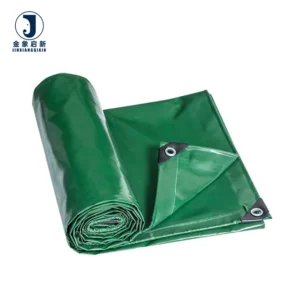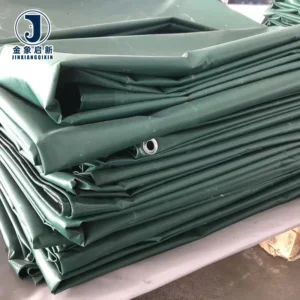
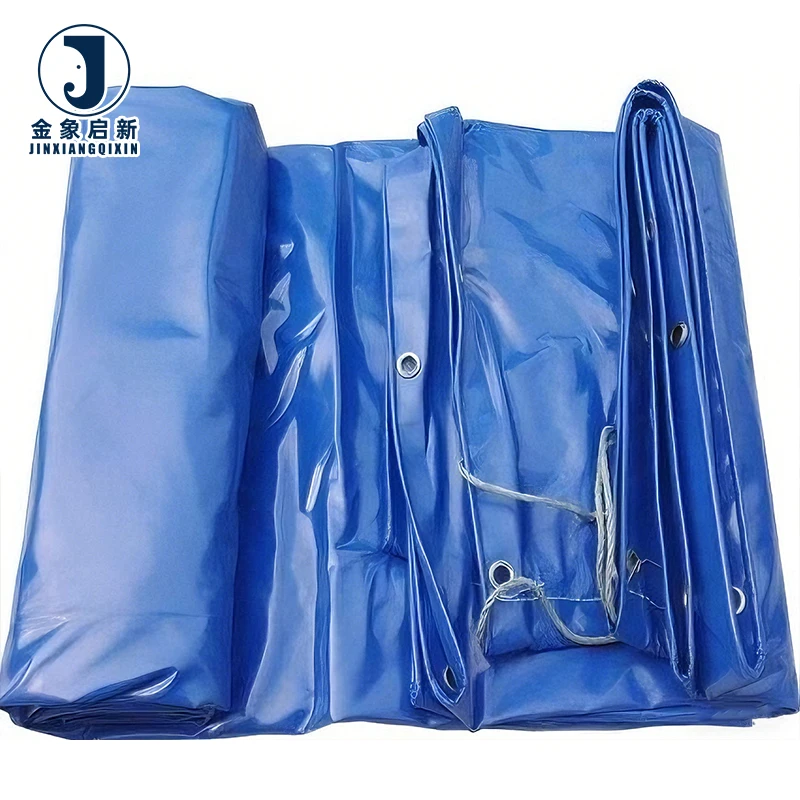
Precision Coating Control — Every roll of PVC Coated Woven Tarpaulin Fabric undergoes stage-by-stage QA to ensure the coating weight, base denier, and surface finish match the material specification sheet before it leaves the line.
Technical Specifications
| Parameter | Value |
|---|---|
| Product Type | PVC Coated Tarpaulin |
| Weight (GSM) | 250gsm-1500gsm |
| Base Fabric Denier | 200D×300D, 500D×500D, 840D×840D, 1000D×1000D |
| Coating Material | PVC |
| Surface Finish | Glossy or matte |
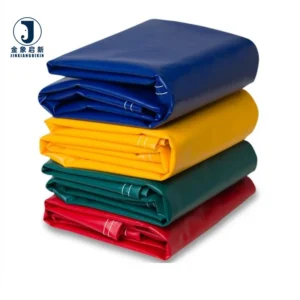
| Color Options | Blue, yellow, black, green, white, etc. |
| UV Treatment | Customized (test basis not stated in source) |
| Flame Retardant Grade | Treated (grade not stated in source) |
| Anti-Fungal | Treated |
| Waterproof | Yes |
| Temperature Range | -15°C to 70°C |
| Eco-Friendly | Yes |
| Standards | ISO, CE |
Application Suitability
| Application | Exposure & Requirement |
|---|---|
| Truck and trailer load covering | Constant road vibration, UV exposure, wind-driven rain, abrasion at tie-down and flex points |
| Construction site and equipment covers | Prolonged sun and rain exposure, dust ingress, puncture from sharp corners and debris |
| Tent and awning manufacturing | Repeated folding and unfolding, weld seam integrity, consistent colour across panels |
| Agricultural and aquaculture pond lining | Permanent water contact, soil chemistry, puncture risk from substrate irregularities |
| Inflatable and membrane structures | Internal air pressure load, UV degradation, weld strength under sustained stress |
Why GSM Alone Does Not Tell You How Strong the Fabric Is
A 650gsm PVC coated tarpaulin fabric built on a 200D×300D base will tear far more easily than a 550gsm fabric woven from 1000D×1000D yarn.
Technical buyers who specify PVC coated tarpaulin fabric by weight alone leave a gap between what the quotation promises and what the roll delivers. A heavier coating adds mass but does not compensate for a loosely woven base fabric when tensile or tear loads are applied. The base denier, yarn count per centimetre, and weave structure govern how the fabric resists mechanical stress, while the PVC coating primarily contributes waterproofing, surface protection, and weldability. [NEED_CITE: tensile and tear test methods for coated fabrics per ISO 1421]
When a fabricated truck cover splits at a flex point, the failure usually traces back to the base fabric structure rather than the coating thickness. Fabricators who understand this relationship specify denier and weave first, then set GSM targets to match the coating performance they need — not the other way around.
How Denier Selection Governs Mechanical Behaviour
The base fabric denier is the single most consequential decision when specifying PVC coated tarpaulin fabric for structural or load-bearing applications. A 200D×300D weave produces a lighter, more pliable material suited to applications where flexibility and folding are routine, such as temporary covers or light-duty awnings. Moving to 840D×840D or 1000D×1000D increases the yarn mass per thread, which directly raises the resistance to tear propagation when the fabric is punctured or subjected to point loads.
The Coating-to-Substrate Bond and Why It Matters
The method by which PVC is applied to the base fabric determines how well the coating resists delamination under flexing, heat welding, and long-term UV exposure. Knife coating forces the PVC compound into the interstices of the woven base, creating a mechanical lock that produces higher peel strength compared to simple lamination. For fabricators who weld seams on truck side curtains or inflatable structures, the adhesion between coating and substrate dictates whether the weld fails before the fabric does — a recurring issue at points where the load flexes most. [NEED_CITE: peel strength test methods for coated textiles]
Reading the Specification Sheet Beyond the Headline Number
When evaluating a PVC coated tarpaulin fabric roll, four parameters interact to define real-world performance. The denier sets the baseline tensile and tear envelope. The GSM — ranging from 250gsm to 1500gsm across this product family — must be confirmed for the specific grade ordered, because quoting a range does not verify the roll you receive. The surface finish, available in glossy or matte, affects both weld behaviour and dirt retention; matte finishes typically offer better ink adhesion for printed branding, while glossy surfaces shed water and particulates more readily. The temperature range of -15°C to 70°C defines the operational boundary: below -15°C the PVC compound stiffens and becomes susceptible to cracking under impact, and above 70°C the coating softens, reducing dimensional stability. These limits should be cross-referenced with the installation environment before specification.
The Hidden Cost of Specifying on Price Per Kilogram
When procurement teams evaluate PVC coated tarpaulin fabric primarily on cost per kilogram, the downstream consequences accumulate quietly. Rolls that arrive below the quoted GSM produce weld seams that fail prematurely because the coating layer is too thin to fuse reliably. Flame retardant treatment applied without a documented grade can result in site inspection failures, especially on construction and mining projects where specific certifications such as M2, B1, or NFPA 701 are contractually required. Colour variation between rolls in the same order becomes visible only after panels are installed side by side, triggering rework and replacement claims that far exceed any unit-price saving. [NEED_CITE: flame retardant classification standards for coated fabrics in construction]
Why Material Specification Transparency Reduces Project Risk
Sourcing this PVC coated tarpaulin fabric through a controlled production process reduces the verification burden on the buyer. The 10-person R&D team develops samples within days for custom GSM, colour, and treatment requirements, allowing fabricators to validate weld parameters and seam strength before committing to bulk volumes. Three full production lines and 36 sets of professional equipment maintain batch consistency across rolls, which is critical when a single project requires multiple rolls of matched colour and weight. Dedicated QA/QC operates at every production stage, with 100% pre-shipment inspection generating a documented record that accompanies each dispatch. Nearly 30 years of focused coating-fabric production provides the process control depth needed to hold tight tolerances on coating weight and adhesion. [NEED_CITE: coating weight verification standards for PVC tarpaulin fabrics]
Documentation & Verification
- Material specification sheet stating exact GSM, base denier, and coating composition per roll
- UV and flame retardant test reports matched to the target market grade — request before order confirmation
- Pre-shipment inspection record documenting weight, colour, and visual check per roll
- ISO and CE certificates confirming quality management and product compliance systems
- Certificate of origin and customs documentation supporting international shipment
- Roll packing list with net and gross weights for container loading verification
Fabrication, Handling & Storage
- Heat welding temperature must be calibrated to the selected glossy or matte surface finish to avoid coating burn-through
- Store rolls upright on pallets to prevent flat-spot deformation across the PVC coated surface
- Allow rolls to acclimatise to workshop temperature before unrolling to avoid coating micro-cracking below -15°C
- Use compatible PVC-based repair patches for field damage to maintain waterproof continuity on the coated surface
- Plan cut patterns around the selected roll width to minimise off-cuts and weld seam count per finished panel
What to Include in Your Material Enquiry
Provide the target denier and GSM range along with the specific application — whether truck side curtain, pond liner, or tent panel — so the correct base fabric and coating weight can be matched. Specify the flame retardant or UV grade required by your local building code or project specification, and indicate whether you need rolls or finished cut sizes. Colour references or Pantone codes help ensure batch consistency across your annual volume. If fabrication welding is part of your process, request a sample roll to validate your heat-seal parameters before placing the production order.
Frequently Asked Questions
Q: How is the GSM verified on arrival and what should I check?
A: Each roll ships with a pre-shipment inspection record that documents the measured weight per square metre. On arrival, cut a measured sample from the roll edge and weigh it against the stated GSM. Any variance outside the agreed tolerance should be flagged before fabrication begins, as welding parameters may need adjustment for coating thickness differences.
Q: What test report supports the flame retardant claim for my market?
A: The fabric is available in flame retardant grades — confirm the specific grade required for your market, such as M2, B1, or NFPA 701. A test report matched to the relevant standard can be requested before order confirmation. Do not assume a generic treated designation will satisfy site inspectors or contractual compliance requirements.
Q: Which denier should I select for a given tensile requirement?
A: Higher denier base fabrics such as 840D×840D or 1000D×1000D deliver greater tensile and tear resistance, suited to truck covers and structural membranes. Lighter deniers like 200D×300D serve applications where flexibility and lower weight are priorities. Request a sample to verify that the selected denier meets your fabrication and load requirements.
Q: How do I ensure colour consistency across multiple rolls in one order?
A: Provide a Pantone or RAL colour reference with your enquiry. The production process includes colour matching controls across rolls within a single batch. Request a pre-shipment photo or sample swatch to confirm the match before the full order dispatches, particularly for large projects where panels are installed side by side.
Q: How does the coating method affect weld strength at flex points?
A: Knife-coated PVC penetrates the base fabric weave, producing higher peel strength than laminated alternatives. This adhesion directly affects how well the heat-welded seam resists delamination when the fabric flexes under load. Request a sample to test your welding equipment settings against the specific coating weight and surface finish you intend to order.