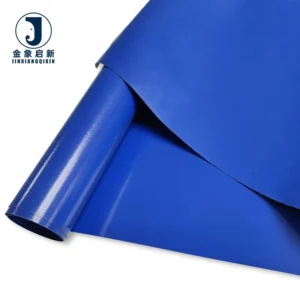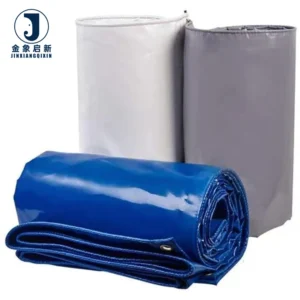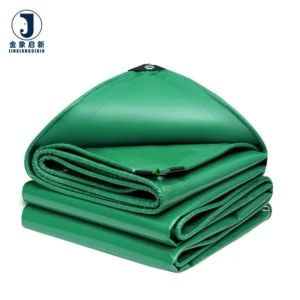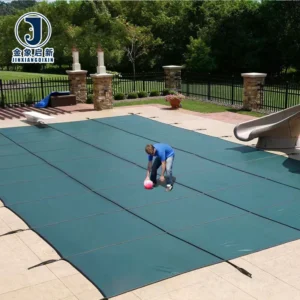
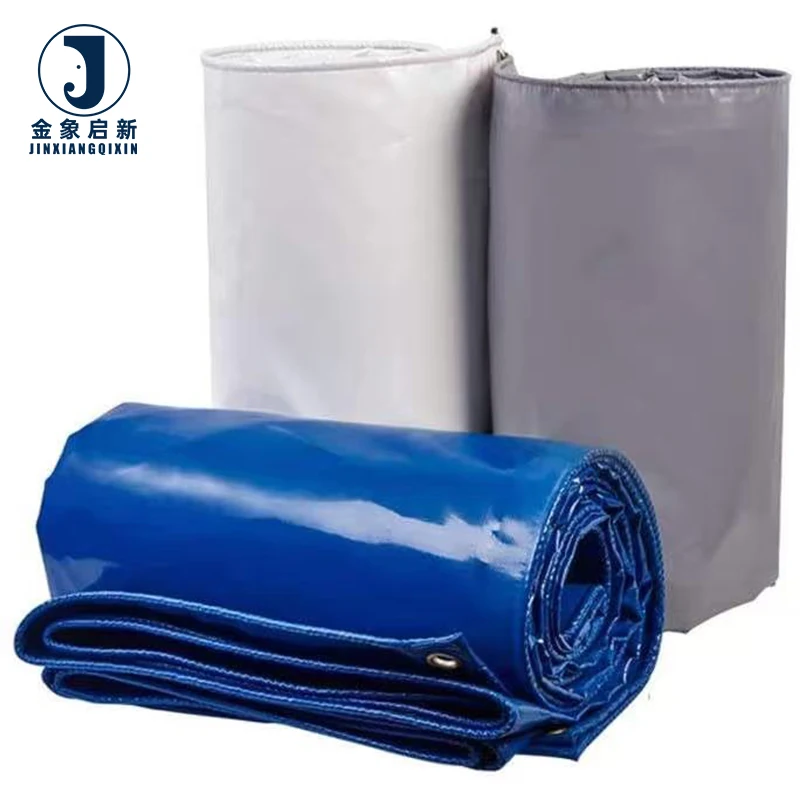
Coating Process Mastery — Nearly 30 years focused on PVC coating adhesion control, refined through every production run to ensure the bond between base fabric and coating matrix outlasts the flex cycles on truck side curtains and tent frames.
Technical Specifications
| Parameter | Value |
|---|---|
| Product Type | PVC Coated Tarpaulin Roll |
| Material Construction | PVC coated fabric, knife coated |
| Waterproof Rating | Fully waterproof coated construction |
| Dimensional Stability | Anti-shrink, maintains shape in extreme weather |
| Flame Retardant | Available in flame retardant grades — confirm the grade required for your market |
| UV Treatment | UV resistant treatment available — test basis confirmed per order specification |
| Application Grade | Industrial heavy-duty |
| Surface Finish | Available in glossy or matte finish |
| Colour Options | Single or double-side colour available, custom colour matching on request |
| Roll Dimensions | Custom width and length available per project requirement |
Application Suitability
| Application | Exposure & Requirement |
|---|---|
| Truck side curtains | Constant flexing at load points, road debris abrasion, sustained UV and weather exposure |
| Lorry and trailer covers | Wind load stress, tie-down tension, rain and moisture ingress prevention |
| Tent and awning structures | Prolonged sunlight exposure, wind uplift, repeated assembly and teardown stress |
| Industrial protective covers | Chemical splash contact, dust and moisture barrier, heavy equipment abrasion |
| Transport fleet weather protection | Multi-climate transit exposure, temperature cycling, mechanical handling wear |
Why a GSM Figure Without a Test Report Is a Purchasing Risk
A quoted PVC coated tarpaulin gsm material properties claim is only as reliable as the pre-shipment inspection record that backs it.
When buyers receive rolls that weigh less than the specification sheet stated, the root cause is rarely a simple measurement error. The gap often originates from a thinner base fabric or a reduced coating weight applied during production — changes that are invisible on the quotation but visible in tensile and tear performance once the fabric is cut, welded, and hung on a truck frame. Anti-UV or flame-retardant treatment claimed without a test report attached is the same category of problem: a promise without a verifiable standard behind it. [NEED_CITE: tensile and tear test methods for coated fabrics per ISO 1421]
I have seen heavy-grade coated rolls fail at the weld line while the surrounding fabric remained intact. The failure was not the PVC — it was the adhesion between the coating and the base yarn, compromised by process inconsistency that no weight measurement alone would reveal.
Coating Adhesion and Its Effect on Welded Seam Life
The bond between the PVC coating and the polyester base fabric determines whether a welded seam survives the same flex cycles as the body of the fabric. Knife coating forces the PVC compound into the weave structure under controlled pressure, creating a mechanical interlock that resists peel forces during high-frequency welding. When adhesion is weak, the heat from welding separates the coating from the yarn at the seam edge, and the curtain splits at the point the load flexes most. This is the single most common failure mode on truck side curtains operating daily routes. Every roll we dispatch carries a coating adhesion reading on its pre-shipment inspection record.
Colour Consistency Across a Container Load
Batch-to-batch colour variation is the kind of defect that only becomes visible when two rolls are unrolled and installed side by side on a trailer or tent structure. The pigment dispersion process during compounding, the coating temperature, and the curing duration all influence the final shade. Controlling these variables within a tight window across an entire container order requires real-time monitoring at the coating head, not just a sample check at the start of the run. We hold a retained swatch from every roll produced and match each subsequent roll against it before release. [NEED_CITE: colour measurement methods for PVC coated textiles using spectrophotometry]
Reading the Specification Sheet Beyond the Weight Number
A PVC coated tarpaulin gsm material properties figure tells you the combined mass of base fabric and coating per square metre, but it does not tell you how that mass is distributed. A roll with a heavier base fabric and lighter coating will tear differently from one with a lighter base and heavier coating, even at identical GSM. The base fabric denier and weave density govern tear propagation resistance, while the coating weight governs surface abrasion and waterproof integrity. Knife coated construction, as used on this industrial-grade roll, delivers a different balance of peel strength and flexibility compared to calendered or laminated alternatives. Understanding this distribution matters when you are specifying fabric for a truck curtain that will be welded, folded, and tensioned hundreds of times per year. Glossy and matte surface finishes also behave differently under cleaning and printing — glossy surfaces shed dirt more readily, while matte finishes accept solvent-based inks with better adhesion for branding.
What Happens When the Wrong Grade Reaches the Site
A flame-retardant claim that does not match the fire code in the buyer’s market means the fabric fails inspection on arrival, and the entire roll shipment may be rejected or quarantined. [NEED_CITE: fire classification standards for flexible PVC materials in building and transport applications] Similarly, a roll specified without verified anti-UV treatment will show visible degradation within months when deployed on an exposed truck route or outdoor tent installation — colour fading, surface chalking, and embrittlement at the weld lines. Batch colour inconsistency forces a fabricator to re-sort and re-cut, wasting material and delaying delivery to the end fleet operator. These are not theoretical risks; they are the most frequently reported complaints in coated fabric procurement across industrial markets.
Why Fabricators Source This Roll Stock From Jinxiang
Three full production lines and 36 sets of professional equipment give us the capacity to run large container orders without splitting them across external coating lines where process variables are harder to control. Our 10-person R&D team develops samples within days for custom width, colour, and treatment requirements, so buyers can validate the fabric before committing to bulk production. Every roll undergoes 100% pre-shipment inspection covering weight verification, coating adhesion, colour match, and visual defect screening — not a spot-check sampling plan. ISO and CE certified production ensures the documentation package meets import compliance requirements in markets across North America, Europe, and Asia. Nearly 30 years of focused PVC coating experience means the process parameters are set from proven production history, not trial and error on your order.
Documentation & Verification
- Material specification sheet stating GSM, base fabric denier, weave type, and coating method with weight per square metre
- UV resistance test report matched to the buyer’s target market standard and linked to the specific roll batch
- Flame retardant grade certificate available in grades matching regional fire codes — confirm requirement at inquiry stage
- ISO and CE certificates provided for customs and import compliance reference
- Pre-shipment inspection record confirming weight, colour, coating adhesion, and dimensional accuracy per roll
- Certificate of origin and full customs documentation package included with every export shipment
Fabrication, Handling & Storage
- High-frequency welding parameters should be calibrated to the knife coated PVC layer thickness for optimal seam peel strength
- Store rolls upright on a flat surface to prevent permanent creasing in the coating matrix during extended warehouse holding
- Avoid dragging the PVC coated surface over sharp edges during unrolling to protect the waterproof coating integrity
- Use compatible PVC-based repair patches and solvent cements matching the coating compound chemistry for field repairs
- Plan cutting layout to maximise roll width utilisation and minimise welded seam count on large curtain panels
- Allow cold-stored rolls to acclimatise to workshop temperature before unrolling to prevent coating micro-cracking
What to Include in Your Inquiry
Provide the specific truck curtain or tent structure dimensions, the flex frequency the fabric will endure, and the climate conditions at the installation site. If your market requires a particular fire classification, state the standard by name so we match the compound formulation to the correct test protocol. Indicate your required roll width, annual volume, and whether you need finished cut sizes or roll stock only.
Frequently Asked Questions
Q: How is the GSM of each roll verified against the quotation before it ships?
A: We conduct a 100% pre-shipment inspection on every roll, cutting a measured sample and weighing it on calibrated scales. The recorded GSM is compared against the specification sheet stated on your quotation. Any roll falling outside the agreed tolerance is held and replaced before dispatch. The inspection record travels with your shipment documentation.
Q: What flame retardant grades are available and how do they map to my market’s fire codes?
A: We offer PVC coated tarpaulin rolls in multiple flame retardant grades. The specific grade — such as those tested under DIN 4102, NFPA 701, or equivalent national standards — is confirmed at the inquiry stage based on your target market’s fire safety regulations. Each grade is backed by a test report linked to your production batch.
Q: What test basis supports the UV resistant treatment claim on this fabric?
A: UV resistant treatment is formulated into the PVC coating compound during production. The test method and exposure duration are confirmed per your order specification and target market requirements. A test report documenting the exposure conditions and results is included with your shipment documentation upon request.
Q: How does knife coating affect tensile strength and seam welding compared to other methods?
A: Knife coating forces the PVC compound into the base fabric weave under controlled blade pressure, creating a mechanical bond that supports higher peel strength at welded seams. This is critical for truck side curtains where flexing concentrates stress at the weld line. Calendered coatings sit more on the surface and may separate under repeated thermal welding cycles.
Q: Can colour and finish be kept consistent across all rolls in a container order?
A: Yes. We retain a production swatch from the first approved roll and match every subsequent roll against it under controlled lighting before release. Pigment dispersion, coating temperature, and curing parameters are held within a narrow window throughout the run. Side-by-side comparison is available for buyer approval before the container is sealed.