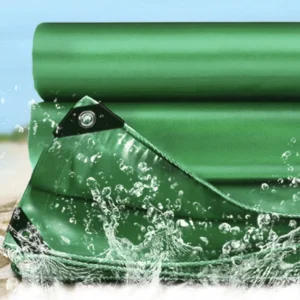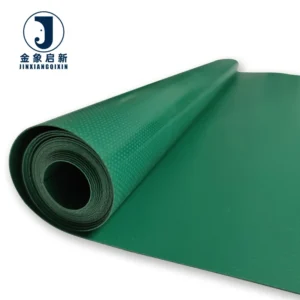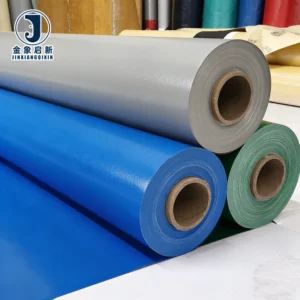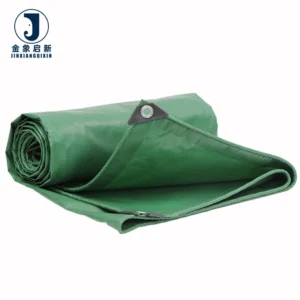
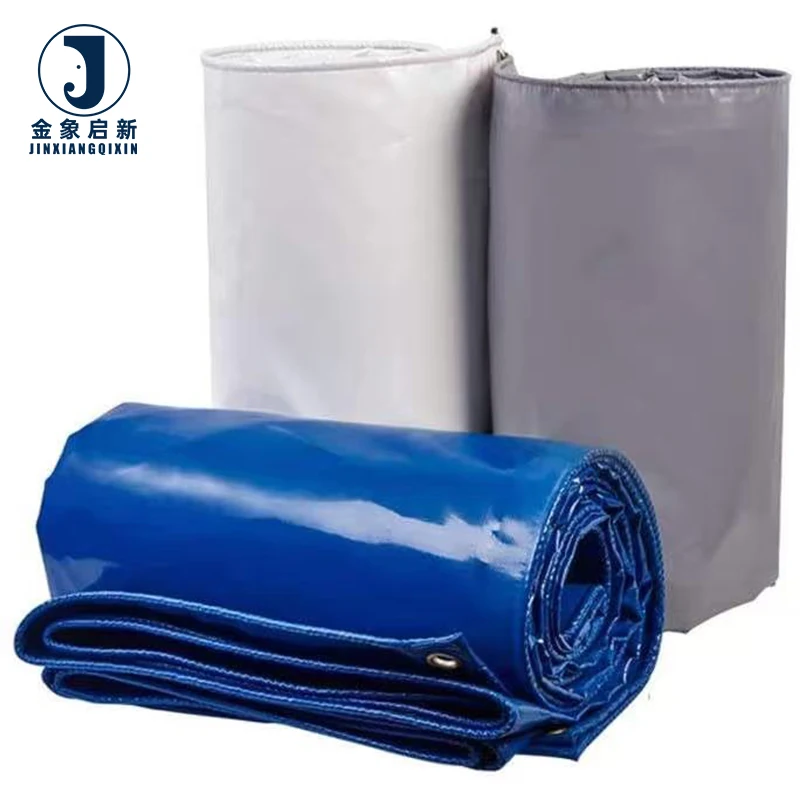
Material Traceability — Every roll ships with a specification sheet mapping base fabric denier, coating method and GSM to the tensile and tear values measured during in-process QA.
Technical Specifications
| Parameter | Value |
|---|---|
| Product Type | PVC Tarpaulin Roll |
| Coating Material | PVC |
| Waterproof Construction | Yes |
| Anti-Shrink Treatment | Yes |
| Flame Retardant Grade | Available in flame retardant grades — confirm the grade required for your market |
| UV Treatment | Anti-UV treatment available — test basis to be confirmed per order |
| Application Grade | Industrial heavy-duty |
| Key Features | Waterproof, Anti-Shrink, Flame Retardant Option, Anti-UV Option |
Application Suitability
| Application | Exposure & Requirement |
|---|---|
| Truck Side Curtains | Constant flexing at tie-down points, road abrasion, prolonged UV exposure |
| Lorry Cargo Covers | Weather loading, wind flap fatigue, welded seam integrity |
| Tent & Awning Fabric | Extended sunlight exposure, wind load tension, field welding and repair |
| Industrial Fabric Covers | Warehouse dust and moisture, handling abrasion, chemical contact |
| Outdoor Transport Weather Protection | Rain ingress prevention, UV colour retention, long-term roll storage |
Why Coating Weight and Base Fabric Must Be Read Together on a PVC Coated Tarpaulin Roll
A GSM number on a quotation means nothing without the base fabric construction behind it.
Technical buyers who specify a PVC coated tarpaulin gsm coating weight tensile tear strength requirement often discover that two rolls with the same stated weight behave very differently once they reach the welding table [NEED_CITE: relationship between base fabric denier and tensile performance in coated fabrics]. A heavier coating can mask a lighter base fabric, delivering the quoted GSM on a scale test but failing to hold tensile load at the flex points where a truck side curtain opens and closes hundreds of times a week. The real specification has to state both the base fabric denier and weave count, and the PVC coating weight applied over it, so that the relationship between weight, tensile strength and tear propagation is transparent before the order is placed.
How Base Fabric Construction Governs Tensile and Tear Performance
The tensile strength of a PVC coated tarpaulin roll is determined primarily by the base fabric, not the coating layer. A higher denier yarn in the warp and weft, combined with a tighter mesh count, gives the fabric its load-bearing skeleton. When a side curtain flexes at the tie-down strap or a tent panel catches a gust load, the force is carried by this woven grid. The PVC coating adds weight, weather protection and weldability, but it does not compensate for an underspecified base fabric. This is why technical buyers evaluating PVC coated tarpaulin gsm coating weight tensile tear strength need the full material data sheet, not a single weight figure [NEED_CITE: ISO 1421 test methods for tensile and tear properties of coated fabrics].
Coating Method and Its Effect on Weld and Seam Behaviour
Knife coating applies PVC in controlled layers onto the base fabric, producing a coating bond that directly affects how well adjacent panels weld together. A consistent coating weight across the roll width means the heat-activated PVC flows evenly during hot-air or wedge welding, so the seam takes the same load as the body fabric. Inconsistent coating weight leads to weak spots at weld lines — the exact points where a truck curtain flexes most. When you evaluate PVC coated tarpaulin gsm coating weight tensile tear strength, the adhesion between coating and base fabric is the hidden variable that determines whether a weld holds or delaminates under load [NEED_CITE: weld strength testing protocols for PVC coated polyester fabrics].
Reading the Specification Sheet Against Your Application
For truck side curtains that open and close daily, the base fabric denier and weave count should be matched to the trailer length and the strap spacing that creates the highest flex concentration. For tent and awning panels that must weld cleanly over long seam runs, coating weight uniformity across the roll width becomes the priority specification. A PVC coated tarpaulin gsm coating weight tensile tear strength comparison only works when both sides of the equation — fabric and coating — are stated with the same level of detail. UV treatment and flame retardant options add further variables that must be confirmed against the test standards required in the destination market, not assumed from a product description alone.
The Cost of Specifying on Weight Alone
When a roll arrives lighter than the quoted specification, the buyer faces a difficult choice: accept the material and risk premature field failure, or reject the shipment and absorb the project delay. Either outcome costs more than specifying the full material data sheet up front. Coating weight that falls below the stated value also changes welding parameters, so fabricators who dial in their machines based on the quoted spec produce weak seams on the actual material. Batch colour variation across rolls in a single order creates visible mismatches once panels are installed side by side on the same vehicle or structure, forcing rework that neither the fabricator nor the end customer planned for [NEED_CITE: pre-shipment inspection practices for coated fabric rolls].
Procurement Backed by Process Control
Jinan Jinxiang operates three full production lines with 36 sets of professional equipment, giving the capacity to hold coating weight and colour consistency across large roll orders. The 10-person R&D team develops samples within days when custom width, colour or treatment combinations are required. Every roll passes through dedicated QA/QC at each production stage, with 100% inspection before shipment — not a sampling protocol that leaves gaps in the data. Material specification sheets, test reports and packing documentation ship with every order so that the buyer’s receiving team can verify the roll against the purchase order immediately.
Documentation & Verification
- Material specification sheet stating GSM, base fabric denier and coating material per roll
- UV and flame retardant test reports tied to the batch supplied
- Pre-shipment inspection record confirming coating weight and adhesion values
- Roll packing list matching roll count, colour and width to the purchase order
- ISO and CE certificates for compliance documentation
Fabrication, Handling & Storage
- Set hot-air welding temperature based on the stated PVC coating weight before running production seams
- Allow rolls to acclimatise before unrolling in cold conditions to avoid coating crack at flex points
- Store rolls upright on pallets to prevent flat spots that distort the base fabric weave
- Use a cutting plan that accounts for roll width to minimise off-cuts and cross-grain welds
- Clean welded seams with a PVC-compatible solvent that does not attack the anti-UV surface treatment
Request a Material Data Sheet
Provide the application, required roll width, annual volume and any flame retardant or UV test standards your market demands. If you need batch-consistent colour across multiple rolls or custom width, state the target reference so a sample can be developed for approval before production.
Frequently Asked Questions
Q: How do I confirm the GSM on arrival matches what was quoted?
A: Each roll ships with a pre-shipment inspection record that states the measured GSM, base fabric specification and coating weight. Your receiving team can cross-check these values against the purchase order using a calibrated scale and the material specification sheet provided.
Q: Which flame retardant and anti-UV grades are available?
A: Flame retardant options are available across multiple grades. The specific grade and UV test basis depend on your target market’s fire safety and durability standards. Confirm the required test standard with our technical team so the correct treatment is applied and documented with a batch-specific test report.
Q: Can you match colour across multiple rolls in one order?
A: Colour consistency is controlled at the coating stage with in-process checks across all three production lines. State your colour reference at inquiry and we will confirm the achievable match tolerance before production, with batch-to-batch consistency maintained on repeat orders.
Q: What is the MOQ on custom width or colour?
A: Custom width and colour orders carry minimums that depend on the specific combination of base fabric, coating weight and treatment required. Request a quotation with your target specification and our team will confirm the minimum order and lead time for your configuration.
Q: Do samples carry the same coating and treatment as production rolls?
A: Samples are produced on the same coating lines using the same base fabric, coating formulation and treatment chemistry specified for your order, so welding and performance testing on the sample translates directly to the production material.