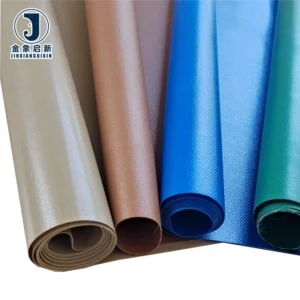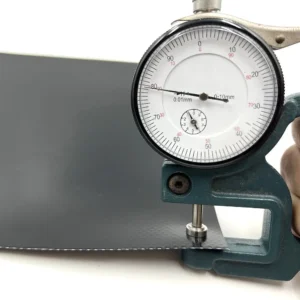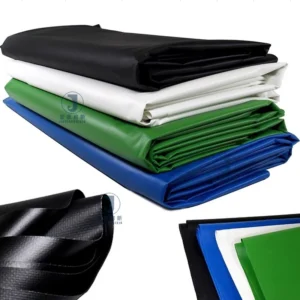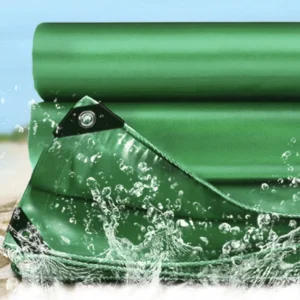
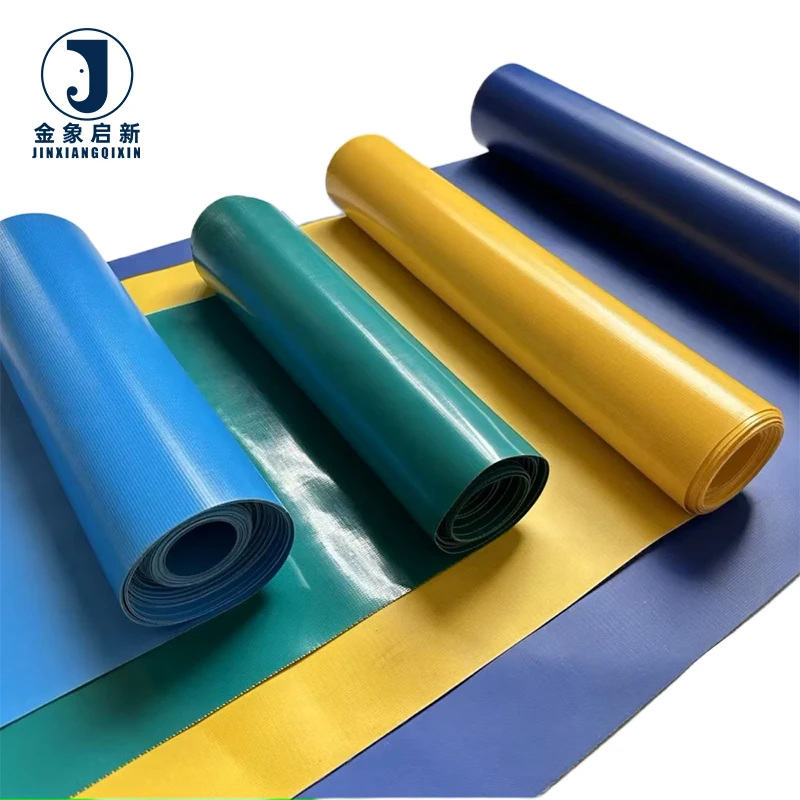
Coating Process Control — Nearly 30 years focused on PVC coated fabric gives us deep process control over coating weight and adhesion, ensuring every PVC Coated Tarpaulin Roll fire retardant meets the technical properties stated on the specification sheet.
Technical Specifications
| Parameter | Value |
|---|---|
| Product Type | PVC Coated Tarpaulin Roll |
| Base Fabric Denier | 200D×300D, 500D×500D, 840D×840D, 1000D×1000D |
| Weight (GSM) | 250gsm–1500gsm (range covers product family — confirm the grade for this item) |
| Coating Material | PVC |
| Finish | Glossy or matte |
| Temperature Range | -15ºC to 70ºC |
| Flame Retardant | Flame retardant treated (grade not stated — confirm the test standard required for your market) |
| UV Treatment | Customized (test basis not stated — request test report matched to destination market) |
| Anti-Fungal | Treated |
| Waterproof | Yes |
| Surface Features | Rain-resistant, abrasion resistant, good flexibility and adhesion strength |
| Colors | Blue, yellow, black, green, white, and custom options |
| Size Options | 3×4m, 6×8m, 8×10m, 10×12m, or custom made |
| Printing | OEM/ODM custom printing |
| Standards | ISO, CE |
Application Suitability
| Application | Exposure & Requirement |
|---|---|
| Tent and awning fabrication | Repeated assembly and disassembly, wind loading, UV exposure, need for verified flame retardant grade for event venues |
| Truck and trailer side curtains | Constant flexing at fold lines, road debris abrasion, tie-down point stress, weather exposure across climate zones |
| Semi-permanent outdoor structures | Long-term UV and rain exposure, fire safety compliance for public-access installations, thermal welding for panel joining |
| Construction site covers | Abrasive contact with building materials, wind uplift, requirement for certified fire retardant treatment on regulated sites |
| Equipment and machinery protection | Outdoor storage exposure, dust and moisture ingress prevention, handling and repositioning wear |
What "Flame Retardant" Means Without a Grade Behind It
A PVC Coated Tarpaulin Roll fire retardant claim is only as reliable as the test report that backs it.
Technical buyers regularly receive quotations stating "flame retardant" with no reference to a recognised standard. When the material arrives on site, the absence of documented compliance becomes a problem at inspection — especially for tent manufacturers and construction contractors who must present certified fire performance to local authorities [NEED_CITE: fire classification requirements for temporary structures vary by jurisdiction]. Without a stated grade such as B1 per DIN 4102, M2, or NFPA 701, the buyer cannot verify whether the treatment matches their market’s regulatory requirements. Our approach is to supply the specific test report alongside the material, so the grade is traceable from roll to project file.
Base Fabric Denier Selection and Tensile Behaviour
The base fabric denier directly controls how a PVC Coated Tarpaulin Roll fire retardant performs under mechanical load. Options span from 200D×300D for lighter applications through to 1000D×1000D for heavy-duty use where tensile and tear demands are highest. Specifiers working on truck side curtains typically select mid-range denier counts that balance flex fatigue resistance with tear propagation control, while tent fabricators may choose higher denier for structural panels subject to wind uplift. The yarn count and weave density together determine how the fabric behaves before the coating is even applied.
Coating Weight, Adhesion, and Weld Integrity
PVC coating weight and the method of application govern both the surface durability and the behaviour of the material at heat-welded seams. When coating adhesion to the base fabric is well controlled, the weld line fails only after the fabric itself reaches its limit — not before [NEED_CITE: adhesion strength test methods for coated fabrics]. Glossy and matte finish options influence how the surface accepts heat during welding and how printed branding adheres in downstream fabrication. Technical buyers should request the material specification sheet that documents the exact coating method and weight for each roll grade they intend to specify.
Reading GSM in Context with Base Fabric Construction
A standalone GSM figure tells only part of the story. The relationship between coating weight and base fabric denier determines the finished material’s tear resistance, flex durability, and suitability for thermal welding. A high GSM achieved primarily through heavy coating on a low-denier base fabric may deliver stiffness without corresponding tear strength. Conversely, a balanced construction pairs appropriate denier with sufficient coating to protect the yarns while maintaining flexibility across the stated temperature range of -15ºC to 70ºC. Technical buyers evaluating PVC coated tarpaulin rolls should request the full construction breakdown rather than relying on GSM alone.
The Hidden Cost of Specifying Without Verification
When GSM on the quotation does not match the material received, the consequences appear at the fabrication stage — thinner coating yields weaker welds, reduced abrasion resistance, and earlier coating delamination under field conditions. Flame retardant treatment supplied without a supporting test report creates a different risk: the finished product may be rejected at site inspection, forcing replacement and schedule delays. Batch-to-batch colour variation between rolls installed side by side is another common outcome when production consistency is not verified before dispatch [NEED_CITE: pre-shipment inspection practices for coated fabric rolls]. These failures are preventable with documented specifications and inspection records tied to each order.
Why Source PVC Coated Tarpaulin Roll Fire Retardant Here
Three full production lines and 36 sets of professional equipment support bulk roll output with consistent coating weight across production runs. The 10-person R&D team handles material selection, denier matching, and sample development for custom requirements, producing samples within days rather than weeks. Dedicated QA/QC at every production stage ensures that coating adhesion, colour consistency, and treatment application are checked before any roll leaves the facility. Pre-shipment inspection records accompany each dispatch, giving buyers traceable evidence of the material properties stated on the specification sheet. ISO and CE certification underpins the quality management system across all product families.
Documentation & Verification
- Material specification sheet stating exact GSM, base fabric denier, and PVC coating method per roll
- Flame retardant test report matched to the destination market standard upon confirmation of grade required
- UV stability test documentation provided where UV treatment is specified for the order
- Pre-shipment inspection record confirming roll-to-roll coating weight and colour consistency
- ISO and CE certificates with full customs documentation support included with every shipment
Fabrication, Handling & Storage
- Heat-weld glossy or matte PVC surfaces using temperature settings matched to coating weight for optimal seam adhesion
- Store rolls upright on pallets to prevent flat-spot deformation of the base fabric and coating layers
- Allow rolls to acclimatise before unrolling in cold conditions to avoid coating stiffness and crease damage
- Select cleaning agents compatible with PVC coating to preserve surface finish and anti-fungal treatment integrity
- Plan cut-and-weld layouts to minimise seam count and maximise roll utilisation across the specified width
Request a Technical Quotation
To specify the correct PVC Coated Tarpaulin Roll fire retardant grade, provide your application type, expected mechanical and environmental exposure, and the fire safety standard applicable in your destination market. Include required denier, GSM range, finish preference, and roll dimensions so that the quotation reflects your exact production needs. If colour consistency across multiple rolls or OEM printing is required, share your reference standards with the enquiry.
Frequently Asked Questions
Q: How is the flame retardant grade verified, and which test standards apply to my market?
A: Flame retardant treatment is available in grades aligned to standards such as DIN 4102, NFPA 701, and M2. Confirm the specific standard required by your local regulations, and the corresponding test report will be supplied with your shipment. We match the treatment formulation and documentation to your stated compliance requirement before production begins.
Q: What is the UV treatment test basis, and how does it relate to expected outdoor service life?
A: UV treatment is customised to the order, and the test basis should be confirmed against your market’s exposure expectations. We provide test documentation supporting the treatment grade specified. The relationship between UV stabiliser concentration and service life depends on installation orientation, climate zone, and annual sun exposure hours at the site.
Q: How does base fabric denier affect tensile and tear strength of the finished tarpaulin?
A: Higher denier base fabric generally provides greater tensile and tear resistance, but the weave density and PVC coating weight also contribute to final performance. A 1000D×1000D construction suits heavy-duty applications, while lighter deniers serve where flexibility and lower weight are priorities. Request the full construction specification to match denier selection to your mechanical requirements.
Q: What is the relationship between GSM coating weight and adhesion strength at welded seams?
A: Coating weight influences how the PVC surface responds to thermal welding — sufficient coating thickness supports strong intermolecular bonding at the seam, while inadequate coating may cause the weld to fail before the base fabric reaches its load limit. The coating method and adhesion to the base fabric are equally important. Request the material specification sheet for each grade to verify these parameters.
Q: How is batch-to-batch colour consistency controlled across multiple rolls in a single order?
A: Colour consistency is managed through controlled pigment dosing and verified during pre-shipment inspection. Each roll in your order is checked against the approved colour reference before dispatch. If your project requires multiple rolls installed side by side, state this requirement at enquiry so that production scheduling keeps your order within a single coating batch.