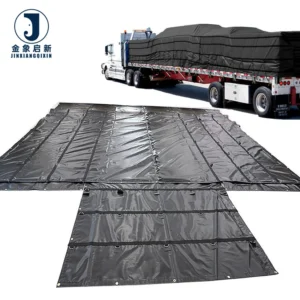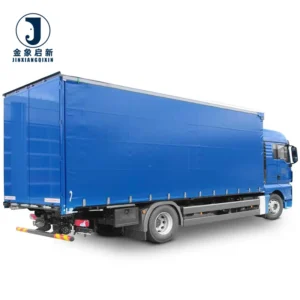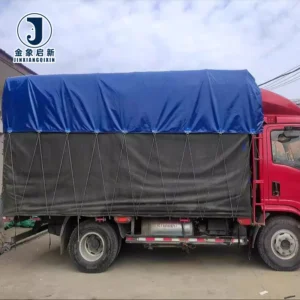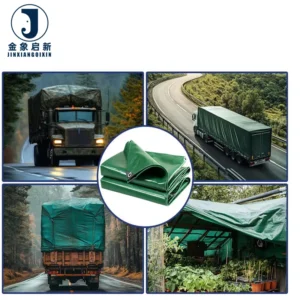
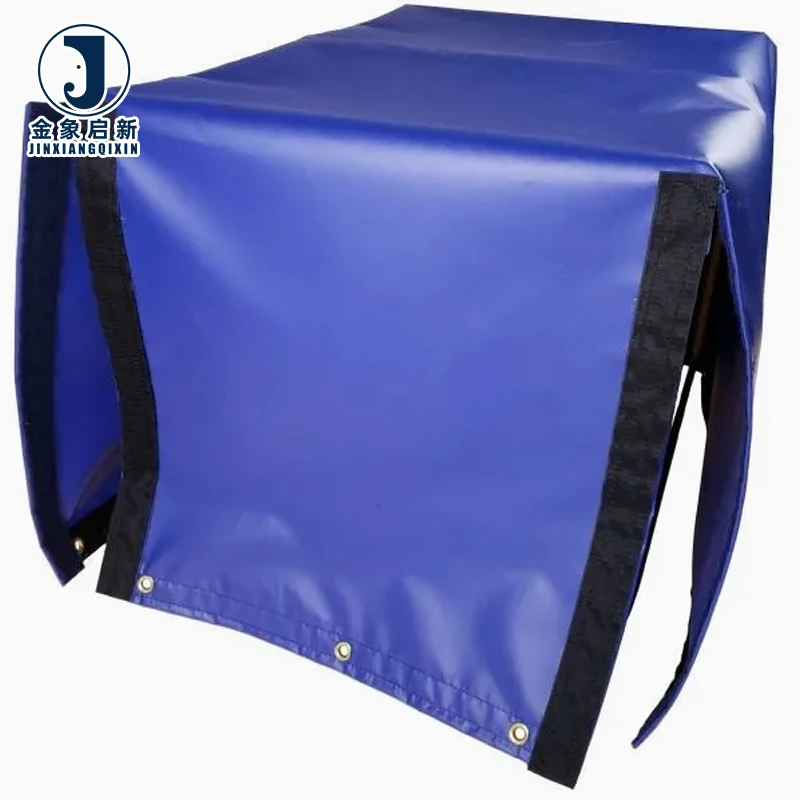
Process Traceability — Every roll of PVC coated truck cover fabric is produced under dedicated QA/QC stages, ensuring coating weight and base fabric denier are documented from raw material to dispatch.
Technical Specifications
| Parameter | Value |
|---|---|
| Product Type | PVC Coated Truck Cover |
| Base Fabric Denier | 200Dx300D / 500Dx500D / 840Dx840D / 1000Dx1000D |
| Coating Material | PVC |
| Weight (GSM) | 250gsm-1500gsm (range covers product family — confirm the grade for this item) |
| Surface Finish | Glossy or Matte |
| Color Options | Blue, Yellow, Black, Green, White (customizable) |
| Temperature Range | -15ºC to 70ºC |
| Treatment Options | Waterproof, UV (test basis not stated in source), Flame Retardant (grade not stated in source), Anti-fungal |
| Size Options | 3x4m / 6x8m / 8x10m / 10x12m or custom made |
| Printing | Custom logo / OEM / ODM |
| Certifications | ISO, CE |
Application Suitability
| Application | Exposure & Requirement |
|---|---|
| Flatbed trailer top cover | Continuous UV exposure, wind uplift load, pooling water, flex fatigue at tie-down points |
| Curtain-side trailer side panels | Repeated lateral flexing, road spray abrasion, friction against cargo during transit |
| Vehicle transport truck cover | Puncture risk from sharp load edges, need for consistent colour across multiple panels |
| Container and equipment shroud | Outdoor static storage, fungal growth in humid climates, dust ingress prevention |
Why a GSM Figure Alone Cannot Guarantee Tear Performance at the Weld
Seam integrity depends on coating adhesion and base fabric denier working together, not on weight per square metre in isolation.
Technical buyers reviewing PVC coated truck cover fabric technology often start with the GSM on the quotation, but a heavier coating does not compensate for a loosely woven base. At the flex points of a curtain-side trailer, the load shifts constantly, and a seam that separates before the fabric body fails is a pattern I have seen across generic imports where the coating weight was inflated but the base denier was light. [NEED_CITE: tensile and tear test methods for coated fabrics per ISO 1421]
When the fabric flexes under load, the stress concentrates at the welded hem. If the adhesion between the PVC layer and the polyester yarn is weak, delamination begins there long before the base yarn snaps. This is why specifying the base fabric denier alongside the GSM is non-negotiable for any transport covering application.
Matching Denier to the Trailer Flex Pattern
The base fabric denier options from 200Dx300D up to 1000Dx1000D allow specifiers to align tensile demand with the actual mechanics of the trailer. A flatbed top cover sitting relatively static under tie-down straps can perform adequately on a mid-range denier, while a curtain-side panel that opens, closes, and flexes with every corner requires a heavier base yarn to resist tear propagation at the hem. PVC coated truck cover fabric technology is only effective when the denier selection reflects the movement profile of the application.
Coating Adhesion and the Weld Line Reality
PVC coating applied by knife-coating method penetrates the base weave and locks around individual yarns, creating a mechanical bond that determines how well the material survives high-frequency welding. The controlled adhesion strength between coating and base fabric means the weld line can be engineered to outlast the surrounding material. Glossy or matte finish options are available depending on whether the priority is ease of cleaning from road grime or reduced glare under direct sunlight. [NEED_CITE: knife coating versus lamination adhesion strength comparison]
Reading the Specification Sheet Beyond the Headline Numbers
GSM tells you mass per unit area, but it is the relationship between the base fabric density and the coating weight that governs tear resistance. A 900 GSM fabric built on a 500Dx500D base with heavy coating may resist puncture but tear easily once a nick starts, while the same weight on a 1000Dx1000D base distributes load across more yarn intersections. The temperature range rated at -15ºC to 70ºC sets the operational boundary — below this, PVC stiffens and becomes brittle under impact, and above it, the coating softens and may stick to itself when folded in transit. Specifiers operating in colder or hotter zones should confirm the grade required for their market.
The Cost of Overlooking Base Fabric in the Specification
Accepting a quotation on GSM alone, without verifying the base denier on arrival, leads to covers that puncture at tie-down contact points within months. Welded seams that part from the fabric body during the first winter indicate adhesion failure, not fabric failure — a problem rooted in inconsistent coating penetration during production. Batch colour variation between rolls becomes visible once panels are installed side by side on a fleet, forcing rework on vehicles already in service. [NEED_CITE: field failure analysis of PVC tarpaulin seams under cyclic loading]
What Process Control Brings to Every Roll
Deep process control over coating weight and adhesion, built through nearly 30 years of focused coated fabric production, ensures that the GSM stated on the specification sheet matches what arrives on the dock. Three full production lines and 36 sets of professional equipment support bulk capacity with consistent on-time delivery across orders. The 10-person R&D team handles material selection, custom sizing, pattern printing, and sample development in parallel. Dedicated QA/QC at every production stage with 100% inspection before shipment catches coating weight drift, colour deviation, and hem defects before they leave the facility. Custom width, length, and print requirements are developed as samples within days for buyer approval prior to full production.
Documentation & Verification
- Material specification sheet stating exact GSM, base fabric denier, and coating type per item
- Test report for UV and flame retardant grades where applicable, matched to batch
- 100% pre-shipment inspection record with piece-level traceability
- Roll packing list detailing dimensions, weight, and colour reference per roll
- Certificate of origin and customs documentation for export clearance
Fabrication, Handling & Storage
- Heat weld parameters should be adjusted for the specific PVC coating thickness and finish type
- Reinforced hems must distribute tie-down load across multiple base yarn intersections
- Store rolls upright on pallets to prevent permanent creasing in the PVC coating layer
- Allow cold rolls to acclimatise before unrolling to avoid surface cracking below -15ºC
- Clean glossy finish surfaces with mild detergent; avoid solvents that degrade PVC adhesion
- Cut patterns should account for the 250gsm-1500gsm weight range to optimise material yield
What to Include in Your Enquiry
To match the correct denier and coating weight to your requirement, share the trailer model or structure dimensions, the expected flex cycle frequency, and your target market’s fire classification or compliance needs. If you need finished covers cut to specific vehicle profiles rather than roll stock, provide the panel drawings with eyelet placement. Colour matching and print branding requirements should be confirmed with a physical sample before production begins.
Frequently Asked Questions
Q: How is the GSM of the PVC coating verified before shipment?
A: Every roll undergoes a 100% pre-shipment inspection where the coating weight is measured and recorded against the stated GSM on the material specification sheet. The inspection record ships with the order, providing batch-level traceability so you can verify the weight on arrival matches the documentation.
Q: What flame retardant grade can be supplied, and which test standard applies?
A: Flame retardant treatment is available in various grades — confirm the grade required for your market and the applicable test standard at enquiry stage. Once specified, the corresponding test report is generated for the batch supplied and included in the shipment documentation package.
Q: What is the UV treatment test basis, and how does it relate to outdoor service life?
A: UV treatment options are available with the test basis to be confirmed per order specification. The relationship between the treatment level and actual outdoor exposure duration depends on climate zone and installation angle, so sharing your operating environment helps us recommend the appropriate grade.
Q: How do different base fabric deniers affect tear and tensile strength at welded seams?
A: Higher denier base fabrics such as 1000Dx1000D provide more yarn intersections for the weld to grip, reducing the risk of seam separation under cyclic flex loading. The denier selection should match the movement profile of the trailer panel rather than defaulting to the heaviest option.
Q: What documentation ships with the order for material traceability?
A: Each shipment includes a material specification sheet, pre-shipment inspection record, roll packing list, and certificates of origin. Where UV or flame retardant grades are specified, the corresponding test reports matched to the production batch are provided alongside ISO and CE documentation.