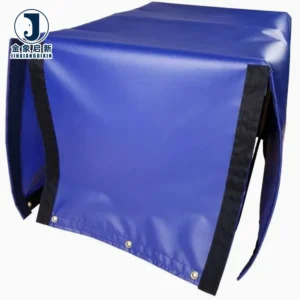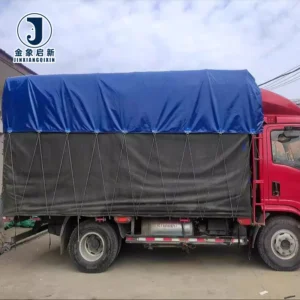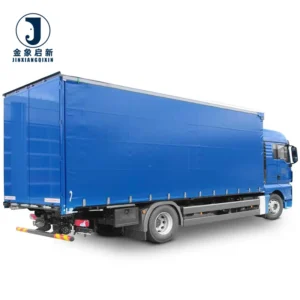
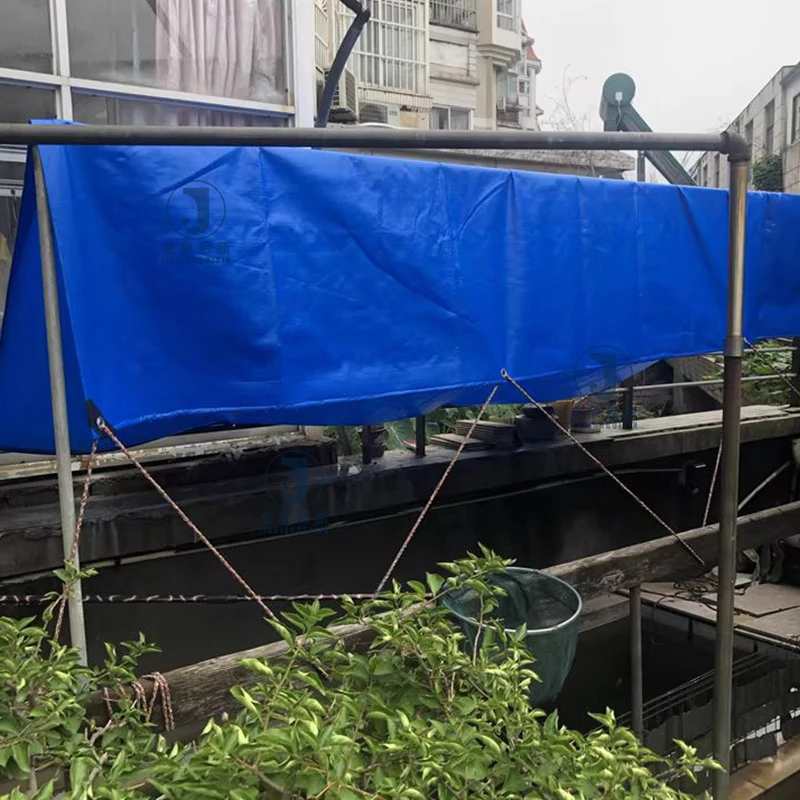
Precision Welded Seams — high-frequency heat welding on PVC coated truck covers ensures the join outlasts the fabric at the exact point where cargo flex cause the highest stress during transit.
Technical Specifications
| Parameter | Value |
|---|---|
| Product Type | PVC Truck Cover |
| Material | PVC Coated Fabric |
| Weight (GSM) | 500 – 900 g/m² |
| Thickness | 0.4 – 0.7 mm |
| Tensile Strength | Meridian 2000-3500 / Latitude 1800-3000 N/5cm |
| Knitting Density | 20×20 |
| Width | Custom (up to 3.2m) |
| Length | Custom |
| Surface Treatment | Anti-UV, Flame Retardant, Anti-static (confirm grade required for your market) |
| Color | Custom (Single or Double Side) |
| Finish | Available in glossy or matte finish |
| Edge Reinforcement | PP rope in hem, reinforced plastic corners |
| Eyelets | Galvanized, every 1m interval |
| Welding Method | High-frequency heat welding |
| Certification | ISO 9001, CE |
Application Suitability
| Application | Exposure & Requirement |
|---|---|
| Flatbed truck load covering | Road vibration, wind uplift, rain ingress, UV exposure during multi-day transit |
| Curtainsider side curtain systems | Continuous flexing at fold points, abrasion against cargo, lateral wind load |
| Trailer tipper covers | Heavy particulate contact, repeated deployment and retraction, edge wear |
| Fleet logistics weather protection | Long-haul sun exposure, temperature swings, tie-down strap friction at eyelets |
Why Stated GSM Does Not Guarantee Real-World Cover Survival
Weld integrity at flex points determines service life far more than base fabric weight alone.
I have reviewed field returns where PVC truck covers failed within a single season — not because the fabric tore, but because the heat-welded seams separated under repeated flex load. The issue is rarely the GSM on the quotation; it is the bond strength between coated layers and the consistency of welding parameters across the production run. Fleet operators replacing covers twice a year rarely trace the root cause back to coating adhesion or weld temperature control. [NEED_CITE: ISO 1421 tensile test methods for coated fabrics]
What Coating Weight and Knitting Density Mean for Load-Bearing Covers
The 20×20 knitting density in this PVC truck cover base fabric creates a grid that distributes tensile load across both warp and weft directions simultaneously. When the PVC coating penetrates and encapsulates this weave, the resulting composite structure resists delamination under the cyclic bending that curtainsider fabrics endure daily. PE Tarpaulin material and coating properties operate on an entirely different construction principle, which is why comparing GSM values across material families without examining base fabric architecture leads to incorrect specification.
How Surface Finish Affects Long-Term Appearance on Fleet Vehicles
A glossy finish sheds road grime and allows rain to carry away surface contaminants, keeping fleet branding visible over extended periods. A matte finish reduces glare, which matters when covers are deployed on vehicles parked near loading bays under direct sunlight. The choice between these options affects cleaning intervals and the adhesion behaviour of printed route numbers or company logos applied after fabrication. [NEED_CITE: surface energy and print adhesion on PVC coated textiles]
Reading the Specification Sheet Beyond the Headline Weight
Tensile strength values of Meridian 2000-3500 N/5cm and Latitude 1800-3000 N/5cm reflect the combined contribution of the polyester base fabric and the PVC coating mass. A 900 g/m² cover with a loosely woven base will tear more easily at eyelet points than a 650 g/m² cover built on a tight 20×20 weave, because tear propagation follows the yarn path. Thickness in the 0.4 to 0.7 mm range correlates with coating mass rather than base fabric denier — a distinction that matters when specifying abrasion resistance for side curtain panels that contact cargo edges. The knitting density, not just the total GSM, governs how the fabric behaves at the welded seams where high-frequency heat must fuse coating layers without degrading the underlying yarns.
The Cost of Underspecifying Welded Seams and Edge Reinforcement
A cover that loses an eyelet mid-transit exposes the entire load to wind ingress, which then escalates into flapping damage and fabric tearing across the panel. Edge reinforcement with PP rope in the hem distributes the load from tie-down straps, but only if the rope diameter matches the hem channel and the welding penetrates both coating surfaces. When flame retardant or anti-static grades are required by the transport operator’s safety protocol, the test report must accompany the shipment — a verbal claim without documentation fails the compliance audit at the depot. [NEED_CITE: fire classification standards for transport cover materials]
Production Control That Reaches the Loading Bay
Three full production lines with dedicated high-frequency welding stations support batch runs where colour consistency holds from the first roll to the last in a multi-cover fleet order. The 10-person R&D team develops weld parameter profiles for each GSM grade, because a 500 g/m² fabric requires different dwell time and pressure than a 900 g/m² fabric to achieve the same seam strength. Every roll undergoes 100% pre-shipment inspection that checks GSM against the purchase order, not against the product family range. Custom widths up to 3.2m are cut and welded to the exact trailer dimensions you provide, eliminating the generic-size problem that leaves excess fabric flapping or insufficient overlap at the tailgate. Samples are developed within days when a new colour or finish is specified, allowing fleet livery approval before production begins. ISO 9001 and CE documentation is compiled per order, not stored in a generic file.
Documentation & Verification
- Material specification sheet stating exact GSM, base fabric knitting density, and PVC coating weight per side for this truck cover grade
- Test report for UV and flame retardant grades where applicable, with stated test basis matching your market requirements
- Pre-shipment inspection record verifying roll-to-roll GSM consistency and weld strength at flex points
- ISO 9001 and CE certificates with scope covering PVC coated truck cover production
- Roll packing list with individual cover dimensions and eyelet count per panel
- Certificate of origin and customs documentation for cross-border fleet procurement
Fabrication, Handling & Storage
- High-frequency welding on PVC coated fabric requires matched dwell time for each GSM grade to prevent seam delamination
- Galvanized eyelets at 1m intervals must be set through both coating layers with reinforced plastic corners bearing the tie-down load
- Rolls up to 3.2m wide should be stored upright on end cores to prevent permanent creasing in the coating surface
- Matte finish covers require non-solvent cleaners to preserve the surface texture and prevent gloss patches from forming
- Edge hems with PP rope must be welded along the full rope length, not spot-tacked, to resist strap pull-through
What to Include in Your Specification Enquiry
Provide the exact trailer make, model, and body dimensions so the cover is patterned to your vehicle rather than cut from a generic template. Specify whether the operating environment requires flame retardant or anti-static certification, and name the standard your safety team audits against. Confirm whether you need rolls for your own fabrication shop or finished covers with eyelets, hems, and reinforcement already applied. State the annual volume and colour requirements so batch consistency can be planned across your fleet renewal schedule.
Frequently Asked Questions
Q: How do I specify the right size for my trailer model?
A: Provide the trailer make, model, year, and body dimensions including any protruding fittings or lashing rails. The cover is then patterned to your exact vehicle profile rather than cut to a generic rectangle, which eliminates excess fabric that flaps in transit or insufficient overlap that lets water reach the cargo.
Q: What test reports verify your UV and flame retardant claims?
A: Test reports are issued per order for the specific grade produced, stating the test basis and classification achieved. Request these before production begins so the grade can be matched to your market’s regulatory requirements — verbal claims without documentation will not pass a depot compliance audit.
Q: Can you match colour consistency across multiple covers in one fleet order?
A: Batch colour matching is controlled across the full production run using the same coating compound batch and curing parameters. Pre-shipment inspection compares every cover against the approved sample, and any panel showing visible deviation under daylight conditions is pulled before packing.
Q: How long does custom sizing and production take?
A: Lead time depends on the number of distinct vehicle profiles and whether a new colour or finish requires sample approval first. Typical multi-week lead times apply for custom colours, while standard colours in confirmed sizes move to production once the pattern is approved.
Q: What reinforcement options are available for high-wear areas?
A: Reinforcement is applied at eyelet zones, hem edges, and any panel area you identify as subject to cargo abrasion or strap friction. PP rope in the hem, reinforced plastic corners, and additional PVC patches at high-stress points are all configurable based on your trailer’s lashing arrangement.