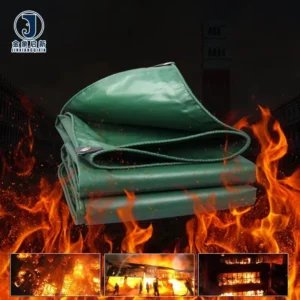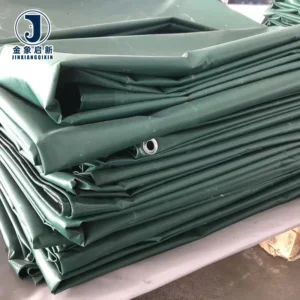
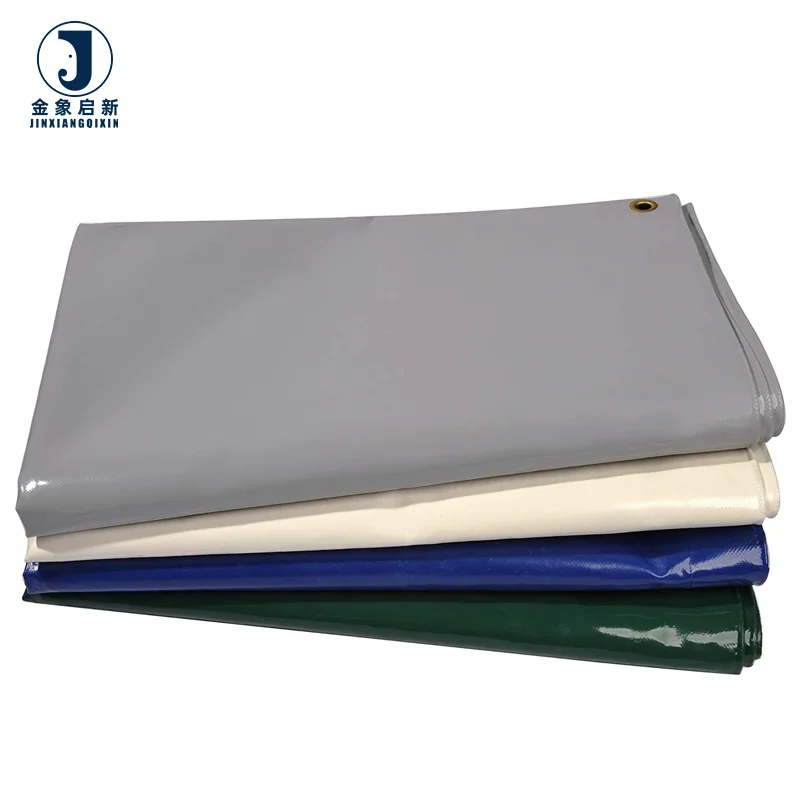
Deep Process Control Over Coating Adhesion — verified at every production stage through in-line weight checks and peel testing to ensure the PVC bond to the polyester base fabric meets structural demands before the roll leaves the line.
Technical Specifications
| Parameter | Value |
|---|---|
| Product Type | PVC Coated Tarpaulin |
| Base Fabric | Polyester, double-sided PVC coating |
| Yarn Count Options | 500D×840D / 500D×1000D / 1000D×1000D / 1000D×1300D / 1300D×1300D / 1000D×2000D |
| Weight Range | 420~1000g/m² |
| Thickness | 0.32 mm (420g) to 0.65 mm (900g) |
| Mesh Density | 20×20 to 30×19 |
| Warp Tensile Strength | 1850 N (420g) to 3900 N (900g) |
| Weft Tensile Strength | 1750 N (420g) to 3500 N (900g) |
| Material Tensile Strength | 50–80 MPa |
| Density | 1.15–2.00 g/cm³ |
| Brittle Temperature | ≤ -50 ~ -60 °C |
| Softening Temperature | ≥ 80 °C |
| Melting Point | 212 °C |
| Flame Retardant | Available in flame retardant grades — confirm the grade required for your market |
| UV Treatment | Anti-UV treatment stated — test basis to be confirmed per order |
| Waterproof | Water resistant / waterproof coated construction |
| Edge Finishing | High temperature heat sealed seamless edge wrapping, 5 mm rope without splicing |
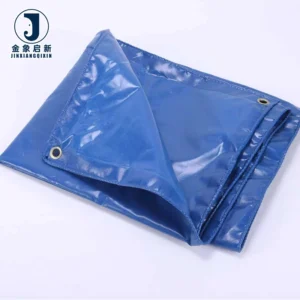
| Eyelets | 3 cm enlarged aluminum alloy buttonhole, reinforced corners |
| Printing | Custom printing accepted |
Application Suitability
| Application | Exposure & Requirement |
|---|---|
| Tent and membrane structure fabric | Permanent UV exposure, wind load tension, flame-retardant compliance for public assembly |
| Truck and trailer side curtain | Constant flexing at load points, road abrasion, weather and UV exposure |
| Awning and pergola cover | Extended sun exposure, rain pooling, thermal cycling across seasons |
| Machine and equipment cover | Abrasion from contact surfaces, dust and moisture ingress, flame-retardant site requirement |
| Balcony and window rainproof tarpaulin | Wind-driven rain, UV degradation on vertical face, visual consistency from street view |
| Inflatable structure fabric | Internal air pressure load, seam integrity under continuous stress, fire classification |
Why the Stated GSM Does Not Guarantee the Strength You Need
Coating weight and base fabric construction must be evaluated together — neither alone defines mechanical performance.
Buyers often specify PVC coated tarpaulin by GSM, then find the delivered material does not hold up under the expected load. A heavier coating does not automatically mean higher tensile or tear strength if the base fabric denier and weave density remain unchanged. The relationship between the polyester yarn count, mesh density and the PVC coating weight determines whether the fabric survives flexing, tensioning and abrasion at stress points. [NEED_CITE: tensile and tear test methods for coated fabrics per ISO 1421]
Base Fabric Denier and Weave as the Structural Backbone
The polyester base fabric carries the mechanical load in any PVC coated tarpaulin system. Yarn count options in this range span from 500D×840D through to 1000D×2000D, each paired with specific mesh densities that control how the coating penetrates the weave. Higher denier yarns in both warp and weft directions directly increase the tensile values recorded during testing. Mesh density governs how evenly those loads distribute across the fabric surface, preventing localised failure at individual yarn crossover points.
Coating Adhesion and Peel Strength at the Interface
The PVC coating must bond to the polyester base with sufficient adhesion to resist delamination under flexing and thermal cycling. Double-sided coating ensures both faces contribute to waterproof performance and structural stiffness. When adhesion is insufficient, the coating separates from the base fabric at welded seams and high-stress flex points — a failure mode that often appears before the fabric itself reaches its tensile limit. [NEED_CITE: peel strength testing for PVC-polyester laminates in coated fabric standards]
Reading the Tensile Data Across Weight Grades
Warp tensile strength increases from 1850 N at 420 g/m² through to 3900 N at 900 g/m², while weft values move from 1750 N to 3500 N across the same span. These figures reflect the combined contribution of base fabric denier escalation and the thicker coating layer that accompanies higher GSM grades. The warp-to-weft differential narrows at heavier grades, indicating a more balanced construction that resists directional tearing under biaxial load. This balance matters for applications like tensioned membrane structures where stress arrives from multiple angles simultaneously.
Temperature Boundaries and Field Performance
The material remains flexible down to a brittle temperature of ≤ -50 to -60 °C and begins softening at ≥ 80 °C, with a melting point of 212 °C. This operating window determines where and when the fabric can be installed and used. In cold-climate applications, the low brittle threshold allows winter deployment without cracking at fold lines or eyelet points. The softening boundary at 80 °C means the PVC coated tarpaulin should not be installed in contact with surfaces that exceed this temperature during operation, such as certain exhaust-adjacent equipment covers.
What Happens When Specifications Are Chosen on GSM Alone
Selecting material based on coating weight without cross-referencing base fabric denier leads to predictable field failures. A 650 g/m² fabric built on a 500D base will flex and abrade differently from one on a 1000D base, even though the quoted GSM is identical. Flame retardant grades require specific chemical formulations within the coating — ordering a flame retardant tarpaulin without specifying the test standard means the delivered material may not satisfy the local fire authority. [NEED_CITE: fire classification standards for temporary structures and transport covers]
Colour inconsistency between rolls in the same order becomes visible once the fabric is installed side by side on a large structure. This is not a cosmetic complaint alone — visible shade variation signals inconsistency in the coating batch, which can correlate with variation in coating weight and UV treatment concentration across the same production run.
Why Procurement from This Line Supports Your Specification
Deep process control over coating weight and adhesion is maintained through in-line checks at every production stage, ensuring each roll of PVC coated tarpaulin meets the stated GSM before it proceeds to finishing. Three full production lines with 36 sets of equipment provide the capacity to deliver bulk orders with consistent lead times. The 10-person R&D team handles material selection and sample development, allowing buyers to verify denier, colour and treatment before committing to volume. Dedicated QA/QC inspects every roll before dispatch, catching weight drift and colour deviation before the shipment leaves the facility.
Documentation & Verification
- Material specification sheet listing GSM, base fabric denier, coating type and colour reference
- Test report for flame retardant or anti-UV grades supplied with shipment where applicable
- Pre-shipment inspection record with roll-by-roll GSM verification
- Roll packing list detailing individual roll weight, width and length
- Certificate of origin and customs documentation included per shipment
Fabrication, Handling & Storage
- Heat-sealed edges at 5 mm rope without splicing resist delamination at cut lines during welding
- 3 cm aluminum alloy eyelets with reinforced corners distribute tie-down loads across the PVC coating layer
- Store rolls upright on pallets to prevent compression marks on the double-sided PVC surface
- Allow cold-stored rolls to acclimatise before unrolling to avoid cracking near the brittle temperature threshold
- Use mild detergent for cleaning — solvent-based cleaners may degrade the PVC coating surface finish
- Plan cutting layout to align seams with the warp direction where tensile load is highest
What to Include in Your Enquiry
Specify the application environment and the mechanical loads the fabric will face, including wind, tension or abrasion conditions. State the fire classification or compliance standard your market requires so the correct flame retardant grade is quoted. Indicate whether you need rolls at stock width or custom dimensions, and whether finished cut sizes with eyelets and hems are required or roll stock only.
Frequently Asked Questions
Q: How do I verify the GSM on arrival matches what was quoted?
A: Cut a measured sample from each roll, weigh it on a calibrated scale, and compare against the stated GSM on the material specification sheet. Weight verification is performed roll-by-roll during pre-shipment inspection, and the inspection record is included with your documentation to support your incoming quality check.
Q: Can I get a test report for flame retardant treatment before committing to an order?
A: Test reports for flame retardant grades are supplied with shipment where applicable. Specify your target market standard during enquiry so the correct grade is selected and documented. Samples can be developed for testing before bulk production is confirmed.
Q: How is colour consistency maintained across multiple rolls in one order?
A: Coating batches are controlled within a single production run, and each roll is inspected for shade deviation before packing. Pre-shipment inspection records document colour consistency checks, and any roll falling outside tolerance is removed before dispatch.
Q: What welding parameters work with these PVC coated tarpaulin grades?
A: Heat sealing temperature and pressure must be matched to the coating thickness and GSM of the specific grade. The high temperature heat sealed edge wrapping used in production provides a reference for field welding settings. Request fabrication guidance when ordering to align your equipment parameters.
Q: Are custom widths and printed branding available, and what are the minimums?
A: Custom printing is accepted for brand and colour requirements. Minimum order quantities depend on the specific width, colour and treatment combination requested. Submit your requirements during enquiry for a quotation with lead time and minimum stated.