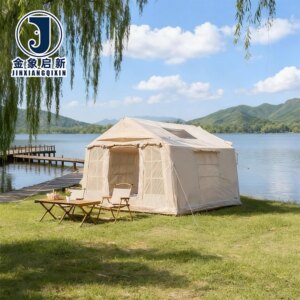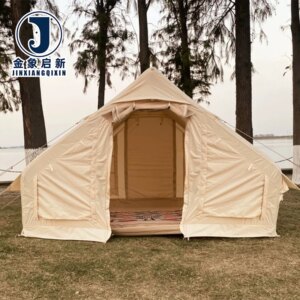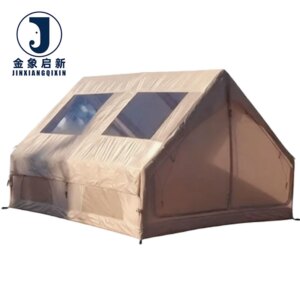
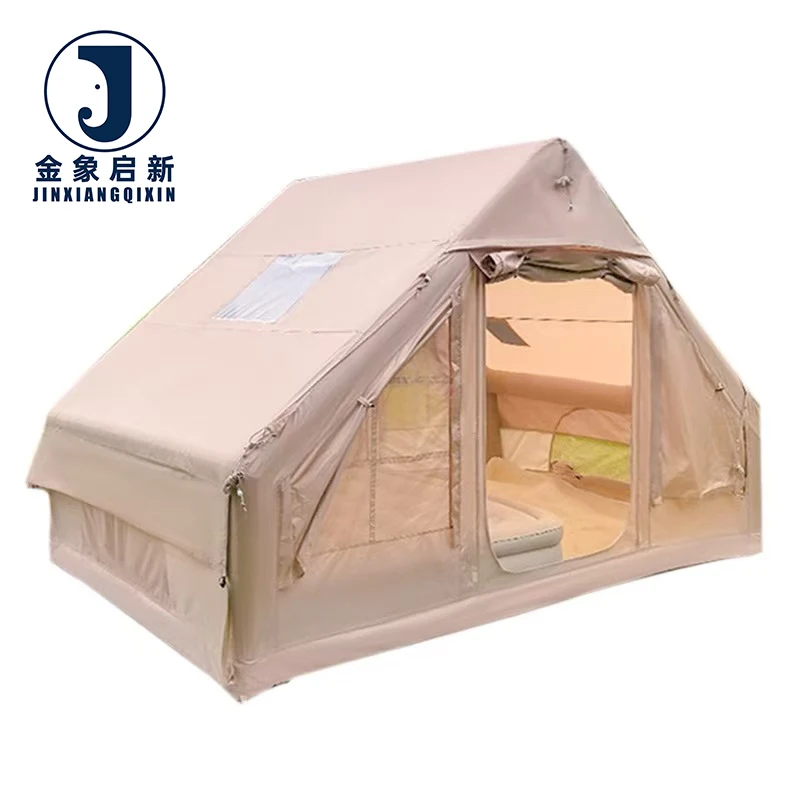
Coated Fabric Expertise — Three dedicated production lines process PVC-coated rolls for inflatable structures with documented coating weight and adhesion control at every batch.
Technical Specifications
| Parameter | Value |
|---|---|
| Product Type | Inflatable Tent |
| Core Material | PVC Coated Fabric |
| Waterproof Rating | ≥10,000mm water column |
| UV Resistance | 4000 hours accelerated aging |
| Tear Strength | ≥300N |
| Construction | Single layer |
| Deployment Cycle Life | 500+ cycles |
| Custom Sizing | Up to 5m length |
| Color Matching | Pantone codes available |
| Standards | ISO 9001, ISO 14001, ISO 45001, CE |
| Key Features | Waterproof, UV-resistant, tear-resistant, OEM & ODM customization |
Application Suitability
| Application | Exposure & Requirement |
|---|---|
| Tent manufacturers sourcing PVC coated fabric by roll | Batch-to-batch consistency in coating weight, tear strength, and weld compatibility for automated production lines |
| Construction site temporary shelters | Sustained UV exposure, wind-driven rain, repeated inflation and deflation cycles over multi-month projects |
| Logistics equipment storage shelters | Abrasion from ground contact, puncture risk from sharp equipment edges, waterproofing under static load |
| Industrial event mobile command posts | Rapid deployment requirement, professional appearance with logo printing, frequent transport and reinstallation |
| Emergency rapid-deployment structures | Reliable inflation under variable temperature conditions, single-layer construction minimizing pack weight |
Why Inflatable Tent Fabric Performance Varies Between Batches Even When Specs Look Identical
Material consistency depends on coating process control, not just the number written on a data sheet.
Purchasing managers sourcing inflatable tent fabric often discover that two rolls quoting the same GSM arrive with noticeably different hand feel, weld behavior, or waterproof performance. [NEED_CITE: relationship between coating adhesion strength and thermal welding parameters for PVC coated fabrics] When a batch arrives lighter than stated or with UV treatment that lacks supporting test documentation, the downstream cost falls on the fabricator who must either reject the shipment mid-production or absorb field failure risk. For inflatable structures, where the fabric must hold internal pressure through repeated deployment cycles, even small deviations in base fabric density or coating thickness translate directly into structural reliability differences.
How Base Fabric Denier and Weave Density Determine Inflatable Structure Integrity
The load-bearing capacity of an inflatable tent does not come from the PVC coating alone — it originates in the polyester base fabric’s denier count and warp-weft density. Higher denier yarns resist puncture propagation, while tighter weave patterns distribute inflation pressure across more fiber intersections. When evaluating inflatable tent fabric for commercial production, the base fabric specification determines whether the material will hold shape under sustained internal pressure or develop stress deformation at panel junctions. This is why material selection for inflatable structures requires reviewing both the coating formulation and the underlying textile construction together.
Coating Method and Its Effect on Weld Strength and Air Retention
The PVC coating process — whether knife-over-edge, dip, or calender — directly affects how the material behaves during thermal welding and how well it retains air under load. Knife-coated fabrics typically deliver higher coating adhesion, which means the welded seam resists delamination when the inflatable structure flexes during inflation cycles. For inflatable tent fabric manufacturers, weld integrity is critical because seam failure under pressure causes immediate structural collapse. [NEED_CITE: thermal welding parameters and peel strength testing for PVC coated polyester fabrics] The coating weight must be sufficient to seal the base fabric completely while remaining thin enough to allow reliable heat transfer during high-frequency welding operations.
Reading the Specification Sheet: What the Numbers Actually Mean for Inflatable Tents
The tear strength value of ≥300N indicates the force required to propagate a tear once initiated, which matters most at stress concentration points such as valve openings and panel corners. The waterproof rating of ≥10,000mm water column confirms the coating’s hydrostatic resistance — relevant for inflatable shelters deployed in sustained rainfall where water pooling on horizontal surfaces creates localized pressure. UV resistance measured at 4000 hours accelerated aging provides a comparative benchmark for outdoor service life, though actual field longevity depends on installation orientation, latitude, and seasonal exposure intensity. The 500+ deployment cycle rating reflects the combined fatigue resistance of the base fabric, coating adhesion, and welded seam construction under repeated inflation and deflation. Custom sizing up to 5m length and Pantone color matching allow tent manufacturers to standardize panel dimensions across production runs while maintaining brand color consistency.
The Hidden Cost of Specifying Inflatable Tent Material on Price Alone
When procurement decisions prioritize per-meter cost over verified material properties, the consequences surface after fabrication. Rolls that arrive below the quoted GSM produce inflatable panels that sag under their own weight or fail to maintain rigidity in wind. [NEED_CITE: common causes of inflatable structure failure related to material specification deviation] Color variation between rolls within the same order becomes visible once panels are assembled side by side on the production floor, forcing fabricators to either sort and rematch — delaying shipment — or accept inconsistent appearance. Weld seams that fail before the fabric body does indicate a mismatch between the coating formulation and the welding parameters used, a problem that compounds with every deployment cycle. These downstream costs routinely exceed the per-meter savings that drove the original purchasing decision.
Why Technical Buyers Source Inflatable Tent Fabric Here
Deep process control over PVC coating weight and adhesion, developed across nearly 30 years of continuous coated fabric production, delivers batch-to-batch consistency that inflatable structure manufacturers depend on. Three full production lines and 36 sets of processing equipment support bulk volume requirements while maintaining coating uniformity across every roll. A 10-person R&D team handles custom formulation requests, Pantone color matching, and sample development for new inflatable structure designs. Every production run passes through dedicated QA/QC inspection at each stage, with 100% pre-shipment verification confirming that material properties match the specification sheet. Custom widths, colors, and printed branding are accommodated without the extended lead times or prohibitive minimums typical of coated fabric sourcing.
Documentation & Verification
- Material specification sheet detailing base fabric denier, coating composition, and GSM for each inflatable tent fabric batch
- Test report confirming UV resistance and waterproof performance against stated values for the specific production run
- Weight verification per roll measured against the quoted GSM before dispatch authorization
- ISO 9001, ISO 14001, ISO 45001, and CE certificates included with every shipment
- Pre-shipment inspection record documenting coating adhesion, tear strength, and visual quality checks
- Roll packing list with individual roll identification for traceability through fabrication
Fabrication, Handling & Storage
- Thermal welding temperature and dwell time must match the PVC coating thickness to achieve full seam adhesion without base fabric damage
- Single-layer construction requires careful handling during inflation testing to avoid point-load puncture on unprotected ground surfaces
- Store rolls upright on core supports to prevent flat-spot deformation that transfers into visible surface creases on inflatable panels
- Pantone-matched colors should be verified under standardized lighting before cutting to confirm batch-to-batch consistency
- Custom-sized panels up to 5m length should be cut with allowance for weld seam overlap to maintain structural pressure integrity
- Clean PVC coating surfaces with pH-neutral detergent only; solvent-based cleaners degrade the coating’s UV stabilizer layer
Before You Request a Quote on Inflatable Tent Fabric
Provide your target panel dimensions, annual volume requirement, and the inflation pressure range your structure operates under. Specify whether you require rolls in stock widths or custom widths to minimize waste during cutting. Confirm the UV resistance level and any fire classification your end market mandates, as regulatory requirements vary significantly by region. If color consistency across multiple rolls is critical for your production, indicate your Pantone reference and whether you need approval samples before bulk release.
Frequently Asked Questions
Q: How is UV resistance tested and what does the 4000-hour accelerated aging result mean for outdoor service life?
A: Accelerated aging uses concentrated UV exposure under controlled temperature and humidity to simulate extended outdoor weathering. The 4000-hour result provides a standardized comparison benchmark between materials. Actual field life depends on installation latitude, orientation, seasonal variation, and local atmospheric conditions. Request the specific test report to verify the methodology used for your inflatable tent fabric batch.
Q: What customization options are available for sizing, color, and printing on inflatable tent fabric?
A: Custom sizing is available up to 5m length per panel. Color matching follows Pantone references to ensure consistency across production runs. Logo and pattern printing can be applied during fabrication. OEM and ODM sample development is supported by the in-house R&D team, allowing you to validate material performance and appearance before committing to bulk production volumes.
Q: How is batch-to-batch consistency ensured across bulk inflatable tent orders?
A: Each production run undergoes in-process QA checks at coating, curing, and winding stages. Weight verification per roll confirms GSM compliance against the specification sheet. Color consistency is measured against approved reference standards. A 100% pre-shipment inspection confirms that tear strength, waterproof rating, and surface quality meet documented values before rolls are released for dispatch.
Q: What documentation is provided to verify waterproof and tear strength performance claims?
A: Each shipment includes a material specification sheet stating coating composition and base fabric data, a test report confirming waterproof performance and tear strength values for the specific batch, and relevant ISO and CE certificates. Pre-shipment inspection records document the individual test results. This documentation package supports your own quality audits and end-customer compliance requirements.
Q: What is the sample development and approval process before bulk production?
A: Submit your material requirements including intended application, required performance values, and color reference. The R&D team develops a sample reflecting your specification within days. Once you approve the sample for weight, hand feel, weld behavior, and color, bulk production follows the identical formulation and process parameters. This ensures the production rolls match the sample you validated.