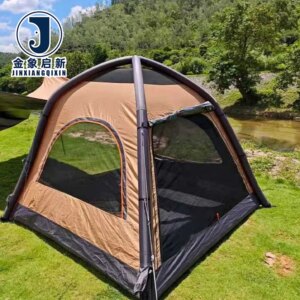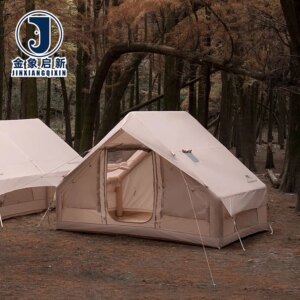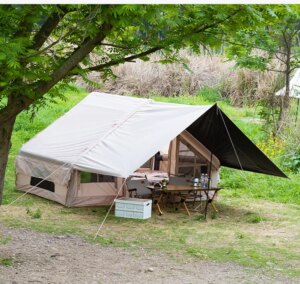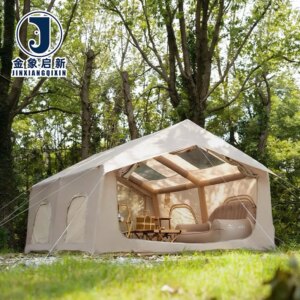
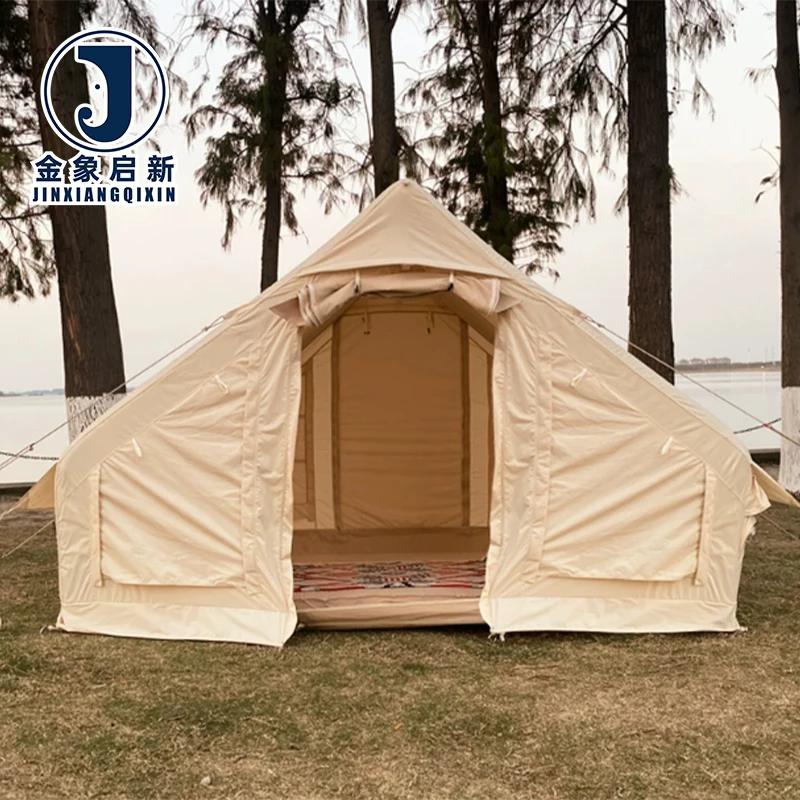
Material-Backed Customization — our R&D team handles base fabric selection, coating weight, and seam engineering for inflatable structures from design through to production validation.
Technical Specifications
| Parameter | Value |
|---|---|
| Product Type | PVC Inflatable Disaster Relief Tent |
| Core Material | PVC coated tarpaulin |
| Product Form | Inflatable, extended type, single layer construction |
| Waterproof Performance | Fully waterproof coated construction |
| Wind Resistance | Windproof rated for all-weather deployment |
| Season Rating | 4-season suitable |
| Deployment Mechanism | Quick automatic opening via inflation |
| Flame Retardant | Available in flame retardant grades — confirm the grade required for your market |
| UV Treatment | Available with anti-UV treatment — test basis to be confirmed per order |
| Anti-Static | Available upon request — verify certification required for your application |
| Customization | OEM & ODM including sample customization and pattern printing |
| Certifications | ISO 9001, ISO 14001, ISO 45001, CE |
Application Suitability
| Application | Exposure & Requirement |
|---|---|
| Temporary construction site shelters | Continuous outdoor UV exposure, wind load, frequent inflation and deflation cycles |
| Mobile logistics storage facilities | Abrasion from cargo contact, ground moisture, rapid deployment demands |
| Field command centers for engineering management | All-weather integrity, interior climate retention, repeated relocation |
| Disaster recovery workspace coverage | Emergency-speed deployment, extreme weather resistance, multi-day continuous inflation |
| Outdoor industrial event and operations enclosures | High foot traffic wear, solar heat gain, branding and visibility requirements |
Why "Flame Retardant" Means Nothing Without a Documented Grade
A flame retardant claim on inflatable tent fabric must be backed by a named test standard and a passing certificate, otherwise it holds no weight at the site inspection.
Technical buyers sourcing PVC inflatable tent fabric for disaster relief or temporary industrial shelters frequently receive material data sheets that state "flame retardant" with no referenced standard. On arrival at a mine site or aviation facility, the safety officer asks for the test report — and procurement is left scrambling. The gap between a marketing claim and a documented grade is where projects stall and shipments get rejected. Inflatable structures hold air pressure against fabric that is often single layer, meaning the entire structural envelope is one material away from failure in a fire event [NEED_CITE: fire classification standards for temporary membrane structures].
Coating Method and Adhesion for Air-Holding Seams
The integrity of an inflatable shelter depends entirely on how well the PVC coating bonds to the base fabric at every welded seam. When the structure is pressurized, the seam carries continuous peel stress that a weak coating bond cannot survive. PVC inflatable tent fabric produced with controlled coating adhesion ensures that heat-welded joints reach strength levels comparable to the base material itself, preventing the common failure mode where seams delaminate before the fabric body shows any wear.
Single Layer Construction and Structural Rigidity
A single layer inflatable design places all performance demands on one fabric — it must hold air, resist puncture, block water, and maintain shape under wind load simultaneously. This makes the relationship between base fabric denier, weave density, and coating weight critical. The PVC inflatable tent fabric used here is engineered so that coating thickness and base fabric tensile properties work together to deliver rigidity when inflated without adding unnecessary weight that would slow deployment or increase transport cost [NEED_CITE: tensile and tear test methods for coated fabrics per ISO 1421].
Reading GSM, Base Fabric, and Coating Weight Together
GSM alone tells you how heavy the fabric is, not how strong it is. A high GSM achieved through heavy coating on a low-density base fabric will show good stiffness but poor tear propagation resistance. For inflatable disaster relief tents, the base fabric denier and thread count determine how a puncture or cut behaves under inflation pressure — whether it stays localized or tears open rapidly. Coating weight then determines surface abrasion resistance and waterproof durability across repeated setup and teardown cycles.
What Specification Mismatches Cost on Site
Ordering inflatable tent fabric based on price per kilogram without verifying the base fabric specification leads to field failures that are expensive to diagnose. A coating that is too thin for the intended climate will crack at fold lines during cold-weather deployment. A base fabric with inadequate tear strength will propagate small punctures into full panel splits under wind gust loading. Batch-to-batch colour variation across a multi-unit order becomes visible when shelters are installed side by side at a single relief site, undermining professional presentation [NEED_CITE: coating weight verification and batch consistency in PVC tarpaulin production].
Sourcing Confidence for Inflatable Fabric Buyers
Our production process includes dedicated QA checkpoints at every coating and finishing stage, with full pre-shipment inspection before any roll leaves the facility. The R&D team develops material samples within days when a buyer needs to confirm coating weight, colour match, or flame retardant grade before committing to volume. Three production lines and a professional equipment setup support consistent output across large orders while maintaining roll-to-roll uniformity. Every batch ships with documentation matched to the purchase order specifications. Pattern printing and OEM customization are handled in-house, keeping lead times contained and quality under direct control.
Documentation & Verification
- Material specification sheet listing GSM, base fabric denier, coating type, and colour reference for each roll
- UV and flame retardant test reports provided where applicable to the grade specified at order
- ISO 9001, ISO 14001, ISO 45001, and CE certificates included with shipment documentation
- Pre-shipment inspection record confirming weight and visual quality against order parameters
- Roll packing list with individual roll identification for traceability through to site deployment
Fabrication, Handling & Storage
- Heat weld temperature and dwell time must match the specific PVC coating weight to achieve full seam adhesion
- Store rolls upright on core to prevent flat-spot creasing that weakens coating at fold lines
- Inflate test each fabricated panel before final assembly to verify seam integrity under pressure
- Use compatible PVC adhesive for field repairs on single layer construction to maintain air retention
- Avoid dragging rolls on unsealed concrete to protect coating surface before fabrication begins
What We Need to Quote Your Inflatable Fabric Correctly
Provide your intended application environment, including expected wind conditions, temperature range, and duration of continuous inflation. Confirm the fire safety or anti-static classification required by the site operator or local authority. Specify required roll width, colour or printing needs, and whether you need sample approval before bulk production proceeds.
Frequently Asked Questions
Q: How is the stated GSM verified before the PVC inflatable tent fabric ships?
A: Each roll is weighed and measured during pre-shipment inspection, and the result is recorded against the order specification. Buyers receive an inspection record showing actual GSM per roll. If a discrepancy is found before dispatch, the roll is held and replaced to match the agreed weight.
Q: What flame retardant standard applies to inflatable tent fabric for my market?
A: The required standard depends on your country and application — common references include DIN 4102, NFPA 701, and local building code classifications. Specify your target market and application at inquiry stage so we can confirm which grades are available and supply the matching test documentation with your order.
Q: How does welded seam strength compare to the base fabric tensile strength?
A: Properly heat-welded seams on PVC coated fabric can approach the tensile strength of the base material itself. The critical variable is coating adhesion quality — our in-process QA checks peel strength at weld points during production to ensure seams do not become the weak link under inflation cycling [NEED_CITE: seam peel strength testing for welded PVC coated fabrics].
Q: What options exist for custom width, colour, and printing on inflatable tent fabric?
A: Custom widths, colours, and pattern printing are available through our OEM and ODM service. Samples are developed within days for buyer approval before bulk production. Lead times and minimum order quantities depend on the specific colour and width combination — confirm your requirements at inquiry for an accurate production schedule.